Recent legislative maneuvers in Moscow have escalated geopolitical anxieties across the European continent. Amid growing warnings from NATO regarding potential broader conflicts, the Russian government has advanced a new bill that significantly eases the legal requirements for foreign military deployment. The drafted legislation grants Russian President Vladimir Putin expanded authority to use the country's armed forces extraterritorially, specifically targeting instances where Russian citizens face prosecution by foreign courts or international judicial bodies. As Europe fears invasions and regional instability, this profound legal shift is viewed by international observers as a potential pretext for future military interventions and a direct challenge to international law.
The Scope of the New Russian Military Legislation
The new legislative initiative, developed by the Russian Ministry of Defense, was recently approved by the Russian government’s commission on legislative activity. It proposes critical amendments to existing federal frameworks, specifically targeting the national laws "On Citizenship" and "On Defense."
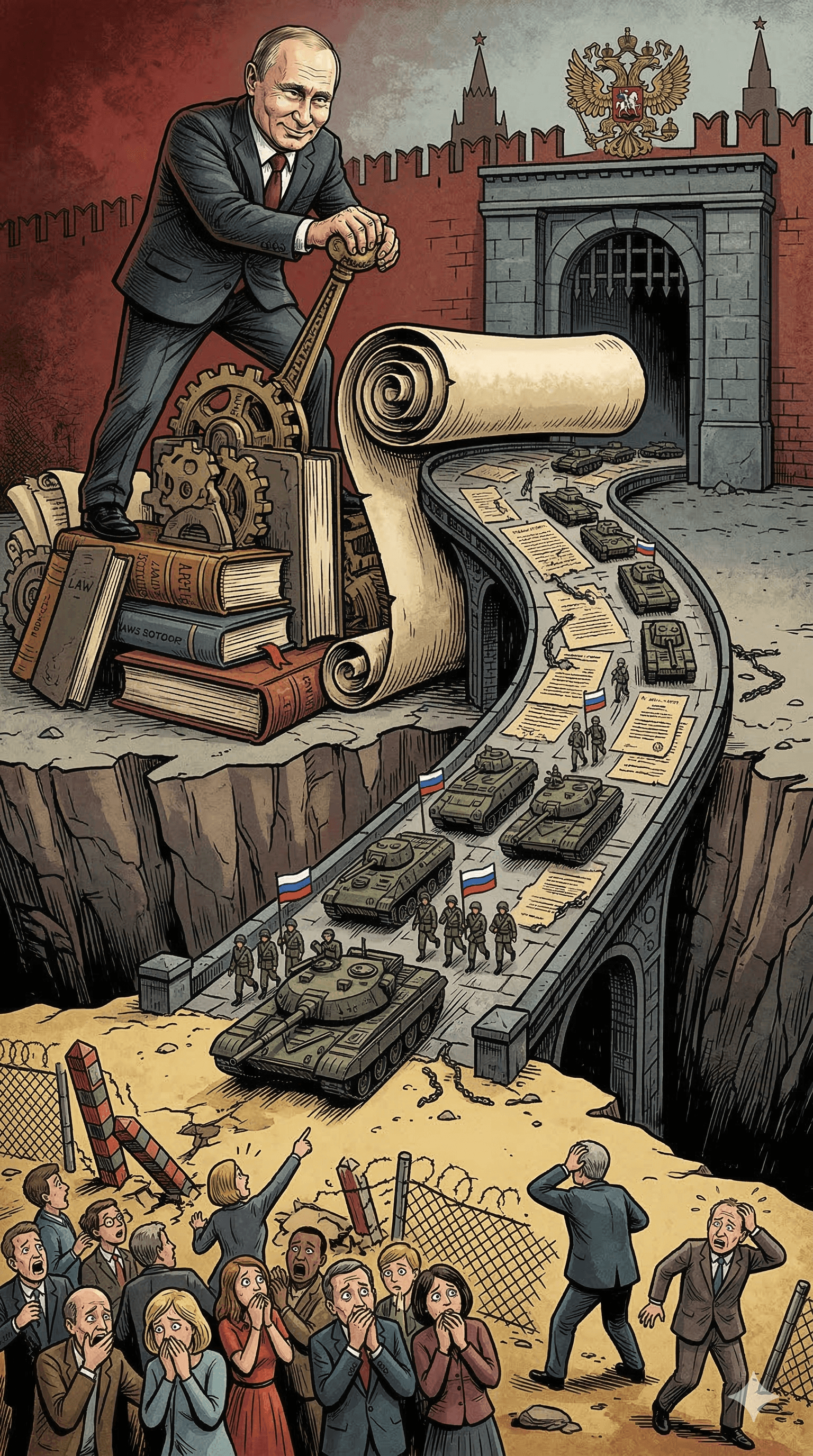
Under the proposed legal structure, President Putin will be granted the unilateral power to deploy units of the Russian Armed Forces abroad to "protect Russian citizens." This mandate explicitly applies to scenarios involving the arrest, detention, criminal prosecution, or sentencing of Russians by foreign courts. Notably, the language of the bill extends to international judicial bodies and tribunals whose jurisdiction the Kremlin does not recognize or participate in.
While existing Russian security laws already allowed the president to dispatch troops abroad if foreign actions broadly contradicted Russia's national interests, this new bill creates a highly specific, individualized trigger for foreign military deployment. Legal and political analysts note that this fundamentally lowers the threshold for military action, effectively weaponizing the legal defense of individual citizens into a potential casus belli (an act used to justify a war).
Trigger Points: The ICC and EU Special Tribunals
The advancement of this Russian foreign military deployment law does not exist in a vacuum. It is widely interpreted as a direct response to intensifying international legal pressures and pending tribunals against the Russian leadership.
In 2023, the International Criminal Court (ICC) issued formal arrest warrants for President Putin and Russia's Children's Rights Commissioner, Maria Lvova-Belova, concerning actions taken during the Ukrainian conflict. Furthermore, the European Union, alongside the Council of Europe, has actively progressed in forming a special international tribunal to prosecute Russian leadership for the crime of aggression.
This proposed EU tribunal is planned to be modeled on the historic Nuremberg trials that took place after World War II. By late 2025, over two dozen EU countries had confirmed their participation in the effort. In January 2026, the European Union allocated the first €10 million for the tribunal's operational setup, aiming to eventually bring multiple high-ranking individuals to justice. By advancing a law to ease Russian foreign military deployment precisely when these international tribunals are gathering momentum, Moscow is establishing a domestic legal basis to categorize any international arrest of its officials as an act of state hostility requiring an armed military response.
As Europe Fears Invasions: NATO and Baltic Reactions
The timing of Putin's new military law has amplified ongoing security alarms across Europe. NATO commanders and European defense ministries have increasingly warned their domestic populations about the possibility of an armed confrontation with Russia within the coming years.
As Europe fears invasions, the regional response has been swift and practical. Just prior to the advancement of the Russian defense bill, a coalition of ten countries in Northern Europe and the Baltic region agreed to coordinate extensive plans for cross-border civilian evacuations in the event of a major crisis or sudden war. The acute concern among these bordering nations is that Moscow could utilize the arrest, detention, or alleged mistreatment of a Russian passport holder in a neighboring country as a formal, legally sanctioned pretext to initiate a cross-border military incursion.
Because the new legislation allows for immediate armed intervention over judicial disputes, European policymakers are forced to re-evaluate the immediate physical risks associated with enforcing international sanctions or executing international arrest warrants against Russian nationals within their borders.
A Broader Trend of Military Legal Restructuring
The bill expanding extraterritorial military use is part of a broader, sustained effort by the Kremlin to restructure its military and defense legislation. This legislative campaign appears designed to sustain prolonged military operations, ease the bureaucratic hurdles of force generation, and protect allied assets.
In early March 2026, Putin signed a related law explicitly banning the extradition of foreign nationals and stateless persons who serve under contract in the Russian Armed Forces. This move provided a legal "protective shield" to foreign fighters, effectively incentivizing international recruitment by offering immunity from foreign prosecution to those who fight for Moscow.
Additionally, in late 2025, the Russian Cabinet of Ministers approved amendments allowing for the rapid deployment of military reservists abroad under "special assemblies" without the need for a formal declaration of war or a mass mobilization order. Collectively, these sweeping legal shifts signal a continuous adaptation of the Russian state apparatus to facilitate rapid and flexible foreign military deployments, deliberately removing domestic legal barriers that could slow down sudden military action.
Impact and Outlook
The advancement of the law to ease Russian foreign military deployment introduces a volatile new dynamic into global geopolitics. By legally intertwining the personal legal jeopardy of its citizens with the overt use of state military force, Moscow has drastically raised the stakes for any sovereign nation attempting to hold Russian officials or operatives accountable through international law.
Looking ahead, this legislation is likely to have a chilling effect on international legal cooperation and cross-border justice. European nations, particularly those situated along NATO's eastern flank, must now weigh the enforcement of international warrants against the explicit statutory threat of a militarized response. As defense postures harden across the continent, the legal pretext for conflict has never been broader, ensuring that regional tensions will remain at historically elevated levels for the foreseeable future.
#Russia #Geopolitics #EuropeanSecurity #MilitaryLaw #NATO #InternationalLaw #Putin #Defense #GlobalNews #EasternEurope #PoliticalAnalysis