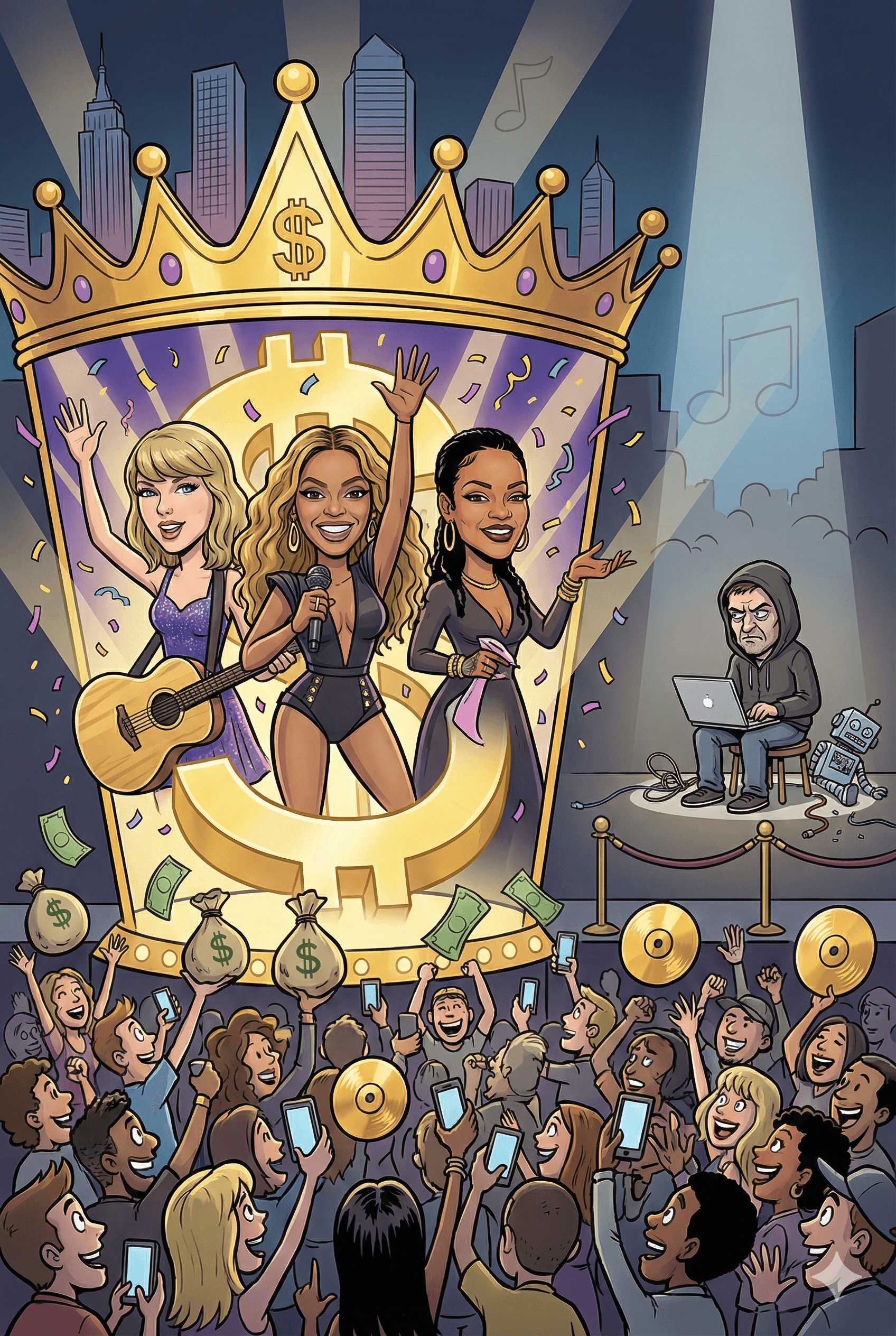
The traditional blueprint for extreme wealth in America has long pointed directly to the West Coast. For decades, Silicon Valley was the undisputed engine of self-made fortunes, driven by venture capital, disruptive software, and tech IPOs. But a look at the most recent economic data reveals a structural shift in how female entrepreneurs are building empires. Today, the new American wealth story isn’t just being coded in tech hubs—it is being recorded in studios, performed in sold-out stadiums, and sold through inclusive beauty lines.
The pop industry has evolved into a dominant macroeconomic force, minting a new generation of billionaire women who are leveraging their intellectual property, fiercely loyal fandoms, and direct-to-consumer business models to bypass the traditional corporate ladder.
The Real Numbers: A $154 Billion Milestone
To understand the scale of this shift, one must look at the broader landscape of female wealth. According to recent financial analyses and Forbes’ tracking of America’s Richest Self-Made Women, the top 100 female entrepreneurs recently pushed their combined fortunes to a record-breaking $154 billion.
While this list includes real estate tycoons, roofing supply executives, and healthcare software founders, the most notable disruption at the top of the billionaire ranks has come from the entertainment sector. Pop stars are no longer just faces of endorsement deals; they are the majority shareholders, CEOs, and primary beneficiaries of their own global conglomerates.
The Billion-Dollar Pop Divas Leading the Charge
The transition from millionaire entertainer to billionaire mogul requires a shift from earning a salary to owning assets. Three prominent figures exemplify this new path to the billionaire club.
Taylor Swift: The Economics of IP and Live Touring
Taylor Swift’s ascent to an estimated net worth of $1.6 billion marks a historic first: she is the first musician to achieve billionaire status primarily through her music catalog and live performances. Swift’s wealth strategy is deeply rooted in intellectual property ownership. By publicly reclaiming her masters and re-recording her early albums ("Taylor's Version"), she successfully devalued her old portfolio while creating a highly lucrative new one.
Furthermore, her record-breaking Eras Tour did not just generate billions in ticket and merchandise sales; it functioned as a microeconomic stimulus for host cities worldwide. Swift’s financial trajectory proves that in the modern pop industry, controlling the distribution and rights to one's art can yield tech-level financial returns.
Rihanna: The Direct-to-Consumer Beauty Blueprint
Boasting an estimated fortune of $1.4 billion, Rihanna represents a different facet of pop industry wealth. While her music catalog remains a foundational asset, her billionaire status was cemented by the launch of Fenty Beauty in partnership with LVMH, followed by her Savage X Fenty lingerie line.
Rihanna identified a massive gap in the global cosmetics market: a lack of inclusive shade ranges for all skin tones. By combining her massive cultural influence with a genuinely disruptive product, she executed a direct-to-consumer masterclass that traditional Silicon Valley startups spend billions trying to emulate.
Beyoncé: Cross-Genre Dominance and Brand Equity
Recently crossing the threshold into the billionaire club, Beyoncé Knowles-Carter has built a financial empire that mirrors a diversified holding company. With an estimated net worth that surged past the $1 billion mark following her Renaissance World Tour and the massive success of her country album Cowboy Carter, Beyoncé’s wealth generation is a mix of high-margin touring, elite brand partnerships, and self-owned business ventures.
Through her management company Parkwood Entertainment, her haircare line Cécred, and her SirDavis Whisky venture, Beyoncé retains strict control over her brand equity, ensuring that she captures the maximum value from her cultural output.
Silicon Valley vs. The Pop Industry: A Changing Paradigm
Why is the pop industry suddenly rivaling Silicon Valley in minting high-profile female billionaires? The answer lies in the evolving nature of capital and audience reach.
In traditional tech, founders often have to dilute their ownership significantly through multiple rounds of venture capital funding before reaching a liquidity event like an IPO. Female founders in Silicon Valley have historically faced additional hurdles, receiving a disproportionately small fraction of total venture capital dollars. Prominent tech executives like Sheryl Sandberg, Meg Whitman, and Safra Catz built immense wealth, but they largely did so by climbing the executive ranks of established megacorporations.
Conversely, the pop industry in the streaming and social media era allows artists to build direct, unfiltered lines of communication with millions of consumers. A pop star with 100 million followers essentially controls her own marketing, distribution, and retail network. When these artists launch products or announce tours, the customer acquisition cost is functionally zero—a metric that Silicon Valley software companies can only dream of.
Economic and Social Implications
This shift carries profound implications for the broader economy. The wealth generated by these billionaire women in the pop industry is highly visible and deeply influential. It signals to young female entrepreneurs that intellectual property, personal branding, and consumer-focused businesses are viable paths to generational wealth.
Furthermore, the "Pop-Economy" relies heavily on the employment of thousands of gig workers, stagehands, dancers, independent producers, and retail workers. When a major pop tour mobilizes or a new beauty brand launches, it stimulates diverse sectors of the economy ranging from hospitality and travel to digital marketing and logistics.
Outlook: The Future of the American Wealth Story
The $154 billion footprint of America's self-made women is a testament to expanding economic opportunities, but the outsized impact of the pop industry is the real storyline of this decade. As the lines between tech, media, and e-commerce continue to blur, the modern pop star is uniquely positioned to dominate all three.
Silicon Valley will undoubtedly continue to produce massive tech fortunes, but the monopoly on the American wealth narrative is over. The new blueprints for billionaire status are being written on stadium stages and in recording studios, proving that in the 21st century, cultural capital is just as valuable as code.
#news #economy #billionairewomen #TaylorSwift #Rihanna #Beyonce #femaleentrepreneurs #SiliconValley #popindustry #wealthcreation #musicbusiness #USGeopolitics