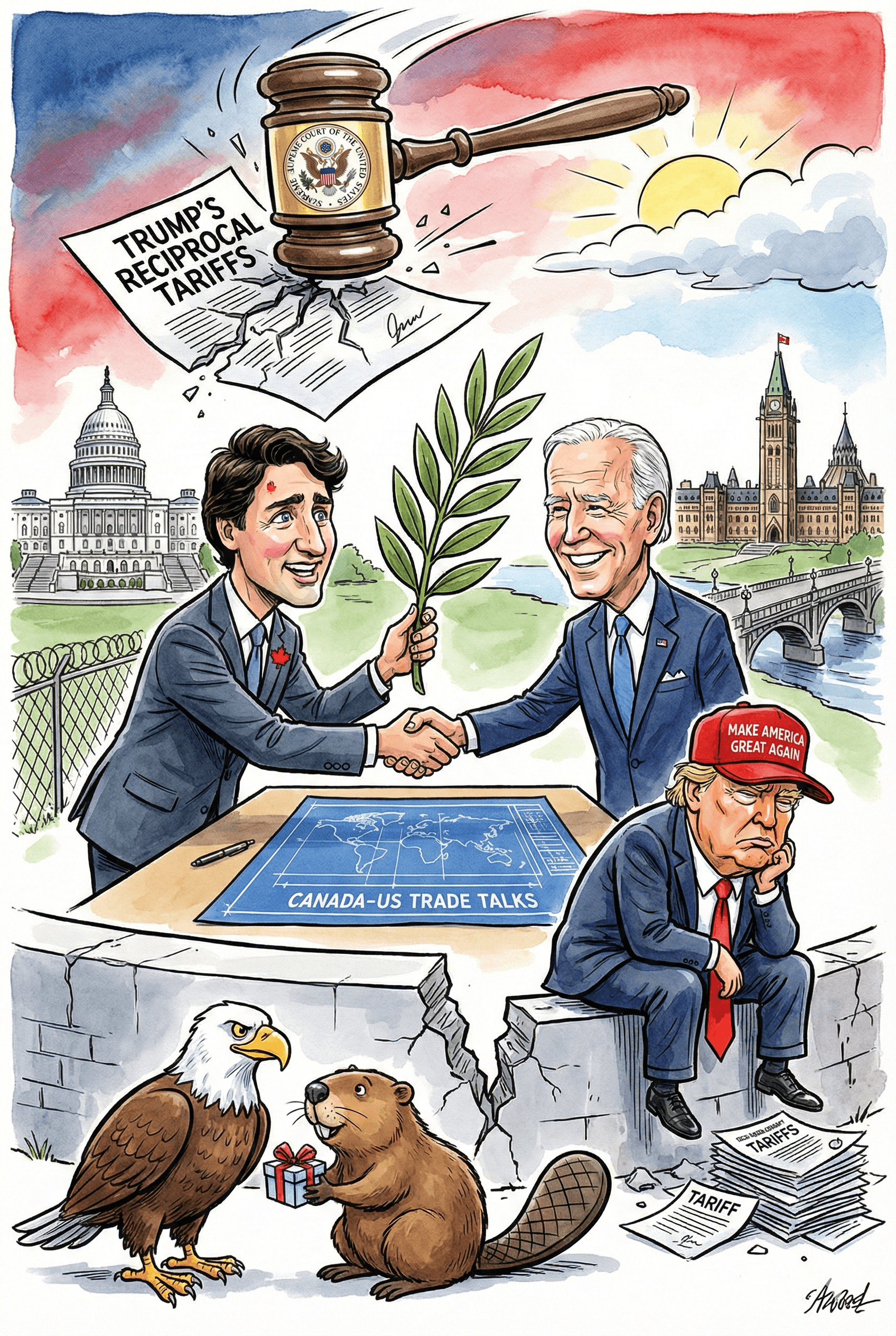
The geopolitical and economic landscape of North America experienced a seismic shift on February 20, 2026, when the US Supreme Court struck down President Donald Trump's sweeping global tariffs. The landmark 6-3 ruling invalidated the administration's "Liberation Day" levies, declaring that the White House had overstepped its executive authority by bypassing Congress.
With the overarching threat of immediate, economy-wide tariffs lifted, Canada is now strategically pivoting. Ottawa is eyeing renewed trade talks with Washington, aiming to replace crisis management with structured bilateral negotiations. As the dust settles on the US Supreme Court decision, global markets, trade negotiators, and multinational corporations are rushing to understand the implications of the ruling and what President Trump’s next move will be.
The Supreme Court Verdict: Striking Down Emergency Tariffs
The core of the legal battle, Learning Resources Inc. v. Trump, centered on the president’s use of the International Emergency Economic Powers Act (IEEPA) of 1977. President Trump invoked this emergency statute to levy sweeping "reciprocal tariffs" on almost every trading partner, citing persistent trade deficits and the influx of illicit drugs, such as fentanyl, as national emergencies.
In the majority opinion, Chief Justice John Roberts—joined by conservative Justices Neil Gorsuch and Amy Coney Barrett, alongside liberal Justices Sonia Sotomayor, Elena Kagan, and Ketanji Brown Jackson—ruled that the IEEPA does not grant the president the authority to impose tariffs. The court emphasized that the US Constitution explicitly vests the power of taxation, including tariffs, exclusively with Congress.
According to the US Supreme Court, interpreting the IEEPA’s language of "regulating importation" to include the power to levy limitless tariffs would violate the separation of powers. Justices Brett Kavanaugh, Clarence Thomas, and Samuel Alito dissented, arguing that the statute was designed to give the executive branch broad flexibility to respond to foreign threats. Ultimately, the ruling legally dismantles the foundation of Trump's reciprocal tariffs, resetting the baseline for US trade relations.
Trump’s Defiant Response and the Section 122 Pivot
President Trump reacted swiftly and fiercely to the verdict. In a White House press conference, he labeled the US Supreme Court's decision a "disgrace" and expressed deep disappointment in the conservative justices who ruled against his administration.
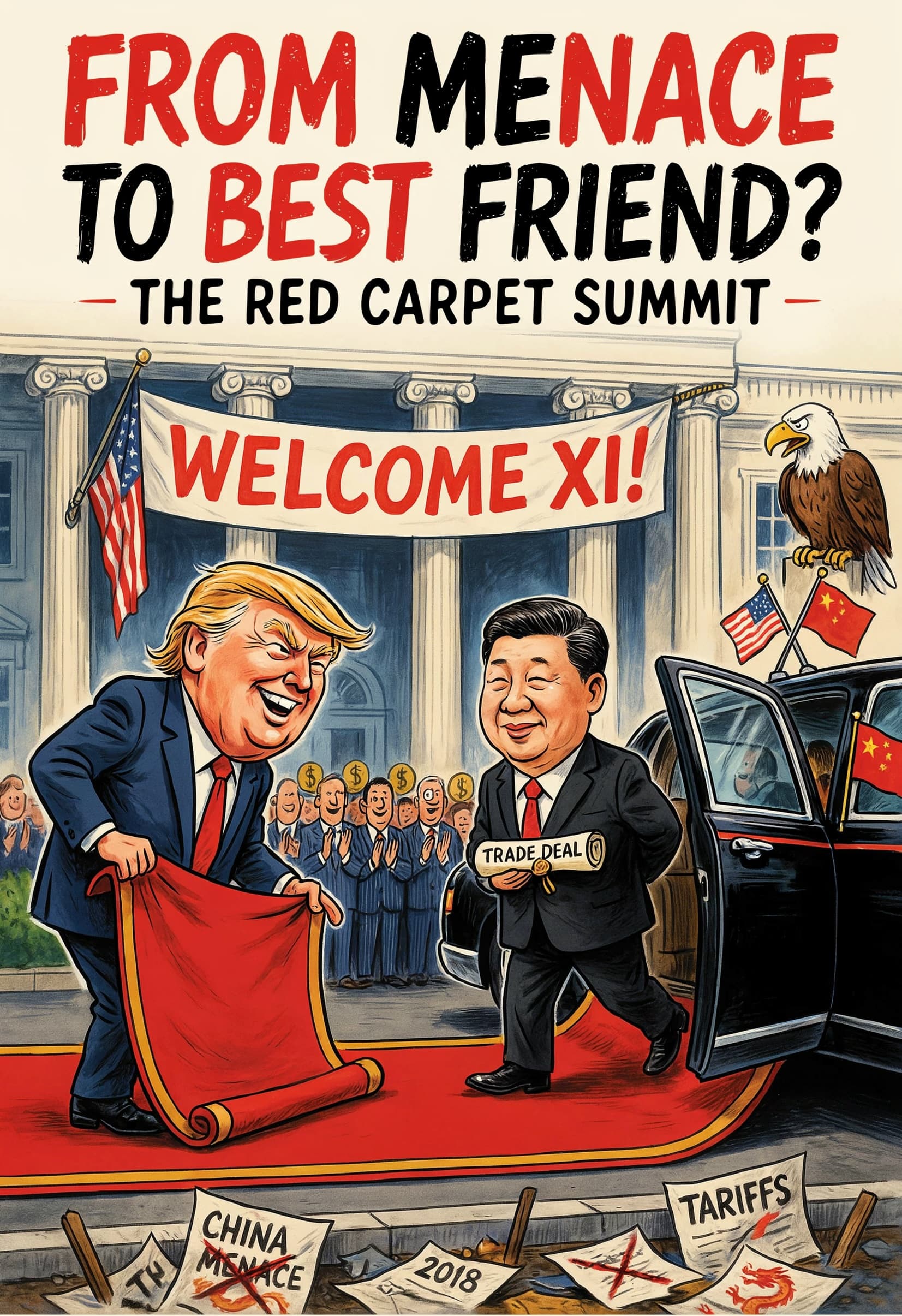
However, the dismantling of the IEEPA tariffs does not mark the end of the president's protectionist trade agenda. Hours after the ruling, Trump signed an executive order invoking Section 122 of the Trade Act of 1974. This rarely used provision allows the president to impose a temporary global import surcharge of up to 15% for a maximum of 150 days to address fundamental international balance-of-payments issues. Trump immediately implemented a 10% global tariff under this statute.
While Section 122 provides a stopgap, it lacks the permanent, unconstrained power of the IEEPA. Any extension beyond 150 days requires congressional approval, a significant hurdle in an election year. The administration has also signaled its intent to launch extensive investigations under Section 301 of the Trade Act, which targets unfair trade practices, ensuring that global trade remains under the specter of executive action.
What This Means for Canada: A Shift in Trade Negotiations
For Canada, the US Supreme Court ruling is a pivotal victory, fundamentally altering the dynamics of cross-border commerce. Prior to the verdict, Ottawa was operating under the constant threat of blanket tariffs—including a proposed 35% penalty tied to the fentanyl crisis. The removal of the IEEPA threat changes the power dynamics as Canada eyes trade talks with Washington.
Canadian officials, including Minister for Canada-US Trade Dominic LeBlanc, have welcomed the ruling, noting that it validates Ottawa's long-held position that the emergency tariffs were unjustified. Provincial leaders, such as Ontario Premier Doug Ford, hailed the decision as a crucial win for North American economic stability, while Conservative Leader Pierre Poilievre called it a step in the right direction.
Despite the optimism, Canadian trade negotiators remain vigilant. The ruling does not affect targeted duties imposed under Section 232 of the Trade Expansion Act, meaning tariffs on Canadian steel, aluminum, softwood lumber, and certain automotive sectors remain active. However, by forcing Washington to rely on structured statutes like Section 301, the US Supreme Court has effectively slowed the pace of tariff escalation. This affords Canada a vital window to engage in data-driven, strategic trade talks rather than negotiating under the immediate threat of arbitrary economic penalties.
As both nations prepare for the upcoming joint review of the Canada-United States-Mexico Agreement (CUSMA), Ottawa’s strategy will likely focus on leveraging deeply integrated cross-border supply chains to argue against further disruptions. The goal is to solidify exemptions and ensure that North American trade remains robust.
Global Economic Implications and the Battle for Refunds
Beyond North America, the US Supreme Court's ruling on Trump's reciprocal tariffs has sent shockwaves through the global economy. Trading partners from the European Union to Asia are reassessing their strategies. Nations like India, which had recently negotiated an interim deal to lower their tariff burden to 18%, will now see their baseline rates temporarily drop back to standard levels before the new Section 122 surcharges apply.
Domestically, the ruling has triggered a monumental legal and logistical headache regarding tariff refunds. Estimates from economic analysts suggest that the US Treasury collected upwards of $130 billion to $160 billion in 2025 alone under the invalidated IEEPA tariffs. Major US retailers, manufacturers, and trade associations are already demanding swift reimbursements, arguing that the unlawful levies suppressed hiring, derailed expansion plans, and fueled inflation by passing costs onto American consumers.
However, the Supreme Court did not provide a framework for these refunds, leaving the matter to the US Court of International Trade. Legal experts warn that the refund process could take years of complex litigation, meaning businesses shouldn't expect immediate financial relief.
Conclusion: A New Landscape for North American Trade
The US Supreme Court’s decision to strike down Trump's reciprocal tariffs marks a historic check on executive power and a turning point in global trade policy. While President Trump is aggressively pursuing alternative legal avenues to maintain his protectionist agenda, the era of instantaneous, unbounded emergency tariffs has ended.
As Canada eyes trade talks with Washington, the playing field has been marginally leveled. Ottawa now has the opportunity to navigate the upcoming CUSMA review with renewed leverage, prioritizing the stability of North American supply chains. The coming months will be critical as both nations navigate this volatile, newly defined trade environment.
#News #Geopolitics #GlobalEconomy #USPolitics #CanadaTrade #SupremeCourt #Tariffs #CUSMA #TradeWar #SupplyChain #Macroeconomics #Diplomacy