What to Expect from Canada PM Mark Carney’s First India Visit
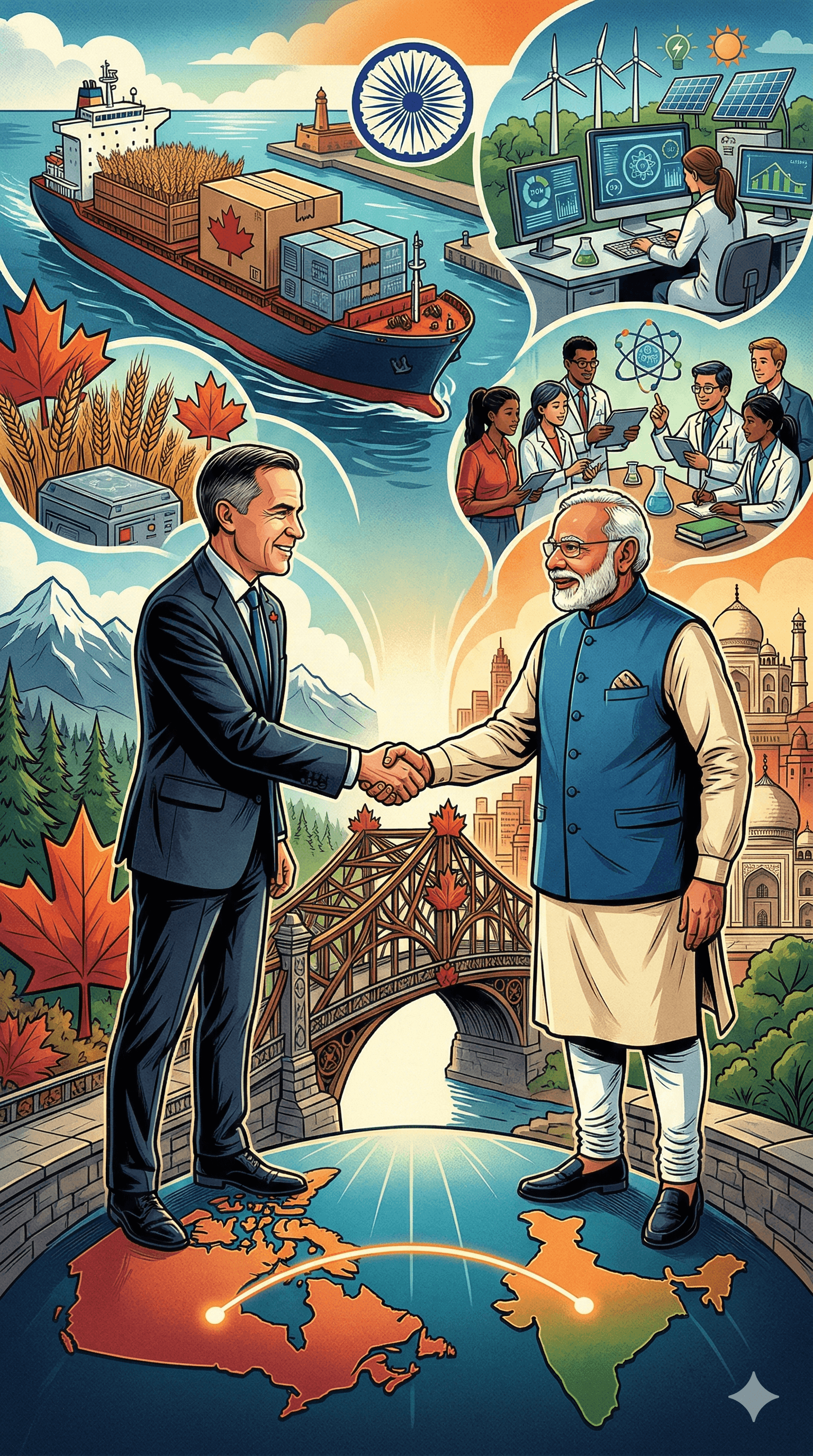
Canadian Prime Minister Mark Carney arrived in Mumbai on Friday, February 27, 2026, marking the beginning of a highly anticipated four-day official visit to India. As his first bilateral trip to New Delhi since taking office in March 2025, the visit is being closely watched by global markets, diplomats, and the international business community. The mission aims to decisively turn the page on years of fractured diplomatic relations and establish a renewed, ambitious partnership centered on trade, clean energy, and advanced technology.
At the invitation of Indian Prime Minister Narendra Modi, Carney’s itinerary takes him from the bustling financial boardrooms of Mumbai to the diplomatic corridors of New Delhi. Joined by a high-level delegation, the Canadian Prime Minister's visit signals a crucial pivot in Ottawa’s foreign policy as it seeks to diversify its economic partnerships and strengthen its strategic foothold in the Indo-Pacific region.
A Strategic Reboot: Moving Past the Diplomatic Row
For the past few years, India-Canada relations have been defined by deep strain. Ties plummeted to a historic low in June 2023 following the killing of Khalistani separatist Hardeep Singh Nijjar in British Columbia. The ensuing allegations made by former Canadian Prime Minister Justin Trudeau, which New Delhi vehemently denied, triggered a prolonged diplomatic standoff marked by the mutual expulsion of diplomats.
Mark Carney’s India visit represents a conscious effort by both nations to reset the narrative. Built on foundational meetings held at the G20 Summits in Kananaskis and Johannesburg in 2025, the current administration in Ottawa has prioritized a constructive and balanced partnership grounded in mutual respect. While underlying political sensitivities remain, the focus has shifted firmly back to shared economic goals and strategic alignment.
Economic Agenda: CEPA Negotiations, Energy, and AI Partnerships
The cornerstone of PM Carney’s visit is the reinvigoration of bilateral trade. A primary objective is to fast-track the formal relaunch of the Comprehensive Economic Partnership Agreement (CEPA). Negotiations for this sweeping trade pact had previously stalled amid the diplomatic fallout, but both nations are now eager to finalize the agreement within the next 12 months.
Canada and India currently maintain a robust commercial relationship, with two-way merchandise and services trade reaching $30.8 billion in 2024. Through CEPA, Ottawa aims to more than double this figure to $70 billion by 2030. Key focus areas of the economic agenda include:
Energy Security and Critical Minerals: Discussions are actively underway for a massive uranium supply agreement, reportedly worth 2.8 billion Canadian dollars over ten years, to support India's rapidly expanding nuclear energy sector. Furthermore, the two countries are exploring deep collaborations in Liquefied Natural Gas (LNG), heavy crude oil, and the secure supply chain of critical minerals required for the global clean energy transition.
Technology and Artificial Intelligence: Recognizing India’s status as a global technology powerhouse, Carney is prioritizing partnerships in Artificial Intelligence (AI) and innovation to foster job creation in both nations.
Investment and Pension Funds: Over 600 Canadian companies already operate in India, and Canadian pension funds have invested nearly $100 billion in Indian infrastructure, real estate, and logistics. Carney’s meetings are specifically targeted at unlocking further cross-border capital flow.
The "Trump Accelerator" and Indo-Pacific Strategy
The timing of Mark Carney's India visit is not purely bilateral; it is heavily influenced by broader macroeconomic currents. Geopolitical analysts point to the "Trump accelerator" effect. With the Trump administration in the United States leaning heavily into protectionist trade policies and tariffs, both Canada and India are actively seeking to decrease their overreliance on American markets.
"In a more uncertain world, Canada is focused on what we can control," Carney stated ahead of his trip. "We are diversifying our trade and attracting massive new investment to create new opportunities for our workers and businesses."
This strategic diversification is the driving force behind Carney’s broader Indo-Pacific tour. Following his engagements in India, the Canadian Prime Minister will travel to Australia to address the parliament and deepen defense ties with PM Anthony Albanese, before heading to Japan for talks with PM Takaichi Sanae on clean energy and maritime security.
Itinerary Highlights: From Mumbai Boardrooms to New Delhi Diplomacy
Prime Minister Carney, accompanied by his wife Diana Fox Carney, purposefully began his trip in India's financial capital to set an economic tone before moving to diplomatic affairs.
Mumbai (February 27–28): The first leg of the trip has been heavily focused on commerce. Carney is engaging in high-level roundtables with Indian and Canadian CEOs, financial experts, and educators. His goal is to pitch Canada as a premier destination for Indian capital while helping Canadian businesses navigate the world's fastest-growing major economy.
New Delhi (March 1–2): Carney arrives in the national capital on Sunday evening. The diplomatic core of the trip takes place on Monday, March 2, beginning with a meeting with External Affairs Minister Dr. S. Jaishankar.
Hyderabad House Talks: Later on Monday, PM Carney and PM Modi will hold extensive delegation-level talks at Hyderabad House. The leaders are expected to exchange Memorandums of Understanding (MoUs) outlining new frameworks for defense, agriculture, and critical mineral cooperation.
CEOs Forum: The visit will culminate with both Prime Ministers attending the India-Canada CEOs Forum at Bharat Mandapam, a platform designed to align government policy directly with private-sector growth.
Outlook: What This Means for Global Markets
The successful execution of Mark Carney's India visit would mark one of the most significant geopolitical realignments of 2026. If the CEPA negotiations advance as planned, global markets can expect lowered tariffs and expanded market access between a G7 economy and the world’s most populous nation. More importantly, a formalized energy and critical minerals pact will strengthen global supply chains, reducing Western reliance on concentrated supply markets.
While the complexities of diaspora politics and historical grievances will require ongoing, delicate management, the sheer economic gravity of the India-Canada relationship is pulling both nations back to the negotiating table. For Canadian workers and Indian industries alike, the renewed partnership promises to unlock a decade of collaborative growth.
#News #Geopolitics #IndiaCanadaTies #MarkCarney #NarendraModi #Economy #CEPA #GlobalTrade #IndoPacific #EnergySecurity #ArtificialIntelligence #Diplomacy