Ceuta faces its biggest migration emergency since 2021
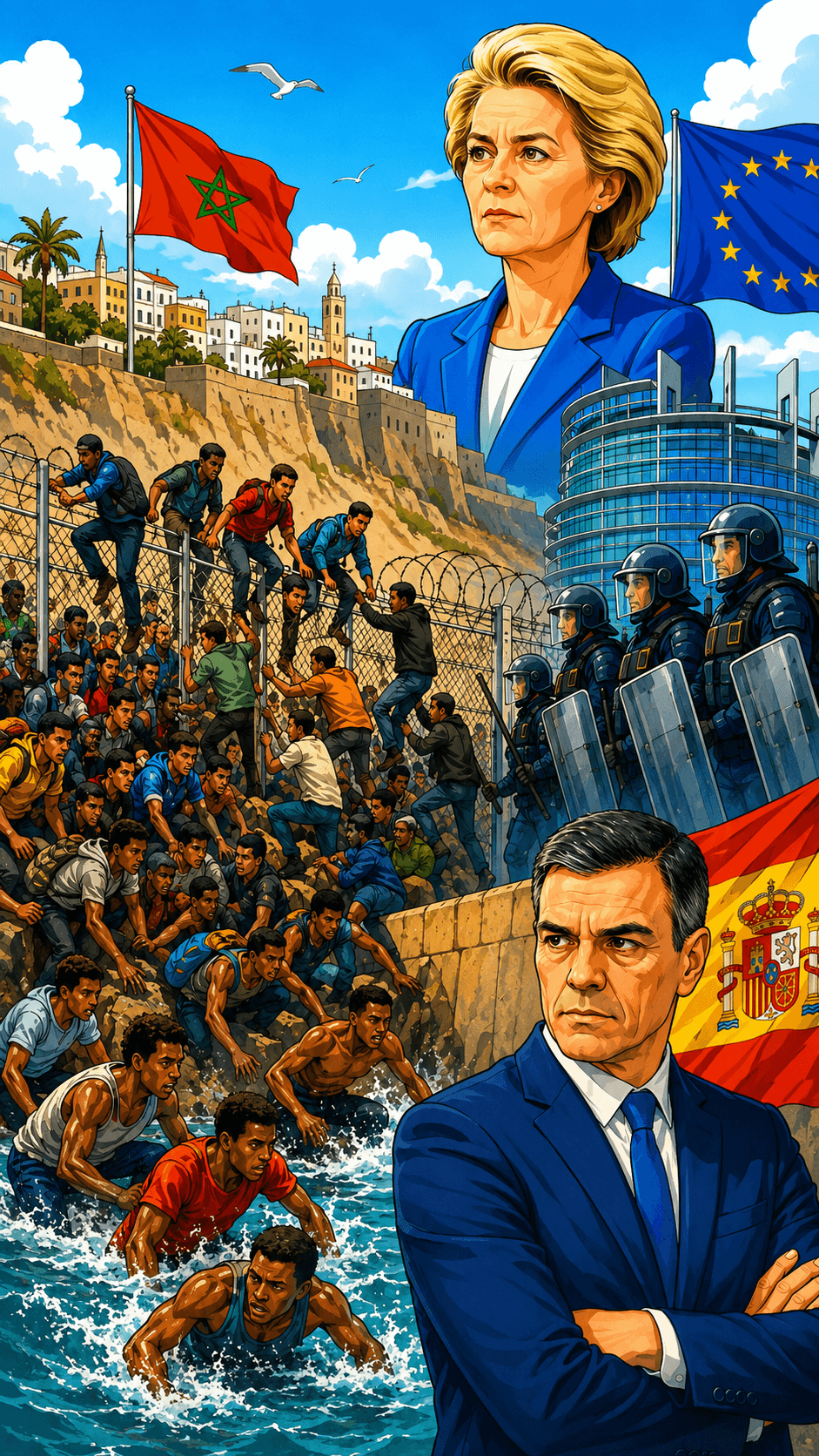
Spain's North African enclave of Ceuta has been thrust back into the center of Europe's migration debate after an extraordinary surge of people crossed from neighboring Morocco in late July 2026. The sudden influx overwhelmed local authorities, reignited political tensions between Madrid and Rabat, and prompted renewed discussions about European Union border security.
While comparisons with the May 2021 Ceuta crisis are inevitable, experts note that the latest episode is significantly larger in terms of the number of arrivals into the enclave itself. However, it should not be confused with the broader 2015 European refugee crisis, which remains the largest migration emergency the EU has experienced in modern history.
What happened in Ceuta?
Ceuta is a Spanish autonomous city on the northern coast of Africa, sharing the European Union's only land border with Morocco alongside Melilla. Because it is Spanish territory, crossing into Ceuta means entering EU territory, although moving onward into mainland Spain remains tightly controlled.
During the latest crisis, estimates indicated that roughly 50,000 to 60,000 migrants entered Ceuta within days by swimming around coastal barriers or climbing border fencing. The city, which has a permanent population of roughly 80,000 residents, quickly became overwhelmed by the scale of the arrivals. Reports also indicated dozens of deaths during dangerous sea crossings.
Spanish authorities deployed additional police and military personnel while emergency shelters rapidly exceeded capacity. Thousands of migrants later voluntarily returned to Morocco, reducing immediate pressure on local facilities, although the humanitarian and political consequences remain significant.
How does this compare with the 2021 Ceuta crisis?
The comparison with May 2021 is central to understanding the current situation.
In 2021, approximately 12,000 people crossed into Ceuta over roughly two days after Moroccan border controls appeared to ease during a diplomatic dispute involving Spain's decision to allow Polisario Front leader Brahim Ghali to receive medical treatment.
The 2026 episode is considerably larger by raw numbers, with estimates four to five times higher than the 2021 surge. It has therefore become the largest single migration incident ever recorded in Ceuta.
However, analysts caution that the circumstances are not identical. Authorities and researchers continue to investigate what triggered the latest crossings. Several possible factors have been discussed publicly, including misinformation spread by smuggling networks, confusion over a Spanish court ruling concerning sea arrivals, worsening economic conditions, and broader diplomatic tensions between Spain and Morocco. No single explanation has been officially confirmed.
Is this the largest migration crisis the EU has ever seen?
The answer depends on how the question is framed.
For Ceuta, the latest incident appears to be the largest migration event in the enclave's history.
For the European Union as a whole, however, the answer is no.
The EU's largest migration crisis remains the 2015-2016 refugee crisis, when more than one million refugees and migrants reached Europe, primarily through Greece and Italy, fleeing conflicts in Syria, Afghanistan, Iraq and elsewhere. Those arrivals fundamentally reshaped EU asylum policy and border management.
Likewise, other recent migration emergencies—including the Belarus-EU border crisis of 2021 and sustained Mediterranean migration flows—have affected multiple member states over longer periods.
Therefore, while the Ceuta surge is unprecedented for that specific border crossing, it does not surpass the overall scale of previous EU-wide migration crises.
Spain, Morocco and the political dimension
Migration has long been intertwined with Spain-Morocco relations.
Although Moroccan authorities deny deliberately encouraging irregular crossings, speculation has resurfaced because a similar diplomatic dispute preceded the 2021 crisis. Some observers have questioned whether broader geopolitical disagreements contributed to the latest events, but officials have not presented conclusive evidence supporting that claim.
Spanish Prime Minister Pedro Sánchez has emphasized restoring border control while coordinating closely with Morocco and European institutions. Madrid has also sought additional EU assistance to manage humanitarian needs and strengthen external border management.
Meanwhile, European leaders have renewed discussions about migration policy, asylum reform, border surveillance and cooperation with neighboring countries.
Humanitarian concerns remain central
Beyond politics, the crisis has highlighted the human cost of irregular migration.
Many of those attempting the crossing reportedly undertook dangerous sea journeys or climbed heavily fortified border fences. Rescue operations were launched while local reception facilities struggled to accommodate large numbers of arrivals.
Children and unaccompanied minors have become a particular concern, placing additional pressure on Ceuta's already limited protection system. Local officials have warned that shelters have been operating well beyond their intended capacity.
Humanitarian organizations continue to call for protection of vulnerable migrants while urging governments to address the economic and political drivers behind irregular migration.
What happens next?
The Ceuta migration crisis is likely to remain a major issue for Spain and the European Union.
In the short term, authorities are focused on restoring border management, processing arrivals and coordinating returns where legally appropriate. Longer term, the crisis may influence implementation of the EU's Migration and Asylum Pact, future cooperation with Morocco, and broader debates over external border security.
Although the latest surge represents the largest migration event ever experienced by Ceuta, it should be viewed within the broader history of European migration. The scale is exceptional for this border crossing, but it does not eclipse the continent-wide refugee crisis that transformed European migration policy a decade earlier.