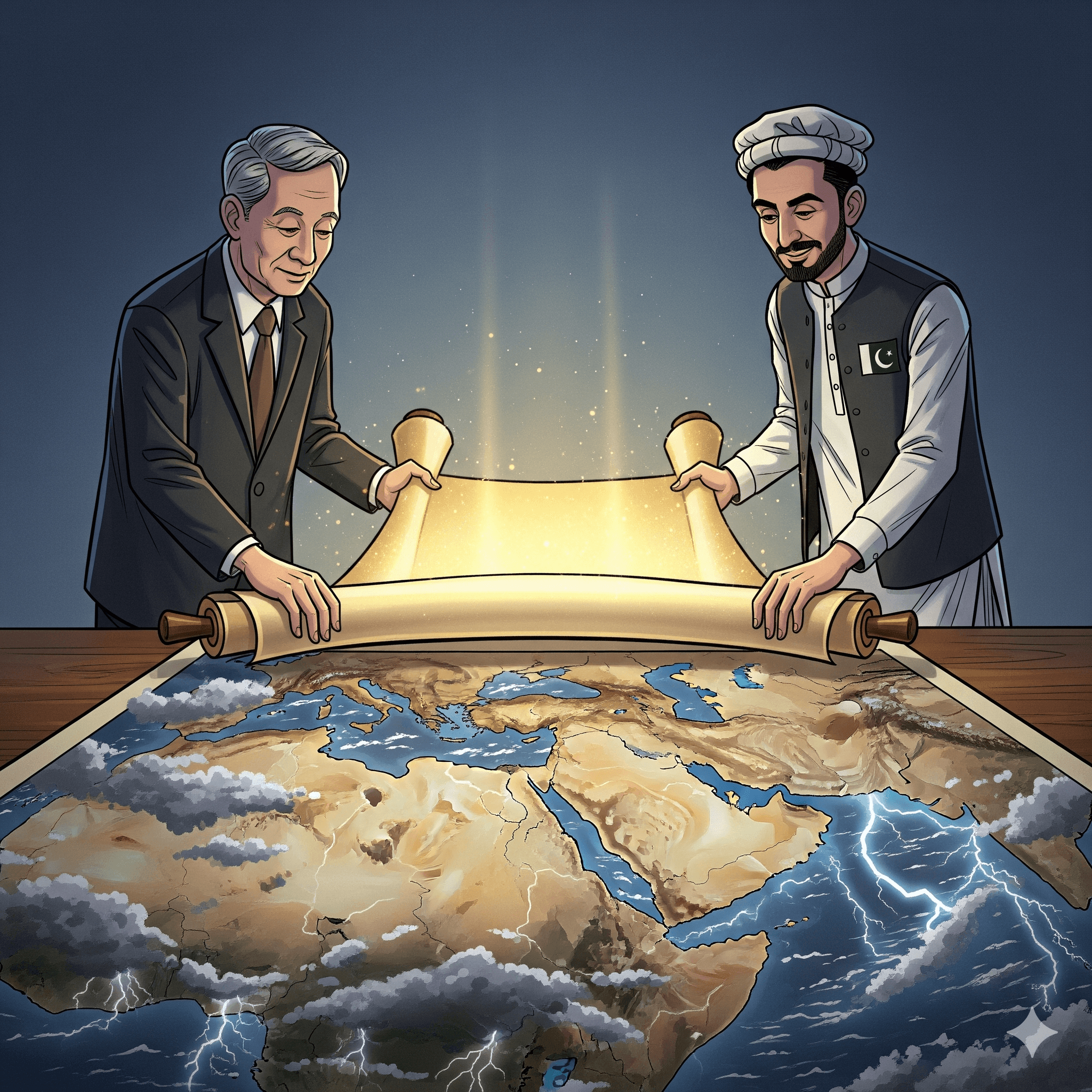
BEIJING — In a major diplomatic maneuver aimed at halting the escalating US-Israel war on Iran, China and Pakistan have jointly unveiled a five-point peace initiative designed to restore stability across the Gulf and the wider Middle East. The proposal, announced following high-level discussions in Beijing between Chinese Foreign Minister Wang Yi and Pakistan’s Deputy Prime Minister and Foreign Minister Ishaq Dar, underscores a growing strategic alignment between Islamabad and Beijing in navigating one of the globe's most volatile conflicts.
As hostilities threaten to plunge the entire region into a broader war, the joint initiative presents a structured diplomatic off-ramp. It arrives at a critical juncture, with global energy markets reeling and fears mounting over the security of international shipping lanes.
The Backdrop of the Peace Initiative
The context for this diplomatic push is a rapidly deteriorating regional security environment. Following intense military exchanges between US-Israeli forces and Iran that escalated significantly earlier this year, West Asia has been on a knife's edge. The fighting has sparked immense concern among neighboring Arab states and global powers alike, who fear that a prolonged war could irreparably damage the region's infrastructure and destabilize global economic systems.
Prior to his arrival in Beijing, Foreign Minister Dar hosted his counterparts from Saudi Arabia, Egypt, and Turkey for weekend talks in Islamabad. This quadrilateral coordination highlights a unified regional desire to halt the violence, setting a multilateral stage for the China-Pakistan proposal.
The Core Elements of the Five-Point Proposal
The peace plan negotiated in Beijing establishes a framework for immediate de-escalation, structured around five central pillars:
1. Immediate Cessation of Hostilities At the forefront of the initiative is an urgent call for all involved parties to exercise maximum restraint and enact an immediate ceasefire. The proposal warns against any unilateral actions that could expand the current military engagements into an uncontrollable regional conflagration.
2. Early Commencement of Peace Talks Emphasizing that dialogue and diplomacy are "the only viable option to resolve conflicts," Beijing and Islamabad are pushing for the rapid initiation of structured negotiations. The framework insists that any resolution must respect the sovereignty, territorial integrity, and national independence of Iran and the Gulf states, rejecting coercion in favor of mutual consent.
3. Protection of Civilians and Critical Infrastructure With an eye on international humanitarian law, the plan demands a strict halt to attacks on civilian populations and non-military targets. Specifically, it highlights the need to protect energy grids, desalination plants, and peaceful nuclear infrastructure. This point directly addresses the widespread devastation typical of modern warfare and aims to prevent long-term humanitarian and environmental catastrophes.
4. Securing the Strait of Hormuz Perhaps the most economically significant point of the proposal deals with global shipping. The plan calls for ensuring the early and safe passage of civilian and commercial ships through the Strait of Hormuz. Notably, this point appears to reject recent moves by the Iranian parliament to monetize the waterway by collecting transit tolls from foreign vessels, advocating instead for the "normal passage" governed by international norms.
5. Multilateralism Under the UN Charter The final pillar calls for the establishment of a comprehensive peace framework rooted in multilateralism and the primacy of the United Nations Charter. The statement issued by the foreign ministries emphasized that regional security should be safeguarded through international law. This language serves as a pointed critique of cross-border military interventions and reinforces the principle of collective security, positioning China and Pakistan as defenders of international norms.
Pakistan’s Strategic Role as Regional Mediator
The rollout of this peace plan highlights Pakistan's increasingly prominent role in global crisis management. As a nation sharing a border with Iran and maintaining deep, "all-weather" strategic ties with China, Pakistan is uniquely positioned to act as a diplomatic conduit.
Recent reports indicate that Islamabad has been quietly facilitating indirect communication between Washington and Tehran, serving as a backchannel for structured message exchanges. By stepping into the mediator role, Pakistan aims to prevent the conflict from spilling over its own borders while simultaneously elevating its diplomatic standing on the world stage.
Chinese Foreign Minister Wang Yi has publicly backed Pakistan’s mediation efforts, stating that they are in the "common interests of all parties." Beijing’s endorsement not only lends immense geopolitical weight to Islamabad's initiatives but also signals China's preference for regional actors leading conflict resolution, backed by Chinese diplomatic capital.
Economic Repercussions and Maritime Security
The conflict's ripple effects on the global economy cannot be overstated, particularly concerning energy markets. The Strait of Hormuz is a vital global chokepoint through which a significant portion of the world's oil supply flows. Ongoing hostilities, compounded by Iran's attempts to establish a toll system for transiting vessels, have sparked severe anxieties regarding supply chain disruptions and skyrocketing energy prices.
By explicitly including the security of shipping lanes in their five-point plan, China and Pakistan are addressing a primary concern of the international community. China, as the world's second-largest economy and a top buyer of Middle Eastern oil, has a massive vested interest in keeping the Strait open and free from conflict-driven tariffs or blockades. The joint proposal’s emphasis on "normal passage" serves as a gentle but firm pushback against any attempts to restrict or tax international maritime trade in the Gulf.
Outlook and Diplomatic Impact
The unveiling of the five-point plan marks a definitive shift toward structured diplomacy in a landscape dominated by military confrontation. However, the path to implementation remains fraught with obstacles.
While Beijing and Islamabad have laid out a logical framework, success depends entirely on the willingness of the primary combatants to step back from the brink. The US and Israel have maintained hardline military postures, while Tehran has historically been skeptical of negotiations that do not address its core security concerns. Furthermore, Iran has previously pushed back against the narrative that Pakistan is mediating direct talks, emphasizing that it will not bow to demands via intermediaries.
Despite these hurdles, the China-Pakistan initiative serves as a crucial rallying point for nations advocating for a peaceful resolution. By presenting a united front, Beijing and Islamabad are putting pressure on the international community to prioritize diplomacy over destruction. Whether this diplomatic blueprint can alter the trajectory of the war remains to be seen, but it undeniably changes the diplomatic calculus in West Asia.
#WestAsia #MiddleEastConflict #ChinaDiplomacy #PakistanForeignPolicy #PeacePlan #StraitOfHormuz #Geopolitics #InternationalRelations #GlobalSecurity #Diplomacy #IranConflict #UNCharter