China launches new coast guard patrols east of Taiwan, sparking fierce condemnation from Taipei and alarm from Western powers, escalating regional maritime tensions.
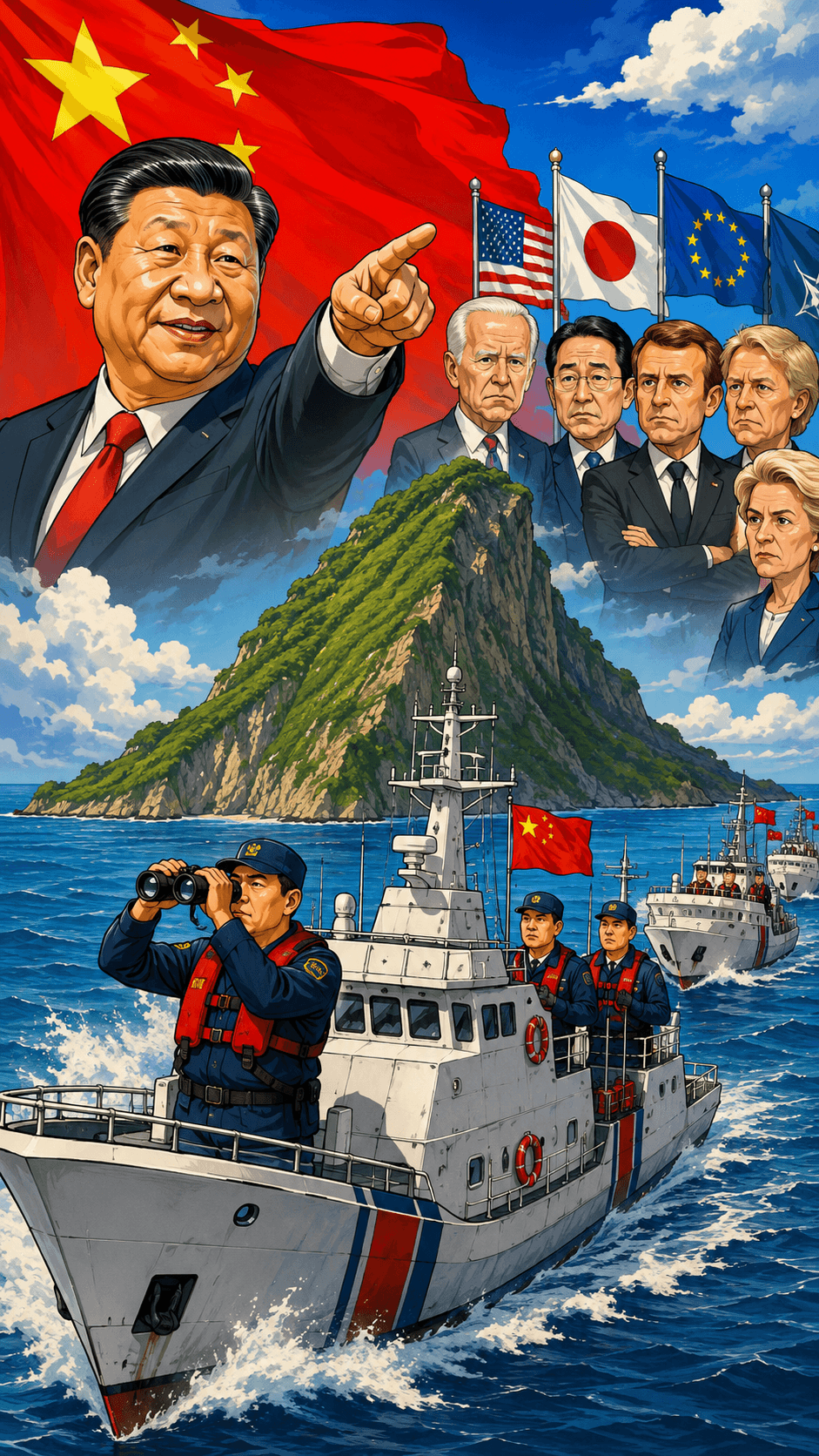
Taipei, Taiwan – China has deployed a new coast guard patrol to waters east of Taiwan, a move announced on Saturday, July 4, that has drawn immediate and sharp condemnation from Taipei and heightened concerns among international observers. This latest deployment marks the second such operation in roughly a month in an area Taiwan considers outside of Beijing's jurisdiction, further straining cross-strait relations and raising alarms about regional stability.
The patrols are part of Beijing's escalating efforts to assert its expansive territorial claims over Taiwan, which it views as a breakaway province to be reunited with the mainland, by force if necessary. Taiwan, a democratically governed island, firmly rejects Beijing's sovereignty claims and maintains that only its 23 million people can decide its future.
Escalating Tensions: A Pattern of Assertiveness
The Chinese Coast Guard (CCG) announced on Saturday that a new task force, led by the vessel Xiushan, would conduct "law enforcement patrols" east of Taiwan, replacing a previous formation that had been active in the area since June. China's state broadcaster CCTV quoted a coast guard spokesman stating that these patrols would be "continued and stepped up" to "firmly safeguard China's territorial sovereignty and maritime rights and interests."
Taiwan's government swiftly condemned the new patrol as an "illegal expansion of power in violation of international law and a disruption of regional stability." The Mainland Affairs Council, Taiwan's top body for China policy, issued a strong statement asserting, "The Chinese communists have no sovereignty or related rights in the waters east of Taiwan, have no jurisdiction over these waters, and none of its official vessels have any law-enforcement authority there."
Taiwan's Coast Guard confirmed it was tracking two Chinese ships approximately 54 nautical miles east of Hualien, a major air base on Taiwan's eastern coast, though they remained outside of Taiwan's restricted waters. Taipei has vowed to "continue to employ all necessary measures to forcefully expel Chinese vessels harassing our waters, steadfastly defend national sovereignty, and ensure the security of our maritime domains."
International Condemnation and Regional Alarm
The recent increase in Chinese Coast Guard activity east of Taiwan has not only drawn the ire of Taipei but also significant concern from several Western powers. In late June, the United States, Britain, France, and Germany collectively raised alarm over the Chinese patrols, stating that such actions "threaten regional stability and the freedom of navigation and safety of international shipping."
A U.S. State Department spokesperson described China's actions, including reported harassment of commercial ships, as "deeply destabilizing." The de facto British, French, and German embassies in Taipei issued a rare joint statement, reiterating their "opposition to any unilateral change to the status quo, particularly by threat or use of force or coercion." They underscored the importance of guaranteeing and respecting "all navigational rights and freedoms and the safety of seafarers and vessels."
Japan has also formally protested China's coast guard activities near Yonaguni Island, its westernmost inhabited island, which lies about 110 kilometers from Taiwan. Japanese Chief Cabinet Secretary Kihara Minoru called China's maritime activity "unacceptable" and pledged that Tokyo would respond "resolutely and calmly" to defend its territory and sovereign rights.
Beijing's Motives: Sovereignty Claims and Geopolitical Maneuvers
Beijing frames its coast guard operations as legitimate exercises of jurisdiction aimed at maintaining regional stability and maritime order. However, the specific timing of these recent patrols is linked to broader geopolitical developments. China stated that the first operation in June was a direct response to an announcement by Japan and the Philippines that they would begin formal talks on delimiting their maritime boundaries. Beijing views these discussions as involving "Chinese waters off Taiwan," thereby challenging its claims.
Observers interpret China's deployment of coast guard vessels as a strategy of "lawfare," aiming to establish a legal basis for its actions and expand its administrative control in contested maritime areas without resorting to direct military escalation. By using civilian maritime agencies for what it describes as "law enforcement," Beijing seeks to normalize its presence and claims in waters actively administered by Taiwan and crucial to international shipping. This approach also allows China to test the responses of Taiwan and other regional powers.
Taiwan's Firm Stance and Maritime Defense
In response to these incursions and potential boarding demands, Taiwan has adopted a more assertive stance. Taipei has explicitly instructed its commercial vessels operating in waters off its east coast to ignore any boarding or inspection requests from China's Coast Guard. Furthermore, Taiwan's Coast Guard has affirmed its readiness to intervene physically, if necessary, to prevent Chinese vessels from boarding Taiwanese ships, reinforcing its position that China has no jurisdiction in these areas.
This directive aims to reassure shipping operators and prevent Chinese enforcement activities from becoming an accepted practice, which would tacitly undermine Taiwan's sovereignty and freedom of navigation. Taiwan's Ocean Affairs Council emphasizes that freedom of navigation and maritime safety in the Taiwan Strait and surrounding waters are essential to global trade and that China's "maritime harassment" violates international law.
Implications for Regional Stability and Global Shipping
The ongoing increase in China's coast guard operations around Taiwan poses significant geopolitical, economic, and social implications. Regionally, the repeated maritime confrontations heighten tensions and increase the risk of miscalculation in one of the world's most strategically important waterways. The Bashi Channel, located between Taiwan and the Philippines, is a critical chokepoint connecting the South China Sea to the Pacific Ocean, essential for global trade and naval operations.
Economically, questioning commercial ships about their routes and destinations, as reported during recent Chinese patrols, raises concerns over the security and predictability of regional shipping. This could disrupt vital trade routes and impact global supply chains. Socially, the assertive actions contribute to anxiety among populations in Taiwan and neighboring countries, who view China's expanding presence as a direct threat to peace and stability.
Outlook Maritime tensions around Taiwan are expected to remain elevated as both Taipei and Beijing continue to assert competing jurisdictional claims without altering their fundamental positions on sovereignty. China is likely to continue its coast guard patrols and maritime law enforcement activities as part of its broader strategy to reinforce claims. Taiwan is anticipated to maintain a proactive coast guard presence and increase diplomatic efforts to garner international support for freedom of navigation and the peaceful resolution of disputes. Continued international monitoring and robust support for the existing rules-based international order will be crucial to prevent these maritime confrontations from escalating into a broader regional security crisis.
#China #Taiwan #CoastGuard #Geopolitics #IndoPacific #MaritimeSecurity #TaiwanStrait #InternationalLaw #RegionalTensions #FreedomOfNavigation