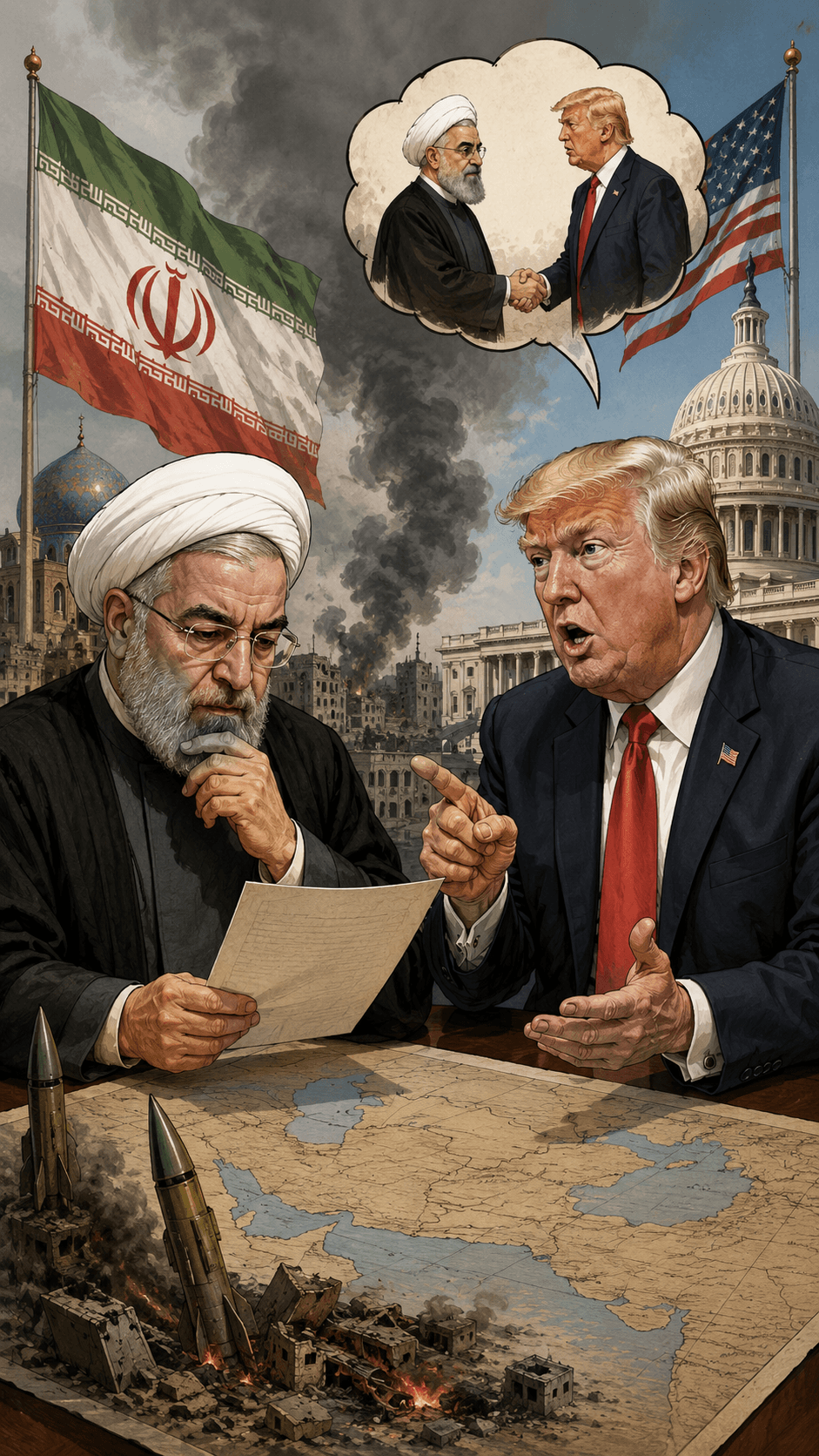
Iran confirms reviewing a US ceasefire proposal while denying direct talks, as former President Trump asserts Tehran is desperate for a deal to end the ongoing conflict. Mediated efforts continue to quell the escalating "Iran War" and stabilize global markets.
Tehran, Iran – March 26, 2026 – The Middle East finds itself on a precarious diplomatic tightrope as Iran acknowledges reviewing a United States ceasefire proposal, yet staunchly denies engaging in direct negotiations to halt the devastating "Iran War" now in its fourth week. Simultaneously, former U.S. President Donald Trump has asserted that Iranian leaders are "begging" and "desperate" to secure a deal, painting a contradictory picture of the high-stakes diplomatic maneuvers aimed at de-escalating the region's most recent and destructive conflict.
This intricate diplomatic dance unfolds against a backdrop of intense military confrontation, unprecedented economic disruption, and significant geopolitical shifts following the U.S. and Israeli-led offensive launched on February 28, 2026. The conflict has claimed thousands of lives, including prominent Iranian figures, and sent shockwaves through global energy markets, underscoring the urgency of the ongoing, albeit indirect, diplomatic efforts.
The Genesis of a New Conflict: The 2026 Iran War
The current "Iran War" erupted on February 28, 2026, with a large-scale joint military operation by the United States and Israel. Codenamed "Operation Epic Fury" by the U.S. and "Operation Roaring Lion" by Israel, the stated objectives of the offensive were to dismantle Iran's ballistic missile program, prevent the acquisition of nuclear weapons, and, implicitly, to bring about regime change in Tehran. This military action followed years of heightened tensions, exacerbated by the 2018 U.S. withdrawal from the Joint Comprehensive Plan of Action (JCPOA), commonly known as the Iran nuclear deal, and the subsequent "maximum pressure" campaign initiated by the Trump administration.
The war quickly escalated, leading to widespread destruction and significant casualties. Tragically, Iran's long-serving Supreme Leader, Ayatollah Ali Khamenei, was killed in an Israeli strike on the first day of the conflict, with his son, Mojtaba, succeeding him but subsequently being wounded in further attacks. Iran retaliated with ballistic missile and drone strikes against Israel and U.S. military bases across the Gulf states, further broadening the conflict's scope. A critical development was Iran's announcement of the complete closure of the Strait of Hormuz to shipping, a vital global chokepoint for oil and gas, triggering severe worldwide fuel shortages and market turmoil.
Conflicting Narratives: Reviewing Plans vs. Begging for Deals
In this volatile atmosphere, a U.S. ceasefire proposal, a 15-point plan, was reportedly transmitted to Tehran through intermediaries, primarily Pakistan. This proposal reportedly demanded sweeping concessions from Iran, including the dismantling of its nuclear program, significant curbs on its missile capabilities, a halt to funding for regional proxy groups, and an effective relinquishment of control over the strategically vital Strait of Hormuz. Sanctions relief was understood to be part of the package in exchange for these concessions.
Iranian Foreign Minister Abbas Araghchi confirmed that Tehran was reviewing the U.S. proposal, but unequivocally denied any direct negotiations or dialogue with Washington. "Messages being conveyed through our friendly countries and us responding by stating our positions or issuing the necessary warnings is not called negotiation or dialogue," Araghchi stated in a televised interview. "At present, our policy is to continue resistance and defend the country, and we have no intention of negotiating." Iran formally rejected the U.S. plan as "unfair" and designed solely to serve American interests.
In response, Iran put forth its own five-point counter-proposal. This included demands for an immediate halt to the killings of Iranian officials, guarantees against any future military aggression, reparations for the ongoing conflict, a cessation of hostilities across all fronts, and the recognition of Iran's sovereignty over the Strait of Hormuz. Tehran made it clear that it would end the war on its own terms and when its conditions were met.
Meanwhile, former U.S. President Donald Trump, a prominent figure in the ongoing political landscape, offered a starkly different interpretation of the situation. He repeatedly claimed that Iranian leaders were "negotiating, by the way, and they want to make a deal so badly, but they're afraid to say it because they will be killed by their own people. They're also afraid they'll be killed by us." Trump's comments, often made via social media, suggested Iran was "militarily obliterated, with zero chance of a comeback" and was actively "begging" for a resolution. He later dismissed Iran's five-point counter-proposal as "TOTALLY UNACCEPTABLE!"
The Role of Intermediaries and Global Fallout
The complex diplomatic communication channels highlight the deep mistrust between Washington and Tehran, which have had no formal diplomatic relations since 1980. Countries like Pakistan, Qatar, Oman, China, Turkey, and Egypt have played crucial roles as intermediaries, facilitating the exchange of proposals and counter-proposals in an attempt to bridge the vast chasm between the two adversaries.
The humanitarian and economic toll of the conflict has been severe and widespread. Beyond the tragic loss of life, the war has triggered significant fuel shortages globally, disrupted international shipping, and caused immense volatility in energy markets. The Iranian blockade of the Strait of Hormuz, through which a fifth of the world's oil transits, has particularly rattled the global economy, making the reopening of this waterway a critical point in any ceasefire discussions.
Recent Developments: An Interim Memorandum of Understanding
By mid-June 2026, intensive diplomatic efforts by regional mediators culminated in a significant, albeit fragile, breakthrough. A Memorandum of Understanding (MOU) was reached, described not as a final peace treaty, but as a framework for de-escalation and further negotiations. This MOU aims to extend the existing ceasefire by 60 days, providing a crucial window to resolve highly contentious issues.
President Trump declared the "Deal with the Islamic Republic of Iran is now complete" on his social media, announcing the reopening of the Strait of Hormuz. The MOU reportedly addresses the reopening of the Strait, the disposition of Iran's nuclear infrastructure and stockpiled enriched uranium, and the timing of U.S. sanctions relief. Iranian media, however, presented the agreement as a victory for Tehran, suggesting it would entail the release of $24 billion in frozen Iranian assets, with potentially an additional $300 billion for "reconstruction." U.S. officials have denied immediate sanctions relief, stating it would only occur after Iran complies with its obligations.
Crucially, the MOU includes a clause, insisted upon by Iran, applying the ceasefire to "all regional fronts, including Lebanon." This has created ambiguity, with Iran interpreting it as requiring an Israeli withdrawal from southern Lebanon, while Israeli leaders have shown no intent to ease military pressure on Hezbollah, raising concerns about potential spoilers to the fragile accord.
Outlook: A Fragile Path Forward
The path towards a comprehensive and lasting peace remains fraught with challenges. The deep-seated distrust between Washington and Tehran, coupled with varying interpretations of the interim MOU and the ongoing regional complexities involving Israel and various proxy groups, underscore the fragility of the current diplomatic efforts. The 60-day negotiation period established by the MOU will be a critical test of whether the parties can move beyond an exchange of messages to genuine dialogue and a durable resolution. The stakes—regional stability, global energy security, and the humanitarian cost of prolonged conflict—could not be higher.