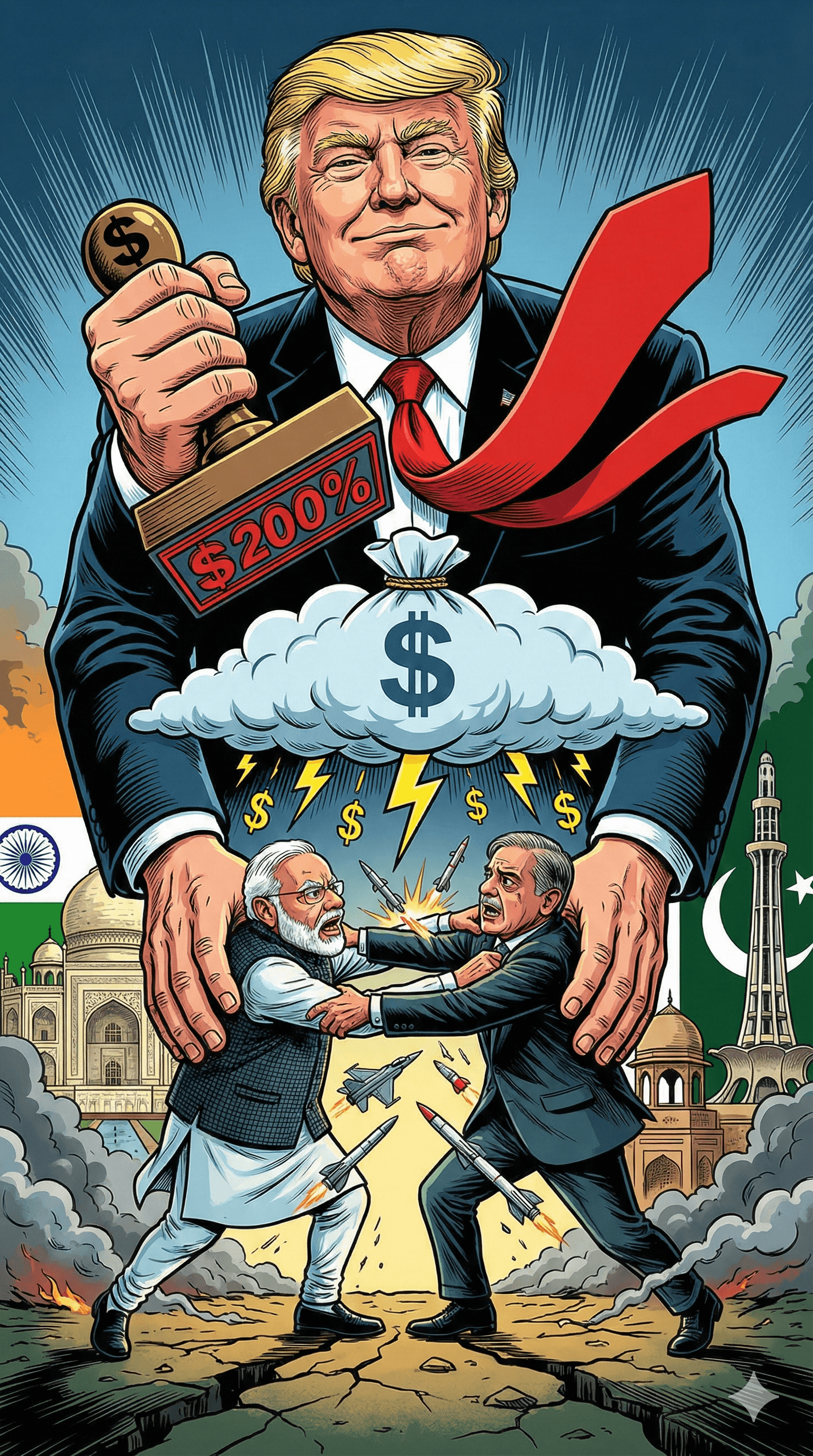
US President Donald Trump has once again commanded the global diplomatic spotlight by claiming that his direct threat to impose massive economic penalties forced India and Pakistan to stop fighting during a severe military standoff last year. Speaking at the inaugural meeting of his newly established "Board of Peace" in Washington, D.C., Trump asserted that a 200% tariff warning was the definitive catalyst that prevented a full-scale war between the two nuclear-armed neighbors in May 2025.
While the Trump administration promotes this narrative as a triumph of economic diplomacy, the claims have exposed a stark diplomatic divide. Pakistan has readily endorsed the U.S. President's version of events, whereas India continues to categorically reject any assertions of third-party mediation. This developing geopolitical story underscores the complex intersection of global trade policies and South Asian security dynamics.
The 200% Tariff Warning: What Donald Trump Claimed
During his address at the Board of Peace event—an initiative designed by Trump to run alongside traditional international bodies like the United Nations—the US President offered a detailed, albeit disputed, retrospective on the India-Pakistan border conflict.
According to Trump, the military confrontation had reached a highly volatile phase characterized by intense aerial combat. "That war was raging. Planes were being shot down. 11 jets were shot down. Very expensive jets," Trump stated, painting a dire picture of the military escalation.
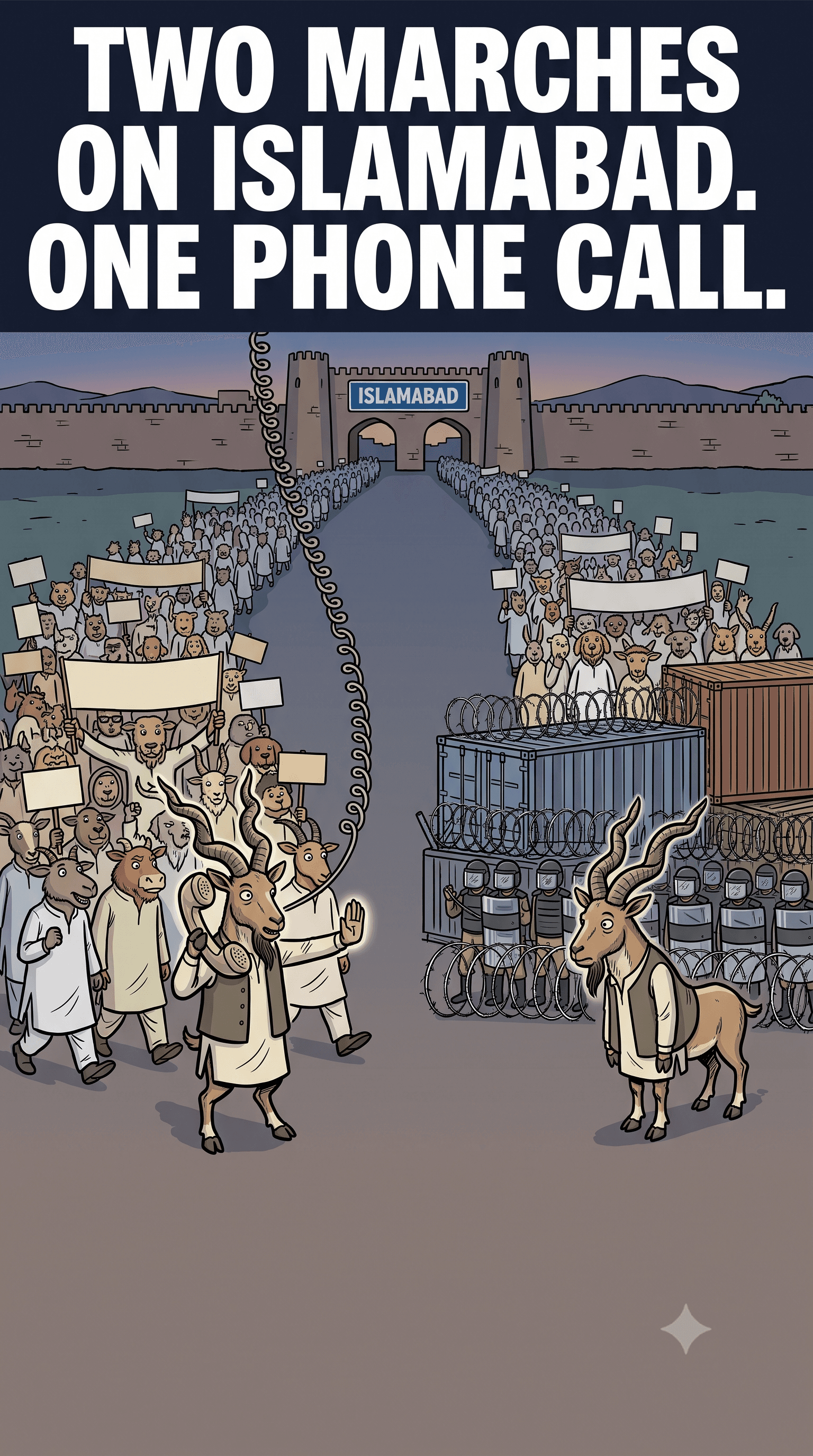
He claimed to have directly intervened by contacting the leadership of both nations. Relying heavily on America's economic leverage, Trump stated: "I called them and I said, listen, I'm not doing trade deals with you two guys if you don't settle this up. And all of a sudden, we worked out a deal. I said, if you fight, I am going to put 200 per cent tariffs on each of your countries."
Trump further explained his philosophy on using trade as a deterrent, noting that while both nations allegedly "wanted to fight," the prospect of severe financial ruin changed their calculus. "When it came to money, it's nothing like money. When it came to losing a lot of money, they said, I guess we don't want to fight," he declared. The President also highlighted his personal rapport with Indian Prime Minister Narendra Modi, stating he knew him "very well," while adding he got to know Pakistan "with a little trade."
Furthermore, Trump boasted that Pakistani Prime Minister Shehbaz Sharif, who was present at the Board of Peace event, had publicly credited him with saving "25 million lives" by stepping in at a critical moment of the India-Pakistan border conflict.
Background: Operation Sindoor and the May 2025 Conflict
To understand the weight of the 200% tariff warning, it is essential to examine the historical context of the military face-off Trump referenced. The tensions originally ignited following the Pahalgam terror attack on April 22, 2025, in which armed militants killed 26 civilians in the Indian region of Jammu and Kashmir. New Delhi attributed the devastating attack to terrorists operating from across the border.
In retaliation, India launched "Operation Sindoor" on May 7, 2025, targeting alleged terror infrastructure within Pakistan and Pakistan-occupied Kashmir (PoK). This triggered a severe four-day military escalation involving cross-border drone strikes, missile exchanges, and aerial combat along the Line of Control (LoC). The hostilities ultimately concluded on May 10, 2025, when a formal ceasefire was announced.
Diplomatic Divide: New Delhi’s Rejection vs. Islamabad’s Endorsement
The aftermath of the conflict has seen India and Pakistan take diametrically opposed stances regarding U.S. involvement, specifically concerning Trump's claims that a 200% tariff warning forced India and Pakistan to stop fighting.
India's Stance: Strict Bilateralism
India has consistently and categorically dismissed the claims of U.S. mediation. The Ministry of External Affairs (MEA) and Prime Minister Narendra Modi have clarified multiple times that no foreign power mediated the cessation of hostilities. New Delhi maintains that the de-escalation was achieved strictly through direct, bilateral negotiations between the Directors General of Military Operations (DGMOs) of the Indian and Pakistani militaries. India’s foreign policy has historically resisted third-party intervention in its disputes with Pakistan, adhering firmly to the principles of the 1972 Simla Agreement.
Pakistan's Stance: Embracing Mediation
Conversely, Islamabad has actively aligned itself with Trump's narrative. Pakistan immediately accepted the invitation to join the Trump-led Board of Peace. Furthermore, Pakistan's leadership, including Army Chief Asim Munir and Prime Minister Shehbaz Sharif, have not only validated Trump's claims of intervention but have previously nominated the U.S. President for a Nobel Peace Prize, citing his efforts in defusing the crisis and preventing a potential nuclear fallout.
The Economics of Peace: Trump's Tariff-Centered Diplomacy
Trump's repeated assertions regarding the India-Pakistan border conflict highlight a broader shift in his foreign policy doctrine: the weaponization of tariffs for geopolitical mediation. By threatening 200% tariffs, Trump aims to demonstrate that access to the lucrative U.S. market is contingent upon geopolitical stability.
Trump has frequently touted this approach, claiming to have settled multiple global conflicts "just based on tariffs." This transactional view of international relations leverages the U.S. economy as a primary diplomatic tool, substituting traditional diplomatic negotiations or military interventions with the threat of severe economic strangulation.
Impact and Outlook
The insistence by Donald Trump that a 200% tariff warning forced India and Pakistan to stop fighting will likely continue to create friction in U.S.-India diplomatic relations. While Washington remains a crucial strategic and trade partner for New Delhi, India's steadfast refusal to acknowledge external mediation signals its commitment to strategic autonomy.
Moving forward, global markets and international observers will closely monitor Trump's Board of Peace and his continued reliance on aggressive tariff threats. As the U.S. administration actively merges trade policy with national security and global peacemaking, countries around the world—including strategic allies like India—must navigate a landscape where economic penalties are increasingly used as the primary lever of American diplomatic power.
#DonaldTrump #IndiaPakistan #Geopolitics #Tariffs #OperationSindoor #USForeignPolicy #SouthAsia #WorldNews #BoardOfPeace #GlobalEconomy