On 26 October 2026, Egypt's House of Representatives, chaired by Speaker Hisham Badawi, authorised President Abdel Fattah el-Sisi to take "the necessary measures," in coordination with Riyadh, to defend Saudi Arabia's territory, sovereignty and holy sites against external aggression.
The vote was taken by roll call, behind closed doors. No tally has been published.
It followed a National Defence Council resolution of 18 October — Sisi chairs that council — and a request he made on 17 October. The Council pledged "all necessary and possible forms of support," without specifying its form, size or duration.
The constitutional detail matters. Article 152 of Egypt's constitution requires a two-thirds majority of the 596-member house — 398 MPs — before the army can be sent on a combat mission abroad. Parliament says that threshold was met. That is not the bar for sending aid. That is the bar for sending soldiers.
Two conditions are attached. Egypt acts only if Saudi Arabia asks, and no formal Saudi request has been announced. And Sisi has said any Egyptian action would be limited to protecting Saudi territory and borders — not attacking Yemen.
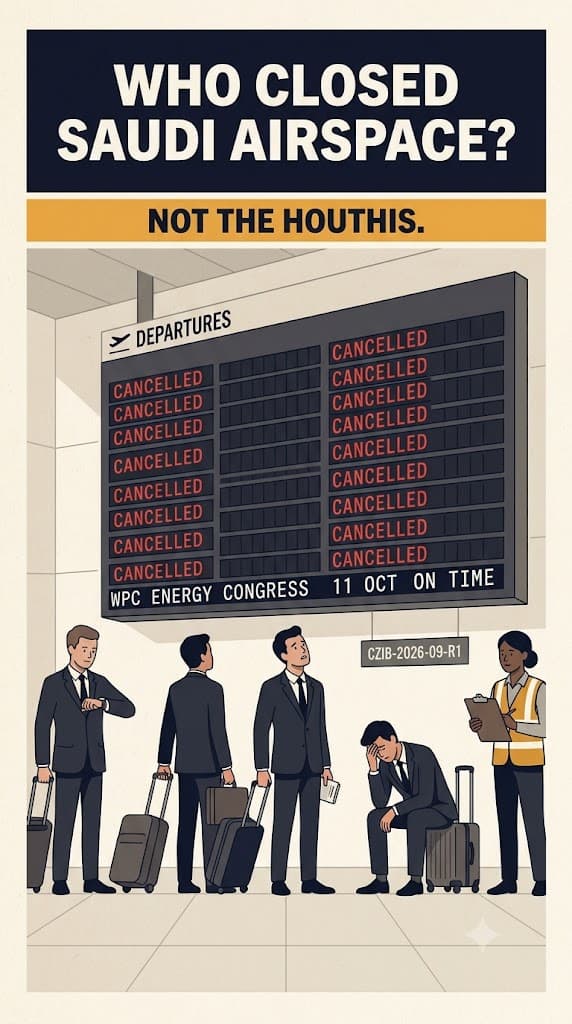
The trigger was a Houthi strike on Riyadh's airport on 10 October that killed 12 people.
WHAT EGYPT IS WALKING TOWARD
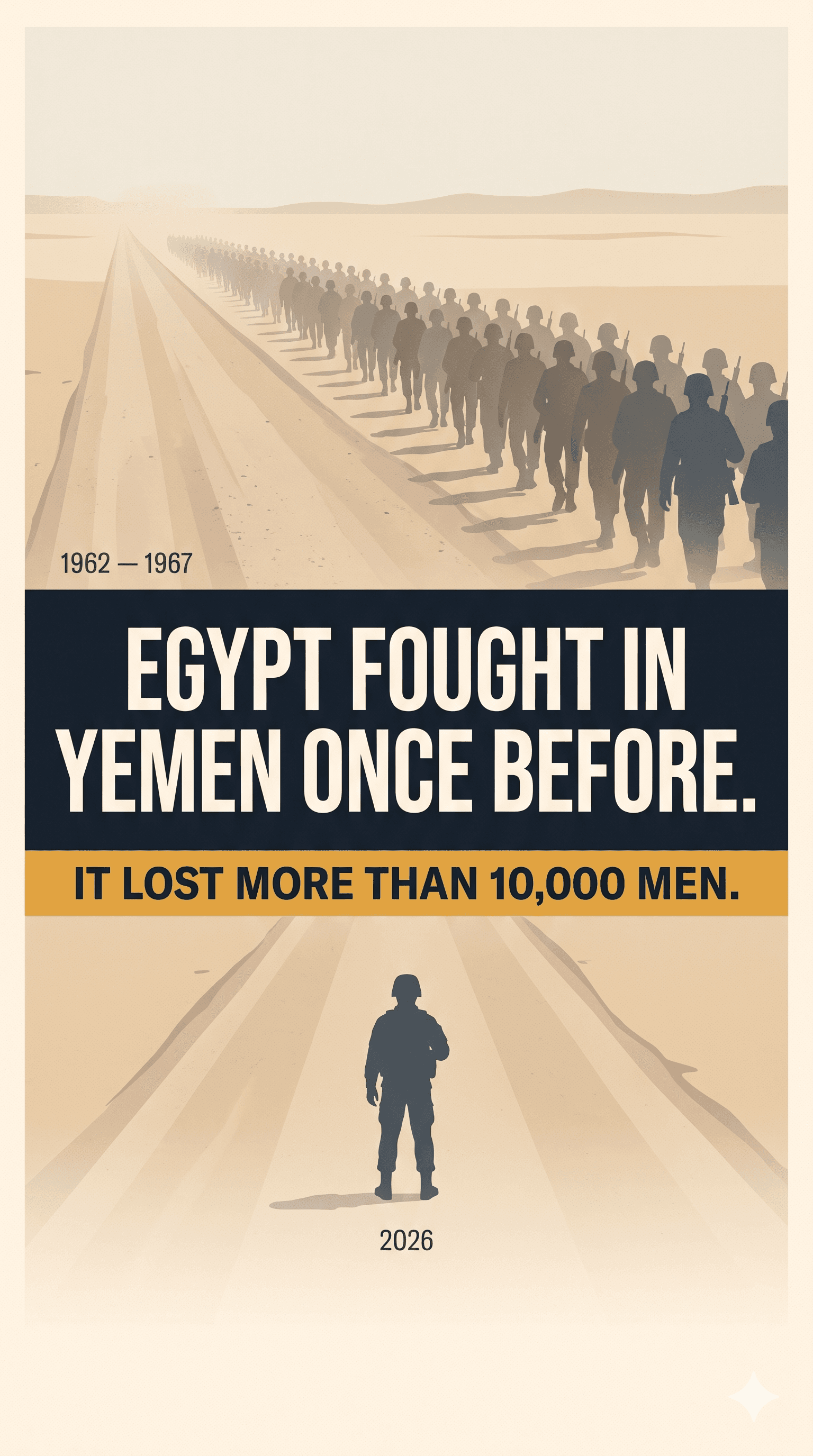
In September 1962, Egypt sent troops into Yemen to support the new republican government against royalist forces.
Within two months it had about 15,000 soldiers there. By late 1965, 70,000.
More than 10,000 Egyptian soldiers were killed. Egypt deployed chemical weapons, killing an estimated 1,500 people. The war ran for five years and left Egypt with heavy debts. It is known to historians as "Egypt's Vietnam."
Egypt only withdrew after its defeat by Israel in 1967 — a defeat the Yemen commitment is widely held to have contributed to, because the army that lost the Six-Day War had a third of its strength and its best units on the wrong side of the Red Sea.
The academic Adeed Dawisha, writing in 1975, identified the root cause as Egypt's "almost total ignorance of the social and political conditions of Yemen."
Nasser went in expecting a short operation. The thing that kept him there was not strategy. It was that withdrawal meant admitting he had been wrong.
This is not that mission. Sisi has said so explicitly, and the distinction between defending Saudi territory and fighting inside Yemen is real. But it is also exactly the distinction that erodes. Nobody announces a five-year war.
THE TRAP NOBODY IS NAMING
Here is why Egypt is in this position at all, and it is the part the coverage is skipping.
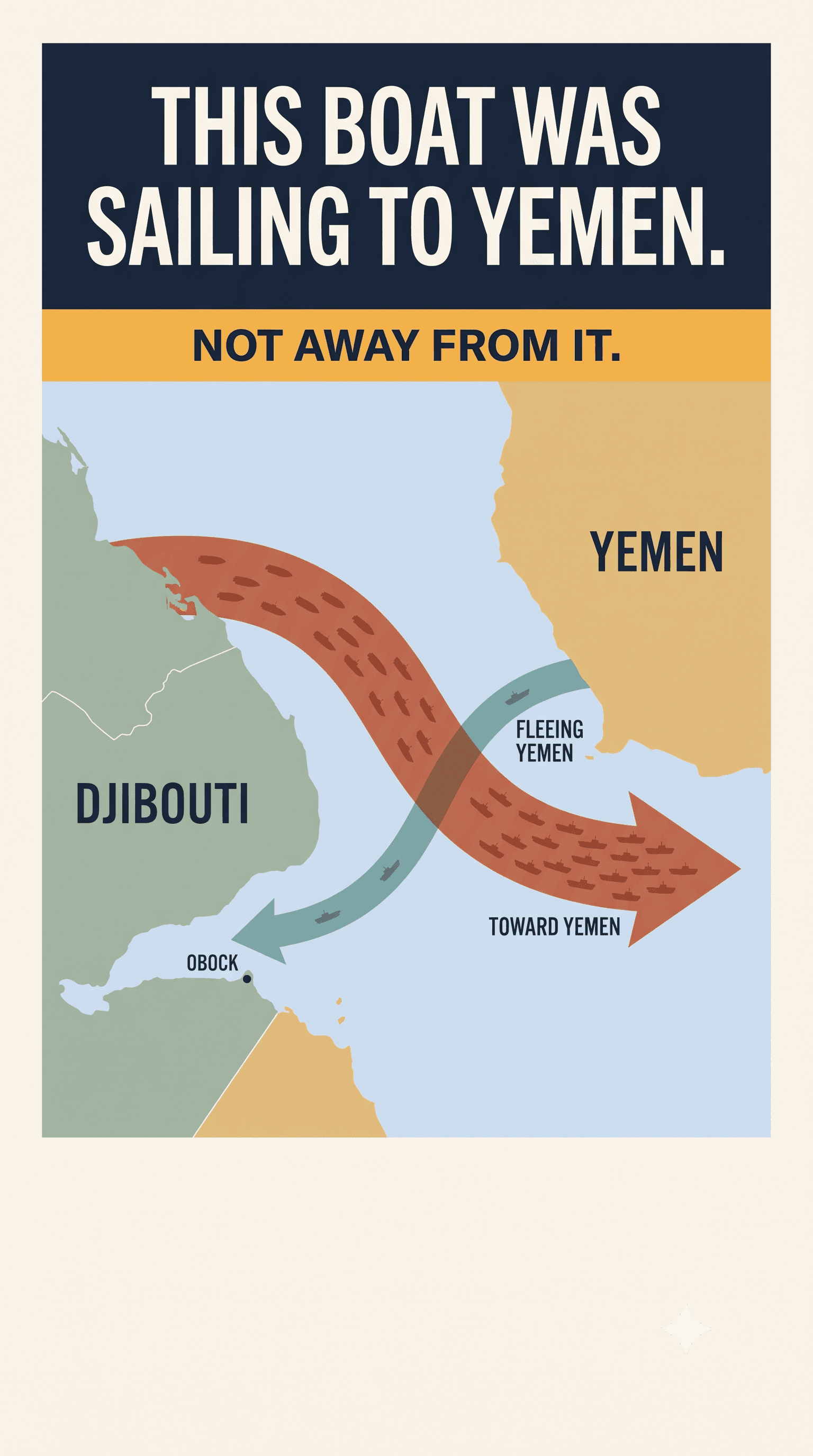
Houthi attacks on Red Sea shipping have cut traffic through the Bab al-Mandeb and the Suez Canal by more than 90% across 2024 and 2025, according to the research group Jefferies. Sisi has said the disruption cost Egypt $800 million a month at its worst, and that cumulative canal receipts are down roughly $10 billion since 2020. Pre-crisis annual revenue was about $10 billion. In 2025 the Suez Canal Authority expected just over $4 billion.
Saudi Arabia, meanwhile, is one of Egypt's largest financial backers.
So Egypt is being pulled in from both ends: by the creditor it cannot refuse, and by the waterway it cannot afford to lose.
And now look at what Egypt is exposing. The single most vulnerable asset it owns, the one already being strangled, is the canal. The Houthis have warned it directly — Sanaa's parliament speaker told his Egyptian counterpart that involvement would pose "a grave danger" to Egypt's national security.
Egypt is considering joining a war against the people currently costing it most of its canal revenue, and the most obvious way for them to retaliate is to cost it the rest.
That is not a moral argument. It is an arithmetic one, and it is the question MPs voted on behind a closed door.
IT WAS NOT UNANIMOUS
Worth recording, because "parliament authorised" flattens it.
The Wafd and the Justice Party backed the request. The Nour Party called for defensive coordination with Riyadh. The Egyptian Social Democratic Party instructed its MPs to abstain. MP Maha Abdel Nasser urged a diplomatic solution. Two further MPs, Mohamed Abdel Aleem Dawoud and Diaa El Din Dawoud, reserved their positions.
Foreign Minister Badr Abdelatty says Cairo still favours a diplomatic settlement. UN Secretary-General António Guterres, meeting Sisi in Cairo the same day, urged "maximum restraint."