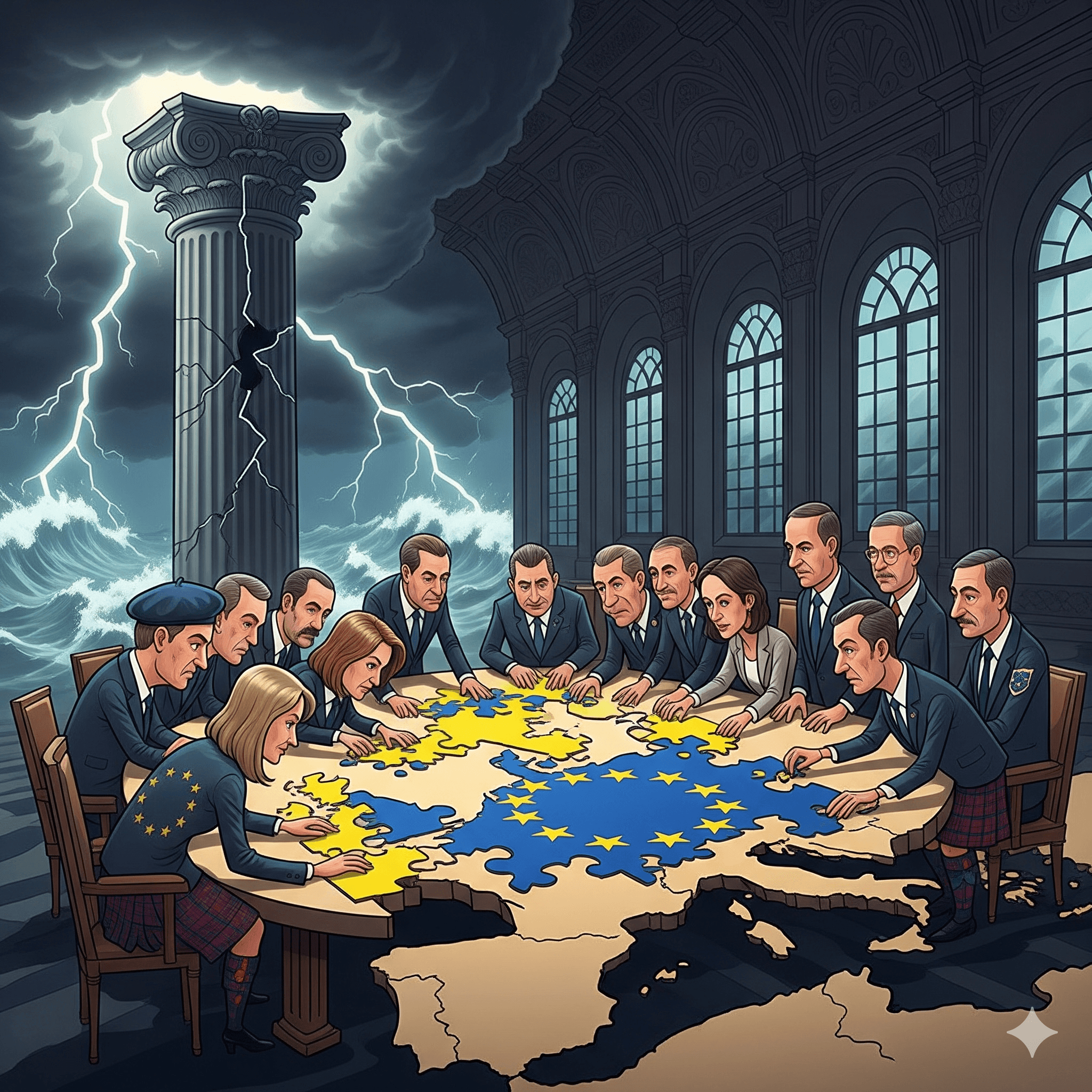
BRUSSELS — Amidst a backdrop of increasing global instability and internal economic pressures, European Union leaders gathered this week for a high-stakes summit, described by many as a "pivotal moment" for the future of the bloc. The primary agenda: forging a unified response to the dual challenges of a slowing regional economy and the escalating security concerns on Europe's eastern and southern fringes.
The summit, held in the historic Val Duchesse estate, saw intense deliberations as the 27 member states sought to reconcile divergent national interests with the growing need for a cohesive European strategy. Central to the discussions were the ongoing energy transition, the strengthening of common defense capabilities, and a renewed push for fiscal integration to bolster the Eurozone’s resilience.
Navigating Economic Headwinds
The European economy, once a global powerhouse, is currently grappling with a period of stagnation. High inflation, albeit receding, has left a lasting impact on consumer purchasing power and industrial competitiveness. Furthermore, the transition away from Russian energy has necessitated a fundamental and costly restructuring of the continent's energy infrastructure.
"We are at a crossroads," remarked one senior EU diplomat, speaking on condition of anonymity. "The old economic model, based on cheap energy and stable global trade, is no longer viable. We must innovate and integrate, or risk falling behind."
To address these concerns, the European Commission proposed a multi-billion euro "Strategic Technologies for Europe Platform" (STEP), aimed at fostering investment in critical sectors such as green tech, biotech, and digital innovation. However, the proposal has faced pushback from some "frugal" member states concerned about the implications for national budgets and the potential for market distortions.
Strengthening the Pillars of Defense
Geopolitical tensions have also forced a re-evaluation of Europe's security architecture. The ongoing conflict in Ukraine has underscored the vulnerabilities of the continent's defense capabilities and the heavy reliance on the United States for security.
In response, leaders discussed plans to significantly increase joint defense procurement and enhance military mobility across the continent. The concept of "strategic autonomy"—the idea that Europe should be able to act independently in key areas of security and defense—was a recurring theme throughout the summit.
"The world is becoming increasingly fragmented and unpredictable," noted European Council President Charles Michel. "Europe must be a stronger, more capable actor on the world stage. This requires not just words, but concrete actions and sustained investment in our common security."
The Challenge of Unity
Despite the clear sense of urgency, achieving a consensus among 27 sovereign nations with vastly different political and economic landscapes remains a monumental task. Significant disagreements persist over the scale and nature of fiscal integration, the pace of the green transition, and the future of EU enlargement.
The rise of nationalist and Euroskeptic movements in several member states has further complicated the quest for unity. These movements often advocate for a return of powers to national capitals, challenging the very foundations of the European project.
Outlook: A Tenuous Path Forward
As the summit concluded, leaders expressed a cautious optimism, emphasizing the progress made in several key areas. However, the path ahead remains fraught with challenges. The ability of the European Union to navigate these turbulent waters will depend on its capacity to bridge internal divides and forge a truly common vision for the future.
The coming months will be crucial as the bloc prepares for the upcoming European Parliament elections, which are expected to be a significant test for the mainstream pro-European parties. The outcome of these elections will undoubtedly shape the trajectory of the European project for years to come.