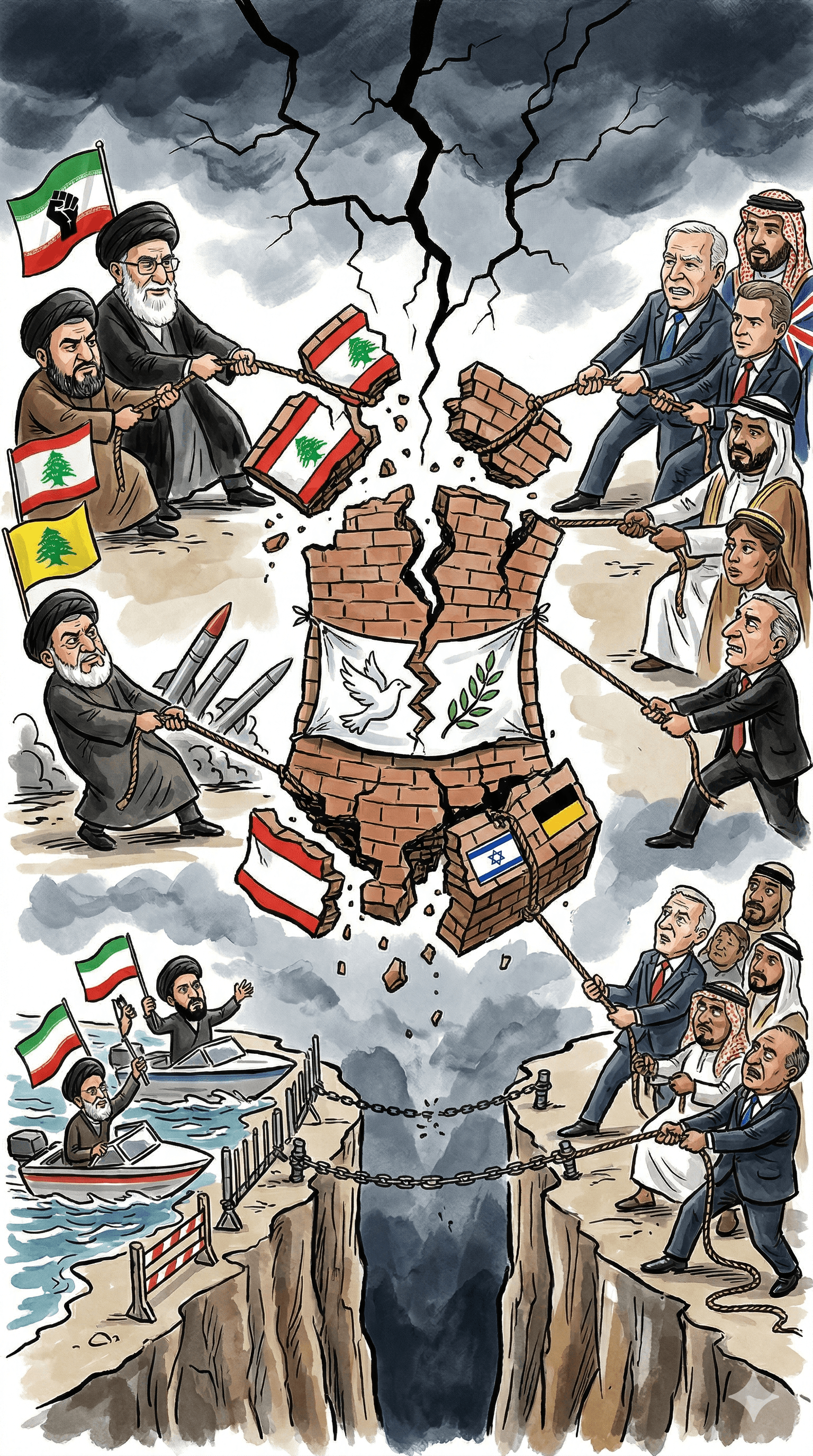
A tentative two-week ceasefire intended to pause the devastating war involving the United States, Israel, and Iran is already hanging by a thread. Announced just days ago to global relief, the U.S.-Iran ceasefire teeters in the face of profound disagreements over the scope of the truce in Lebanon and Tehran’s continued chokehold on the Strait of Hormuz.
While both Washington and Tehran initially declared diplomatic victories, the reality on the ground tells a drastically different story. Intense Israeli bombardments in Beirut and Iran’s sudden rerouting of vital international shipping lanes have exposed glaring loopholes in the agreement, threatening to plunge the Middle East back into full-scale conflict before upcoming peace talks in Pakistan can even begin.
The Lebanon Disconnect: A Fatal Flaw in the Truce?
The most immediate threat to the Iran ceasefire stems from a fundamental dispute over whether the agreement extends to Israel’s ongoing military operations against Hezbollah in Lebanon.
Just hours after the U.S.-Iran truce was announced, Israel launched a massive wave of airstrikes across Lebanon. According to the Lebanese health ministry, the strikes killed at least 182 people and wounded nearly 900 in a single day, marking the deadliest bombardment in the country since the broader war began on February 28. In response, the Iran-backed militant group Hezbollah resumed rocket fire into northern Israel.
The diplomatic fallout has been swift and chaotic, revealing a stark geopolitical divide:
The U.S. and Israeli Position: Israeli Prime Minister Benjamin Netanyahu and U.S. President Donald Trump have maintained that the ceasefire strictly applies to direct U.S.-Iran hostilities and does not cover Israel's campaign in Lebanon. U.S. Vice President J.D. Vance explicitly warned Tehran not to let the negotiations collapse over Lebanon, asserting that the country "has nothing to do with them."
The Iranian Position: Tehran views the assault on its proxy as a direct violation of the ceasefire framework. Iranian Parliament Speaker Mohammad Bagher Qalibaf warned that Lebanon and the "Resistance Axis" are an inseparable part of the agreement, stating that continued Israeli attacks would bring "explicit costs and strong responses." Iranian Foreign Minister Abbas Araghchi echoed this sentiment, publicly condemning the strikes as a breach of the truce.
Security analysts note that even if Lebanon was formally excluded from the written deal, the sheer scale of Israel's strikes is viewed by Tehran as highly escalatory, potentially aimed at driving a wedge between Iran and its regional proxies.
The Strait of Hormuz: Global Trade Held Hostage
In direct retaliation to the events in Lebanon, Iran has leveraged its most potent strategic advantage: the Strait of Hormuz. The reopening of this crucial maritime corridor—through which roughly 20% of the world’s traded oil and natural gas passes—was a core condition of the two-week ceasefire.
However, citing the presence of sea mines in the primary navigation zones, Iran’s Revolutionary Guards essentially closed the main shipping lanes on Thursday. Tehran issued directives forcing any transiting vessels to use heavily monitored "alternative routes." U.S. intelligence previously assessed that underwater mines had been deployed in the strait, a tactical move that has effectively paralyzed global shipping in the region.
Economic Repercussions and Oil Markets
The disruption has triggered immediate economic panic. The International Maritime Organization (IMO) estimates that approximately 2,000 ships are currently stranded in the Persian Gulf, leaving roughly 20,000 seafarers trapped in a volatile war zone. Sultan al-Jaber, the head of the United Arab Emirates’ major oil company, stated that at least 230 ships loaded with oil are waiting to transit and must be allowed to navigate unconditionally.
Global energy markets, which briefly stabilized following the initial ceasefire announcement, have once again been rattled. The spot price of Brent crude has climbed back to approximately $98 per barrel—up 35% since the war began in late February. White House Press Secretary Karoline Leavitt condemned the reported closures as "completely unacceptable," highlighting the immense pressure the Biden-Trump transition and current administration face regarding domestic gas prices and global supply chains.
Looming Peace Talks in Pakistan
Despite the escalating violence and maritime blockades, diplomatic efforts are still technically in motion. High-stakes peace negotiations are scheduled to begin this weekend in Islamabad, Pakistan, which has stepped forward as a regional mediator.
Vice President J.D. Vance is expected to lead the American delegation, potentially facing off against Iranian negotiators like Qalibaf. The talks aim to transform the fragile two-week pause into a permanent resolution, but the preconditions remain deeply contentious.
The U.S. has established firm red lines. President Trump has demanded that Iran turn over its stockpiles of highly enriched uranium—a critical step to prevent Tehran from developing nuclear weapons. Furthermore, Trump has issued stern warnings that U.S. warships and military personnel will remain deployed in the region, threatening that forces will strike "harder than before" if a "real agreement" is not fully honored.
Conversely, Iran’s demands for a permanent truce include the complete withdrawal of U.S. combat forces from the region, the lifting of crushing economic sanctions, and the release of frozen national assets.
Outlook: Will the Ceasefire Hold?
The international community, led by figures like United Nations Secretary-General Antonio Guterres, has warned that the ongoing military activity in Lebanon and the maritime standoff pose a grave risk to regional stability.
As negotiators prepare to meet in Islamabad, the U.S.-Iran dispute remains on a razor's edge. If diplomacy fails to reconcile the gaping divide over Lebanon's sovereignty and the free navigation of the Strait of Hormuz, the two-week ceasefire may ultimately be remembered not as the end of the war, but as a brief, turbulent pause before a catastrophic regional escalation.