Introduction
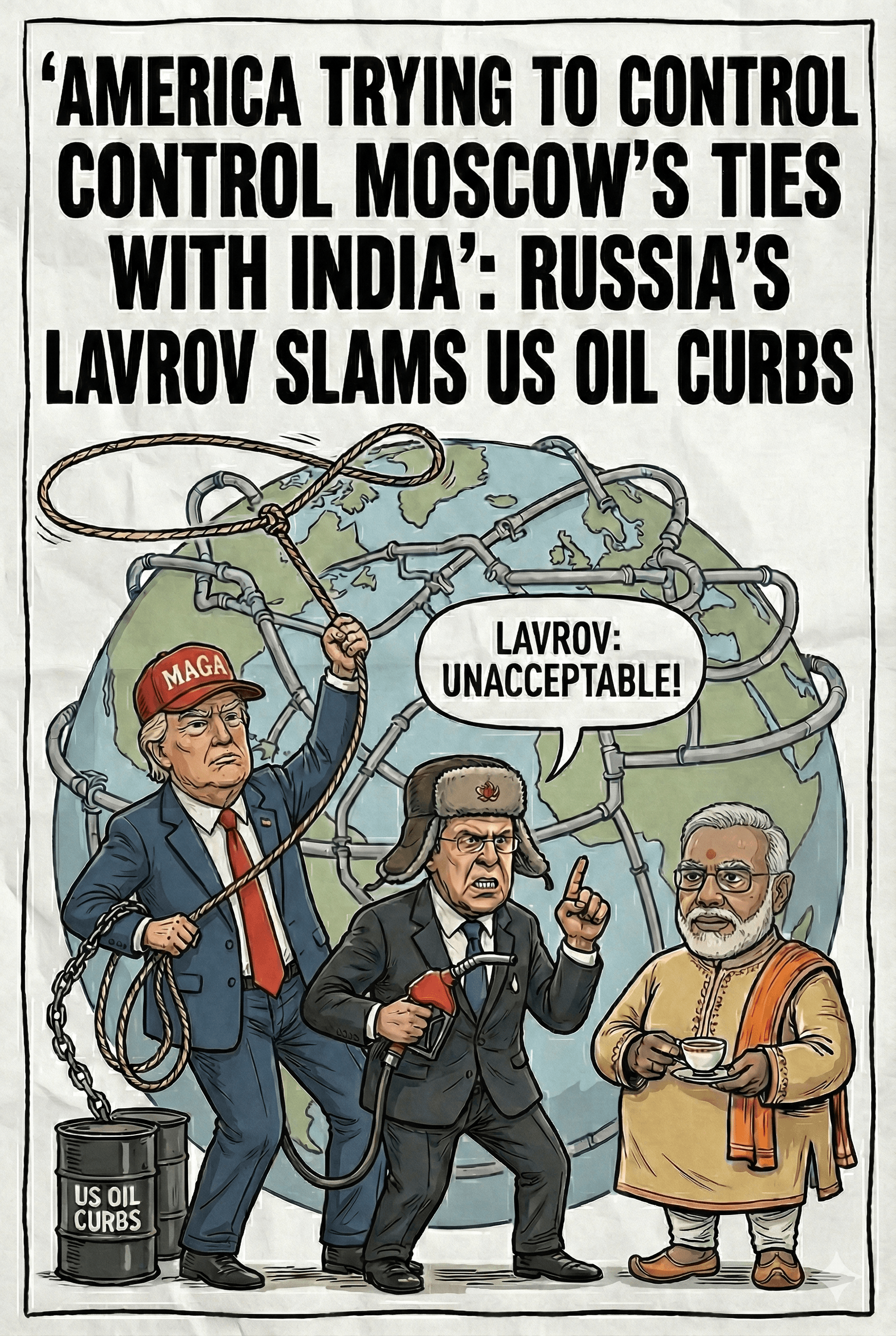
In a sharp escalation of diplomatic rhetoric, Russian Foreign Minister Sergei Lavrov has vehemently condemned what he terms "US oil curbs," framing them as a direct attempt by Washington to dictate Moscow's strategic relationship with New Delhi. This statement comes amidst a complex geopolitical landscape where energy security and national interests are colliding with Western sanctions regimes. A recent political cartoon brilliantly captures this dynamic, showing the US trying to "lasso" the situation while Russia protests and India maintains a calm, independent stance.
The US Strategy: Sanctions as a Geopolitical Lasso
The United States, along with its Western allies, has imposed a series of sanctions and price caps on Russian oil exports following the conflict in Ukraine. The goal is to reduce Russia's oil revenue, thereby hampering its ability to fund its military operations. The cartoon depicts a figure representing the US (with a MAGA hat, symbolizing a particular brand of American foreign policy) attempting to use a lasso of "US OIL CURBS" to constrain a globe crisscrossed with pipelines. This visual metaphor powerfully illustrates the perception of American efforts to exert extraterritorial control over global energy markets and the foreign policy choices of other nations.
Russia's Rebuke: Lavrov Calls US Actions "Unacceptable"
Sergei Lavrov's response, as dramatized in the cartoon with an angry "UNACCEPTABLE!" speech bubble while he holds a gas pump, reflects Moscow's deep frustration. Russia views these sanctions not only as economic warfare but also as an illegitimate interference in its sovereign affairs and its bilateral relationships. Lavrov has repeatedly argued that such unilateral measures violate international law and are designed to serve US hegemonic interests at the expense of global economic stability. He specifically pointed to the pressure being placed on partners like India to comply with these Western directives.
India's Balancing Act: Prioritizing National Interest Over Pressure
At the center of this storm is India, represented in the cartoon by Prime Minister Narendra Modi, who is shown calmly sipping tea, seemingly perturbed by the chaos around him. Despite immense pressure from the West to join the sanctions regime, India has continued to purchase significant quantities of discounted Russian oil. New Delhi's position is rooted in its pragmatic commitment to energy security for its vast population and its long-standing strategic partnership with Russia. Indian officials have consistently stated that their energy purchases are guided by national interest and market economics, not by political alignment with any single bloc. The cartoon's portrayal of a composed Modi highlights India's determination to chart its own course in a polarized world.
Conclusion
The situation underscores the deepening fault lines in global geopolitics. The US attempt to use its economic power to isolate Russia is meeting resistance not just from Moscow, but also from major non-aligned powers like India who refuse to be drawn into a binary choice. As the cartoon vividly suggests, the attempt to "control" these complex relationships through oil curbs is proving to be a difficult, and perhaps ultimately unsuccessful, endeavor in a multipolar world.