As the U.S.-Israeli war with Iran enters its second month, global energy markets are facing severe destabilization. Following U.S. President Donald Trump's vow to drastically step up military strikes on Iranian infrastructure, global oil prices have surged, with Brent crude skyrocketing well past $100 a barrel. The strategic Strait of Hormuz remains heavily restricted by Iranian forces, prompting nearly 40 allied nations to convene emergency discussions aimed at securing global energy flows. However, deep diplomatic rifts between Washington and its NATO allies, coupled with Iran's unyielding defiance, signal a prolonged and economically damaging geopolitical crisis.
Trump’s Vow to Escalate Military Operations
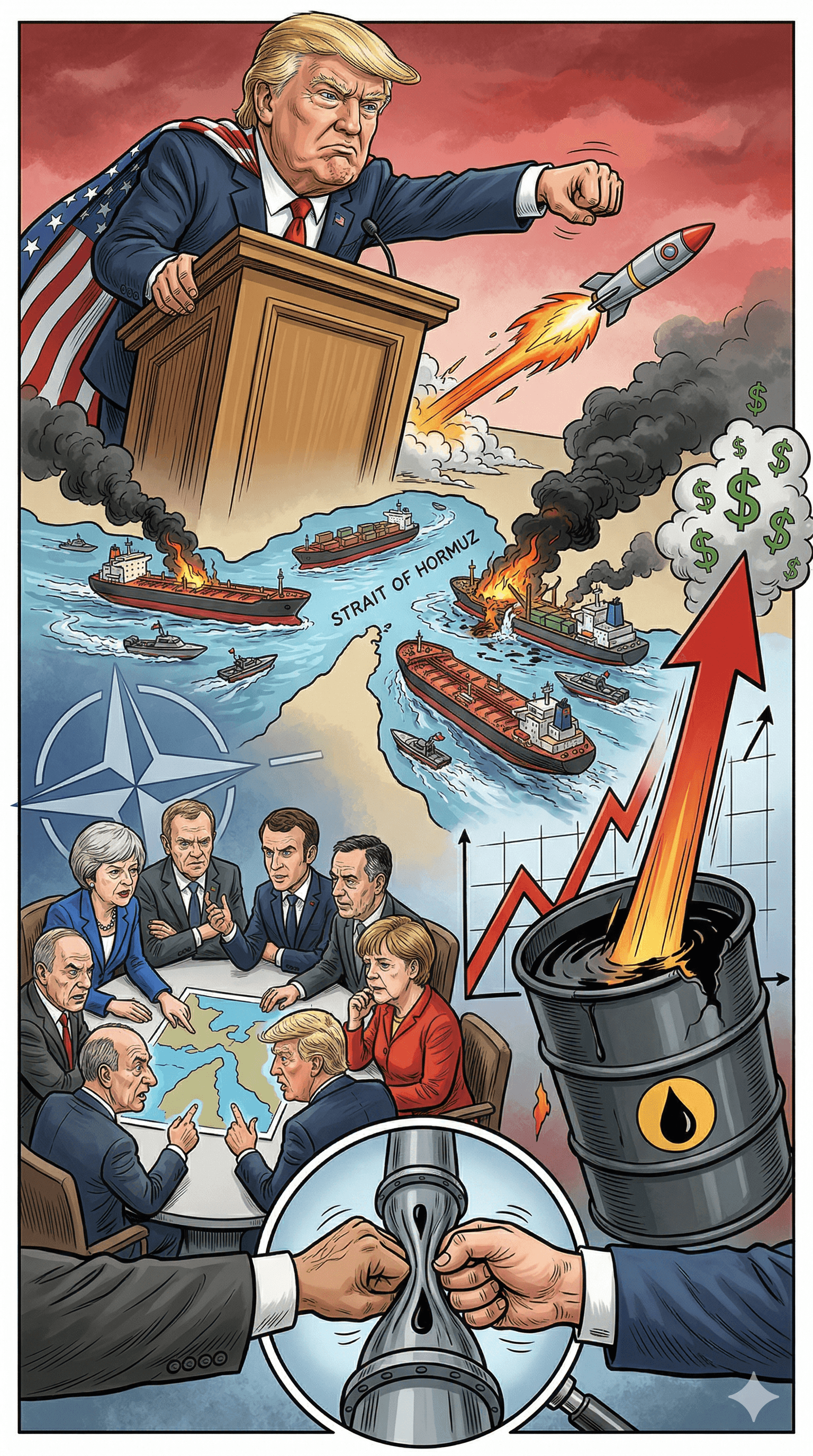
The recent spike in the oil market was triggered by a prime-time address on Wednesday, where President Trump promised a fierce intensification of the ongoing conflict. Expressing frustration over stalled diplomatic efforts, Trump declared the U.S. military would hit Tehran "extremely hard over the next two to three weeks" to bring the nation "back to the Stone Ages where they belong."
Despite earlier indications of direct and indirect negotiations, U.S. peace proposals routed through regional intermediaries in Pakistan, Egypt, Saudi Arabia, and Turkey were swiftly rejected by Iranian officials as “unrealistic, illogical, and excessive.” In response, Trump took to his Truth Social platform to issue a stark ultimatum: if a deal is not reached and the Strait of Hormuz is not immediately reopened, the United States will completely obliterate Iran’s electric generating plants and oil wells. Analysts note that a military operation targeting Iran's critical export hubs, such as Kharg Island, is actively on the table.
The Economic Fallout: A Global Oil Price Surge
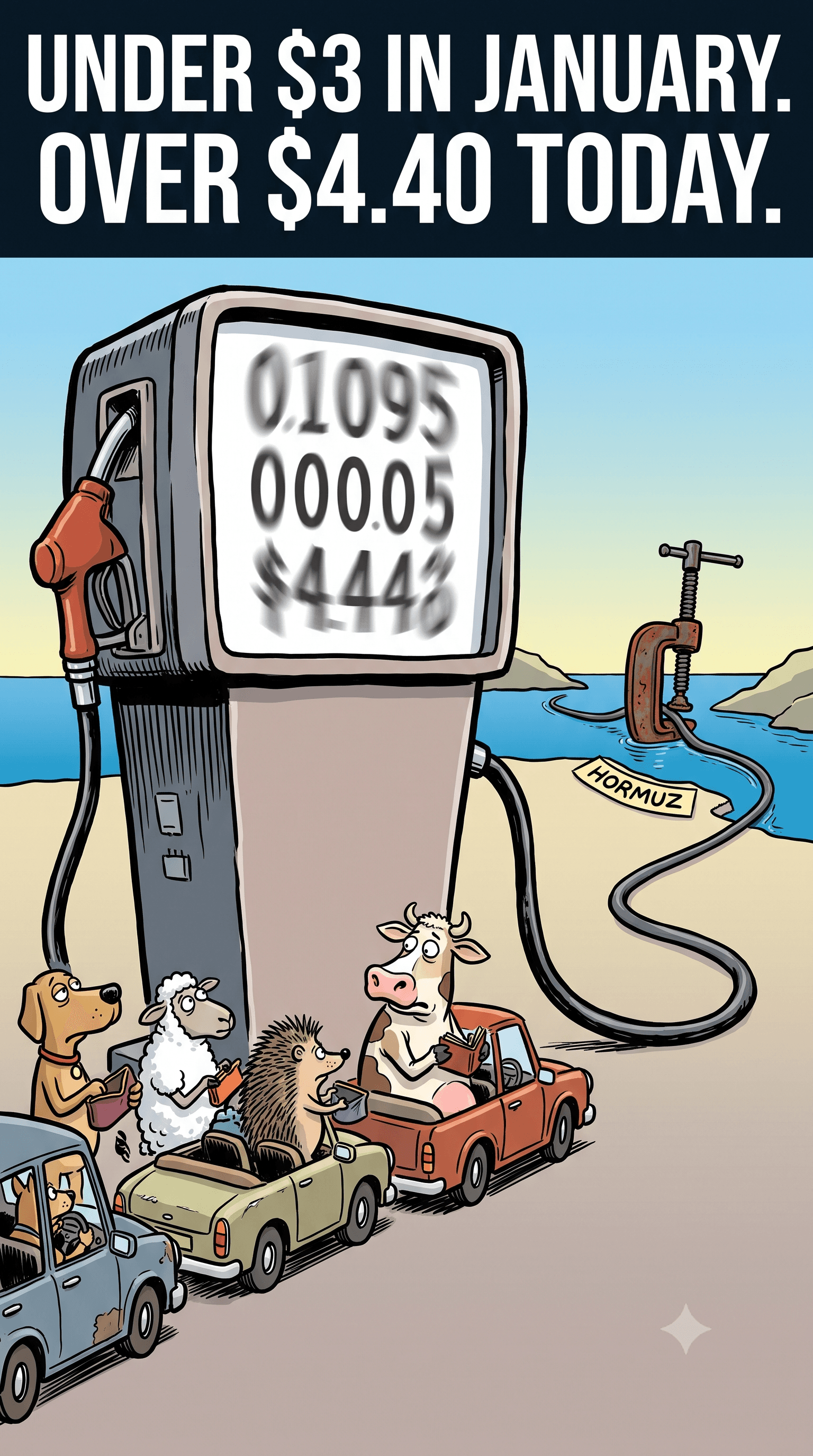
The immediate economic repercussions of the geopolitical standoff have been severe. Spot prices for Brent crude, the international benchmark, have surged past $107 a barrel—representing an increase of more than 45% since the war initiated on February 28.
The European Union is bracing for the worst. In a recent memo to member states, EU Energy Commissioner Dan Jorgensen urged European governments to prepare for a "prolonged disruption" to energy markets. While Europe's crude supply is not exclusively dependent on the Middle East, Brussels is deeply concerned about regional shortages of refined petroleum products like jet fuel and diesel, advising countries to defer non-emergency refinery maintenance.
Simultaneously, global supply chains are fracturing. According to Drewry Airfreight Insight, international airfreight rates jumped by up to 95% between February and March. This spike is driven by a dual blow of shrinking cargo capacity and soaring jet fuel prices, pushing logistical costs closer to pandemic-era peaks.
The Strait of Hormuz Stranglehold
At the center of the economic panic is the Strait of Hormuz, a narrow and vital maritime chokepoint that normally accommodates about one-fifth of the world’s daily oil and liquefied natural gas (LNG) consumption. Iran has effectively blocked the corridor, aggressively targeting oil tankers and disrupting trade to leverage its position.
Alarmed by the ongoing blockade, representatives from roughly 40 nations are actively discussing strategies to secure the Strait of Hormuz. However, the formation of a unified maritime coalition has stalled. European states and other key global players have stipulated that they will only commit military resources to secure the waterway if a comprehensive ceasefire is implemented—a condition that Washington currently firmly rejects.
Strained Alliances: Tensions Between the U.S. and NATO
The Iran war has exposed critical fault lines within the NATO alliance, complicating international efforts to restore maritime stability. President Trump has publicly lashed out at European allies who declined to join the U.S. and Israel in their military campaign against Tehran.
Addressing nations heavily reliant on Middle Eastern oil, particularly the United Kingdom, Trump offered a blunt directive regarding the energy shortage. Writing on social media, he suggested that European nations should "build up some delayed courage, go to the Strait, and just TAKE IT," emphatically stating that the U.S. would not bear the burden of securing the waterway for non-participating allies. “Go get your own oil!” he declared.
This diplomatic friction is translating into tangible logistical hurdles for the U.S. military. Spain recently closed its airspace to U.S. planes involved in the conflict, while Italy reportedly denied the use of its Sigonella air base in Sicily for linked operations. France has similarly restricted overflight permissions, demanding guarantees that American planes utilizing its territory are not actively participating in offensive strikes.
Iran’s Retaliation and Defiant Posture
In the face of looming U.S. ground operations and intensified aerial bombardments, Iran remains entirely uncompromising. The Iranian Ministry of Foreign Affairs insists the country is actively defending itself against unprovoked military aggression. Meanwhile, Ebrahim Zolfaqari, spokesperson for the Iranian military’s Khatam al-Anbiya central headquarters, issued a chilling counter-threat, warning of "more crushing, broader and more destructive" retaliatory attacks against the U.S. and Israel. He stated the war will continue until the “permanent regret and surrender” of Iran's enemies.
Adding to the regional volatility, Iran-aligned Houthi forces have engaged in the conflict by launching missiles and drones at Israel, raising profound concerns that they could expand their maritime blockade to a second vital shipping route: the Bab el-Mandeb Strait. In a further diplomatic escalation, Iran’s parliament is now reviewing a potential withdrawal from the Nuclear Non-Proliferation Treaty (NPT), a move that would fundamentally alter the global security landscape.
Impact and Outlook
The global oil market has largely abandoned hopes for a swift, negotiated settlement, instead pricing in a severe escalation of military hostilities. As the Pentagon reportedly prepares for weeks of ground and special operations, the global economy stands on a precipice. Consumers worldwide are poised to face soaring inflation driven by elevated fuel costs and significantly disrupted supply chains. Without a sudden diplomatic breakthrough or an immediate de-escalation in the Strait of Hormuz, this geopolitical standoff threatens to force the global economy into a prolonged, energy-induced contraction.
#Geopolitics #OilPrices #StraitOfHormuz #Trump #IranWar #GlobalEconomy #EnergyCrisis #NATO #MiddleEastConflict #SupplyChain #BrentCrude #NewsUpdate