In recent years, the devastating realities of urban warfare have brought a grim question to the forefront of global news: Are hospitals in war zones protected under international law? With international bodies like the World Health Organization (WHO) and the United Nations repeatedly sounding the alarm over surging attacks on medical infrastructure in conflict zones—from the grinding war in Ukraine to the intense devastation in Gaza and Sudan—the legal protections afforded to healthcare workers and patients have never been more scrutinized.
While international humanitarian law (IHL) establishes robust frameworks to shield medical facilities during armed conflict, modern warfare has increasingly blurred the lines. This article breaks down the legal parameters, historical context, and the complex realities of hospital protection under the laws of war.
What the Laws of War Say About Healthcare Facilities
The short answer to whether hospitals are protected is an unequivocal yes. The legal framework safeguarding medical services during wartime was born out of the immense suffering witnessed on 19th-century battlefields. Today, this framework is universally recognized and legally binding across all warring parties, including both state militaries and non-state armed groups.
The Role of the Geneva Conventions The foundation of these protections lies in the 1949 Geneva Conventions and their subsequent Additional Protocols. Under these internationally ratified treaties, medical personnel, hospitals, ambulances, and the wounded and sick must be respected and protected in all circumstances.
Key legal mandates under international humanitarian law include:
Absolute Protection of Care: Hospitals organized to care for the wounded, sick, infirm, and maternity cases cannot be the object of an attack.
Protection of Personnel: Doctors, nurses, paramedics, and humanitarian workers must be allowed to perform their duties without arbitrary interference or targeted violence.
Treatment of Enemy Combatants: Medical facilities must treat the wounded impartially. Treating a wounded enemy fighter who is hors de combat (out of the fight) is a fundamental duty under IHL, and doing so does not compromise a hospital’s legally protected status.
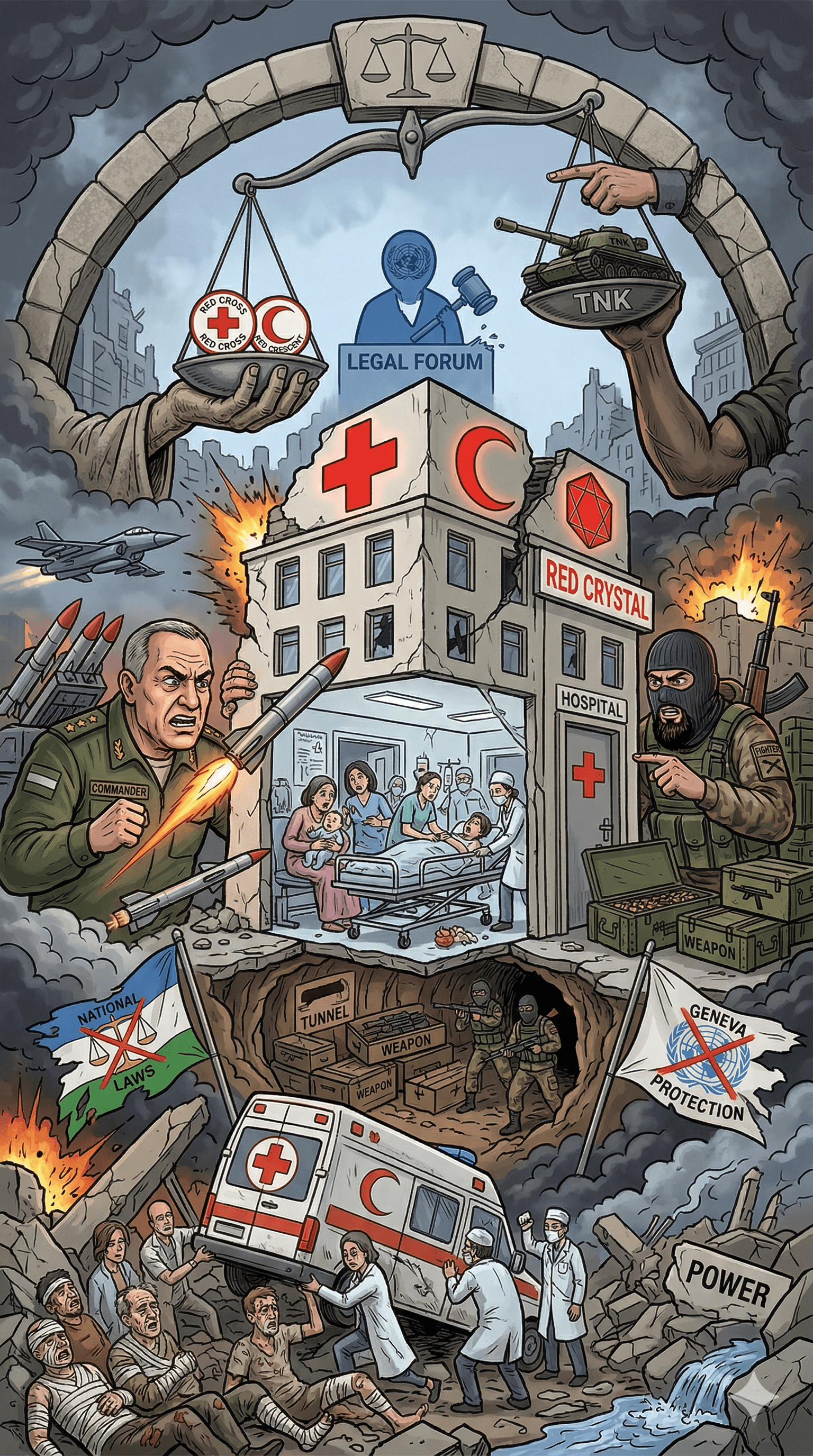
Distinctive Emblems: Facilities displaying recognized protective emblems—the Red Cross, Red Crescent, or Red Crystal—must be shielded from military operations.
Why Are Attacks on Hospitals Surging?
Despite these clear legal directives, the frequency of strikes on medical infrastructure is escalating globally. Experts and political analysts point to the changing nature of modern conflict, which has increasingly shifted from traditional, open battlefields to densely populated urban zones.
In conflicts spanning the Middle East, Eastern Europe, and Africa, hospitals are frequently caught in the crossfire. What militaries once routinely classified as "mistaken attacks" or collateral damage are now increasingly justified by attacking forces on the grounds of "military necessity." This shift in military rhetoric has ignited fierce debates in legal and diplomatic forums regarding the interpretation of international law and the threshold for military action in civilian areas.
When Does a Hospital Lose Its Legal Protection?
The most highly debated aspect of international humanitarian law today involves the exceptions to hospital immunity. Can a hospital legally lose its protected status? Under international law, yes—but the legal threshold is exceptionally high.
According to Article 19 of the Fourth Geneva Convention, a civilian hospital loses its protection only if it is being used to commit "acts harmful to the enemy" outside of its humanitarian duties.
Examples of acts that could legally strip a hospital of its protected status include:
Using the facility as a base to launch rockets or direct combat attacks.
Serving as a military command, intelligence, or liaison center.
Storing active weapons and munitions inside the medical wards.
Deliberately sheltering able-bodied combatants to shield them from targeting.
The Strict Rules of Engagement: Warning and Proportionality Even if a warring party confirms that a hospital is being misused by the enemy for military purposes, international law does not grant a free license to attack. The attacking force remains legally bound by strict rules of engagement:
Due Warning: A warning must be issued to the occupants, establishing a reasonable time limit to cease the unlawful military activity or evacuate the patients and staff safely. An attack can only proceed if this warning remains unheeded.
Proportionality: The anticipated military advantage of attacking the facility must be carefully weighed against the expected civilian harm. If the civilian casualties or the long-term devastation to the region's healthcare capacity are deemed excessive compared to the direct military gain, the attack is illegal.
Precautions: Warring parties must take all feasible precautions to minimize civilian casualties. This includes planning for the disruption of medical services and aiding in safe evacuations before any kinetic action is taken.
War Crimes: Perfidy and Unlawful Strikes
Violations of the laws surrounding medical facilities can constitute war crimes, prosecutable by national legal systems or international bodies like the International Criminal Court (ICC). Accountability applies to both the attacking force and the defending force.
Perfidy (Human Shields): Intentionally misusing a protected medical facility or a recognized medical symbol to shield military operations or deceive the enemy is a specific war crime known as perfidy. This deliberate deception is widely condemned because it turns life-saving sanctuaries into military targets and endangers civilians.
Unlawful Strikes: Conversely, attacking a functioning hospital without sufficient evidence of military misuse, failing to provide adequate warning, or launching a disproportionate strike that causes excessive civilian death is a severe violation of international law.
Outlook: The Humanitarian Impact and Accountability
As armed conflicts increasingly urbanize, the debate over the protection of hospitals under international law will remain a critical geopolitical issue. While the Geneva Conventions provide a clear and robust legal framework, the persistent challenge lies entirely in enforcement and accountability.
When hospitals are destroyed, the immediate loss of life is tragically compounded by a secondary, long-term health crisis. The collapse of local healthcare systems leaves vulnerable populations without access to emergency trauma care, maternal health services, or treatments for chronic diseases, vastly multiplying the true death toll of a war. Moving forward, the international community faces the daunting task of strengthening the mechanisms of justice—such as independent UN investigations and international tribunals—to ensure that the laws of war are respected, and that hospitals remain sanctuaries of healing, rather than theaters of combat.
#InternationalLaw #GenevaConventions #WarZones #HumanitarianLaw #GlobalNews #Geopolitics #HealthcareInDanger #HumanRights #WarCrimes #ConflictResolution #IHL