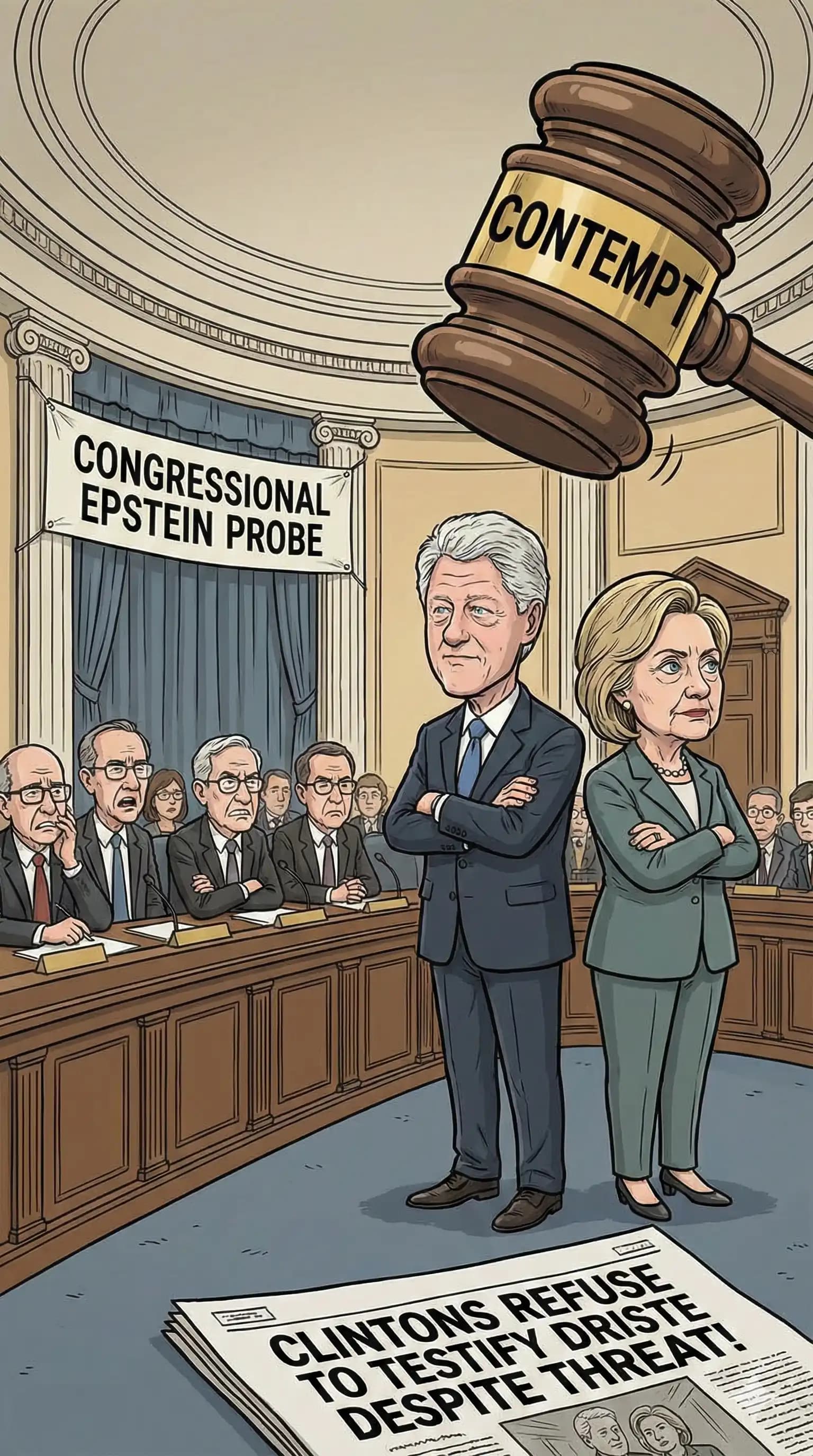
WASHINGTON, D.C. – In a dramatic escalation of the congressional investigation into the late financier and sex offender Jeffrey Epstein, the House Oversight Committee has voted to hold former President Bill Clinton and former Secretary of State Hillary Clinton in contempt of Congress. The move follows the couple's refusal to comply with subpoenas requiring them to sit for closed-door depositions regarding their alleged knowledge of Epstein’s operations and influence.
The Breaking Development
On Wednesday, January 21, 2026, the Republican-led House Oversight Committee, chaired by Rep. James Comer (R-Ky.), advanced resolutions recommending the House of Representatives find the Clintons in contempt. The committee cited the Clintons' "willful" defiance of lawful subpoenas issued in August 2025, which demanded their testimony as part of a sweeping probe into the federal government's handling of the Epstein case and the sex trafficking ring's reach into the highest echelons of power.
The vote to hold Bill Clinton in contempt passed 34-8, a notable bipartisan margin where nine Democrats joined all Republicans in favor. The resolution against Hillary Clinton passed 28-15, largely along party lines, though three Democrats broke ranks to support the measure.
"Subpoenas are not mere suggestions; they carry the force of law and require compliance," Chairman Comer stated during the hearing. "No one is above the law, and justice must be applied equally—regardless of position, pedigree, or prestige."
The Standoff: Why the Clintons Refused
The standoff came to a head earlier this month when the Clintons, through their legal team, informed the committee they would not appear for the scheduled depositions on January 13 and 14.
In a scathing letter released to the public, the Clintons described the subpoenas as "legally invalid" and accused the committee of engaging in "partisan harassment." They argued that the investigation lacked a legitimate legislative purpose and was being weaponized to target political opponents of President Donald Trump.
"We have tried to give you the little information we have," the Clintons wrote, noting they had offered written declarations under oath regarding their interactions with Epstein. They contend this should suffice, given they have never been accused of any crime in connection with Epstein's activities. However, Chairman Comer rejected the offer, insisting on transcribed, in-person interviews to allow for cross-examination. "No transcript, no deal," Comer told reporters.
Context: The Epstein Connection
The committee’s investigation seeks to unravel how Epstein managed to evade justice for years and leverage relationships with powerful figures.
Bill Clinton: The former president has acknowledged flying on Epstein’s private plane, the "Lolita Express," on several occasions in the early 2000s for humanitarian trips. While he has denied visiting Epstein's private island or knowing about his crimes, Republicans have pressed for details on the extent of their relationship.
Hillary Clinton: While her direct connections to Epstein are less documented, the committee has cited her close relationship with Ghislaine Maxwell, Epstein’s convicted accomplice, as a basis for inquiry. Ranking Member Robert Garcia (D-Calif.) defended Hillary Clinton during the hearing, stating, "No one who is serious about justice for Epstein's survivors believes that Hillary Clinton has somehow been involved."
What Happens Next?
The contempt resolutions now head to the full House of Representatives for a floor vote, expected to take place in February 2026 after the congressional recess.
If the full House votes to approve the contempt citations, the matter will be referred to the U.S. Attorney for the District of Columbia for potential criminal prosecution. A conviction for contempt of Congress can carry a fine of up to $100,000 and imprisonment for up to one year.
However, legal experts note that a prosecution is far from guaranteed. The Department of Justice (DOJ) has historically exercised discretion in such cases, and the Clintons are expected to mount a vigorous legal defense challenging the validity of the subpoenas based on executive privilege and separation of powers arguments.
Key Takeaways
Bipartisan Support: The significant number of Democrats voting to hold Bill Clinton in contempt signals a growing pressure within the party to prioritize transparency regarding the Epstein scandal, even when it implicates their own leaders.
Political Fallout: The move intensifies the political warfare in Washington, with Democrats accusing the GOP of shielding President Trump (who also had a documented history with Epstein) while targeting the Clintons.
Expanding Probe: The committee recently issued new subpoenas to other Epstein associates, including billionaire Les Wexner, signaling that the investigation is widening its net beyond political figures.