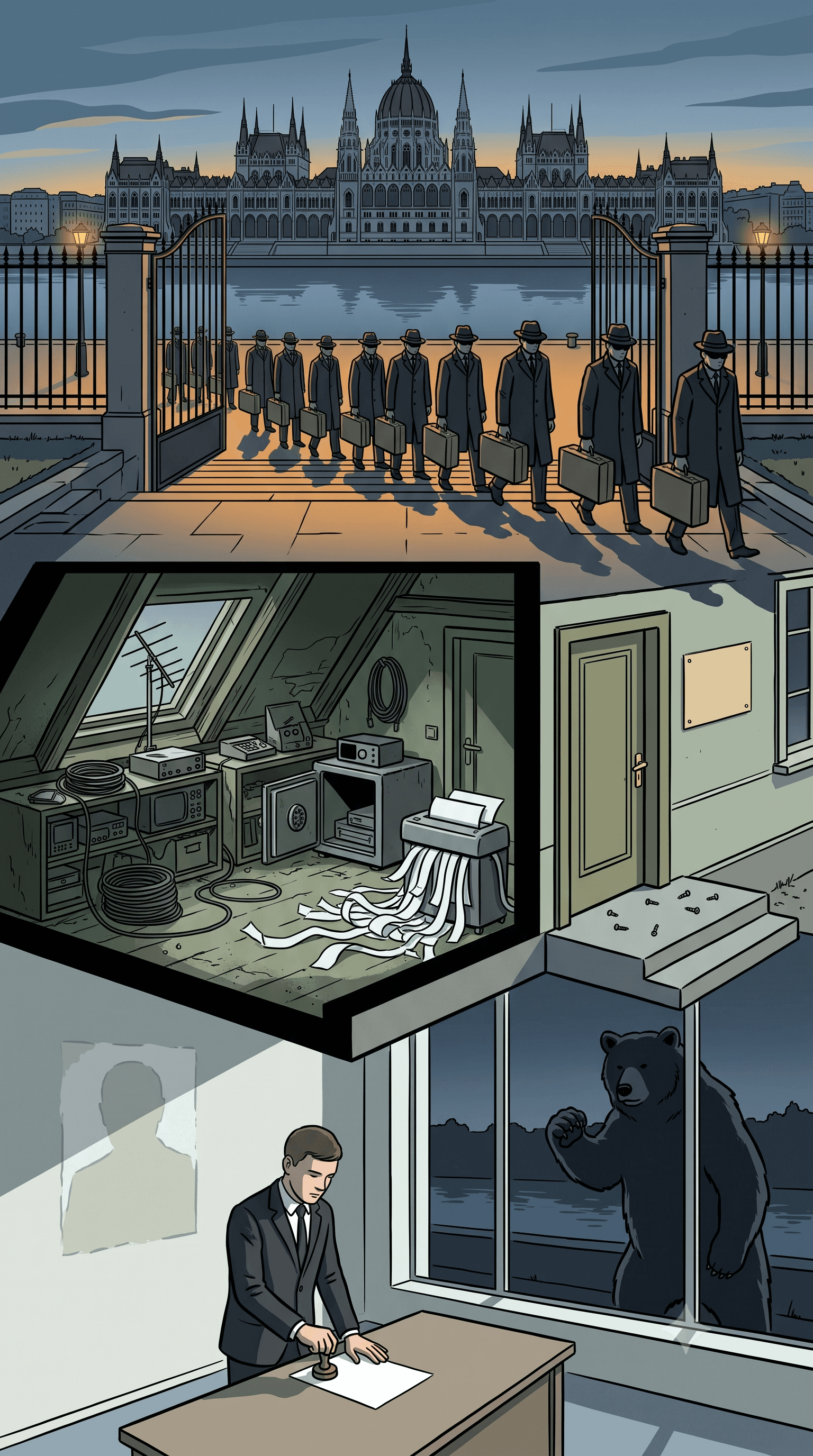
BUDAPEST — In a dramatic geopolitical realignment, the Hungarian government ordered 10 members of Russia’s diplomatic mission to leave the country on September 8, 2026. Officials cited activities incompatible with diplomatic rules as the basis for the expulsions. This sweeping mandate represents the sharpest diplomatic action taken against Moscow by Hungary’s newly elected leadership under Prime Minister Péter Magyar. The move definitively signals the end of Budapest’s long-standing era of Kremlin-friendly foreign policy, carrying immediate ramifications for European Union unity, NATO solidarity, and bilateral relations between the two nations.
The Expulsion Order and Official Statements
The diplomatic rupture was formalized on Tuesday when the Russian ambassador to Hungary was officially summoned and informed of the government's decision. According to a public statement released by Hungarian Foreign Minister Anita Orbán (who bears no relation to former Prime Minister Viktor Orbán), the administration acted strictly to safeguard national interests.
Confirming the exact wording of the government’s stance, Foreign Minister Orbán stated that “according to the assessment of the Hungarian authorities, 10 members of the Russian mission had engaged in activities in Hungary that are unacceptable for diplomats under the Vienna Convention.”
She further clarified the administration’s diplomatic boundaries, writing, “This decision protects Hungary's security and sovereignty. It does not imply breaking off diplomatic relations with Russia. Hungary intends to continue the necessary dialogue, based on mutual respect and adherence to the rules.”
Despite the clarity of the mandate, certain logistical specifics have been withheld from the public. Official government statements and reliable media reports have not specified the exact departure deadline given to the expelled Russian personnel. Furthermore, the total current size of the Russian diplomatic mission in Budapest is not publicly available, making it difficult to immediately quantify what percentage of Moscow’s institutional footprint is being removed.
Understanding 'Persona Non Grata' and the Vienna Convention
For the general reader, the diplomatic jargon surrounding such international disputes can seem opaque. The "Vienna Convention" referenced by the Hungarian Foreign Minister refers to the 1961 Vienna Convention on Diplomatic Relations, the foundational international treaty that governs how countries host foreign representatives.
Under Article 9 of this treaty, a host nation can declare any member of a foreign diplomatic staff persona non grata—Latin for "an unwelcome person"—at any time, without being legally required to explain its reasons. When diplomats are expelled for "activities unacceptable for diplomats" or "incompatible with diplomatic status," it is universally recognized in international relations as a polite, formal euphemism for espionage, covert intelligence gathering, or interference in domestic political affairs. Once declared persona non grata, the diplomats lose their diplomatic immunity and must leave the host country by the stipulated deadline, or risk arrest and prosecution.
Moscow's Reaction: Warnings of a "Painful" Retaliation
The response from Moscow was swift and combative, though currently lacking in specific counter-measures. Russian Foreign Ministry spokeswoman Maria Zakharova fiercely condemned the Hungarian directive, blaming the decision on a "Russophobic lobby" operating within Budapest. She warned that Moscow's response to the expulsions would be "harsh and painful."
Simultaneously, comments provided by the Russian Foreign Ministry to Russia’s state news agency RIA Novosti vowed to deliver "an appropriate response." However, it is vital to distinguish between political threats and actionable diplomatic retaliation. As of this reporting, it can be confirmed that Russia has only issued warnings; Moscow has not yet announced any specific reciprocal expulsions of Hungarian diplomats from Russia or any other concrete retaliatory actions.
The Wider Political Context: The Tisza Party’s Ascendancy
To understand the magnitude of this diplomatic clash, one must look at Hungary’s recent domestic upheaval. For sixteen years, Hungary was governed by Viktor Orbán and his Fidesz party, during which Budapest served as Moscow’s most reliable ally within the European Union. The former administration frequently delayed EU sanctions against Russia and openly courted the Kremlin for economic partnerships.
That era ended abruptly on April 12, 2026. In a landmark parliamentary election, Péter Magyar’s pro-EU, centrist Tisza Party defeated Fidesz in a historic landslide, securing 141 out of 199 seats—a two-thirds supermajority. Taking office with a mandate to eradicate corruption and rebuild bridges with Brussels, Prime Minister Magyar quickly reversed the country's foreign policy trajectory.
This expulsion of Russian diplomats is the sharpest and most consequential move against Moscow by the Magyar administration to date. However, the ideological groundwork was laid recently when Hungary took the floor at the UN General Assembly. In a stark departure from its historical voting record, the new Hungarian delegation explicitly described Russia as a fundamental threat to Hungary, to Europe, and to the global order.
Implications for EU Unity, NATO, and Energy Dependence
From an analytical standpoint, Hungary’s pivot removes the primary internal roadblock that had previously hindered the European Union and NATO’s consensus on Eastern European security. Prime Minister Magyar has already signaled his intent to lift the previous administration's vetoes on vital financial aid to Ukraine, specifically unblocking a much-needed €90 billion loan framework.
The most complex unresolved factor remains energy. Under Viktor Orbán, Hungary cultivated a deep and systemic energy dependence on Russian oil and natural gas, finalizing multiple lucrative deals with Moscow while the rest of Europe divested. Regarding the present day, the current operational status of these Hungarian-Russian energy arrangements remains unannounced. It is not publicly available whether the Magyar government has quietly severed these contracts, renegotiated them, or maintained them out of short-term economic necessity. Until the new Ministry of Energy releases detailed structural reports, the exact standing of Budapest's energy ties to Moscow cannot be confirmed.
Strategic Outlook and Analysis
Hungary's decision to expel 10 Russian diplomats marks a point of no return in Budapest's contemporary relations with Moscow. While the Hungarian government officially claims it wishes to maintain diplomatic dialogue, declaring foreign personnel persona non grata invariably triggers a deep freeze in bilateral trust. Moving forward, geopolitical analysts anticipate that Moscow will eventually follow through on its threats of symmetrical retaliation, likely expelling an equal number of Hungarian officials from Russia. Ultimately, this expulsion cements Hungary’s full reintegration into the Western strategic bloc, effectively closing the Kremlin's most vital political gateway into the European Union.