The landscape of global trade is frequently shaped by ambitious targets and shifting timelines, and the proposed Free Trade Agreement (FTA) between India and Peru is no exception. Recently, reports and headlines have circulated suggesting that the bilateral trade talks are entering their final stretch, with a comprehensive deal expected to be signed in 2027.
However, a critical review of official statements and the current state of play reveals a significantly different reality. Despite the mutual desire for expanded market access, profound structural imbalances—chiefly driven by India’s massive gold imports from Peru—are keeping a final agreement largely out of reach for the foreseeable future.
Fact-Checking the 'Final Stretch': No Imminent Signing
Contrary to recent rumors of a 2027 signing target, there is currently no credible official reporting or public government announcement confirming such a timeline. In fact, on July 4, 2026, Indian Commerce and Industry Minister Piyush Goyal firmly dashed expectations of an early resolution.
Speaking to reporters in New Delhi on the sidelines of a business exhibition, Goyal explicitly contradicted the narrative that the talks were near completion. “There are certain concerns. There are many products where we cannot offer them market access. I do not see Peru FTA happening very soon,” Goyal stated.
Given this definitive on-the-record comment from the Indian Commerce Minister, assertions that the negotiations are in their "final stretch" are unsubstantiated. Rather than sprinting toward a 2027 finish line, the two nations remain deadlocked over sensitive tariff lines that neither side is currently willing or able to concede.
Negotiation History: A Long Road Since 2017
The effort to forge an economic alliance between New Delhi and Lima is not new. The two nations formally launched negotiations for the trade pact in 2017. Over the years, multiple rounds of talks have alternated between New Delhi and Lima.
According to India's Ministry of Commerce and Industry, the most recent formal, full-scale engagement was the ninth round of negotiations, which took place in Lima, Peru, from November 3 to 5, 2025. During that round, the Ministry reported "substantive progress" across chapters like Trade in Goods and Services, Rules of Origin, Customs Procedures, and Critical Minerals. Following the ninth round, the two sides agreed to hold intersessional meetings to address pending technical issues before convening for a tenth round in New Delhi in 2026. However, advancing from technical chapter discussions to finalizing the core tariff concessions has proven incredibly difficult.
The Trade Imbalance: A Structural Deficit
To understand why the FTA is stalled, one must look at the heavily lopsided nature of the bilateral trade relationship.
While some recent unofficial estimates and reports have suggested bilateral trade could surge toward the $10 billion mark for the 2025-26 fiscal year—with India ostensibly importing around $8.87 billion and exporting $1.4 billion—official figures for the latest fully confirmed financial year (2024-25) from the Indian Commerce Ministry pegged total merchandise trade at approximately $5.91 billion. Even within these confirmed parameters, the deficit is stark: India imported roughly $4.91 billion worth of goods from Peru while exporting merely $1.002 billion. Whether analyzing the official $5.91 billion baseline or the projected $10 billion estimates, the fundamental narrative remains the same: India runs a massive, multi-billion-dollar trade deficit with the South American nation.
The Commodity Composition
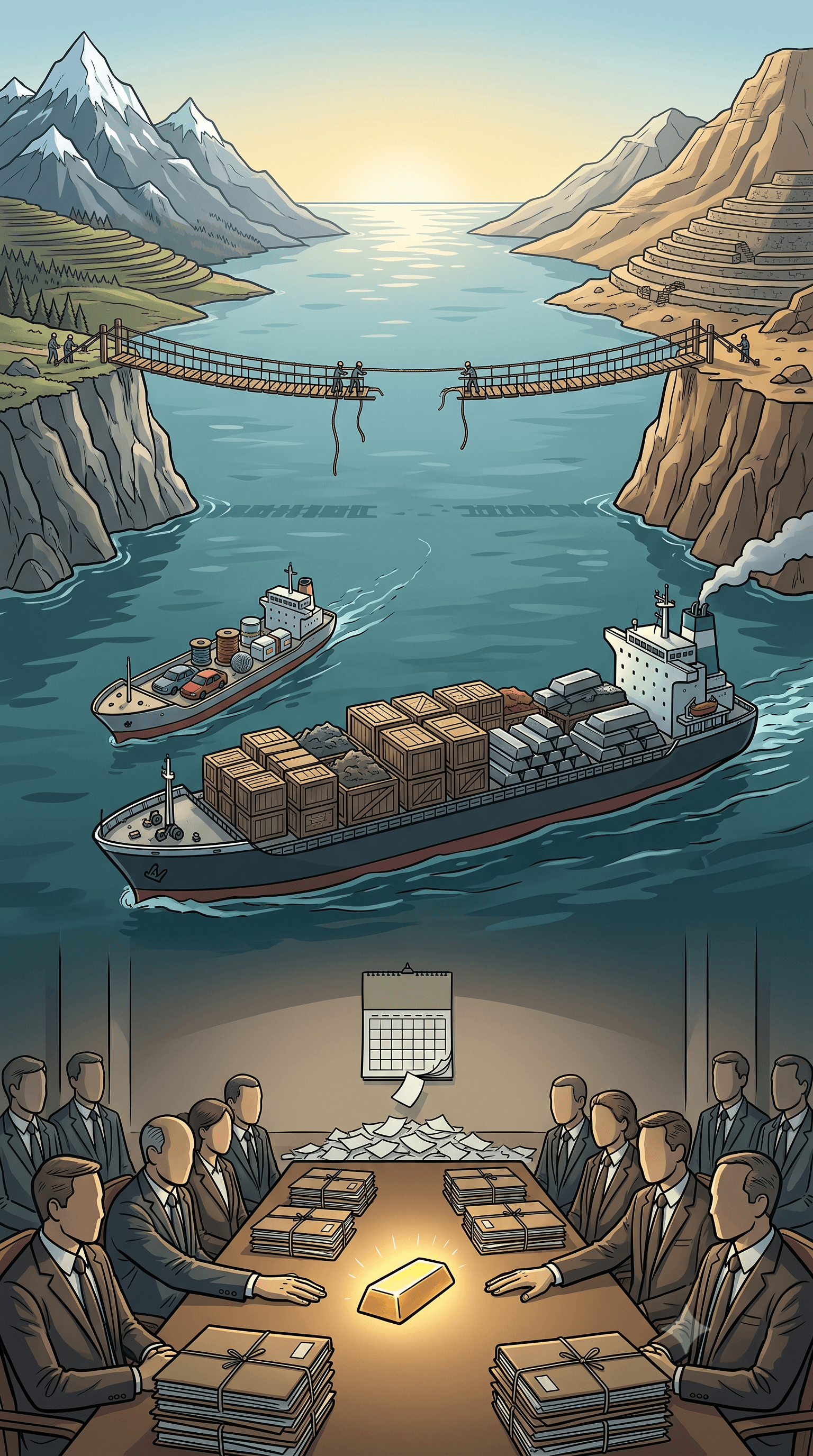
The composition of this trade sheds light on the specific hurdles. India’s exports to Peru are primarily manufactured and value-added goods. As per trade data, New Delhi sends motor vehicles and cars, cotton yarn, and pharmaceutical products to Lima.
In reverse, India’s imports from Peru are heavily concentrated in raw commodities. Gold is by far the largest import. Based on recent bilateral trade composition data, gold historically accounts for the vast majority of Peru's exports to India—often valued at billions of dollars annually—alongside substantial imports of copper ores and bulk minerals.
The Sticking Point: Why Gold Tariffs Complicate Trade Pacts
For a general reader, it is vital to understand what a Free Trade Agreement actually changes. At its core, an FTA is designed to reduce or eliminate import taxes (tariffs) and quotas on goods traded between partner countries, theoretically creating a win-win scenario for exporters and consumers.
However, a large raw commodity import bill severely complicates tariff liberalization. In India, gold is not just a commodity; it is a critical macroeconomic lever. The Indian government heavily regulates gold imports through tariffs to manage its current account deficit (CAD) and prevent capital flight.
If India were to offer steep tariff concessions on Peruvian gold under the FTA, it risks a massive surge in gold imports that could widen the trade deficit further and strain foreign exchange reserves. As the Global Trade Research Initiative (GTRI) and market analysts have noted, duty concessions on gold remain the hardest sticking point for India. Simply put, India cannot afford to open its market unconditionally to its single largest import from Peru, which explains Minister Goyal's frank admission regarding market access constraints.
Peru's Push and India's Broader Strategy
From Lima’s perspective, the delay is frustrating. Peruvian officials, including Minister of Foreign Trade and Tourism Teresa Stella Mera Gomez, have repeatedly made public pushes to conclude the agreement in a timely manner. Peru views the FTA as a way to lock in a massive consumer market for its critical minerals and precious metals. Reports indicate Peru has submitted counterproposals regarding market access and is waiting for a formal Indian response.
For India, the Peru negotiations are just one piece of a much broader FTA puzzle. India has recently inked trade deals with the UAE, Australia, and the EFTA bloc, and is simultaneously juggling complex negotiations with the United Kingdom, Oman, and the European Union. In these broader contexts, FTA timelines frequently slip because modern trade deals require balancing domestic industrial protection with diplomatic ambitions. When a partner country's primary export threatens a core domestic economic safeguard—as Peruvian gold does to India's import tax structures—the strategic incentive to rush a deal evaporates.
Outlook
While India and Peru continue to engage diplomatically, investors and trade analysts should treat rumors of a 2027 FTA signing with caution. Until a mutually agreeable compromise can be engineered around the massive gold trade imbalance, the negotiations will likely remain a protracted exercise rather than an imminent breakthrough. Both nations recognize the potential for strategic cooperation, particularly in critical minerals, but translating that potential into a legally binding, tariff-slashing agreement will require substantially more time at the negotiating table.