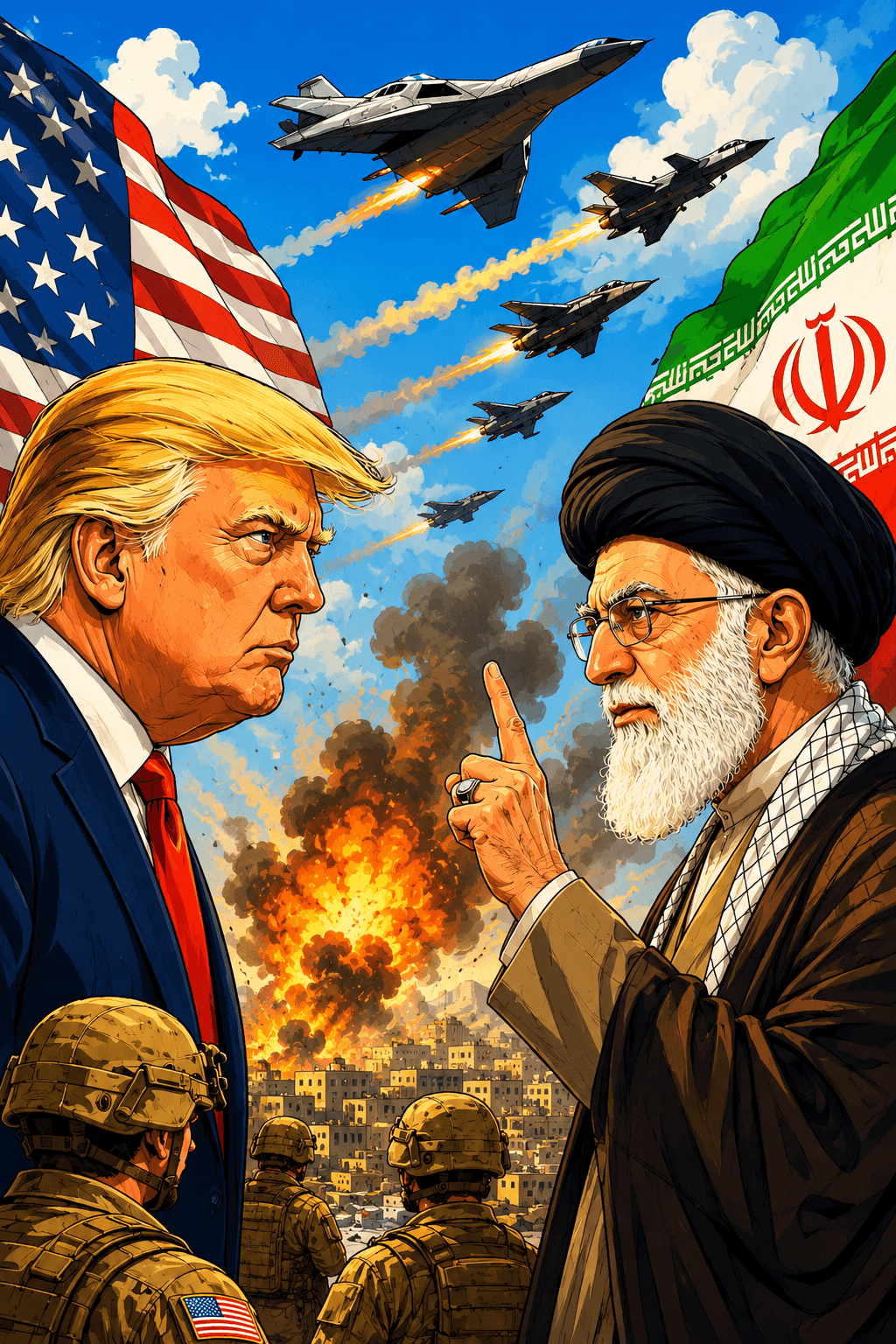
The Middle East is facing a deepening security crisis as the United States launched military strikes against Iran for a ninth consecutive night. In response, Tehran has vowed to take "appropriate action," setting the stage for further escalation in a conflict that has already drawn in neighboring Gulf states and disrupted global energy markets. The persistent US strikes on Iran and the resulting retaliatory measures represent a critical flashpoint in the ongoing US-Israel-Iran war, which officially began its current escalation phase in late February 2026.
With both nations trading heavy blows, the standoff centers heavily on the strategic Strait of Hormuz, a vital maritime chokepoint for global oil supplies. As diplomatic efforts stall, the region braces for what analysts warn could be a broader and more devastating regional conflict.
US Strikes Enter Ninth Consecutive Night
Late Sunday and early Monday, US Central Command (CENTCOM) announced the commencement of a new wave of military operations, marking the ninth consecutive night of US strikes on Iran. According to CENTCOM, the primary objective of these sustained attacks is to degrade Iranian military capabilities utilized to target commercial vessels and civilian mariners navigating the Strait of Hormuz.
The US strikes targeted a wide array of Iranian military and strategic assets. Iranian state media and semi-official news agencies reported missile strikes hitting several key cities and port infrastructure, including Tabriz, Chabahar, Konarak, Bandar Mahshahr, and Bandar Imam Khomeini. Further complicating the conflict, the Atomic Energy Organization of Iran claimed the US targeted the unfinished Darkhovin nuclear power plant in the country's southwest, denouncing the act as "aggressive and brutal". Strikes were also reported in Bushehr, home to Iran's only operational civilian nuclear facility.
President Donald Trump, directing the military campaign, stated that the US "hit them very hard again tonight," dedicating the strikes to recently fallen American service members. US Secretary of State Marco Rubio emphasized that Washington remains actively involved in targeting the locations Iran uses to launch missiles and drones, pointing out that Iran's actions dictate the US response.
Iran Vows 'Appropriate Action' and Expands Retaliation
Following the US strikes on Iran, particularly the reported attack on the Darkhovin nuclear facility, Tehran swiftly vowed to take "appropriate action". Senior Iranian leader Mojtaba Khamenei warned of "unforgettable lessons" if the United States continues its military campaign.
Demonstrating its capacity to strike beyond its borders, Iran has aggressively expanded its retaliatory attacks to target US allies and military installations across the Middle East. Early Monday, the Iranian Revolutionary Guards claimed a "surprise attack" on a special operations command center in Syria's Al-Tanf region. Furthermore, Iran directed drone and missile attacks toward neighboring Gulf states. Kuwait reported that its air defenses successfully intercepted hostile drones following "Iranian aggression," while Bahrain activated air raid sirens, urging residents in the capital, Manama, to find the nearest safe place.
The Islamic Revolutionary Guard Corps (IRGC) also claimed responsibility for ballistic missile attacks targeting US military aircraft at an airport in Aqaba, Jordan, alleging "heavy damage". Iran's central military commander, Ali Abdollahi, reinforced Tehran's aggressive posture, warning that any further American aggression would be met with a "decisive and devastating response".
The Strait of Hormuz Standoff and Economic Fallout
At the heart of the current US-Iran war is a fierce battle for control over the Strait of Hormuz. Before the conflict escalated in February 2026, roughly one-fifth of the world's oil supplies transited through this critical waterway. Since the outbreak of hostilities, Iran has virtually closed the conduit, using its control as diplomatic leverage against Washington. In response, the US has reimposed a naval blockade on Iranian ports to stifle Tehran's crude oil shipments.
The economic implications of this standoff are severe. Oil prices surged at the opening of Asian markets on Monday, with Brent crude climbing 2.72% to pass $90 a barrel—the highest level since June. US Energy Secretary Chris Wright noted that while the Trump administration initially paused operations to seek an agreement allowing oil to flow, Iran's unwillingness to cooperate forced a strategic pivot. Protecting commercial shipping and ensuring the flow of oil and gas remains Washington's primary objective in the region.
Meanwhile, the IRGC explicitly warned that the Strait of Hormuz "will not be secure for oil and gas traffic," claiming that two oil tankers near the southern approaches to the strait had recently exploded and been disabled.
Mounting Casualties and Collapsed Diplomacy
The human cost of the US-Iran war continues to rise. Over the weekend, the US military confirmed the death of an American service member in northern Iraq during the controlled detonation of a downed Iranian drone. This followed the deaths of two other US service personnel during a strike in Jordan, with another service member reported missing in action. The total number of confirmed US military fatalities since the conflict began on February 28 now stands at 17.
On the Iranian side, reported casualties are significantly higher. The Iranian health ministry recently stated that 50 people have been killed in the fighting, with more than 500 injured.
Compounding the crisis is the total collapse of diplomatic negotiations. A preliminary deal aimed at ending the war and reopening the Strait of Hormuz has completely disintegrated. An Iranian negotiator accused the United States of violating its commitments, prompting Tehran to suspend its obligations under the interim agreement.
Impact and Outlook
The ninth consecutive night of US strikes on Iran marks a dangerous new phase in a rapidly deteriorating geopolitical landscape. With Iran vowing appropriate action and actively targeting Gulf neighbors like Kuwait and Bahrain, the conflict risks dragging the entire Middle East into a protracted, multi-front war.
Economically, the persistent threats to the Strait of Hormuz guarantee that global energy markets will remain highly volatile. If oil shipments continue to face disruption, the global economy could face severe inflationary pressures. While the US asserts it is degrading Iran's maritime and missile capabilities, Tehran's continued ability to strike regional targets suggests a long war of attrition. Without a renewed framework for diplomacy, both nations appear locked in a retaliatory spiral where miscalculations could lead to catastrophic regional consequences.