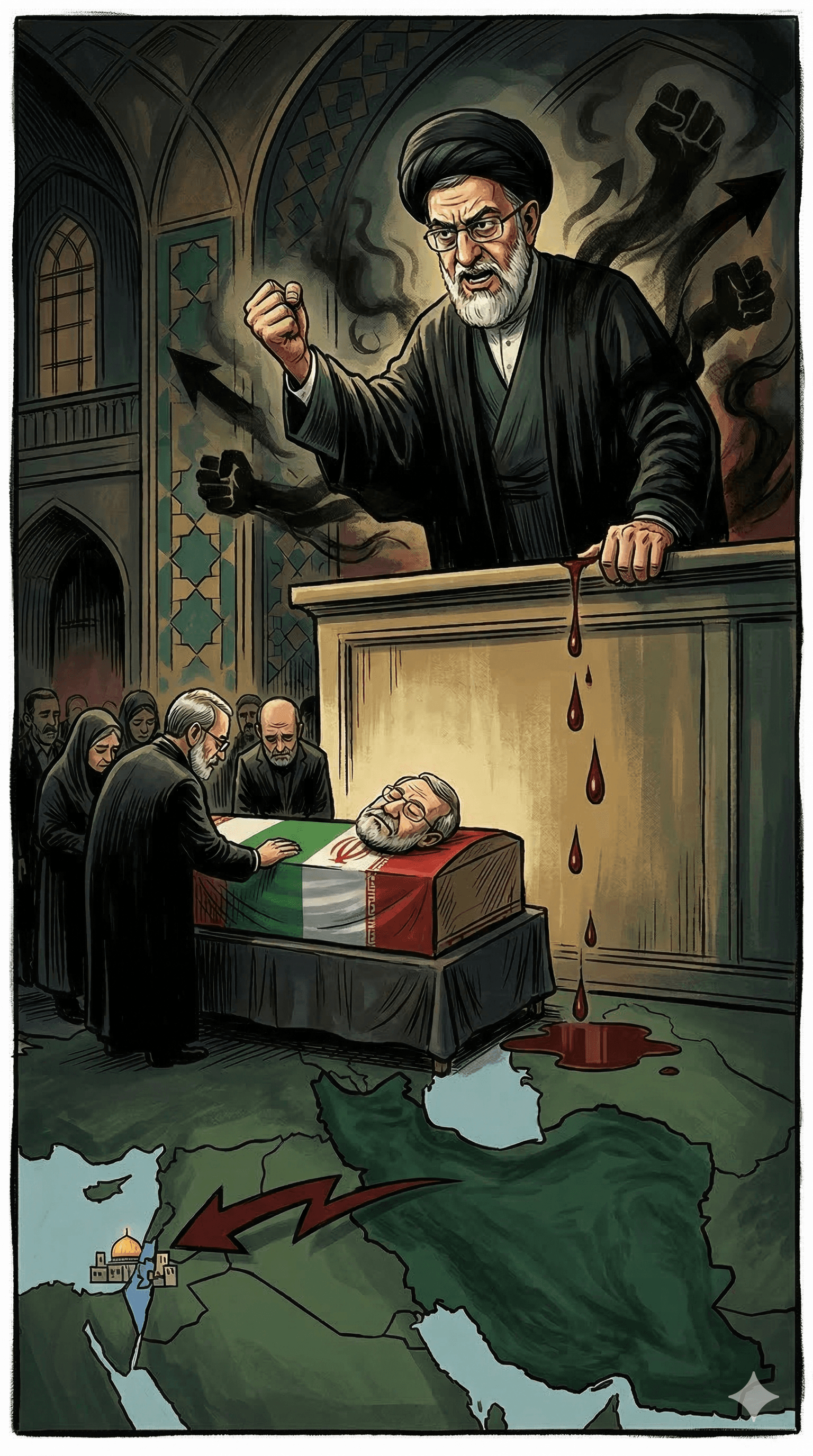
TEHRAN — Iran's newly appointed Supreme Leader, Mojtaba Khamenei, has issued a stark warning of retaliation following the assassination of the country's national security chief, Ali Larijani, in an Israeli airstrikes. The targeted killing of Larijani—widely considered the linchpin of Iran’s political and security apparatus—marks a devastating blow to the Islamic Republic and signals a dangerous new phase in the rapidly escalating US-Israel-Iran war.
The Assassination of Ali Larijani and Basij Leadership
Ali Larijani, 67, the secretary of Iran’s Supreme National Security Council, was killed on Tuesday in a precision Israeli strike that reportedly targeted his daughter's home in the Pardis area of Tehran. The state-affiliated Fars News Agency confirmed the attack also claimed the lives of his son, a deputy, and several bodyguards. In a coordinated operation, Israeli forces also eliminated Gholamreza Soleimani, the commander of Iran’s powerful Basij paramilitary force, dismantling a significant portion of the nation's internal security leadership.
Larijani's death removes a pivotal figure from the heart of the Iranian establishment. Following the February 28 death of former Supreme Leader Ayatollah Ali Khamenei at the onset of the war, Larijani had effectively stepped in to manage the country’s defense strategy and regional policy. A veteran politician who served for 12 years as parliamentary speaker and brokered a landmark 25-year strategic agreement with China in 2021, Larijani possessed the unique ability to bridge the gap between Iran's civilian administration and the Islamic Revolutionary Guard Corps (IRGC).
The Israel Defense Forces (IDF) confirmed the operation, describing Larijani as “one of the most veteran and senior figures within the Iranian regime leadership” who led combat operations against Israel. Israeli Prime Minister Benjamin Netanyahu characterized the assassination as part of a broader strategy to give the Iranian people an opportunity to remove their rulers, while Israeli military officials have openly vowed to track down and "neutralize" the new Supreme Leader, Mojtaba Khamenei.
'Every Drop of Spilled Blood': Mojtaba Khamenei's Warning
The assassination prompted the first public statement from Mojtaba Khamenei since he assumed the role of Supreme Leader. Known for his hardline stance and deep ties to the IRGC, Mojtaba Khamenei published a written message on his official Telegram channel on the day of Larijani’s funeral, vowing that the perpetrators "will have to pay" for the attack.
"Without a doubt, the assassination of such a figure attests to his importance and to the hatred that the enemies of Islam harbor toward him," Mojtaba Khamenei stated. "Every drop of spilled blood comes at a price, and the criminal murderers of these martyrs will soon have to pay it."
Analysts suggest that Mojtaba Khamenei’s harsh rhetoric and swift appointment by the Assembly of Experts send an unequivocal message that Tehran has rejected any prospect of diplomatic compromise. Iran’s military apparatus echoed this sentiment, with Iranian Army Chief Amir Hatami promising a "decisive and regrettable" retaliation.
Origins of the Conflict: Operations Roaring Lion and Epic Fury
The targeted killings of Larijani and Soleimani are the latest developments in a massive regional conflict that ignited less than three weeks ago. On February 28, the United States and Israel launched joint, sweeping airstrikes—dubbed "Operation Epic Fury" by the US and "Operation Roaring Lion" by Israel. The opening salvos aimed to cripple Iran's nuclear and military infrastructure, resulting in the deaths of Ayatollah Ali Khamenei and several top IRGC commanders.
Since the war began, Israel has pursued a strict decapitation strategy. According to Defense Minister Israel Katz, recent strikes have also targeted Iranian Intelligence Minister Esmail Khatib and Palestinian Islamic Jihad leader Akram al-Ajouri, systematically eliminating key figures within the region's militant networks.
Iran has responded with sustained waves of missile and drone attacks. Following Larijani's death, the IRGC launched Khorramshahr-4 and Qadr multiple-warhead missiles at central Israel, successfully bypassing some air defense systems and killing two people near Tel Aviv's commercial hub.
Economic Fallout: The Strait of Hormuz and Global Oil Markets
Beyond the immediate military casualties, the geopolitical shockwaves are threatening the global economy. As retaliation for the joint US-Israeli campaign, Iran has effectively restricted access to the Strait of Hormuz—a vital maritime chokepoint through which one-fifth of the world’s crude oil transits.
The blockade has driven oil prices toward $100 a barrel, exacerbating global inflation and energy supply fears. Iranian Foreign Minister Abbas Araghchi warned that the economic repercussions "have only just begun and will hit all."
In an effort to reopen the waterway, the US military's Central Command has deployed some of its heaviest munitions, dropping 5,000-pound bunker-buster bombs on hardened Iranian missile sites along the coast. Meanwhile, US President Donald Trump has publicly criticized allied nations for distancing themselves from the conflict and refusing to assist in escorting oil tankers through the contested strait.
Regional Reactions and Diplomatic Isolation
The intense bombardment has drawn condemnation from neighboring states and proxy groups. The Lebanese militant group Hezbollah denounced Larijani's assassination as "cowardly," asserting that the loss of leaders would not break the resolve of the Islamic Republic.
Further complicating the diplomatic landscape, the United Arab Emirates issued a rare public rebuke, condemning an Israeli strike on Iran’s South Pars gas field as a “dangerous escalation.” As the violence spills over, Lebanon continues to endure heavy Israeli airstrikes targeting Hezbollah infrastructure in Beirut, pushing the regional death toll higher and displacing thousands.
Outlook: A Region on the Brink
As Iran holds state funerals for Ali Larijani and Gholamreza Soleimani, the immediate outlook for the Middle East remains bleak. The assassination of Larijani removes one of the few pragmatic strategists capable of negotiating a ceasefire, leaving Iran's wartime apparatus firmly in the hands of Mojtaba Khamenei and hardline IRGC commanders.
With Israel vowing to eliminate the new Supreme Leader and Iran launching advanced ballistic missiles at Tel Aviv, both sides are locked in an escalatory spiral. The economic dislocations stemming from the Strait of Hormuz closure guarantee that the consequences of this war will be felt globally, ensuring that the coming weeks will critically test the resilience of international energy markets and regional stability alike.
#News #Geopolitics #MiddleEastConflict #Iran #Israel #MojtabaKhamenei #AliLarijani #GlobalEconomy #StraitOfHormuz #ForeignPolicy