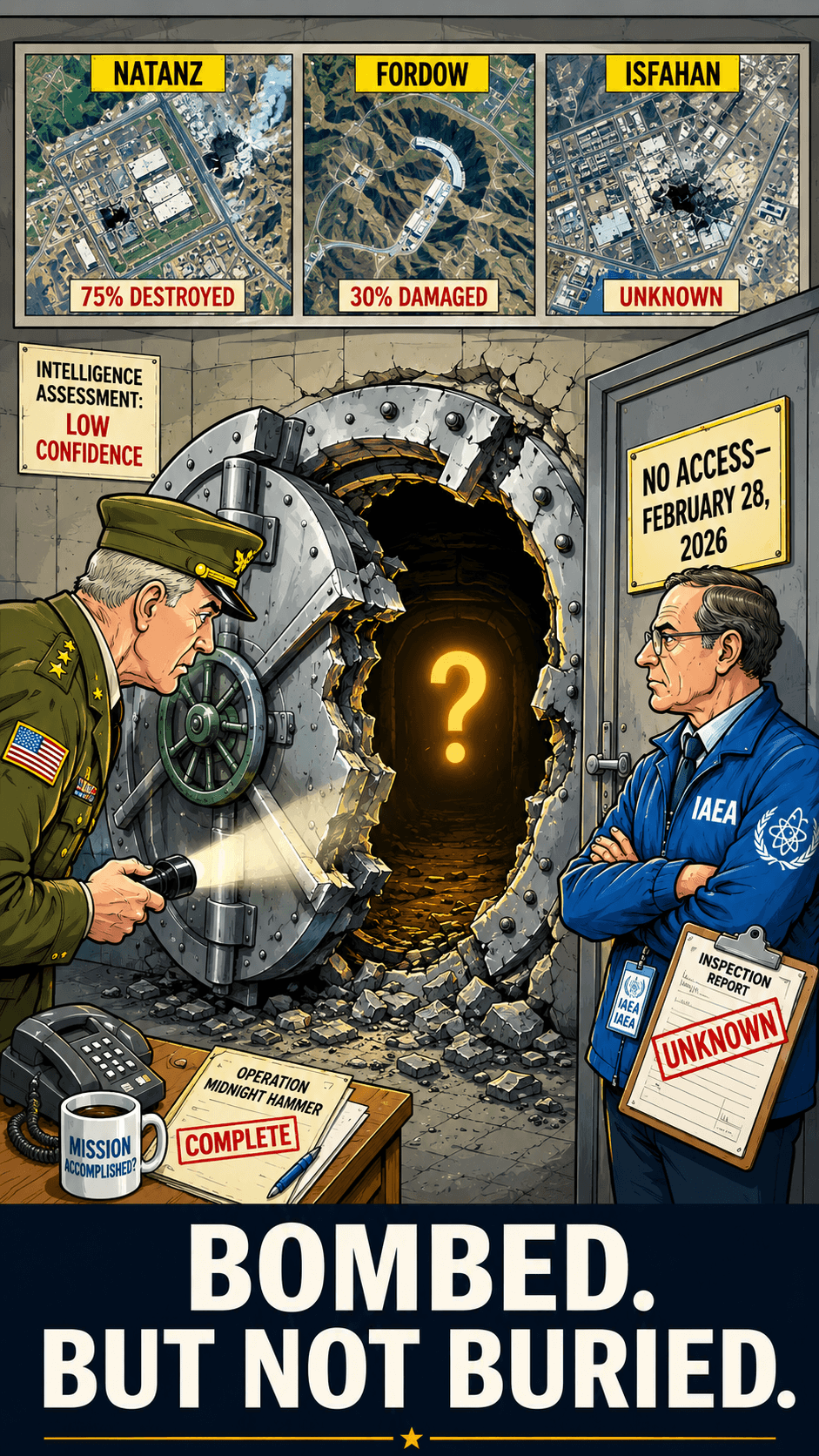
The United States launched a war to destroy Iran's nuclear ambitions. Months later, the most important question in global security remains unanswered: did it work?
Context: Why the Bombs Fell
On June 22, 2025, B-2 Spirit stealth bombers dropped fourteen GBU-57A/B "bunker buster" bombs — the most powerful conventional weapons in the US arsenal — on three Iranian nuclear sites: Natanz, Fordow, and Isfahan. Tomahawk missiles fired from submarines struck simultaneously. The stated objective was unambiguous: eliminate Iran's capacity to enrich uranium and destroy its stockpile of highly enriched material before Tehran could cross the threshold to nuclear weapons capability.
It was the most consequential military strike on a nuclear program since Israel bombed Iraq's Osirak reactor in 1981. And like that strike, the outcome is far more complicated than the explosions suggested.
What the Strikes Hit
The physical damage to Iran's declared nuclear infrastructure was extensive. At Natanz — Iran's primary enrichment facility — above-ground halls collapsed and over 6,000 centrifuges were destroyed. At Isfahan, the uranium conversion facility was largely destroyed. Fordow, buried deep inside a mountain, suffered the least damage: the facility's core may remain intact despite tunnel collapses near its entrance.
The IAEA confirmed the strikes caused "enormous damage" across the three sites and identified direct impact points above underground enrichment halls at Natanz and Fordow. Independent satellite analysis by the Institute for Science and International Security described the destruction at the main sites as "largely catastrophic," with Fordow, Natanz, and Isfahan having "seen little significant activity since the war."
By those measures, the strikes were among the most successful precision attacks on nuclear infrastructure in modern history.
What the Strikes Didn't Do
Here is where the consensus fractures.
Iran's enriched uranium stockpile survived. Before hostilities began in February 2026, Iran had accumulated approximately 440 kilograms of uranium enriched to 60 percent — a level the IAEA has flagged as having no credible civilian justification and only one step removed from weapons-grade. That stockpile, stored in mobile containers deep underground at Isfahan, is believed to remain in the country.
The IAEA Director General Rafael Grossi stated plainly in March 2026 that Iran's nuclear program cannot be eliminated through military force. "You cannot disinvent this," Grossi told reporters. "You cannot undo the knowledge that you have or the capacities that you have." He assessed Iran could resume producing enriched uranium — using surviving centrifuges — within months of a political decision to do so.
US Intelligence Director Tulsi Gabbard testified in March 2026 that Iran had not resumed enrichment. But crucially, no one can verify this. Iran terminated all IAEA access on February 28, 2026 — disabling cameras and removing seals from all declared facilities. The result is the most significant nuclear verification blackout in IAEA history. Without inspectors on the ground, neither the US nor the international community can confirm the status of Iran's stockpile, the extent of covert enrichment, or whether underground facilities are being quietly rebuilt.
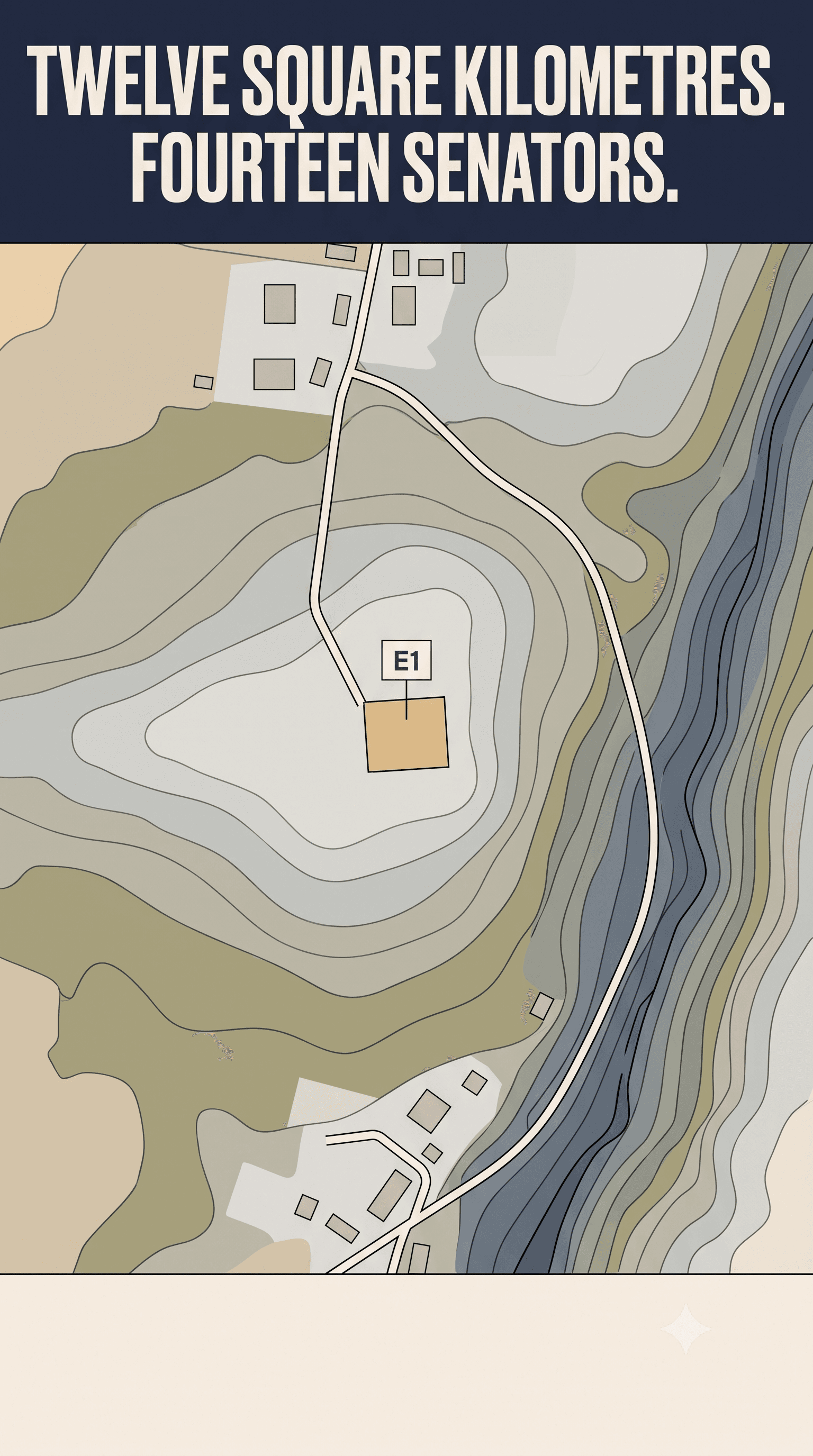
Fordow remains the greatest proliferation concern. Analysts assess its core may be intact. And satellite imagery shows continued construction at the "Pickaxe Mountain" site near Natanz — a potential location for a new, deeper enrichment plant, untouched by any strike.
The Intelligence Wars
No two agencies agree on what happened.
The US assessed Iran's program was set back "around two years." A leaked Defense Intelligence Agency report suggested the facilities were damaged but not destroyed, estimating a setback of only a few months. Israeli intelligence concluded Natanz's underground infrastructure had likely collapsed, but acknowledged uncertainty about Fordow's core. The IAEA called the damage "enormous" — but could not verify specifics after losing inspector access.
Iran itself offered contradictory readings: initially claiming "quite superficial" damage with "no irreversible harm," then later acknowledging damage was "serious." This ambiguity was almost certainly deliberate — designed to keep adversaries uncertain while projecting resilience domestically.
The Carnegie Endowment for International Peace summarized the strategic paradox: the strikes "rendered most of Iran's known enrichment infrastructure inoperable" but left Iran with "an ability and perhaps greater desire to reconstitute these capabilities, including in smaller, clandestine facilities."
The Deal on the Table — and What It Leaves Unresolved
As of June 14, 2026, mediators announced a Memorandum of Understanding set to be signed on June 19, with a 60-day window to negotiate a final agreement. The MOU would reopen the Strait of Hormuz and provide Iran with sanctions relief. Nuclear terms would be negotiated in the follow-on phase.
Critically, Iran's 440-kilogram stockpile of 60-percent enriched uranium remains untouched by the MOU. It will not be surrendered, transferred, or capped before signing. Arms control experts have noted that any future deal must contend with far greater uncertainty than the 2015 JCPOA faced — given the gap in inspections since 2018, Iran's technological advances in enrichment, and the verification blackout since February 2026.
The proposed MOU would require Iran to commit to never seeking a nuclear weapon, with a possible uranium enrichment moratorium of at least 12 years. Tehran has historically maintained it never sought one in the first place — making the concession simultaneously significant and unverifiable.
Strategic Implications: The Question That Remains
The United States degraded Iran's nuclear infrastructure. It did not eliminate Iran's nuclear knowledge, its enriched uranium, or its covert capacity to rebuild. The war created a window — but the size of that window remains classified, contested, and possibly unknowable.
What is clear is this: the bomb that could destroy a centrifuge hall cannot destroy a country's nuclear expertise. And with IAEA inspectors locked out, the world is left reading satellite imagery and intelligence leaks to answer the most consequential security question of the decade.
Whether that window becomes a lasting diplomatic settlement — or simply a pause before the next escalation — will be determined not by what was bombed in June 2025, but by what is negotiated in the sixty days ahead.