In a major diplomatic overture amid a rapidly expanding Middle East war, Iranian President Masoud Pezeshkian has issued a rare public apology to neighboring West Asian countries, assuring them that Tehran will halt its missile strikes across the region. As the devastating US-Israel conflict with Iran enters its second week, Pezeshkian emphasized that Iran "will not strike" its neighbors unless an attack against Iranian territory originates from their soil.
The televised address marks a significant pivot in Tehran's regional strategy. Following the targeted assassination of Iran's Supreme Leader Ayatollah Ali Khamenei in a coordinated US-Israel strike on February 28, 2026, the region has been engulfed in cross-border violence. Iran's subsequent retaliatory missile barrages inadvertently struck or threatened several Gulf Arab states, prompting immense diplomatic and economic fallout. Now, operating under a newly formed interim leadership council, Pezeshkian is attempting to de-escalate tensions with regional powers while maintaining a defiant stance against Washington and Jerusalem.
A Strategic Apology: Reassuring the Gulf States
During his prerecorded broadcast on state television, President Pezeshkian sought to pacify growing anxieties in neighboring capitals, including Riyadh, Abu Dhabi, and Manama. Over the past week, intense Iranian fire targeting US and Israeli interests resulted in airspace violations and explosions near major urban centers in Bahrain, Saudi Arabia, and the United Arab Emirates.
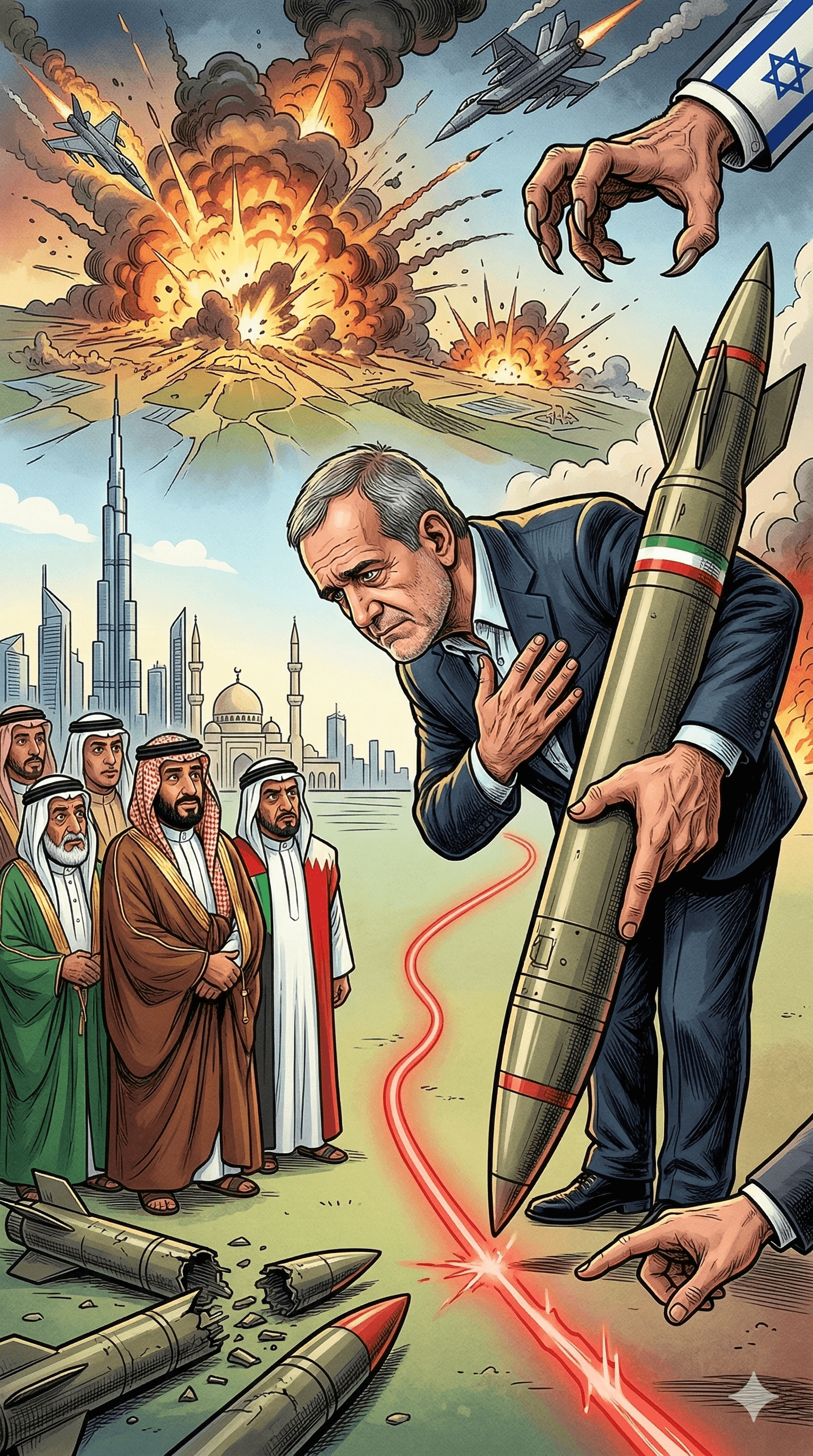
"I apologize on my own behalf and on behalf of Iran to the neighboring countries that were attacked by Iran," Pezeshkian stated. He attributed the recent strikes affecting Gulf territories to a "miscommunication in the ranks" and assured regional leaders that Tehran harbors no territorial ambitions.
"We have no intention of invading other countries," he continued. "The interim leadership council agreed yesterday that no more attacks will be made on neighboring countries and no missiles will be fired unless an attack on Iran originates from those countries."
This calculated diplomatic maneuver highlights Iran's desire to prevent the ongoing war from transforming into a broader regional confrontation. By explicitly stating that Iran will only target its neighbors if their territories are used as staging grounds by the United States or Israel, Tehran is placing political pressure on Gulf states to deny airspace and logistical support to the US military.
Defiance Against US Demands for "Unconditional Surrender"
While extending an olive branch to its West Asian neighbors, Iran’s leadership remains resolutely defiant against its primary adversaries. Pezeshkian’s conciliatory message to the Gulf was coupled with a fierce rejection of recent ultimatums delivered by the United States.
Earlier in the week, US President Donald Trump stated that Washington would not engage in diplomatic negotiations with Tehran without its "unconditional surrender." Trump further claimed that the US military operations were performing exceptionally well and suggested that post-surrender, the US and its allies would help reconstruct Iran under new leadership.
Pezeshkian vehemently dismissed these assertions, framing them as imperialist fantasies. "They will take their dreams of us surrendering unconditionally to the grave," the Iranian president declared. He warned that any nation seeking to exploit the current chaos to undermine Iran should avoid becoming "puppets of imperialism," reiterating that alignment with Israel or the United States is "not a path to honor and freedom."
Despite the heavy casualties—with reports indicating over 1,230 dead in Iran—and the severe damage to the nation's military infrastructure, the Islamic Revolutionary Guard Corps (IRGC) continues to launch retaliatory operations. The IRGC recently announced the deployment of new-generation missile systems targeting US bases and Israeli positions across the region under "Operation True Promise 4."
Economic and Geopolitical Impact on the Middle East
The escalating US-Israel conflict with Iran has triggered profound economic and logistical disruptions across the global supply chain, with the Middle East bearing the brunt of the chaos.
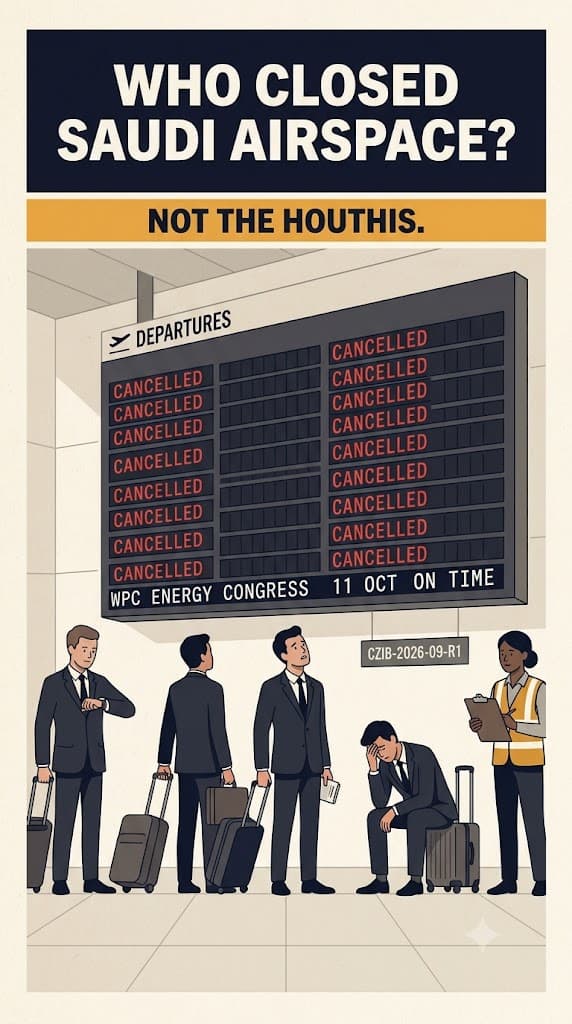
Following reports of intercepted aerial threats and explosions near the world's busiest international transit hubs, major travel disruptions have paralyzed parts of the region. On Saturday morning, operations at Dubai International Airport (DXB) were temporarily suspended to ensure the safety of passengers and crew. Emirates Airlines halted all flights to and from Dubai "until further notice," advising passengers not to travel to the airport. Passengers were reportedly moved into train tunnels to shelter from incoming threat interceptions.
The geopolitical instability has also sent shockwaves through global energy markets. Crude oil prices surged above $90 a barrel as traders priced in the risk of prolonged disruptions in the Strait of Hormuz and potential damage to vital oil infrastructure in the Persian Gulf. Defense chiefs from Saudi Arabia and Pakistan have already convened in Riyadh to discuss mutual defense pacts and strategies to safeguard critical energy assets from the conflict's crossfire.
Outlook: Can Regional De-escalation Hold?
As the Middle East navigates this precarious geopolitical tightrope, the success of President Pezeshkian’s diplomatic outreach remains uncertain. Iran’s promise to halt strikes on its West Asian neighbors is strictly conditional. If the United States or Israel utilizes airspace or military installations located within Gulf nations to launch further strikes against Iranian targets, Tehran has vowed to retaliate proportionately.
This places nations like the UAE, Bahrain, and Saudi Arabia in an incredibly delicate position. These countries host significant US military infrastructure, making them potential flashpoints if the Pentagon intensifies its bombing campaign, as US officials have recently warned.
Ultimately, while Iran's apology serves as a crucial first step in preventing an all-out regional war, the overarching US-Israel-Iran conflict shows no immediate signs of a ceasefire. The coming weeks will test whether the Gulf states can successfully mediate their own security while caught between an uncompromising United States and a defiant Iran.
#News #Geopolitics #MiddleEast #Iran #MasoudPezeshkian #USIsraelWar #GulfStates #GlobalEconomy #DonaldTrump #ForeignPolicy #Dubai #WorldNews