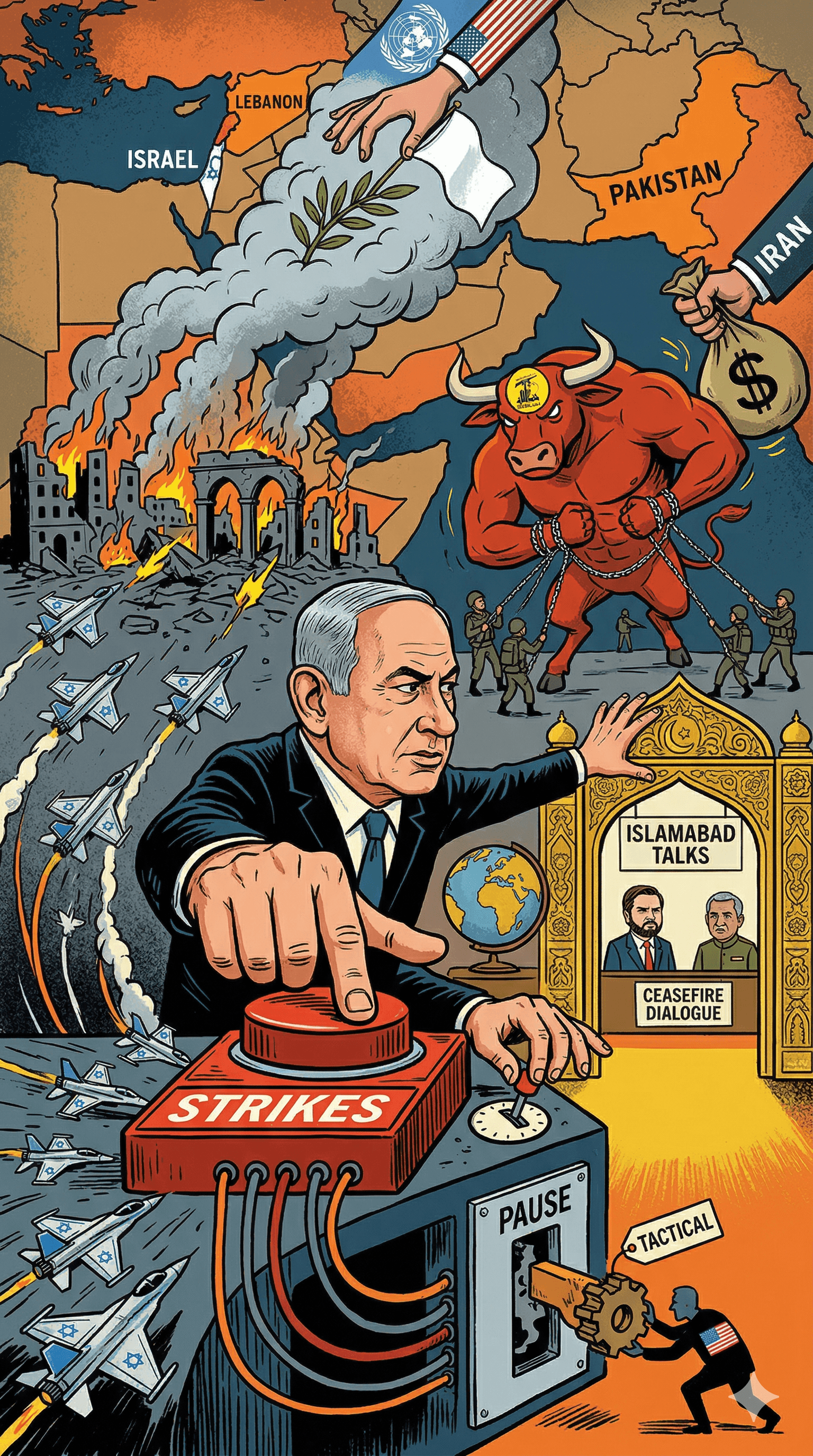
JERUSALEM/WASHINGTON — In a significant diplomatic maneuver, Israeli Prime Minister Benjamin Netanyahu is reportedly weighing a brief "tactical pause" in military strikes against Lebanon. The potential halt in hostilities comes as intense international pressure mounts to preserve fragile, parallel peace negotiations between the United States and Iran set to take place in Islamabad, Pakistan. With the Middle East teetering on the edge of a broader regional collapse, all eyes are on whether Israel will grant the temporary reprieve requested by both Lebanese and American officials.
The Push for a Tactical Pause in Lebanon
For weeks, the conflict has ravaged the Israel-Lebanon border, culminating in one of the deadliest periods since the war's major escalation on February 28. On Wednesday alone, intense Israeli airstrikes targeting Hezbollah infrastructure in central Beirut and other areas resulted in over 300 fatalities and more than 1,000 injuries, according to the Lebanese Health Ministry. The Israeli Defense Forces confirmed that recent targeted operations also resulted in the death of Ali Yusuf Harshi, a prominent aide to Hezbollah leader Naim Kassem.
In response to the escalating violence and the heavy toll on civilian infrastructure, the United States and Lebanon have formally requested that Israel halt its strikes as a diplomatic "gesture" ahead of historic direct negotiations scheduled for next week in Washington.
Historically, Netanyahu has maintained a hardline stance, insisting that talks must be held "under fire" and refusing a formal ceasefire with the Iran-backed militant group Hezbollah. However, recent reports suggest a slight strategic shift. According to Israeli sources cited by Axios, while there is firmly "no ceasefire" on the table, Netanyahu may ultimately agree to a "short tactical pause on airstrikes" to facilitate broader geopolitical negotiations.
The Islamabad Talks: A Fragile US-Iran Truce at Stake
The immediate catalyst for this potential pause lies hundreds of miles away in Islamabad. Following a fragile two-week truce brokered by Pakistan between the United States and Iran, delegations from Washington and Tehran are scheduled to meet in the Pakistani capital this weekend.
The U.S. delegation will be led by Vice President JD Vance, while Iran’s parliament speaker, Mohammad Bagher Qalibaf, has been positioned as a key negotiator for Tehran. However, the sheer scale of Israel's recent bombardment in Lebanon threatened to torpedo these critical Islamabad talks entirely.
Iranian officials quickly warned that continued Israeli aggression against Hezbollah—an essential part of Tehran's regional proxy network—violated the spirit of the ceasefire agreement. Arguing that Lebanon falls under the umbrella of the truce, Iran explicitly threatened to abandon the Islamabad summit if the Lebanon strikes persisted.
Trump Intervenes to Save the Ceasefire
Recognizing the imminent threat to the U.S.-Iran diplomatic track, U.S. President Donald Trump directly intervened. In a high-stakes phone call on Wednesday, Trump reportedly urged Netanyahu to scale back military operations in Lebanon.
Confirming the exchange in an interview with NBC News, Trump stated, "I spoke with Bibi and he’s going to low-key it. I just think we have to be sort of a little more low-key." U.S. officials were reportedly stunned by the severity of Israel's Wednesday strikes, fearing that heavy civilian casualties could unravel the painstaking progress made by mediators. This direct American pressure underscores how deeply interconnected the varied fronts of the Middle East crisis have become.
Pakistan's Role as Regional Mediator
Pakistan has emerged as a crucial powerbroker in the current crisis. By leveraging its unique geopolitical position, Islamabad successfully brokered the fragile truce between Washington and Tehran. Pakistani diplomats, acting as guarantors of the agreement, have consistently warned that regional conflicts cannot be viewed in isolation. They have joined Iranian officials in emphasizing that military de-escalation in Lebanon is vital to maintaining the broader U.S.-Iran ceasefire framework.
Parallel Diplomacy: Washington Prepares for Israel-Lebanon Negotiations
Should the tactical pause in Lebanon strikes materialize, it will provide critical breathing room for unprecedented direct talks between Israel and Lebanon. Slated to begin Tuesday at the U.S. State Department in Washington, these negotiations represent a separate but parallel diplomatic track to the Islamabad talks.
Netanyahu announced Thursday that he had authorized direct negotiations "as soon as possible" following appeals from Beirut, including a welcome call from Lebanon's prime minister to demilitarize the capital. The talks aim to focus heavily on the disarmament of Hezbollah and the establishment of peaceful relations between the neighboring nations. The Israeli delegation will be represented by Ambassador to the U.S. Yechiel Leiter, while U.S. Ambassador to Lebanon Michel Issa acts as a key facilitator.
Lebanon has spent days advocating for a temporary ceasefire to allow these broader talks to proceed, describing it as a "separate track but the same model" as the U.S.-Iran truce. While Israeli officials reiterate that there will be no permanent truce ahead of the talks, a tactical pause could serve as the necessary catalyst for diplomats to engage meaningfully.
Economic and Geopolitical Implications
The stakes of these intertwined negotiations extend far beyond the borders of Israel and Lebanon. The ongoing conflict has severely disrupted global trade, most notably through Iran's continued de facto closure of the Strait of Hormuz. This vital maritime chokepoint's obstruction has caused significant volatility in global energy markets, driving up oil prices and stoking fears of widespread inflation affecting gasoline and basic commodities worldwide.
A successful negotiation at the Islamabad talks could lead to the resumption of normal commercial traffic through the strait, easing economic pressures globally. Conversely, if Israel's strikes in Lebanon cause the U.S.-Iran talks to collapse, the resulting escalation could cement the strait's closure and trigger deeper global economic turmoil. Regional powers, including Türkiye, have strongly condemned the recent Israeli strikes, warning that continued bloodshed undermines trust and threatens the entire framework of regional economic stability.
Outlook and Regional Impact
As the weekend approaches, the geopolitical landscape remains highly precarious. A brief tactical pause by Israel would serve as a critical diplomatic bridge, potentially rescuing the U.S.-Iran summit in Islamabad while setting a cooperative tone for the Israel-Lebanon talks in Washington.
However, the situation remains highly volatile. Major questions persist regarding Iran's enriched uranium stockpile, Hezbollah's willingness to actually demilitarize, and Israel's long-term security guarantees. The coming days will test whether coordinated international pressure can successfully compartmentalize and defuse the varied fronts of this conflict. If diplomacy prevails, it could mark the beginning of a historic, sustainable de-escalation. If it fails, the region risks plunging back into an unpredictable and economically devastating wider war.