WASHINGTON, D.C. — King Charles III championed the indispensable US-UK bond during a pivotal day of statesmanship in Washington, marking the 250th anniversary of American independence. In a sweeping four-day state visit, the British monarch met with President Donald Trump and delivered a rare, historic address to a joint session of Congress. The diplomatic mission underscores a concerted effort to reaffirm trans-Atlantic ties and navigate a complex, rapidly shifting global political landscape.
A Historic Address to Congress: Reaffirming the US-UK Alliance
Addressing lawmakers from the dais of the House of Representatives on Tuesday, King Charles III became only the second British monarch in history to address a joint session of the U.S. Congress, following in the footsteps of his late mother, Queen Elizabeth II, who delivered a landmark speech in 1991.
]The king repeatedly emphasized the shared historical and cultural ties that have cemented the enduring US-UK bond. He expressed profound gratitude that the two nations united over the centuries to build what he described as “one of the most consequential alliances in human history.” Eliciting multiple standing ovations from both Democrats and Republicans, Charles struck a unifying and optimistic tone, while recognizing that today's geopolitical climate is noticeably "more volatile and more dangerous" than the era his mother addressed over three decades ago.
Subtle Diplomatic Nuances and Calls for Global Unity
While the British monarch is expressly apolitical by tradition, King Charles III used his platform to deliver a series of nuanced diplomatic messages. He cautioned against isolationism, urging American leaders and the broader international community to “ignore the clarion calls to become ever more inward-looking.”
The king highlighted several key areas of international cooperation:
NATO and Global Security: Charles stressed that the alliance between the U.S. and the U.K. "cannot rest on past achievements." He championed the NATO alliance—an organization President Trump has frequently scrutinized—and urged "unyielding resolve" in backing Ukraine against Russian aggression.
Climate Change and Conservation: A lifelong environmentalist, the king subtly contrasted with the current administration's rollback of climate regulations by encouraging those in power to “reflect on our shared responsibility to safeguard nature, our most precious and irreplaceable asset.”
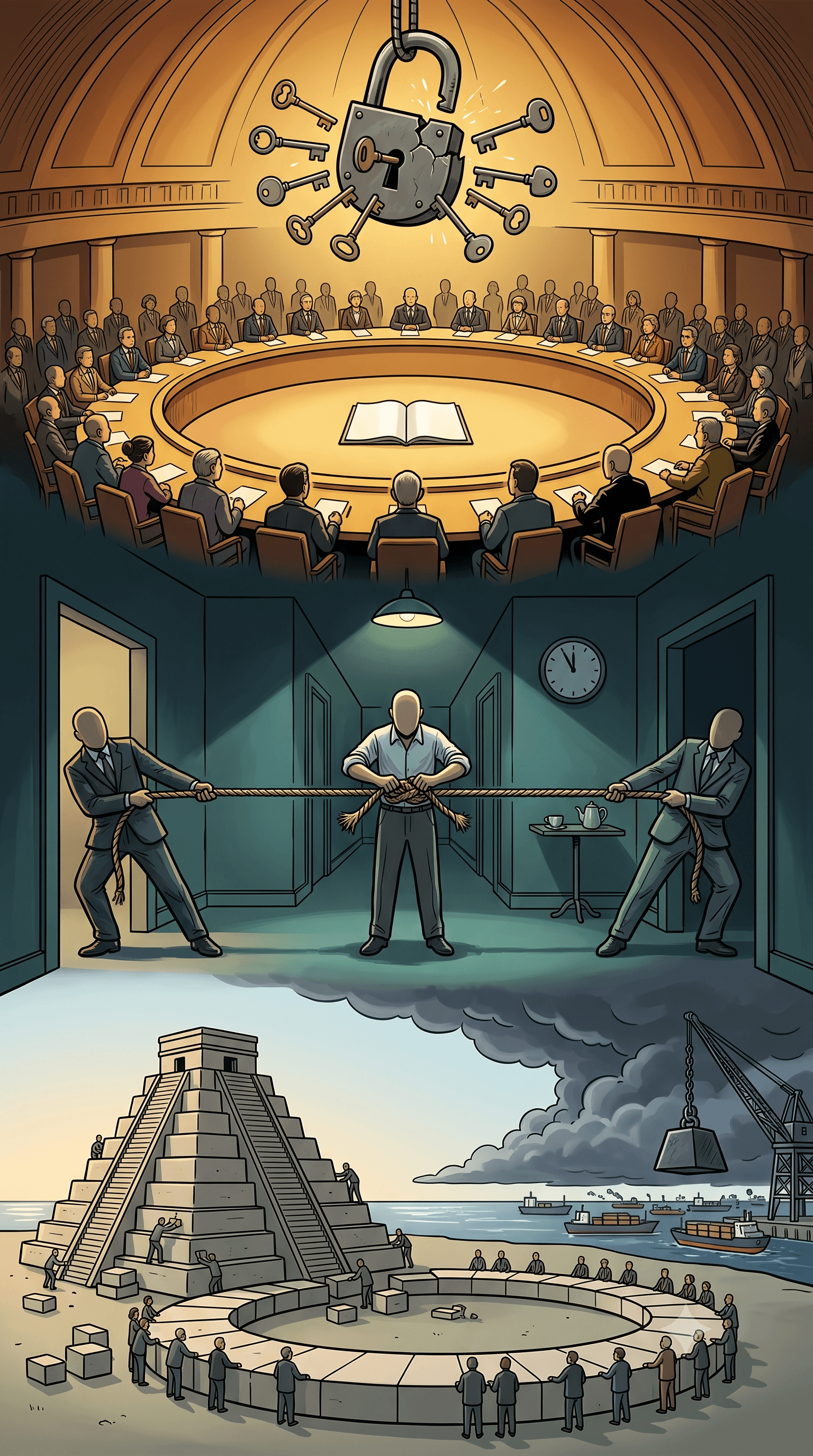
Democratic Institutions: Charles traced the concept of executive checks and balances back to the Magna Carta of 1215, generating significant applause from lawmakers.
Addressing recent domestic events, Charles also offered words of solidarity. Referencing a recent shooting incident that disrupted the White House Correspondents' Dinner just days prior, the king stated with firm resolve that “such acts of violence will never succeed.” Furthermore, he delicately alluded to the collective strength required to support victims of societal ills, which analysts viewed as an acknowledgment of the controversies surrounding the late Jeffrey Epstein.
State Visit Diplomacy: King Charles III and President Trump
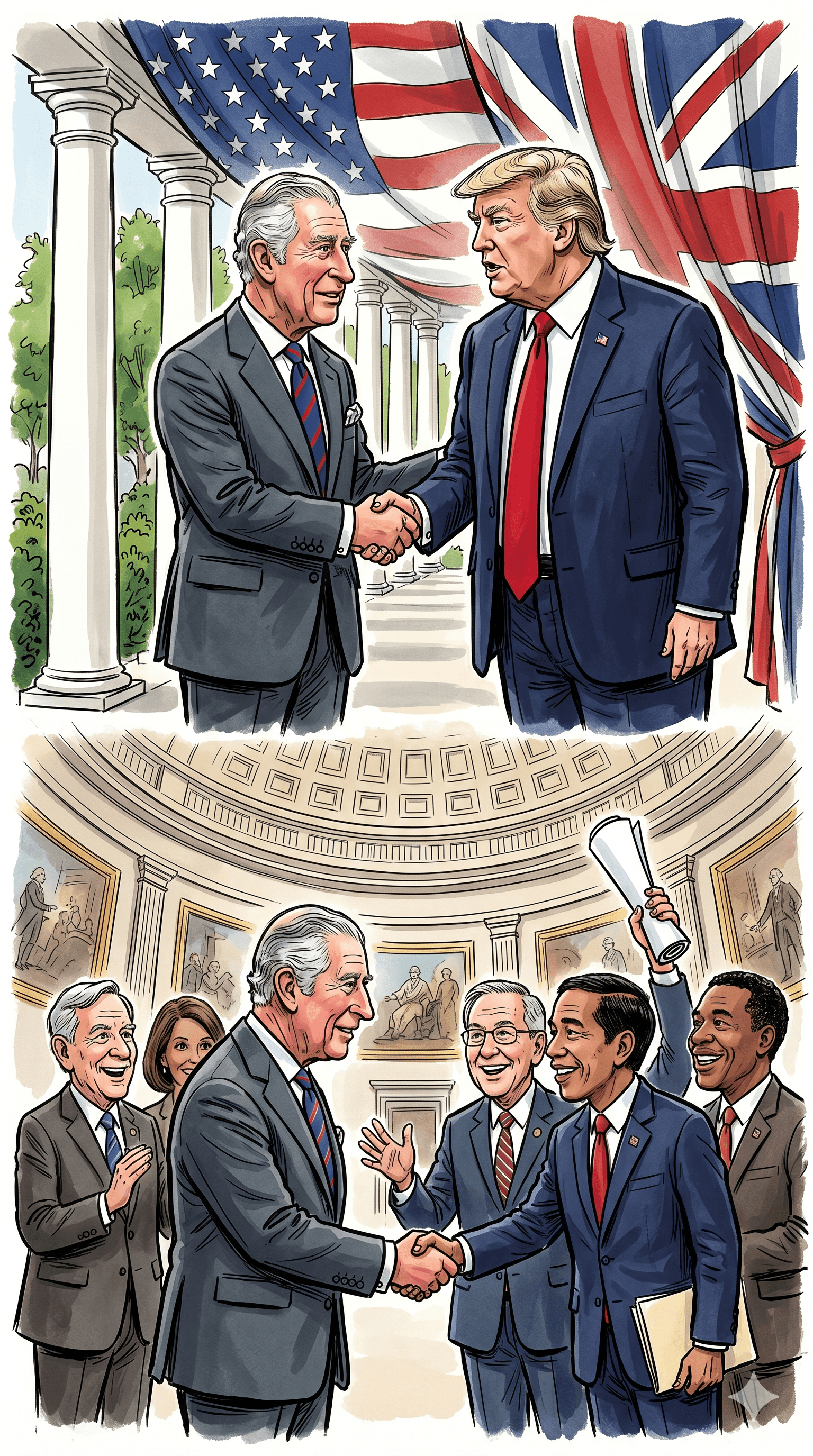
Despite areas of differing political philosophies, the state visit featured warm diplomatic greetings and formal pageantry. King Charles III and Queen Camilla arrived at the White House for an elaborate formal arrival ceremony, complete with a military parade and flyover.
President Donald Trump welcomed the royal couple to the Oval Office for private talks that he later described as “really good,” adding that the king is a “fantastic person.” During his public remarks, President Trump leaned into the deep historical ties between the two nations.
“American patriots today can sing, 'My country, 'tis of thee, sweet land of liberty,' only because our colonial ancestors first sang, 'God save the king,'” Trump noted, emphasizing that Americans have no closer friends than the British.
The White House State Dinner
The day culminated in a jovial state dinner hosted by President Trump and First Lady Melania Trump in the East Room of the White House. The exclusive event was attended by approximately 130 guests, including top lawmakers, conservative Supreme Court justices, and prominent business figures such as Apple outgoing CEO Tim Cook and Amazon founder Jeff Bezos. Both heads of state used the banquet to enthusiastically toast the US-UK alliance, with Charles labeling the partnership as entirely "indispensable."
Navigating Economic and Geopolitical Friction
The grand ceremonial aspects of the King Charles US visit sit atop a foundation of modern geopolitical challenges that both nations must continually navigate.
The "special relationship" is currently being tested by a series of economic and strategic frictions. President Trump has recently threatened to impose a “big tariff” on the U.K. if it refuses to scrap a digital services tax aimed at American technology companies. Additionally, the traditional trans-Atlantic defense posture has faced headwinds amid U.S. domestic debates over NATO funding and differing approaches to ongoing conflicts, including the war in Iran.
Despite these hurdles, King Charles III's diplomatic approach leaned heavily on the historical resilience of the alliance. He gracefully reminded his audience that while the two nations "do not always agree," the foundational democratic values they share provide a framework to overcome temporary policy disputes.
Future Outlook: The Resilience of Trans-Atlantic Relations
The royal state visit serves as a powerful symbol of continuity in US-UK relations. While economic tariffs, varied climate priorities, and differing defense strategies pose distinct challenges, the core message from both King Charles III and President Trump remains clear: the trans-Atlantic partnership is a cornerstone of global stability. As the U.S. celebrates its 250th anniversary of independence, the ongoing dialogue facilitated by this historic visit suggests that the "special relationship" will continue to adapt, evolve, and ultimately endure the pressures of a volatile modern world.