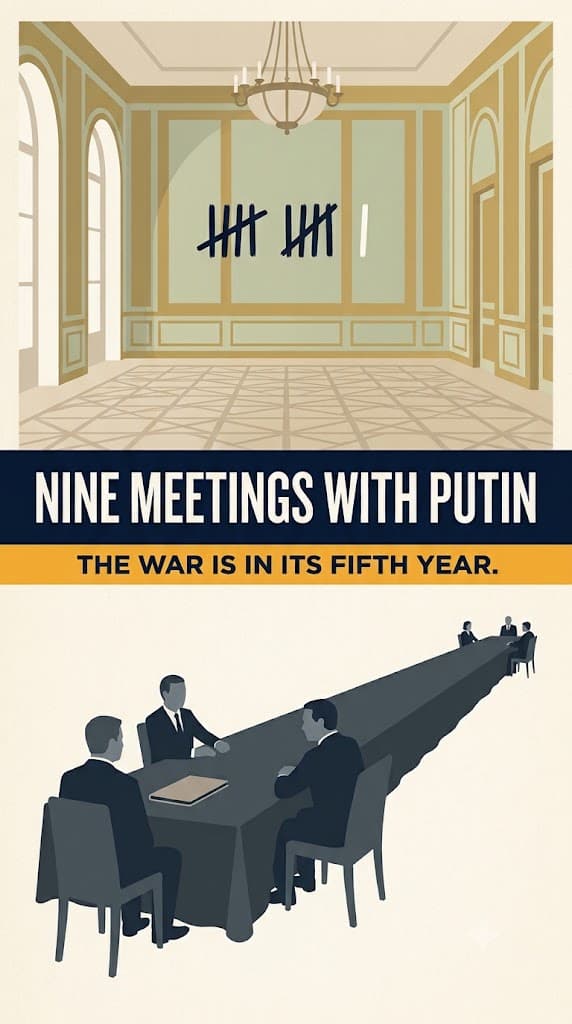
On 21 October 2026, US envoy Steve Witkoff met Vladimir Putin in a palace in Saint Petersburg. It was his ninth in-person meeting with the Russian president.
The day before, in Oslo, he had met Zelensky alongside the prime ministers of Norway and Finland and representatives of France, the UK, Germany, Poland, the EU and NATO. He called those talks productive and described "some degree of momentum." Jared Kushner joined virtually.
Witkoff said he brought documents setting out American approaches to ending the war, and — according to TASS — that "there is already a basis for reaching a ceasefire."
The war is in its fifth year.
WHAT EACH SIDE BROUGHT TO THE TABLE
This is the part worth reading slowly, because the asymmetry is in the public record and almost nobody is laying it out.
What Ukraine was asked for. The one concrete demand reported out of Oslo is that Ukraine stop striking Russian oil refineries. Kushner pressed Trump's demand on this and a source described him as "very direct." Zelensky has said he is prepared to stop — if Moscow takes reciprocal steps. What those reciprocal steps are has not been specified in any reporting we can find.
What Trump said about Ukraine. That he doubts Zelensky wants to end the war, and that if he doesn't, "it's gonna be a very bad thing." The pressure in public is being applied to Kyiv.
What Russia brought. A goodwill gesture — the release of Stephen Hubbard, a retired American teacher held in Russia. Thanks to Trump and Witkoff for their efforts. An offer to help on Iran. An offer to supply fertiliser to the United States. And a proposal for a Trump meeting in China next month, which the Kremlin suggested could include Xi Jinping.
What Putin wanted to talk about. That after the diesel deal, global prices "fell by 5–6%."
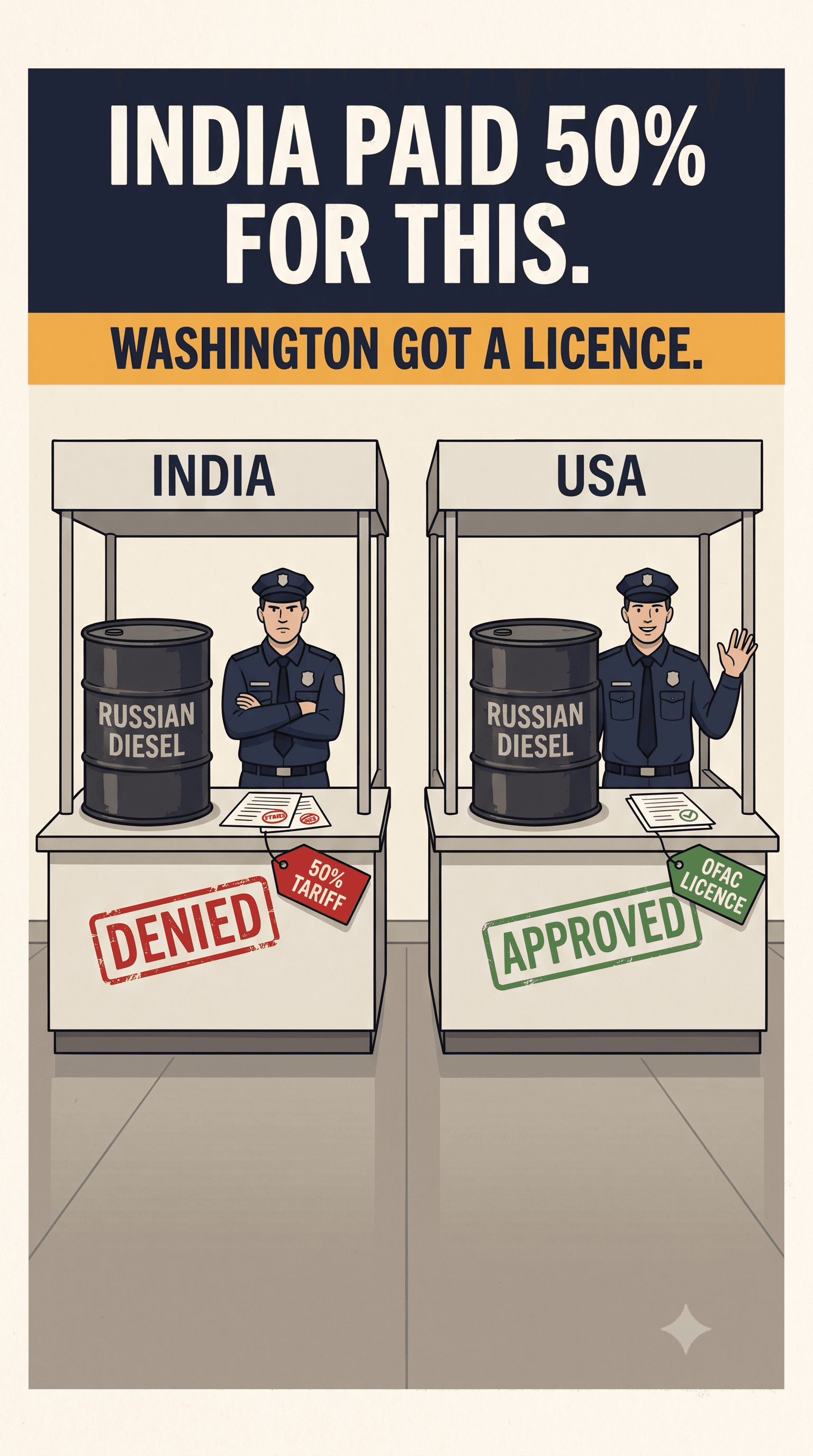
Read that last line again. In a meeting convened to end a war, the Russian president's contribution included the commercial benefit of the sanctions waiver Washington issued him twelve days earlier.
THE RECEIPT
On 10 October we wrote about General Licence 135 — the US Treasury instrument authorising Russian diesel into the American market, valid to April 2027 — and argued that what Washington spent was its credibility and what it bought was a headline three weeks before a midterm.
We were wrong about one thing: it also bought Putin a talking point, which he deployed on 21 October in a negotiation about territory and ceasefire terms.
And on 8 October, writing about India's ceasefire proposal, we said this:
Every plan since 2022 has died on territory, because neither side can concede it and survive. India's doesn't reach for it.
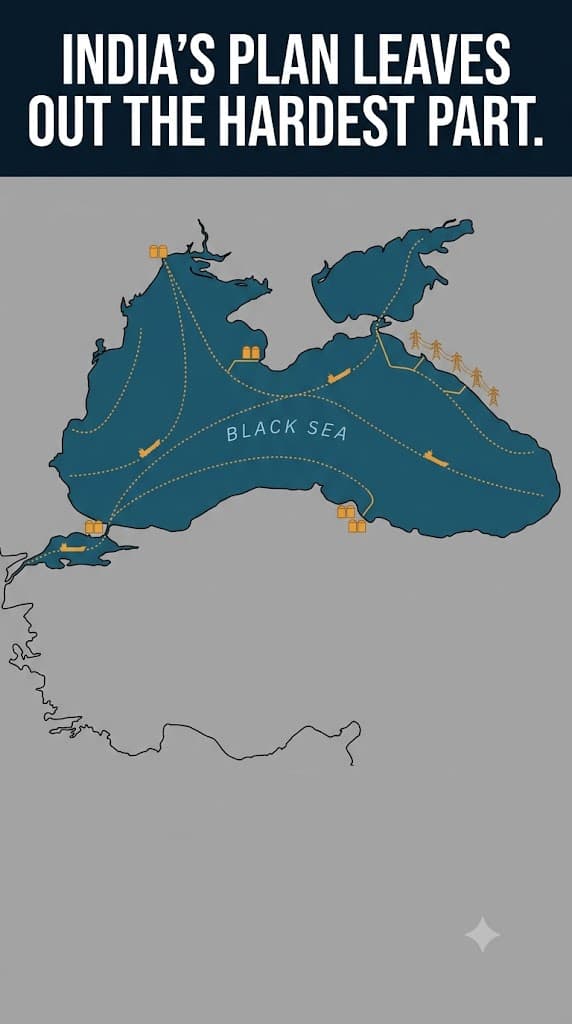
Look at what is actually on the table now. The only specific, reciprocal measure being discussed in public is energy infrastructure — stop hitting refineries, stop hitting the grid. Territory is not mentioned in any reporting of the proposal's contents.
That is, structurally, the Indian plan. We are labelling this as inference, because the US proposal's components have not been published and we have not seen them. But if the framework Witkoff carried into Saint Petersburg is an energy ceasefire that leaves territory alone, then the plan Washington is now advancing is the architecture New Delhi proposed in September and Moscow publicly thanked New Delhi for on 7 October.
WHAT WOULD MAKE THIS ONE DIFFERENT
Nine meetings is not in itself an indictment. Diplomacy is repetitive, and the Dayton talks took years of groundwork. But something has to distinguish round nine from rounds one through eight, and there are only three candidates.
One: the trilateral. Zelensky says the next step must be a meeting with Putin and Trump together. Russia has so far rejected that format. If Moscow accepts it, that is a genuine change. Watch for it.
Two: an enforceable reciprocal step. "Ukraine stops hitting refineries if Russia reciprocates" is only a deal once somebody says what Russia stops doing. Until that sentence exists in public, this is a demand on one party described as a mutual concession.
Three: territory. Nothing in the reporting addresses it, and nothing has ever been agreed without it.