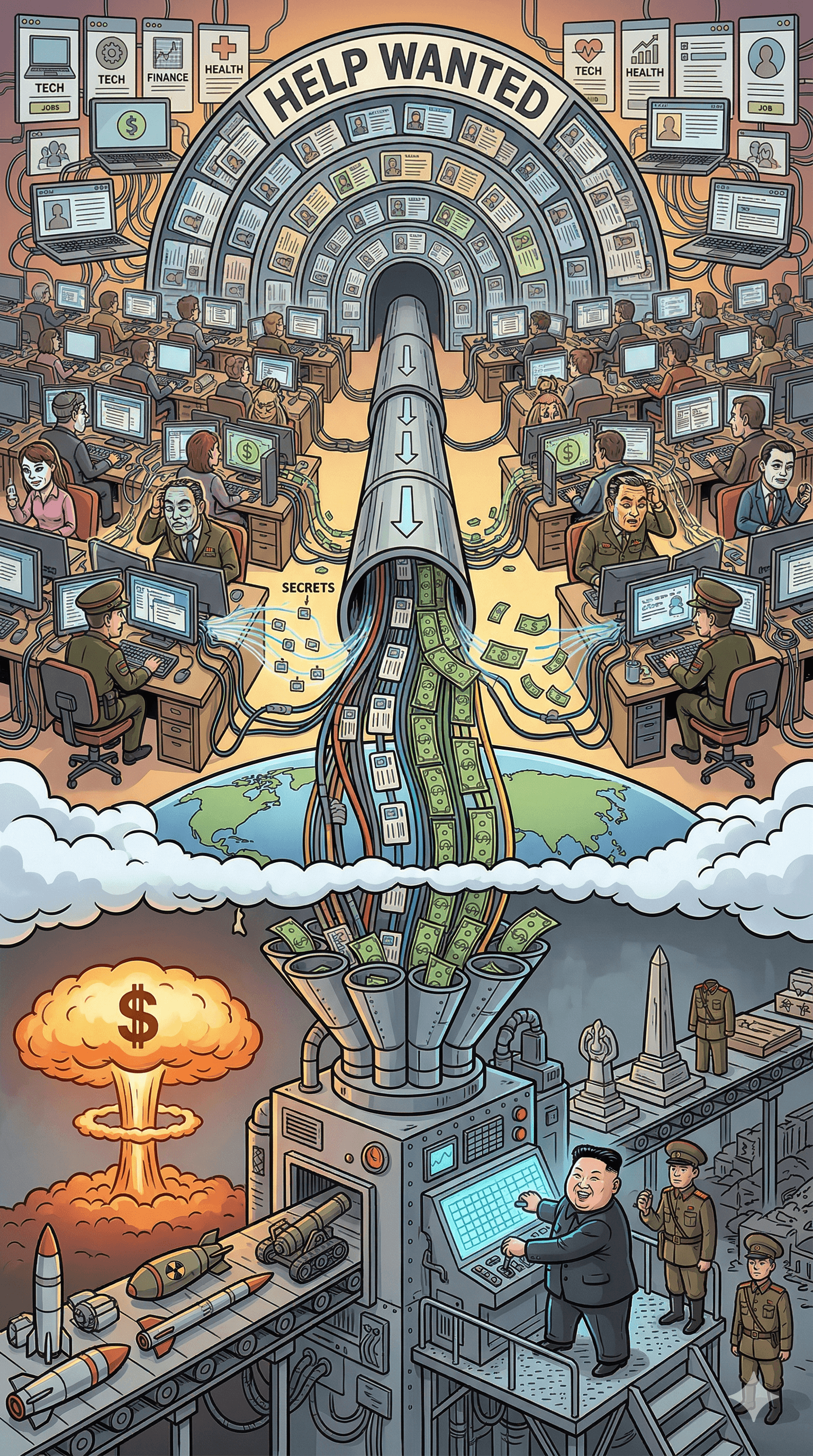
In a sophisticated evasion of international sanctions, North Korean operatives have successfully infiltrated hundreds of US businesses. Masquerading as remote IT workers, these individuals are securing lucrative contracts and full-time positions at Fortune 500 companies and tech startups alike. Their primary objective is generating illicit revenue to fund Kim Jong Un’s ballistic missile and weapons of mass destruction (WMD) programs, while occasionally engaging in corporate espionage.
The Scope of the Infiltration: Thousands, Not Hundreds of Thousands
While sensationalized rumors have occasionally suggested infiltration numbers climbing into the hundreds of thousands, official intelligence assessments paint a different, yet highly concerning, picture. According to the Federal Bureau of Investigation (FBI), the US Department of Justice (DOJ), and the US Treasury, the actual number of North Korean IT workers operating in this scheme is estimated to be in the thousands.
These highly skilled software developers and IT professionals are primarily based in China and Russia, operating under the strict command of the North Korean regime. Despite the lower headcount than some viral claims suggest, the economic and security impacts are massive. The scheme has reportedly generated hundreds of millions of dollars annually since 2018, representing a critical financial lifeline for a heavily sanctioned rogue state.
The Infiltration Playbook: How Operatives Secure US Remote Jobs
The rapid normalization of remote work during the COVID-19 pandemic provided the perfect cover for North Korea's cyber army. Operating under entities like the Reconnaissance General Bureau—North Korea’s primary military intelligence agency—these operatives exploit vulnerabilities in modern corporate hiring and human resources practices.
Stolen Identities and AI Manipulation
To bypass initial screenings, North Korean operatives utilize advanced Artificial Intelligence (AI) and stolen US identities. Cybersecurity experts at firms like Mandiant and Google Cloud have documented instances where applicants use AI-generated profile pictures, fabricated resumes boasting degrees from prestigious international universities, and stolen personal data from real US citizens. Some operatives have even manipulated video and voice feeds in real-time during remote interviews to mask their true identities, accents, and physical locations.
US-Based Facilitators and "Laptop Farms"
A major technical hurdle for these operatives is proving a domestic US physical presence. To solve this, the network relies on US-based facilitators—citizens or residents who willingly or unknowingly assist the regime.
These facilitators manage "laptop farms" across the United States. When a US company hires a North Korean operative, they ship the corporate workstation to the facilitator's address. The facilitator connects the device to the internet, allowing the North Korean worker to access it remotely via IP-based KVM (Keyboard, Video, Mouse) devices or remote management software. To corporate IT and security departments, it appears the employee is logging in locally from within the United States.
Stakeholders and the Cybersecurity Response
The scale of this operation has caught many corporate security teams off guard, prompting aggressive responses from federal authorities and private cybersecurity firms.
In recent months, the DOJ has unsealed indictments against several North Korean nationals and their facilitators. In one notable case, operatives were charged with stealing $900,000 in cryptocurrency from a single company after covertly modifying its blockchain smart contracts. Authorities have also seized dozens of laptop farms across multiple US states and blocked financial accounts used to launder the illicit funds.
Private sector stakeholders are sounding the alarm. Companies like CrowdStrike and Mandiant have warned that these workers often gain elevated access to production systems and source code. In one documented incident, cybersecurity firm KnowBe4 accidentally hired a North Korean operative who immediately attempted to deploy malware on the company's internal network upon receiving his workstation. Fortunately, internal alerts flagged the activity, and the FBI was engaged before damage could be done.
Motivations: Bypassing Sanctions to Fund WMDs
The motivations behind this sprawling network are primarily financial. Traditional revenue streams for North Korea, such as illegal arms sales and resource exports, have been severely throttled by United Nations sanctions.
Faced with an isolated economy, the Kim Jong Un regime has pivoted to cybercrime. The IT workers funnel the vast majority of their six-figure US salaries directly back to the state. US intelligence experts are adamant that these funds do not improve the lives of average North Korean citizens; instead, they are directly allocated to the continued research, development, and expansion of Pyongyang’s illicit nuclear and ballistic missile arsenals.
Furthermore, while the primary goal is revenue generation, the secondary threat is corporate espionage. Cybersecurity analysts warn that these operatives act as "sleeper cells" within Western tech infrastructure. With their elevated access, they could theoretically receive future directives from Pyongyang to deploy ransomware, steal intellectual property, or disable critical systems across the US and Europe.
Economic and Political Implications
The implications of this scheme are profound and multi-layered. Economically, US companies are unwittingly financing a hostile foreign power, exposing themselves to massive regulatory fines under strict US Treasury sanctions laws. Companies also face the direct theft of proprietary data, intellectual property, and digital assets.
Politically, the scheme undermines the efficacy of global sanctions. The United Nations and Western allies rely on economic isolation to pressure Pyongyang into denuclearization. However, this strategy is rendered significantly less effective if North Korea can reliably generate hundreds of millions of dollars through decentralized cyber channels. This forces international law enforcement into a perpetual game of digital whack-a-mole, tracking down proxy accounts, cryptocurrency tumblers, and shell companies.
Future Outlook and Corporate Defense Strategies
Looking ahead, cybersecurity experts predict that North Korean tactics will become even more aggressive and sophisticated as AI tools become more accessible. The threat is also expected to expand further into European and Asian tech sectors.
To combat this, human resources and corporate security departments are being forced to overhaul their hiring processes. Recommendations include implementing mandatory camera-on interviews, using advanced geolocation tools to verify physical addresses, conducting rigorous background checks that verify VoIP numbers, and continuously re-verifying the identities of remote workers.
As the digital front lines blur with traditional geopolitics, corporate America is learning a hard lesson: the next remote hire might not just be a bad cultural fit, but a state-sponsored operative working for one of the world's most heavily sanctioned regimes.