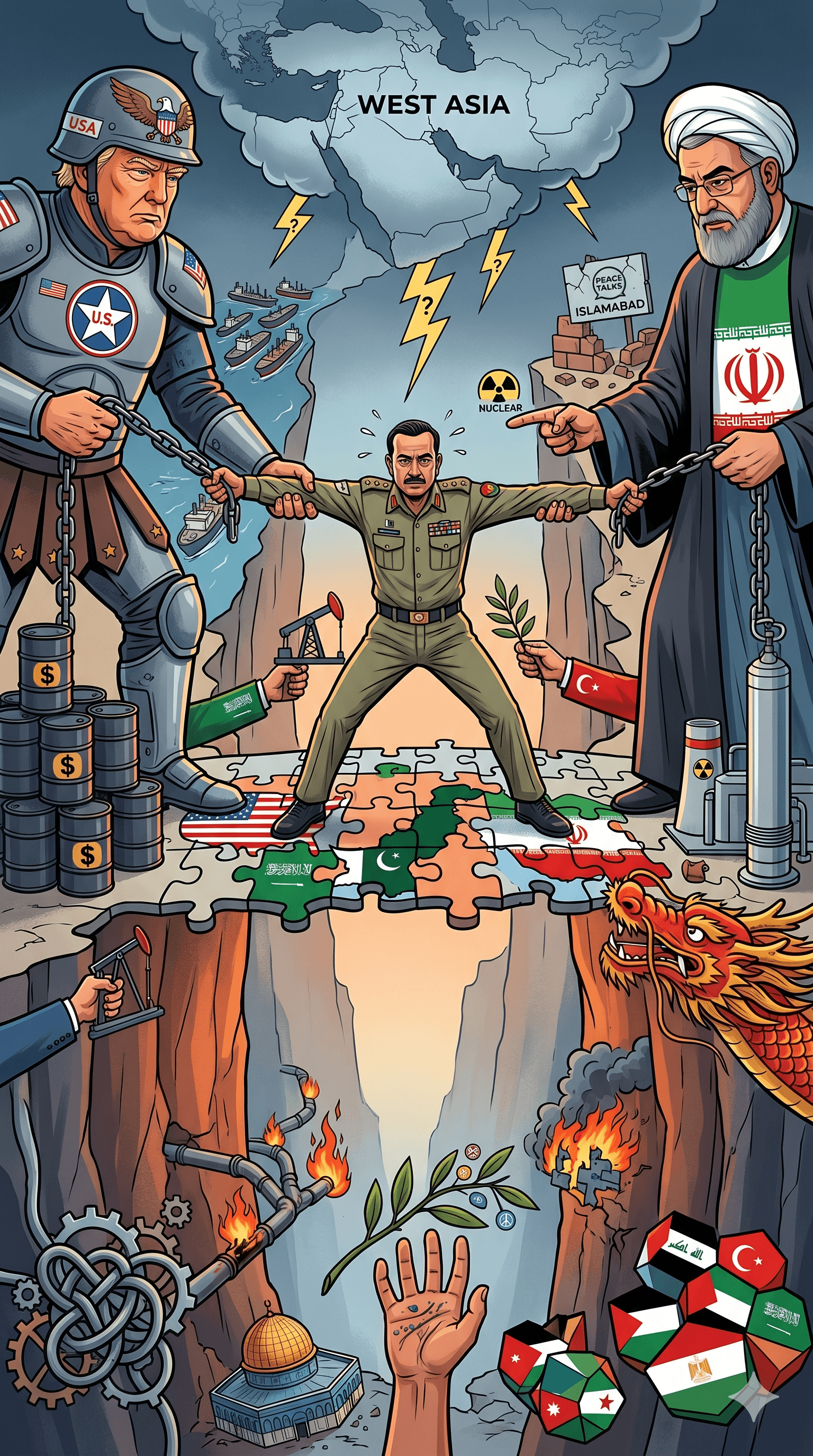
TEHRAN — In a high-stakes diplomatic maneuver that has the eyes of the world fixed on West Asia, Pakistan’s Chief of Army Staff, Field Marshal Asim Munir, arrived in Tehran on Wednesday. Leading a high-level delegation, Munir’s visit is being viewed as a critical, last-ditch effort to prevent the region from sliding back into full-scale war. As the primary mediator between Washington and Tehran, Pakistan is attempting to bridge a widening chasm following the collapse of the recent "Islamabad Talks."
The Mission: A Message from Washington
Field Marshal Asim Munir, accompanied by Pakistan’s Interior Minister Mohsin Naqvi, was received at the Mehrabad International Airport by Iranian Foreign Minister Abbas Araghchi. According to officials from the Inter-Services Public Relations (ISPR), the visit is part of "ongoing mediation efforts" aimed at de-escalating tensions between the United States and the Islamic Republic.
Diplomatic sources indicate that Munir is carrying a "specific and urgent" message from U.S. President Donald Trump. This follows a tense weekend in Islamabad where direct negotiations between U.S. Vice President JD Vance and Iranian officials ended without a breakthrough. The urgency of the Tehran visit is underscored by a looming Tuesday deadline, when a fragile two-week ceasefire is set to expire.
The Islamabad Impasse: Why Previous Talks Failed
The first round of direct talks, hosted in Islamabad on April 11-12, lasted an exhausting 21 hours. Despite the length of the session, the delegations remained deadlocked over "red line" issues. The primary sticking point remains Iran’s nuclear program.
The U.S. delegation, led by Vice President Vance, reportedly demanded a 20-year moratorium on all uranium enrichment. In contrast, Tehran offered a five-year suspension, maintaining that its right to enrich uranium for civilian purposes is "indisputable."
Following the failure of the Islamabad round, President Trump announced a naval blockade of the Strait of Hormuz to curb what he termed "Iranian extortion." This escalation has sent global energy prices to record highs and placed immense pressure on the mediation team led by Munir to find a middle ground before hostilities resume.
Background: A Region on the Brink
The current crisis erupted on February 28, 2026, following joint U.S.-Israeli strikes on Iranian soil. The conflict has since claimed the lives of thousands and severely disrupted global trade. For Pakistan, the stakes are not merely diplomatic but existential.
Sharing a 900-kilometer border with Iran, Islamabad has faced a multifaceted crisis since the war began. Domestic protests have rocked major cities like Karachi, and the country is grappling with a severe energy shortage due to the disruption of Gulf oil supplies. Operation Muhafiz-ul-Bahr, launched by the Pakistan Navy in March, continues to escort merchant vessels, but the economic strain of a prolonged conflict is becoming unsustainable for the South Asian nuclear power.
Pakistan’s Unique Position as Mediator
Many analysts have questioned why Pakistan, a country facing its own internal economic challenges, has emerged as the central arbiter in this global conflict. The answer lies in its unique "limited alignment" strategy.
Shared Security Interests: Pakistan fears that a fragmented or weakened Iran could embolden militant groups in Balochistan.
Sectarian Harmony: With a significant Shia population, the Pakistani military leadership is keen to avoid any domestic sectarian spillover from the regional war.
Historical Ties: Despite occasional friction, Pakistan and Iran share deep-rooted historical and cultural bonds that allow for a level of trust that Western or even other Arab nations might lack.
Field Marshal Asim Munir’s personal involvement highlights the "military-to-military" diplomacy that often carries more weight in Tehran than traditional civilian channels. By engaging directly with Iran's military and political elite, Munir is leveraging the institutional credibility of the Pakistani army to secure a second round of negotiations.
Stakeholders and Motivations
The actors involved in this geopolitical drama have vastly different motivations:
The United States: The Trump administration seeks a definitive end to Iran’s nuclear ambitions and the "neutralization of radical elements," while preferring a "deal" that avoids a decades-long quagmire.
Iran: Under the advisory of hardliners like Mohsen Rezaei, Tehran has signaled a willingness for a "long war" if its sovereignty and enrichment rights are not respected. However, the economic toll of the naval blockade is a powerful incentive for compromise.
Pakistan: Islamabad seeks regional stability to protect its borders, secure its energy needs, and prevent a refugee crisis.
The Outlook: Will Peace Prevail?
As Asim Munir conducts meetings in Tehran, the international community is watching for any sign of a "second round" of talks. President Trump has already hinted that Islamabad remains the preferred venue for these potential discussions, suggesting they could materialize within the next 48 hours.
However, the rhetoric from Tehran remains defiant. Iranian Foreign Ministry spokesperson Esmaeil Baqaei emphasized that while they are exchanging messages through Pakistan, they will not accept "dictation or imposition."
The success of Munir’s mission likely hinges on whether he can convince the Iranian leadership that the current U.S. offer is indeed the "final and best," or if he can extract enough of a concession to persuade Washington to extend the ceasefire.
Impact and Implications
If Field Marshal Munir fails, the naval blockade is expected to tighten, and the risk of a broader regional conflagration involving Israel and neighboring Gulf states remains high. Conversely, a successful mediation would not only cement Pakistan’s status as a pivotal geopolitical player but could also lead to a historic "Islamabad Accord" that redefines the security architecture of West Asia.