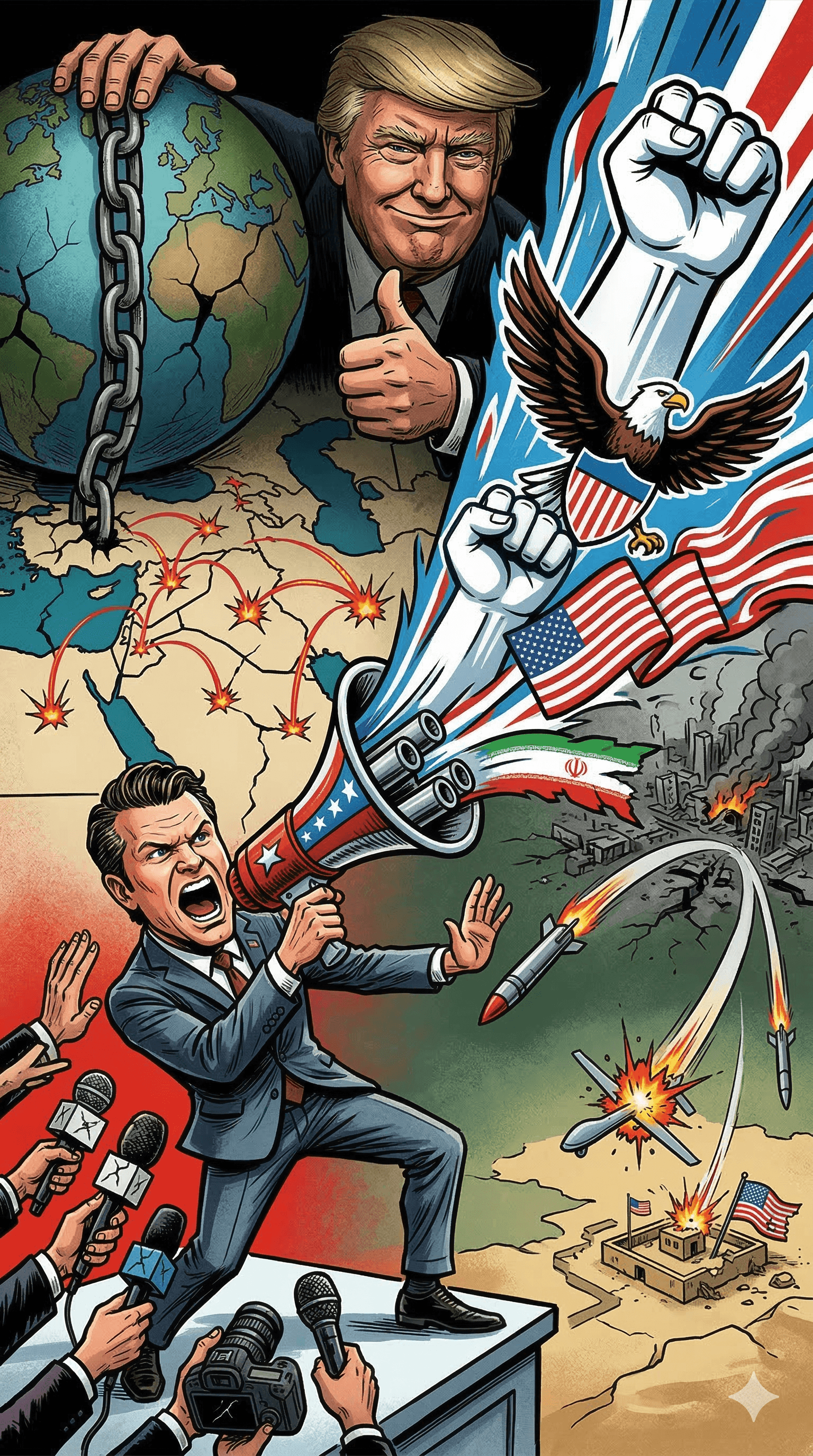
In the opening weeks of "Operation Epic Fury," the sweeping U.S. and Israeli military campaign against Iran, Defense Secretary Pete Hegseth has firmly established himself as the unapologetic, combative public face of the conflict. Appointed by President Donald Trump, Hegseth has shunned the traditional, measured tone of the Pentagon, opting instead for a highly aggressive posture that mirrors the administration’s hardline strategic objectives.
As the war enters its second week in March 2026, Hegseth’s daily briefings have become defined by fierce rhetoric, media clashes, and a clear, uncompromising directive: the United States is fighting for nothing less than Iran’s unconditional surrender.
The Launch of Operation Epic Fury
Initiated in late February 2026, Operation Epic Fury represents a massive escalation in Middle Eastern geopolitics. Directed by President Trump, the operation was launched with the explicit goals of dismantling Iran’s nuclear program, annihilating its naval capabilities, and destroying its ballistic missile and drone infrastructure.
The campaign's opening days drastically altered the Iranian leadership. Coordinated airstrikes resulted in the death of Supreme Leader Ayatollah Ali Khamenei, prompting the rapid elevation of his son, Mojtaba Khamenei, to the position. However, the Trump administration has already signaled its refusal to recognize the new leadership, with the President publicly expressing his dissatisfaction and demanding sweeping capitulation from Tehran.
According to Gen. Dan Caine, Chairman of the Joint Chiefs of Staff, the U.S. and its allies struck over 5,000 targets within the first 11 days of the war. The U.S. military claims this sustained bombardment has led to a 90% reduction in Iran’s ballistic missile launches, fundamentally degrading Tehran's ability to project power across the region.
Pete Hegseth: The Self-Styled "Secretary of War"
Pete Hegseth, a former Fox News host and military veteran, has brought a distinctly partisan and hyper-masculine style to the Pentagon briefing room. He has reportedly embraced the rebranded title of "Secretary of War," reflecting a stark departure from the defensive posture traditionally associated with his cabinet role.
During his press conferences, Hegseth has consistently utilized provocative language, describing the Iranian regime as a "death cult" and "barbaric savages" whose leaders are "toast." He frames the conflict not just as a geopolitical necessity, but as direct, moral retribution for the American lives lost to Iranian-backed proxies over the last four decades.
This combative style prominently extends to his interactions with the press. Hegseth recently drew intense criticism after claiming that the media's focus on U.S. casualties was merely a tactic designed to "make the president look bad." He has repeatedly insisted that while the U.S. mourns its fallen soldiers, the harsh realities of armed conflict require a resolute focus on absolute victory rather than operational caution or media optics.
Casualties, Controversies, and the Human Cost
Despite Hegseth’s assertions of total air dominance and decisive U.S. victories, the war has carried a significant human toll. The Pentagon has confirmed that seven American service members have been killed since the operation began, including six Army reservists who died in a retaliatory Iranian drone strike on a logistics operations center in Kuwait. An additional 140 U.S. troops have been reported injured, with several in severe condition.
On the Iranian side, the conflict has resulted in widespread destruction and severe civilian casualties. Mounting international scrutiny has fallen on the U.S. military following a devastating strike on the Shajareh Tayyebeh girls' elementary school near an Iranian military base. The strike killed 165 people, the vast majority of whom were young children.
When pressed on the tragedy by reporters, Hegseth aggressively defended the military's targeting protocols. He accused Iranian forces of deliberately moving rocket launchers into civilian neighborhoods, schools, and hospitals to use innocent populations as human shields. While preliminary U.S. assessments suggest American munitions were likely responsible—possibly due to outdated intelligence identifying the site as an active naval base—Hegseth maintains that the U.S. takes unprecedented precautions to avoid civilian deaths and blames the casualties entirely on Iranian terrorist tactics.
Economic Shockwaves and Global Implications
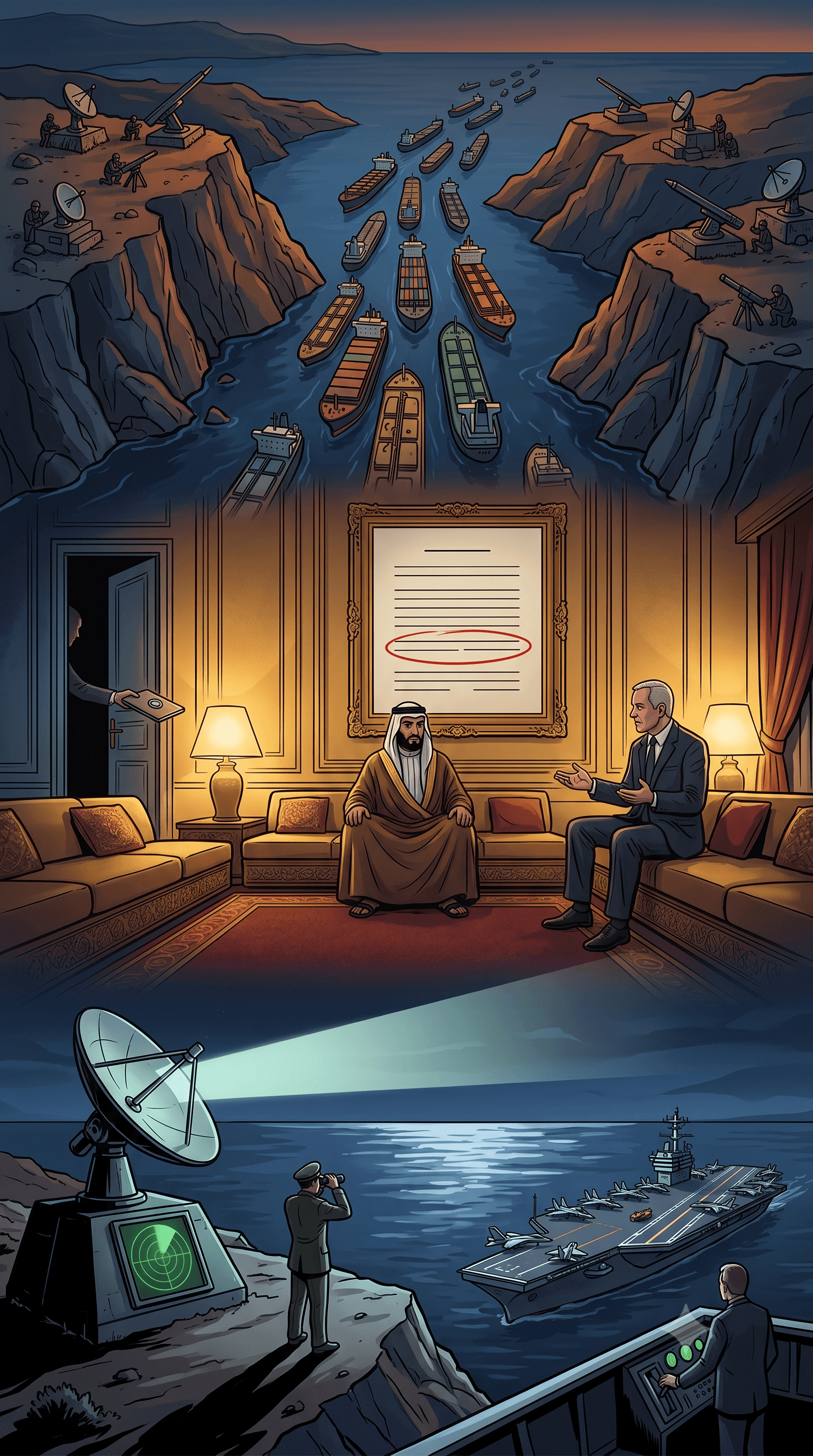
The geopolitical shockwaves of Operation Epic Fury have rapidly spilled over into the global economy. As Iran threatened to block the Strait of Hormuz—a critical maritime chokepoint through which 20% of the world's oil supply flows—global energy markets experienced wild volatility. Oil prices surged to $119 a barrel, reaching their highest levels since the outbreak of the Russia-Ukraine war in 2022.
The conflict has also paralyzed regional aviation, with hundreds of flights canceled and airspace heavily restricted across the Middle East. Meanwhile, traditional Iranian proxy networks—such as Hezbollah in Lebanon, Hamas in Gaza, and the Houthis in Yemen—have found themselves largely sidelined or militarily degraded. This has left Iran increasingly isolated, especially as neighboring Gulf states quietly facilitate U.S. airspace operations.
Strategic Outlook: Unconditional Surrender vs. "Forever War"
As the aerial bombardment intensifies, questions are mounting regarding the conflict's endgame. President Trump has firmly rejected any diplomatic off-ramps short of "unconditional surrender," warning that the U.S. will strike "twenty times harder" if Iran disrupts global oil supplies.
Hegseth has echoed this uncompromising stance, assuring the American public that Operation Epic Fury will not devolve into a drawn-out, endless quagmire. "This is not 2003. This is not endless nation-building," Hegseth declared at the Pentagon, contrasting the current strategy with the protracted, unpopular wars in Iraq and Afghanistan. He emphasized that the U.S. possesses a virtually unlimited stockpile of precision gravity bombs and intends to dictate the brutal pace of the war until the Iranian military is entirely incapable of fighting.
Impact Summary
As Pete Hegseth continues to project American military might from the Pentagon podium, the immediate future of the Middle East hangs in the balance. The Trump administration's high-stakes gamble relies on the premise that overwhelming, uncompromising force will bring swift capitulation. However, with Iranian leadership vowing ongoing retaliation, mounting civilian casualties drawing international ire, and volatile global markets reacting to every strike, the combative "Secretary of War" remains the polarizing frontman of a conflict that is actively reshaping the global order.
#News #Geopolitics #MiddleEastConflict #OperationEpicFury #PeteHegseth #DonaldTrump #IranWar #USMilitary #GlobalEconomy #OilPrices #ForeignPolicy #Pentagon