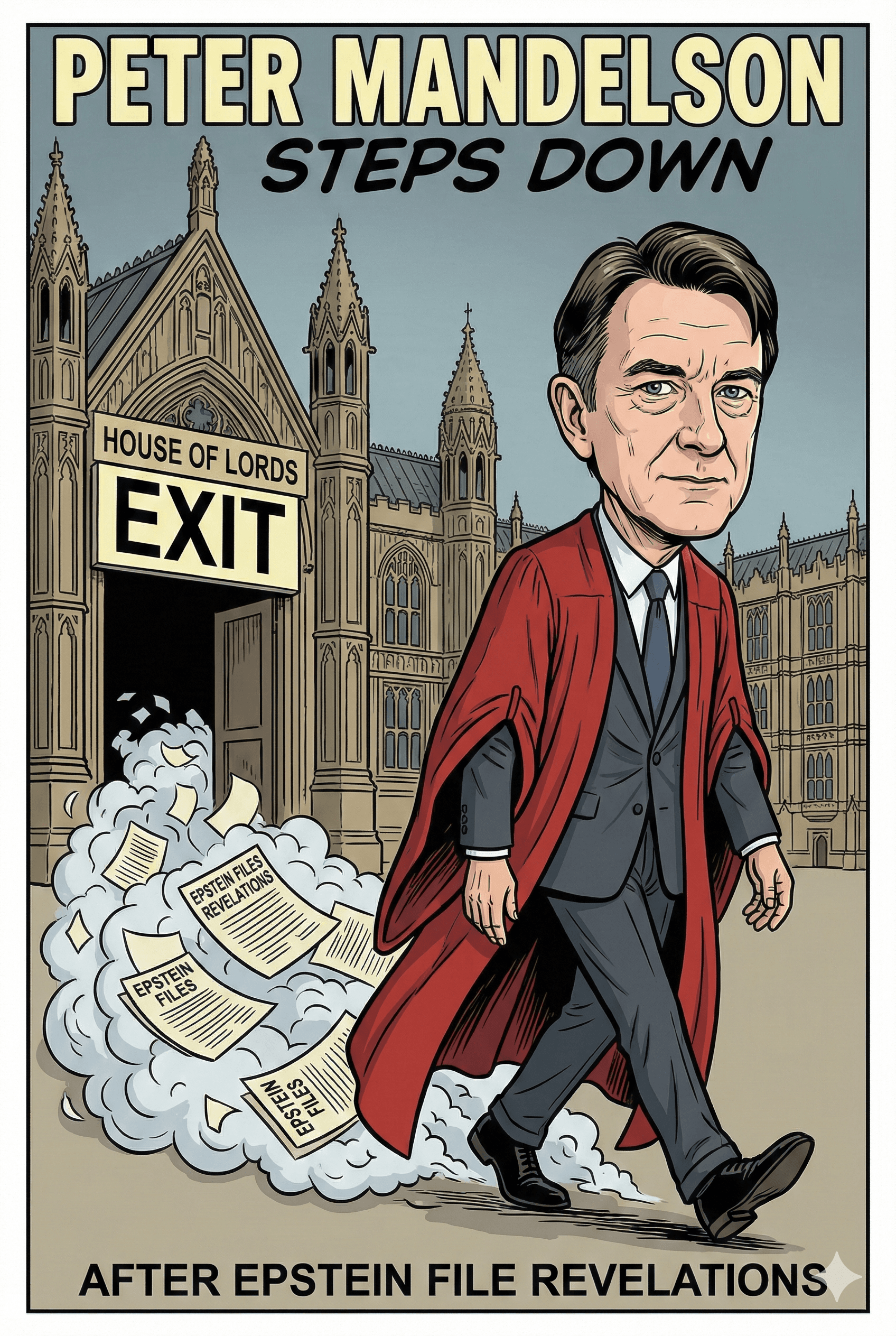
Lord Peter Mandelson, one of the most defining and controversial figures of the New Labour era, has announced his intention to resign from the House of Lords. The stunning development comes in the wake of explosive new revelations contained within recently unsealed "Epstein files," which have renewed intense scrutiny over his past association with disgraced sex offender Jeffrey Epstein.
The decision marks a dramatic exit from parliamentary life for the former Cabinet minister and European Commissioner, often referred to in Westminster circles as the "Prince of Darkness" for his political strategic prowess.
The Tipping Point: Fresh Epstein Revelations
While Lord Mandelson’s acquaintance with Jeffrey Epstein has been public knowledge for years, the release of new court documents this week has significantly escalated pressure on the peer.
Although Lord Mandelson has consistently denied any wrongdoing or knowledge of Epstein's criminal activities, the nature of the newly detailed information—the specifics of which are currently dominating headlines across the UK—has made his continued presence in the Upper Chamber politically untenable.
Insiders suggest that the cumulative weight of the headlines and the potential for further embarrassing disclosures forced Mandelson’s hand. The revelations have reignited public fury regarding the lack of accountability for high-profile figures associated with Epstein’s network.
A "Distraction" to Westminster
In statements circulating Westminster, sources close to Lord Mandelson indicate that his decision to step down is motivated by a desire to stop his personal affairs from becoming a "distraction" to the legislative work of the House of Lords and the broader Labour movement.
Facing growing calls for an internal parliamentary investigation from cross-party benches, resigning appears to be a strategic move to preempt further institutional damage.
The Long Shadow of the Epstein Scandal
Lord Mandelson has previously admitted to meeting Epstein and staying at his properties but has maintained that their relationship was professional and that he regretted the association following Epstein's initial conviction.
However, critics have long argued that his explanations were insufficient. The latest "Epstein files" have cast a shadow that previous denials could no longer dispel, raising fresh questions about the judgment of those who remained in Epstein's orbit.
Campaigners for victims of sexual abuse have welcomed the resignation, arguing that powerful figures must face consequences for their associations with known predators.
Political Fallout and Calls for Reform
Mandelson's departure sends shockwaves through the UK political establishment. For the current Labour leadership, it removes a persistent source of controversy, albeit one who remained an influential, if informal, advisor.
More broadly, the resignation has provided fresh ammunition for critics of the House of Lords. Reform advocates are seizing this moment to highlight what they view as a lack of accountability among unelected peers, arguing that the chamber requires systemic overhaul to maintain public trust.
As Peter Mandelson prepares to exit the parliamentary stage he once dominated, it serves as a stark reminder that the repercussions of the Epstein scandal continue to reverberate through the highest echelons of global power.