Tensions Escalate as Moscow Pushes Back Against Alleged Blockade Threats
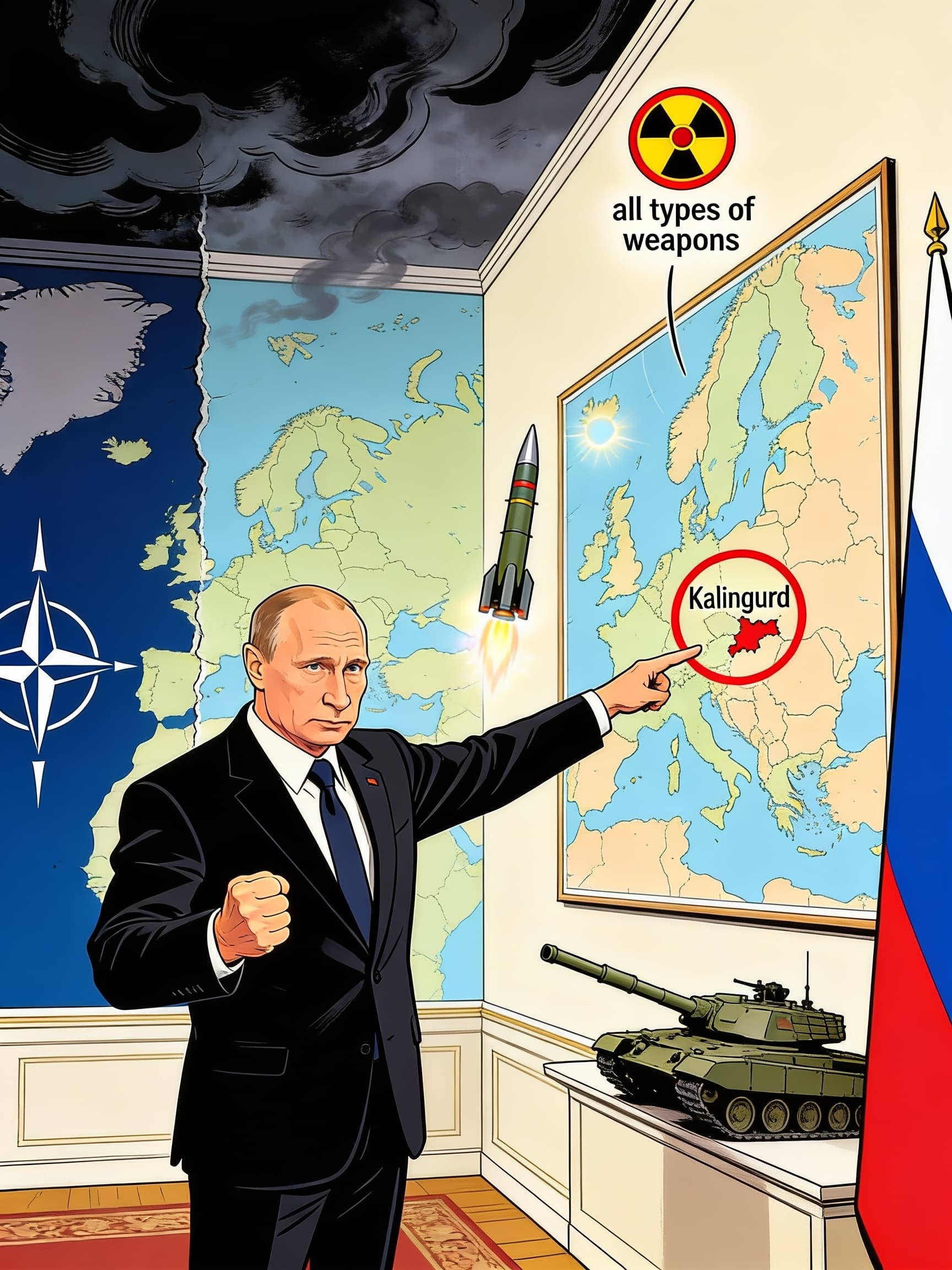
On Thursday, October 1, 2026, Russian President Vladimir Putin issued a stark warning to Western nations, declaring that Moscow would inevitably consider deploying "all types of weapons" at its disposal in the event of a direct attack on Russia or its strategic Baltic exclave, Kaliningrad.
Speaking at the annual Valdai Discussion Club in Moscow, Putin addressed the rising geopolitical friction with NATO, specifically regarding the heavily militarized and geographically isolated Kaliningrad region. While emphasizing that Russia has no intention of initiating an unprovoked conflict, the Russian leader maintained that any aggression toward its sovereign territory would trigger a maximum-level response.
The Valdai Discussion Club Address: Unpacking Putin’s Warning
During his extensive address, Putin directly referenced a recent official letter from the Russian Foreign Ministry regarding the defense of the Kaliningrad Oblast. The document was issued as a preemptive diplomatic countermeasure against perceived Western discussions regarding a potential blockade of the Russian exclave.
“If it comes to a direct attack on the Russian Federation... then, of course, the question of the Russian Federation deploying all types of weapons at our country's disposal will inevitably and immediately be on the agenda," Putin remarked to the forum attendees. "This is inevitable."
The Russian President also preemptively dismissed allegations that his statements constituted an unprovoked nuclear threat. He clarified that the Foreign Ministry’s letter did not explicitly mention nuclear armaments, but rather referred broadly to the use of "all means" necessary for defense. Putin accused Western leaders and politicians of deliberately taking his government's statements out of context, inflating the narrative to frame Russia as a reckless nuclear aggressor.
Using a literary analogy, Putin invoked the dramatic concept of Chekhov’s gun to describe the volatile state of global military arsenals: "If a gun hangs on the wall at the beginning of a play, it must fire by the end". He noted that while major world powers possess highly destructive capabilities, "we cannot be sure that they will not be used," stressing the urgent need to step back from an uncompromising confrontation and avoid a fatal point of no return.
Why Kaliningrad Matters: The Geopolitical Flashpoint
To understand the gravity of Putin’s statements, it is essential to look at the geographical and strategic reality of Kaliningrad. Sandwiched between NATO members Poland and Lithuania on the Baltic Sea, Kaliningrad is entirely separated from mainland Russia by foreign borders.
This unique positioning makes Kaliningrad a vital military outpost for Moscow, housing the headquarters of the Russian Baltic Fleet alongside advanced defense and missile systems. However, its geographic isolation also makes it highly vulnerable to supply chain disruptions.
Recent months have seen an uptick in rhetoric regarding the restriction of transit to and from the exclave. Any attempt by NATO or European Union nations to cut off Kaliningrad would be viewed by the Kremlin as a direct act of war, threatening Russia’s territorial integrity. Consequently, Moscow has drawn a distinct red line around the territory, reinforcing that an attack on Kaliningrad is functionally identical to an attack on Moscow itself.
NATO’s Response and the Broader European Security Crisis
Putin’s remarks arrive during a period of profoundly strained relations between Russia and the West, exacerbated by ongoing developments in the Ukraine conflict, including Ukraine's first-ever combat deployment of its FP-7 tactical ballistic missile.
In response to Moscow's diplomatic letters and public warnings, NATO officials have firmly rebuffed Russian posturing. NATO Secretary General Mark Rutte recently addressed the growing friction, emphasizing that the military alliance remains fundamentally defensive in nature and urging Russia to halt its "irresponsible nuclear rhetoric".
However, Rutte also issued a sobering warning to European leaders, urging them to prepare for a protracted era where Russia increasingly relies on hybrid warfare tactics, including sabotage, arson, and other disruptive operations across the continent.
Lithuania, which shares a direct border with Kaliningrad, dismissed Moscow’s latest rhetoric as a calculated attempt at psychological pressure. Meanwhile, German leaders have echoed NATO's broader security concerns, confirming that Europe is preparing for major hybrid attacks and stands ready to respond swiftly to any malicious interference.
Debunking the Invasion Timeline
In an attempt to counter Western intelligence warnings that Moscow might test NATO’s borders by the end of the decade, Putin explicitly denied any long-term plans to attack European nations.
"We are not threatening anyone and we do not plan to attack any European countries, not in 2029, not in 2030, not in 2050," Putin stated at the forum. He maintained, however, that Russia would not hesitate to retaliate if provoked by external aggression.
Analysis: Strategic Deterrence or Escalating Brinkmanship?
From a political analysis perspective, Putin’s statements serve a dual purpose. Domestically, the rhetoric projects strength, reassuring the Russian populace that the state remains capable of defending its most vulnerable borders despite ongoing military commitments in Ukraine.
Internationally, the deliberate ambiguity of the phrase “all types of weapons” functions as a classic strategy of deterrence. By declining to explicitly name nuclear weapons while simultaneously refusing to rule out their use, Moscow forces NATO planners to calculate the highest possible risk before considering any action that could restrict access to Kaliningrad.
Furthermore, Putin’s anticipation of how Western media would interpret his speech—predicting they would accuse him of nuclear sabre-rattling—shows a concerted effort by the Kremlin to control the narrative. By framing Russia's stance as purely defensive, Moscow attempts to portray the West as the true escalator of regional tensions.
Impact and Outlook: A Fragile Status Quo
Looking ahead, the situation surrounding Kaliningrad will likely remain one of Europe's most dangerous flashpoints. While a direct military confrontation or an outright blockade remains unlikely in the immediate term, the margin for error is shrinking rapidly.
With both sides entrenched in their positions—NATO fortifying its eastern flank and Russia pledging maximum retaliation against any encroachment—the Baltic Sea region faces an extended period of high-stakes militarization. Diplomatic channels remain severely restricted, meaning that any minor incident, miscalculation, or transit dispute near Kaliningrad could trigger an unpredictable and potentially catastrophic chain of events.
For the global economy and international security, this persistent standoff guarantees sustained market volatility, heightened defense spending across Europe, and a continued atmosphere of Cold War-style brinkmanship.