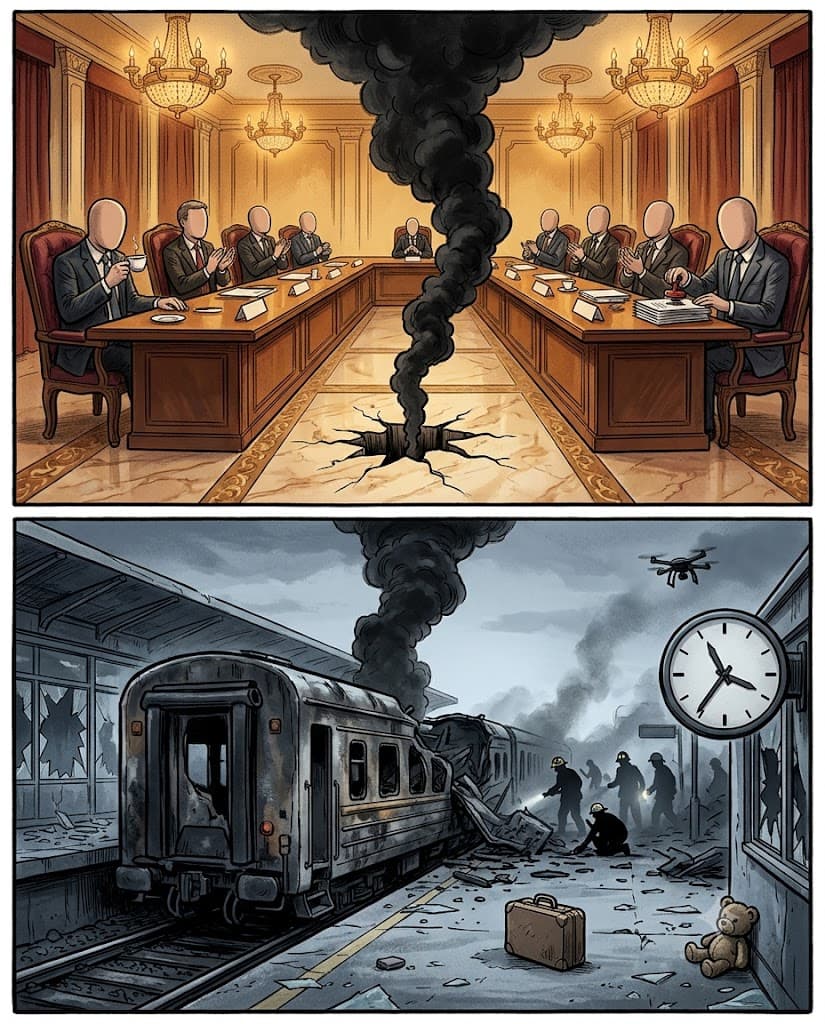
DNIPRO, Ukraine — A Russian drone struck a crowded platform at the railway station in Dnipro on Thursday, October 29, killing at least 13 people. President Volodymyr Zelenskyy called it "a horrific Russian strike" and urged Western governments to respond with new sanctions.
The drone hit a platform where, according to Zelenskyy, "an ordinary commuter train and a scheduled passenger train were standing." Images released by emergency services showed two burnt-out passenger trains with shattered windows.
Zelenskyy said 10 people were injured. Oleksandr Hanzha, head of the Dnipropetrovsk regional military administration, had earlier reported five wounded, and figures may still change.
How the Attack Unfolded
Ukraine's air force said it intercepted three jet-powered drones during the daytime attack, but a fourth evaded air defences and hit the station, AFP reported.
Oleksandr Pertsovsky, head of Ukraine Railways, said an elevated threat level had been announced before the strike. Even so, "there were still a large number of people on the platform," he said.
No immediate Russian comment on the Dnipro strike was reported. Earlier in the week, the Kremlin said it would not let up the pace of the war.
Zelenskyy: "Stronger Sanctions Steps"
In a statement on X, Zelenskyy tied the attack directly to sanctions policy. He asked how many such "terrorist strikes" Russia had carried out since sanctions were lifted on certain Russian oligarchs and the Russian energy sector.
"It is time for new, stronger sanctions steps by the EU, the United States, and the G7," he wrote. He added that "sanctions against Moscow and its war machine must not be eased for as long as this Russian war continues."
The Sanctions Backdrop
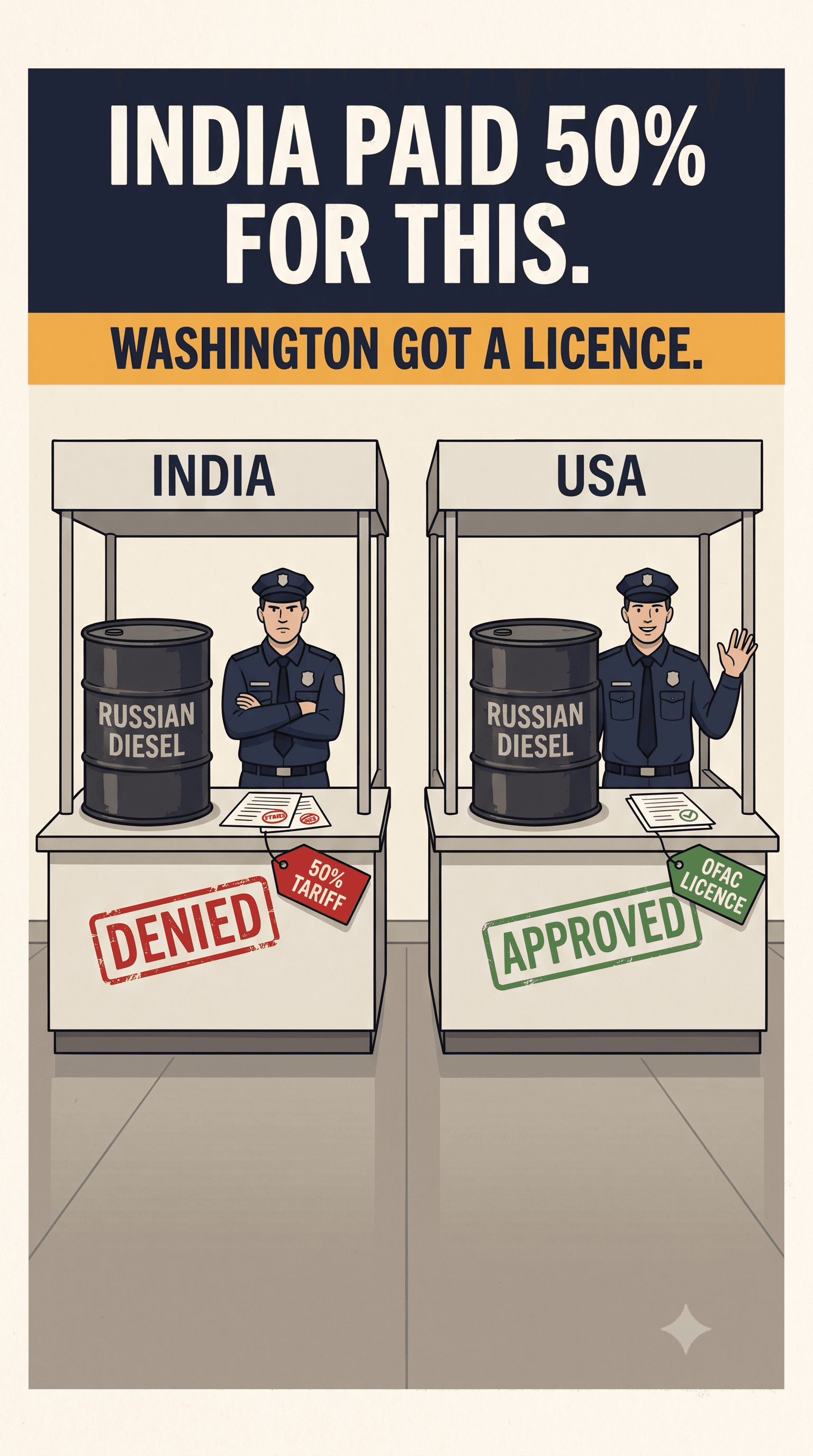
Zelenskyy's appeal follows a major U.S. decision earlier this month. On October 16, President Donald Trump signed an order waiving key sanctions, restrictions and tariff provisions targeting buyers of Russian energy under the Sanctioning Russia and Iran Act of 2026.
The waived measures included threatened duties of up to 100% on goods from the largest importers of Russian oil and gas, a group that includes India and China. Trump certified to Congress that the waivers serve the U.S. national interest. Sanctions imposed under earlier executive orders were not affected.
Moscow welcomed the move. Kremlin envoy Kirill Dmitriev called it "an important and truly historic moment."
A Day of Strikes Across Ukraine
Dnipro was not the only city hit on Thursday. At least five other people were killed in separate Russian attacks, according to local officials.
In Chernihiv, a strike killed two 15-year-old girls and wounded more than a dozen people, said Dmytro Bryzhynsky, head of the city's military administration. In Kremenchuk, a drone hit a multi-storey residential building, killing two and wounding several others, including a six-year-old child.
Railways in the Crosshairs
Ukraine's rail network has been a repeated target since the full-scale invasion began in 2022. Russian drones have destroyed hundreds of locomotives and killed several railway workers, according to Ukrainian authorities.
The threat has grown in recent months. In September alone, passengers were evacuated from more than 5,800 train services because of drone threats. Russia has also intensified strikes on energy sites, which Kyiv says are meant to plunge the country into cold and darkness this winter.
Diplomacy on a Separate Track
The strike came as a fragile local ceasefire in Russian-occupied Oleshky, in the Kherson region, held into its third day. Ukraine's human rights ombudsman, Dmytro Lubinets, set out with a delegation towards the city. Zelenskyy said it would be a "huge success" if the truce allowed stranded civilians to be evacuated.
Russian and Ukrainian delegations are due to meet with U.S. envoys next month, though no firm dates have been set. Several earlier rounds of talks ended without a deal.
Outlook: Pressure on the Allies
The Dnipro strike puts Kyiv's allies in front of a direct request: new sanctions from the EU, the United States and the G7. It lands less than two weeks after Washington moved in the opposite direction on energy penalties.
How those governments respond, and whether next month's talks produce anything, will shape what follows for civilians who still depend on Ukraine's railways every day.