Saudi Arabia has temporarily shut down its largest domestic oil refinery following a drone strike on Monday, marking a severe escalation in regional hostilities. The attack on the state-owned Saudi Aramco Ras Tanura refinery comes as a massive wave of retaliatory strikes forces the precautionary closure of critical oil and gas facilities across the Middle East, sending shockwaves through global energy markets and raising alarms over widespread supply chain vulnerabilities.
The Incident at Ras Tanura Refinery
On the morning of March 2, 2026, the Ras Tanura energy complex—strategically located on Saudi Arabia's Gulf coast—was targeted by unmanned aerial vehicles (UAVs). Housing one of the Middle East's largest refineries with a processing capacity of 550,000 barrels per day (bpd), the facility also serves as a critical export terminal for Saudi crude oil bound for international markets in Asia and Europe.
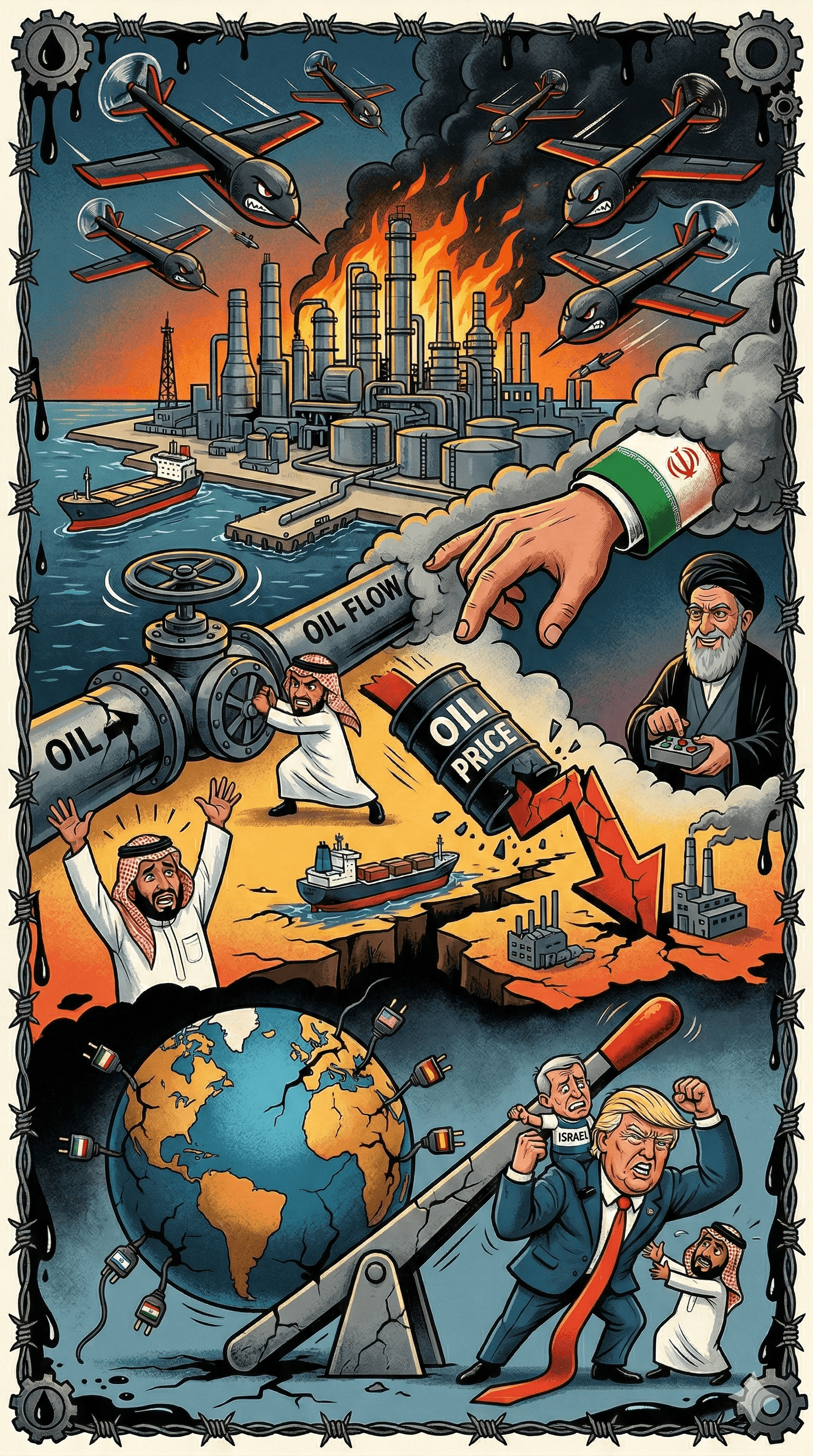
According to a spokesperson for the Saudi Defense Ministry speaking to Al Arabiya TV, air defense systems successfully intercepted two drones. However, falling debris ignited a limited fire within the complex. Authorities confirmed that the blaze was quickly brought under control and no casualties or injuries were reported among the facility's personnel.
Industry sources and Saudi officials emphasized that the shutdown of several refinery units was a strictly "precautionary measure" to ensure the safety of the infrastructure while authorities assess the broader security situation. The Saudi energy ministry noted that the domestic supply of petroleum products to local markets remains unaffected, but the temporary loss of this massive processing capacity adds immediate operational strain to global energy supply chains.
A Region on Edge: The Geopolitical Context
The drone strike on the Ras Tanura refinery is not an isolated security incident; it is a direct consequence of a rapidly expanding geopolitical crisis. The attack follows recent U.S. and Israeli military operations targeting Iran over the weekend. In response, Tehran and its aligned factions have launched a coordinated wave of retaliatory strikes across the Gulf.
Security incidents and drone activities have been reported in key economic hubs across the region, including Abu Dhabi and Dubai in the United Arab Emirates, Doha in Qatar, Manama in Bahrain, and the commercial port of Duqm in Oman. The coordinated nature of these strikes indicates a strategic effort to target the critical economic and energy infrastructure of U.S. and Israeli allies without necessarily crossing the threshold into conventional, all-out military warfare.
This escalating threat level has prompted widespread, synchronized shutdowns far beyond Saudi borders:
Iraqi Kurdistan: Operators have taken drastic defensive measures. Companies including DNO, Gulf Keystone Petroleum, Dana Gas, and HKN Energy have halted output at their fields as a strict precaution. This region exported roughly 200,000 bpd via a pipeline to Turkey’s Ceyhan port in February, volumes that are now temporarily wiped from the market.
Israel: Offshore energy production has been heavily impacted. The giant Chevron-operated Leviathan gas field was shut down on Saturday. Additionally, Energean halted its production vessel serving smaller gas fields, a move that is currently throttling vital energy exports to neighboring Egypt.
Global Energy Markets React to Supply Threats
The immediate fallout from the Ras Tanura shutdown and the broader regional instability has triggered severe anxiety in global commodities markets. Following the news of the drone strikes, Brent crude futures surged by roughly 10%, jumping more than 8% to $78.72 a barrel. Meanwhile, U.S. West Texas Intermediate (WTI) crude gained 7.6%, reaching $72.20.
Market analysts warn that the situation could deteriorate much further if critical shipping lanes are compromised. The Strait of Hormuz , a highly strategic maritime chokepoint through which approximately 20% of global oil consumption flows, is currently facing immense security risks.
Over the weekend, an oil tanker was attacked in this strategic waterway. The state-run Oman News Agency identified the vessel as the Palau-flagged Skylight, noting that four mariners were wounded. This incident coincided with deeply concerning reports that Iran’s Revolutionary Guards issued VHF radio warnings declaring that “no ship is allowed to pass” through the strait.
Analysis: Energy consultancy Wood Mackenzie has cautioned that if tanker traffic through the Strait of Hormuz is halted for an extended period, the global market will face a "dual supply shock." Not only would current exports be suspended, but the additional OPEC+ volumes and spare capacity—typically utilized to balance the market during crises—would remain trapped behind the blockaded waterway. Analysts draw parallels to the early stages of the Russia-Ukraine conflict, warning that oil prices surging above the $100 per barrel threshold is a highly probable scenario if maritime transit flows are not quickly re-established.
Historical Precedent: The 2019 Abqaiq Attacks
While Saudi Arabia’s energy infrastructure is heavily fortified with billions of dollars in air defense systems, this week's events highlight ongoing vulnerabilities to asymmetric warfare. The current crisis directly echoes the devastating September 2019 drone and cruise missile attacks on Saudi Aramco’s Abqaiq and Khurais processing plants.
The 2019 strikes, claimed by Houthi rebels but widely attributed to Iran by the U.S. and Saudi Arabia, utilized complex swarms of low-flying drones to temporarily knock out 5.7 million barrels per day. That represented more than half of the kingdom’s crude production and roughly 5% of global supply. While the current Ras Tanura incident has not resulted in the same level of catastrophic physical damage, the psychological and market impacts are proving comparable due to the highly volatile geopolitical environment and the simultaneous threats against maritime shipping.
Impact and Outlook
The precautionary shutdown of the Ras Tanura refinery underscores the fragile nature of global energy security in an era of democratized drone technology. While Saudi Aramco has the resources and capability to restore operations rapidly once the immediate threat subsides, the broader risk to the Middle East's energy ecosystem remains critically high.
If diplomatic off-ramps are not established quickly to de-escalate the standoff between Iran, Israel, and the United States, the region faces the prospect of sustained economic warfare. For the global economy—and heavily import-reliant nations like India—this translates to prolonged market volatility, elevated energy inflation, and the looming threat of supply chain disruptions that could severely stifle international economic growth.
#News #Geopolitics #SaudiAramco #OilPrices #EnergySecurity #MiddleEast #DroneStrike #RasTanura #GlobalEconomy #OPEC