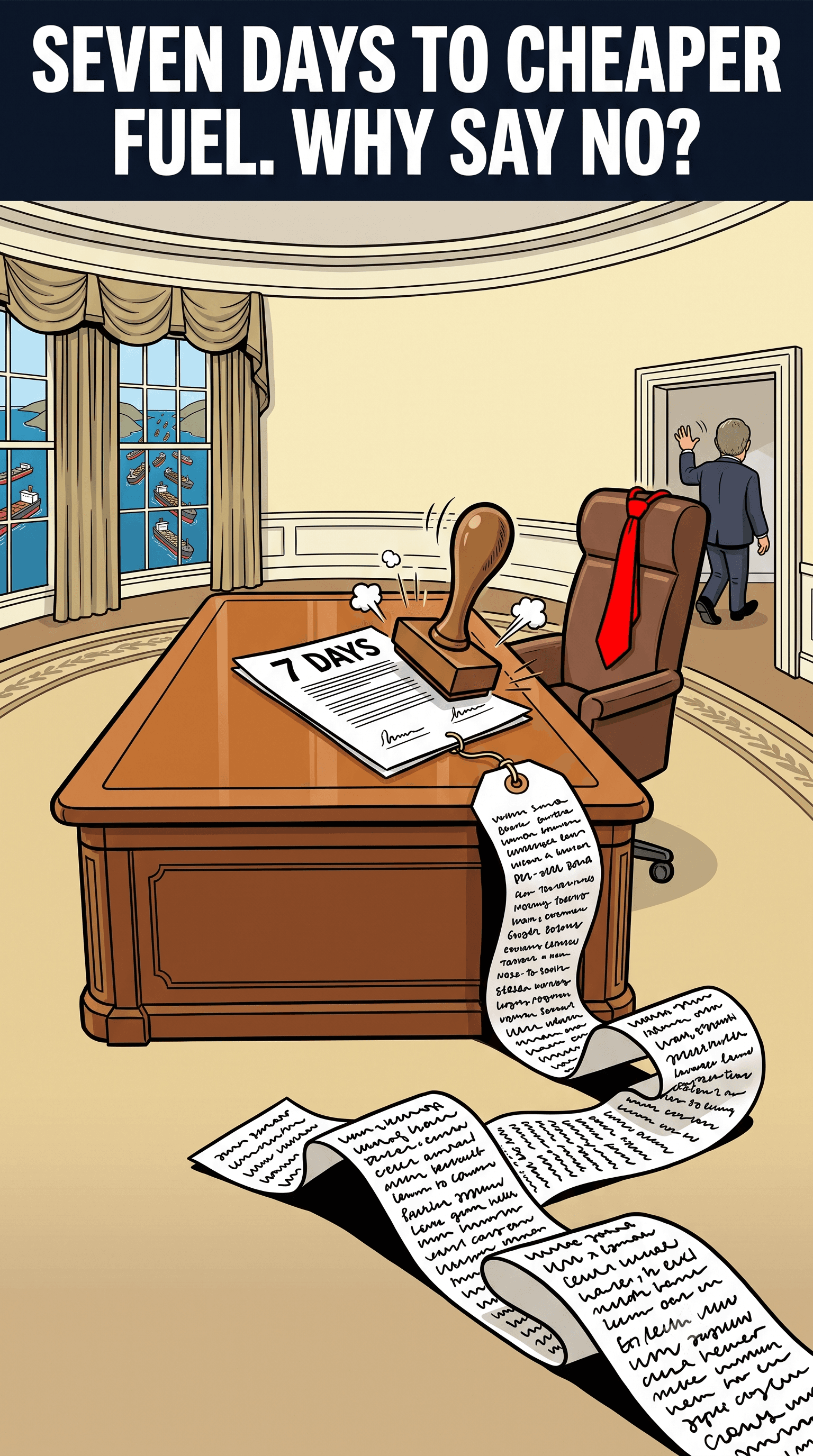
Standfirst: Iran offered to reopen Hormuz inside a week. Washington said no. The interesting part is not the refusal — it is the price tag, which almost nobody has printed.
On Friday 25 September 2026, Iran's foreign minister Abbas Araghchi set out a roadmap to reopen the Strait of Hormuz within seven days.
Given what the closure has done to fuel prices — US diesel at a national average of $6.285 a gallon, up 68% in a year, petrol over $4.40 from under $3 in January — that sounds like an offer you take.
The Wall Street Journal reported, citing unnamed US officials, that President Trump rejected it. Washington has issued no public response. A US official told Al Jazeera that "Washington is in no hurry to respond."
So: why say no?
What was actually on the table
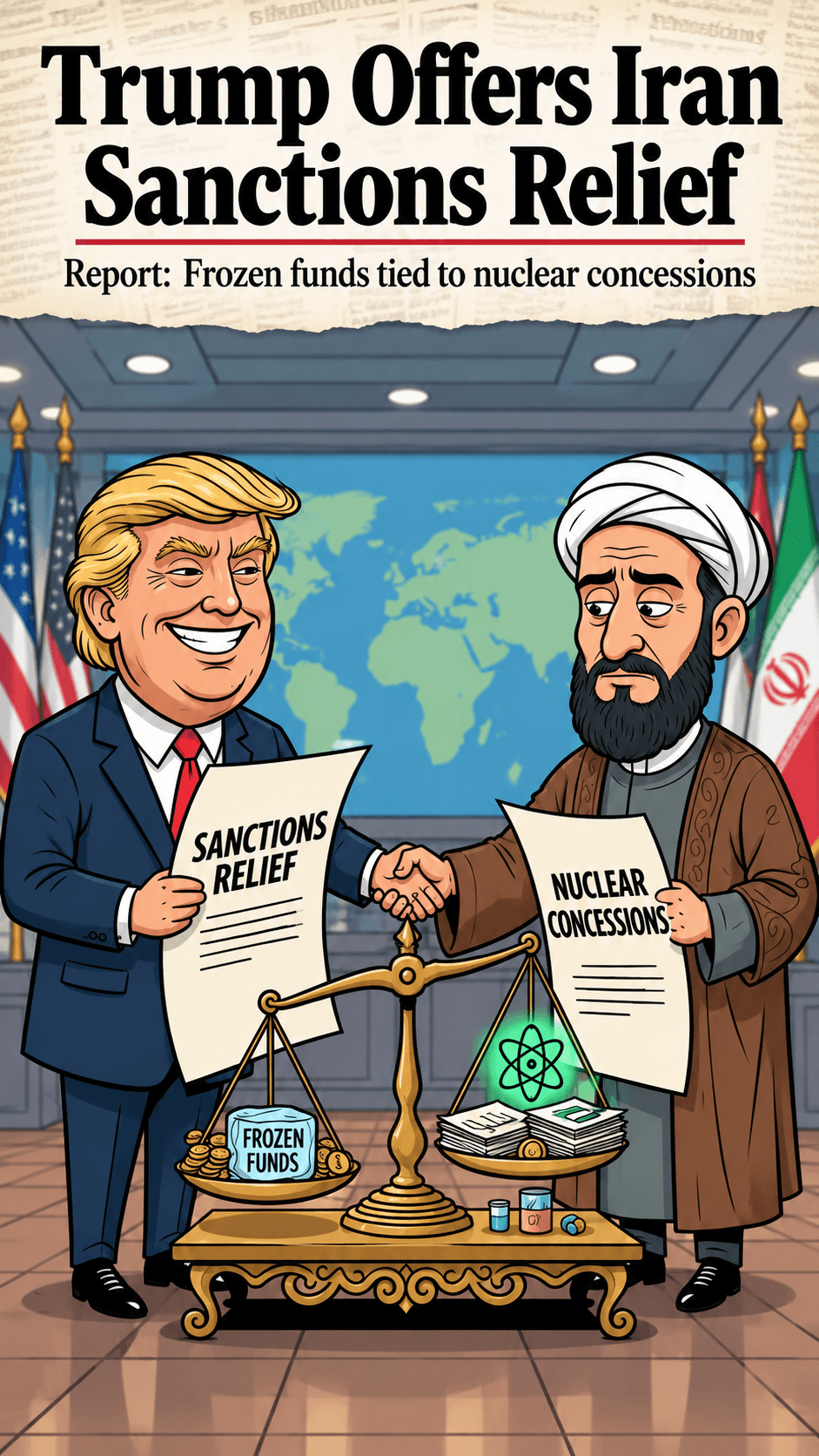
Here is the part that changes the question. The seven days were not free. Araghchi's roadmap required the United States to do four things first:
Release $12 billion in frozen Iranian assets
Lift oil sanctions
End the naval blockade of Iranian ports
Cease all hostilities — including Israeli operations in Lebanon
Once those were done, estimated at four to five days, the strait would reopen. Final negotiations would begin on day seven.
Read that list again, because the sequencing is the whole thing. The United States performs all four concessions first. Iran reopens the strait after. And the substantive negotiation — the nuclear question, the thing the war is nominally about — starts on day seven, with the leverage already spent.
That is not a ceasefire proposal in the ordinary sense. It is a proposal that the other side disarm its economic pressure, in advance, in exchange for the removal of a blockade Iran itself imposed.
Why that's a hard yes even for a government that wants out
Three structural problems, and none of them requires you to think the rejection was wise.
The concessions are permanent and the reopening is reversible. Unfrozen assets are spent. Lifted sanctions take years to rebuild — the coalition, the banking compliance, the secondary enforcement. A strait, by contrast, can be closed again in an afternoon. You are trading a one-way concession for a revocable one, which is the weakest position in any negotiation.
Item four isn't Washington's to give. "Cease all hostilities including Israeli operations in Lebanon" asks the United States to deliver a third country's military decisions. Even a president inclined to accept would be signing for something he does not control, and failure to deliver would hand Iran a breach to point at.
And the nuclear question is deferred to day seven. The single issue that everything else hangs on is scheduled for after all the leverage is gone. Trump's stated scepticism is specifically about whether Iran would ever actually commit to never acquiring nuclear weapons, and the roadmap's structure does nothing to answer that.
The case for taking it anyway
This should be said, because it is not weak.
Every day the strait stays shut, the damage compounds and it falls hardest on countries with no part in the dispute. Bangladesh is projected to lose up to 3% of GDP. Slovenia rationed motorists to 50 litres a day. Egypt is closing shops at 9pm. The IEA called this the largest supply disruption in the history of the oil market.
Against that, "the sequencing is unfavourable" is a negotiator's objection, not a moral one. A deal with bad sequencing that ends the disruption may simply be worth more than a better deal six months later. And $12 billion, in the context of what this war is costing the world economy weekly, is not a large number.
The honest summary is that both positions are defensible and the disagreement is about time preference — whether you would rather have a worse deal now or a better one later, while other people pay the interest.
The part that should worry you
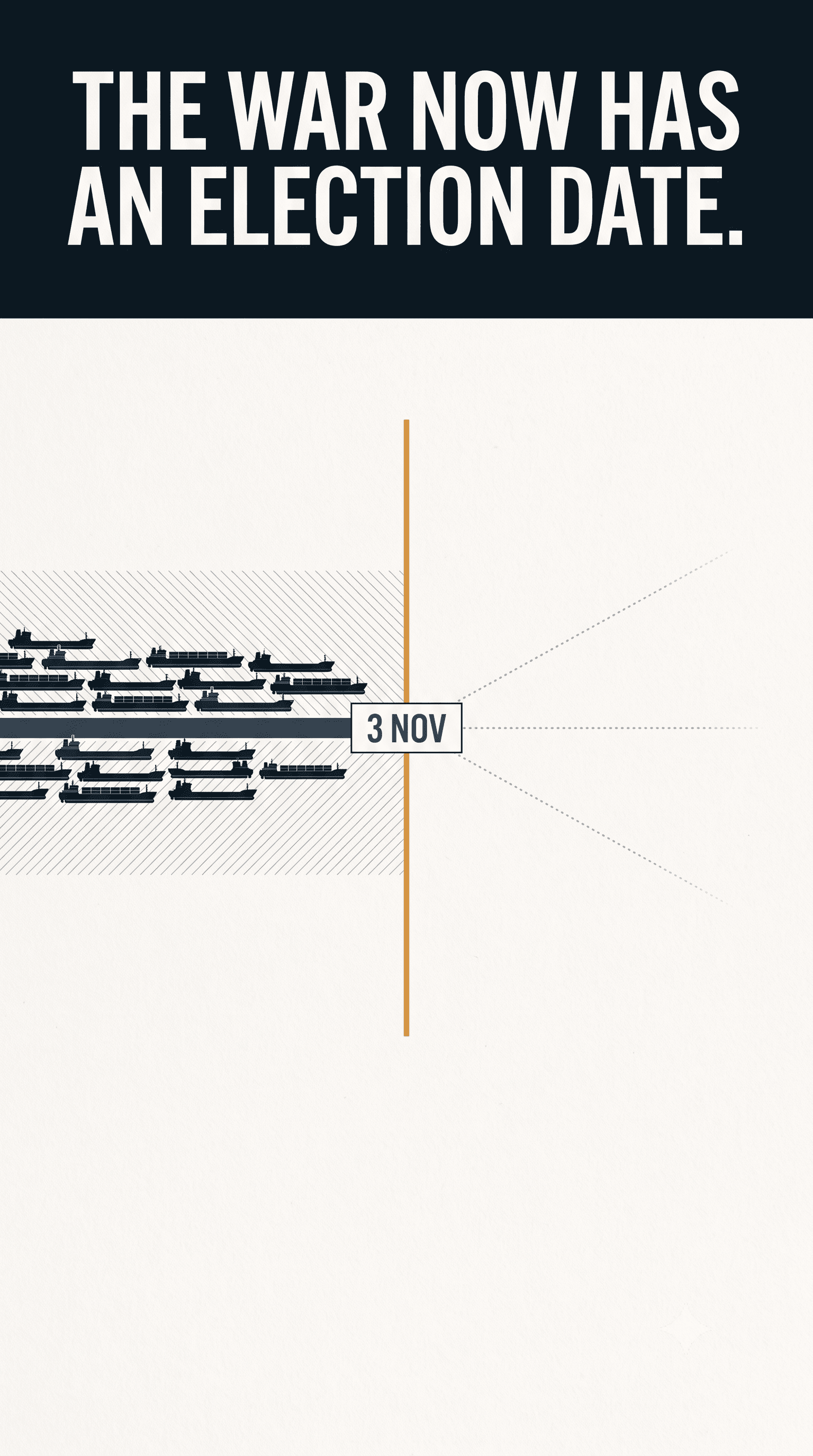
According to the same Wall Street Journal sourcing, Trump expects to launch bombing campaigns against Iran after the November midterm elections — while also suggesting a deal may follow shortly after those elections.
Both of those cannot be a strategy at once, but they can both be true as expectations. And they share a date.
If the operative variable is 3 November rather than anything in Araghchi's roadmap, then the seven-day proposal was never going to be accepted on its merits, because its merits were not what was being assessed. That is an inference, not a reported fact, and it is worth holding loosely — but it is the simplest explanation for why a government facing $6.28 diesel is "in no hurry to respond."
Meanwhile indirect talks continue through Qatar as intermediary at the UN General Assembly, and both sides say diplomacy remains possible.
What to watch
Whether any counter-offer is published. Rejecting a proposal and making one are different acts. So far only the first has happened.
Whether the $12 billion figure moves. In negotiations of this kind the asset number is usually the most flexible item on the list, which makes it the best early indicator that anyone is seriously bargaining.
Shipping volumes through Hormuz, not the oil price. Traffic is the leading indicator; price lags it by weeks.
And 3 November. If nothing moves before the midterms and a great deal moves after them, that tells you what this negotiation was actually about.
Sourcing note: Iran's seven-day roadmap, its four conditions and the $12 billion figure are as reported by Al Jazeera following Araghchi's announcement of 25 September 2026. Trump's rejection is reported by the Wall Street Journal citing unnamed US officials and carried by Bloomberg, CBS, France 24 and others; there has been no public statement from the White House, so the rejection itself rests on anonymous sourcing. The "no hurry to respond" quotation is a US official speaking to Al Jazeera. The expectation of post-midterm bombing is also WSJ sourcing from unnamed officials and should be held at that weight. Fuel price figures are US Energy Information Administration data of 15 September 2026. The reading of why the sequencing is unattractive, and the observation about 3 November, are analysis rather than reported fact and are labelled as such in the text.