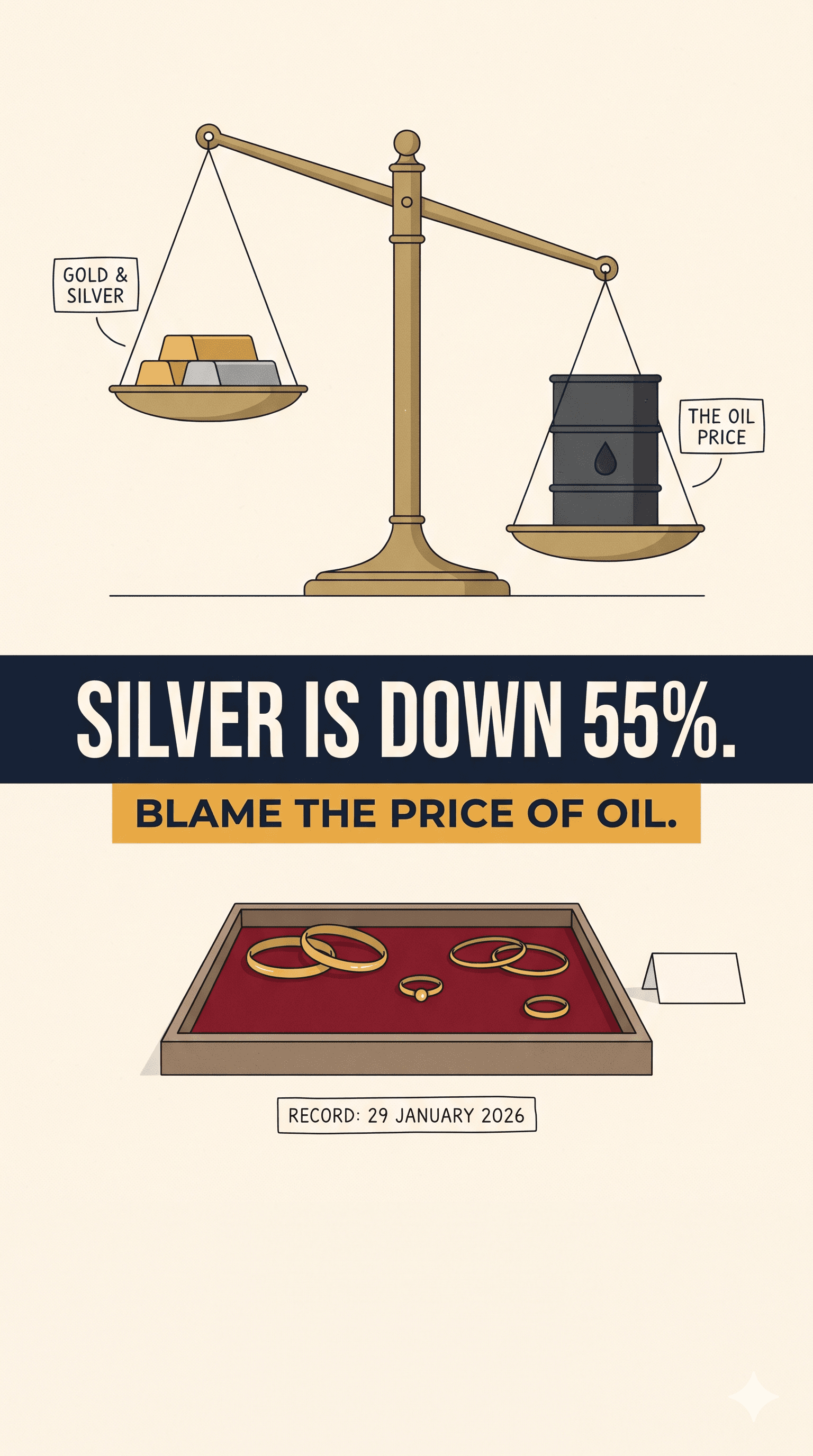
Gold and silver pay you nothing. No dividend, no coupon. Their entire appeal is that they hold value when other things don't.
That appeal depends on what you give up to hold them. If a safe government bond pays almost nothing, a metal paying nothing costs you nothing. If that bond pays well, every ounce of metal in your vault is money not earning interest.
So the price of gold is, to a large extent, a bet on interest rates.
Now follow the chain.
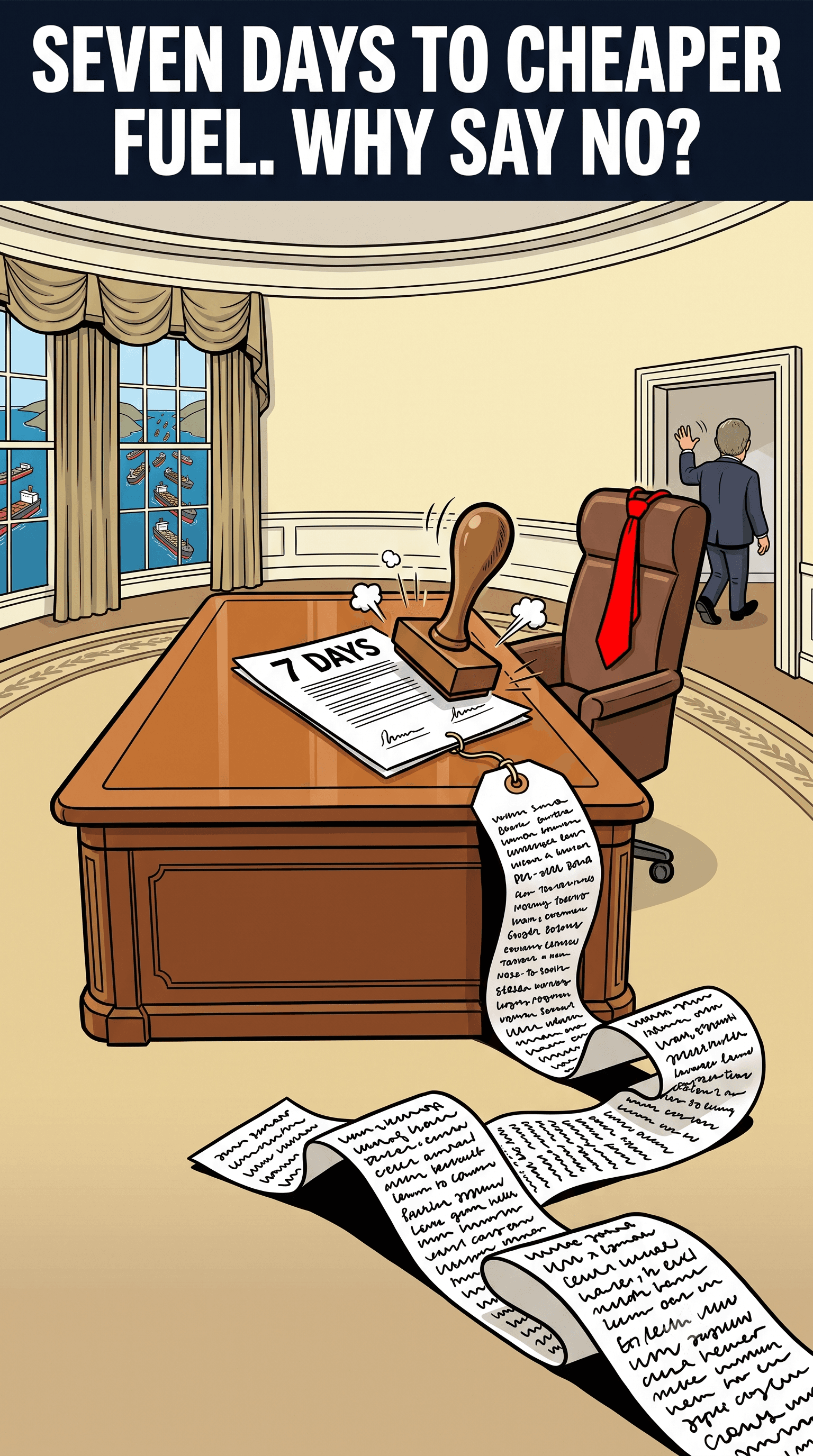
Oil is expensive. Expensive oil feeds into everything that moves, which keeps inflation elevated. Elevated inflation means the US Federal Reserve cannot cut rates as fast as markets had hoped. Rates staying higher for longer makes bonds more attractive and non-yielding metals less attractive.
Gold and silver fall.
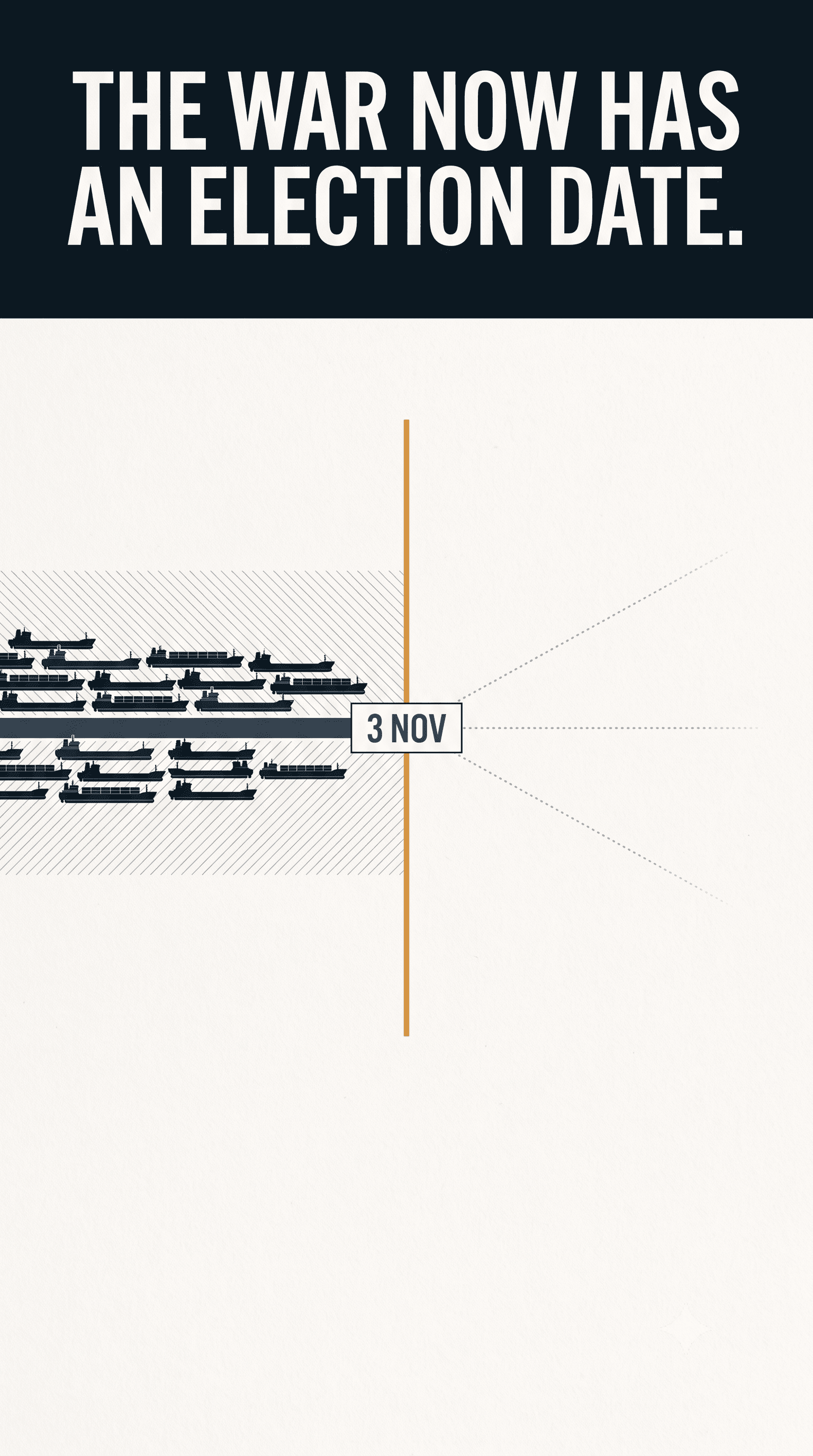
And the oil price is high because of the Strait of Hormuz — the chokepoint this page has been covering for weeks.
Here is the cruel part. Gold is supposed to be what you own when the world is unstable. Geopolitical crisis is meant to be gold's best case. But this crisis is an energy crisis, and energy crises are inflationary — so the same event that creates the safe-haven demand also creates the rate pressure that crushes it.
Safe-haven buying and inflation-driven rate expectations are pulling in opposite directions, and right now the rates are winning.
Silver gets hit twice, because it isn't only a store of value. It's an industrial metal — solar panels, semiconductors, electronics, electric vehicles. When the growth outlook dims, industrial demand expectations fall with it. That is why silver has fallen roughly twice as far as gold.
WHAT THIS DOES NOT MEAN
Three corrections, because this is a subject where people lose money on bad framing.
"Down 56% from the record" is not "you lost 56%." That depends entirely on when you bought. The January spike was extraordinary. Gold ended 2025 near $4,400 — so at $4,013 it is down single digits against last year's close, not down a third. The record is a peak, not a baseline.