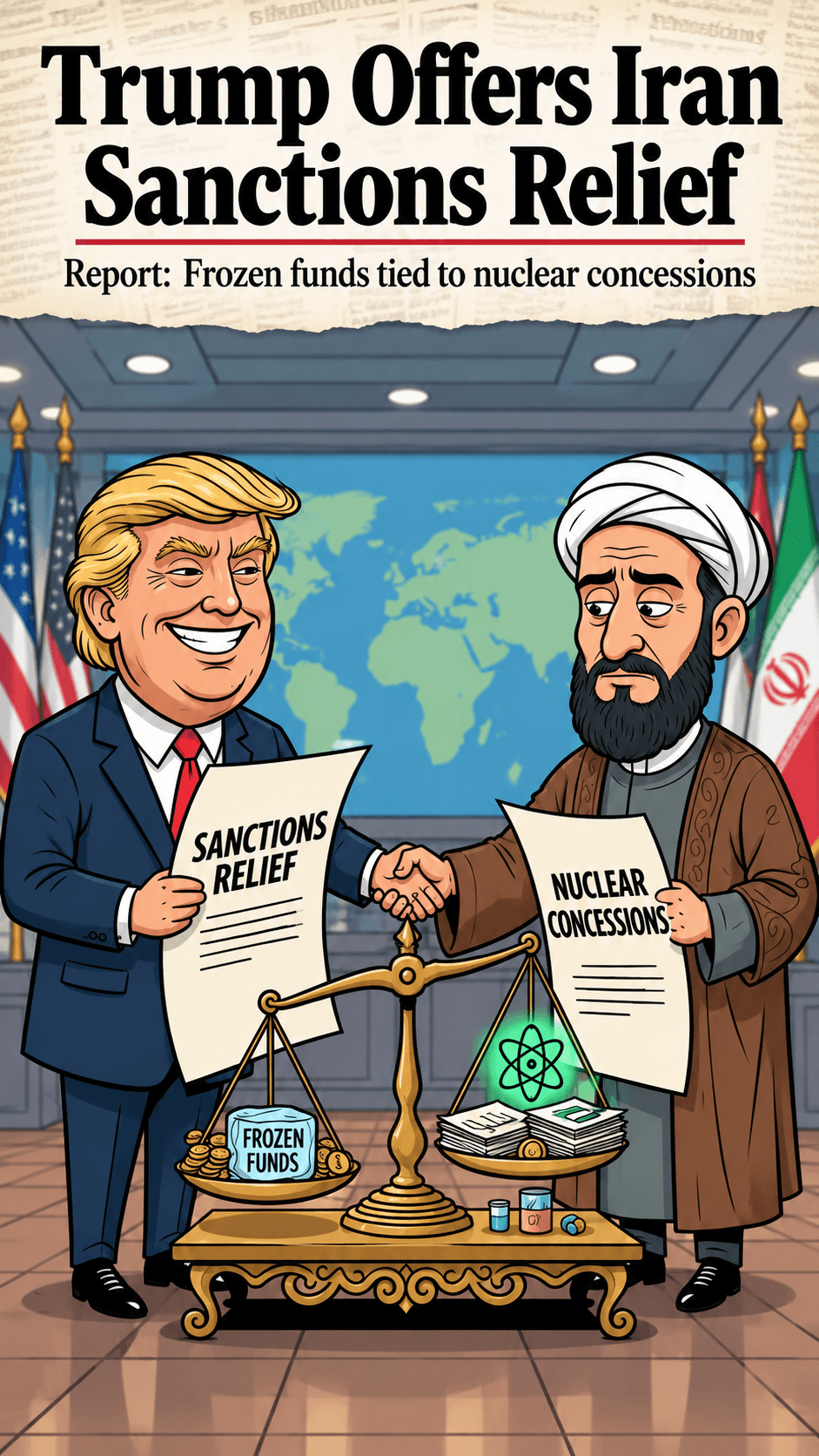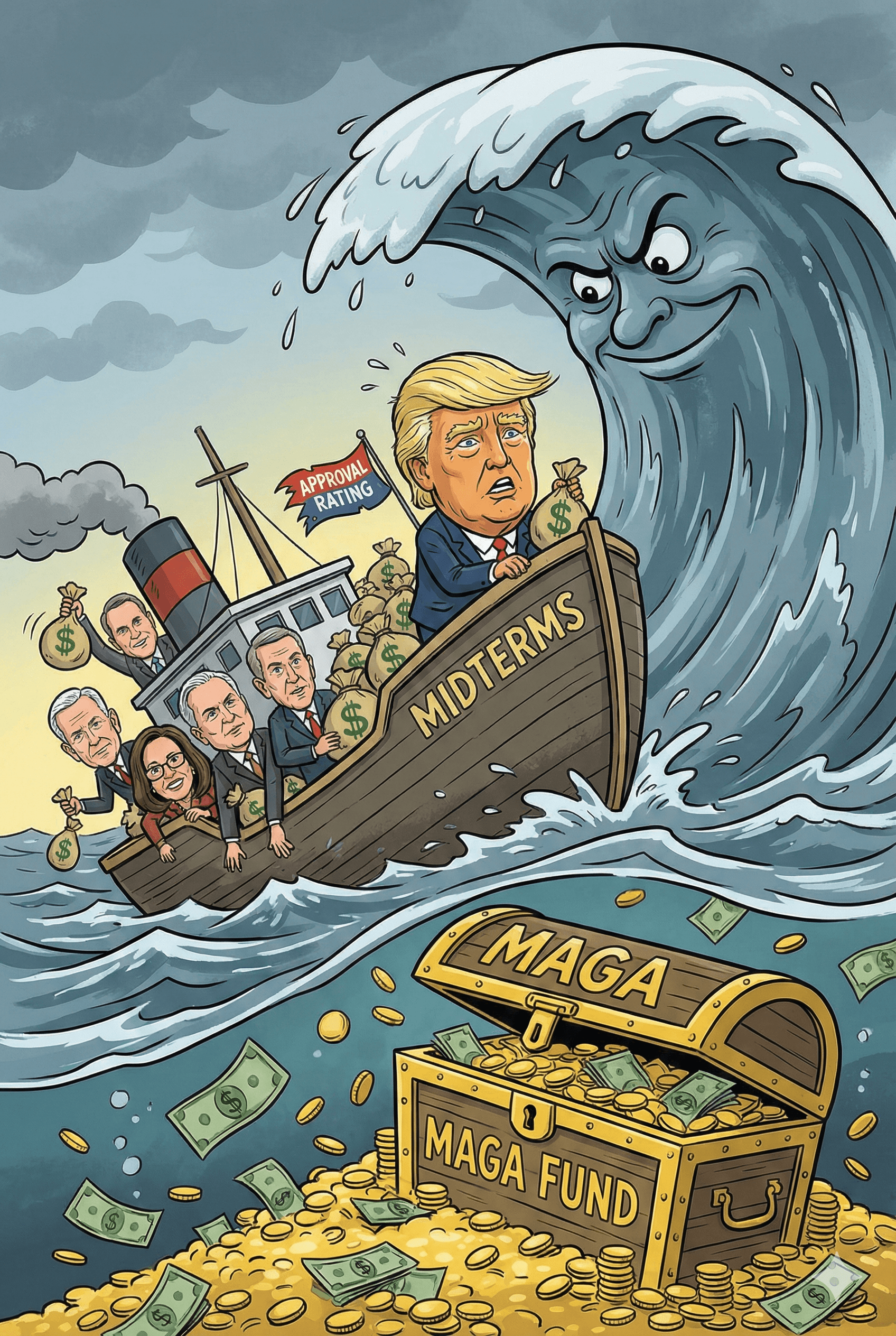
WASHINGTON — In the high-stakes arithmetic of American politics, the numbers rarely add up this strangely. As the 2026 midterm election cycle begins to turn its gears, the Republican Party finds itself caught between two contradictory data points: President Donald Trump’s approval rating has plummeted to 36%, yet his political machine sits atop a historic, unprecedented war chest of $304 million.
This divergence—a deeply unpopular president armed with massive financial firepower—has set the stage for a midterm season that political strategists on both sides of the aisle admit is "uncharted territory." As the "honeymoon" phase of Trump’s second term abruptly ends, the GOP is forced to do the math: Can nearly a third of a billion dollars buy enough loyalty and turnout to defy the gravity of public opinion?
The "Second Term" Slump Hits Hard
According to the latest polling data surfacing this week, including reports cited by USA Today and The Spokesman-Review, President Trump’s approval rating has slid to 36% just over a year into his second administration.
This figure represents a significant dip from his inauguration highs and places him in a precarious position historically. Midterm elections are traditionally a referendum on the sitting president, and an approval rating below 40% typically signals a "wave" election for the opposition. Analysts point to a confluence of headwinds driving this decline:
Economic Volatility: Reports of "chaos" in the markets and controversial new tariffs have rattled investor confidence.
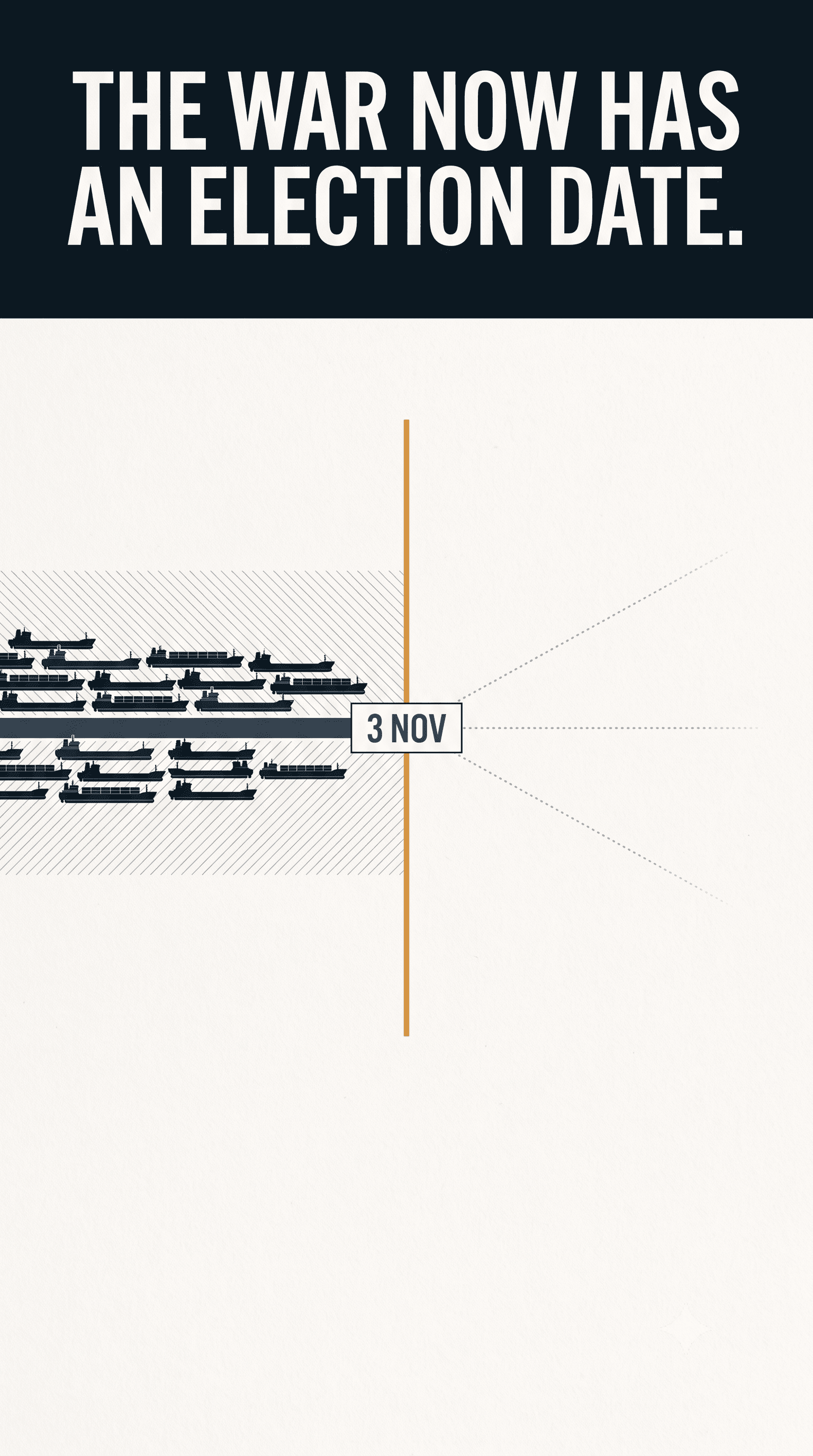
Geopolitical Tensions: Fresh military exercises by Iran in the Strait of Hormuz, following threats of military action from the White House, have spiked anxiety over foreign entanglement.
Domestic Fatigue: The sheer exhaustion of the electorate, compounded by aggressive executive moves on immigration and energy, appears to be alienating independent voters who may have swung toward Trump in 2024.
"Usually, a 36% approval rating in February of a midterm year is a death knell for the President's party in Congress," notes one veteran GOP strategist. "But usually, the President doesn't have a $304 million shield."
The $304 Million MAGA War Chest
While the President’s personal popularity wanes, his fundraising prowess has only accelerated. The headline figure of $304 million—attributed to the constellation of Super PACs and fundraising committees in the MAGA orbit, primarily MAGA Inc.—is shattering records for an off-year haul.
This financial advantage is reshaping the political landscape in three critical ways:
1. The Loyalty Enforcer
The sheer size of the MAGA fund acts as a deterrent against internal dissent. Republican incumbents who might otherwise distance themselves from an unpopular president fear being "primaried" by well-funded, Trump-backed challengers. The $304 million ensures that the President’s endorsement remains the most valuable currency in the GOP primary, regardless of his general election polling.
2. The Air War
With this war chest, the Trump political machine can blanket competitive districts with advertising early, defining Democratic challengers before they can introduce themselves. In a fractured media environment, this level of spending allows the GOP to bypass traditional news filters and appeal directly to low-propensity voters—the core of the Trump coalition.
3. Ground Game vs. "Vibes"
Democrats, currently energized by the President's low approval, are banking on organic voter enthusiasm. The GOP, conversely, is banking on paid organization. The $304 million is expected to fund a massive data and door-knocking operation designed to turn out the "MAGA base" even if the broader electorate is souring on the administration.
The Democratic Counter-Equation
For Democrats, the math offers a different opportunity. The 36% approval rating is seen as a potent recruiting tool. Democratic leadership is already framing the 2026 midterms as a check on "unchecked power," citing the administration's aggressive foreign policy rhetoric and domestic crackdowns.
However, the fundraising gap remains a glaring vulnerability. While Democratic grassroots fundraising has ticked up in response to recent headlines—including the administration's clashes with career officials and the controversial "Aliens are real" distraction from former President Obama—the party lacks a singular, centralized war chest comparable to the MAGA fund.
Implications: The "Money vs. Mood" Test
The 2026 midterms are shaping up to be a definitive test of modern political gravity. Can a party buy its way out of a popularity deficit?
If the GOP holds its ground in November, it will prove that financial supremacy and base mobilization have rendered traditional approval ratings obsolete. If they suffer heavy losses, it will reaffirm the old maxim that in a democracy, you cannot spend your way out of a sour public mood.
As Washington braces for the spring campaign season, the only certainty is the volatility. With tensions rising in the Middle East and markets reacting to every White House statement, that 36% approval rating could sink lower—or rally in a crisis. But the $304 million is already in the bank, waiting to be deployed.
You do the math.
Impact & Outlook
The disparity between President Trump's approval and his financial resources suggests a brutal, negative campaign cycle ahead. Expect a barrage of attack ads as the GOP uses its cash advantage to disqualify opponents early, while Democrats attempt to nationalize the race around the President's performance. The outcome will likely hinge on whether independent voters focus on the economy (which the GOP will try to spin with ad spend) or the "chaos" fatigue reflected in the polls.
#2026Midterms #TrumpSecondTerm #MAGA #PoliticalFinance #GOP #Democrats #USPolitics #Elections2026 #Geopolitics #EconomicPolicy