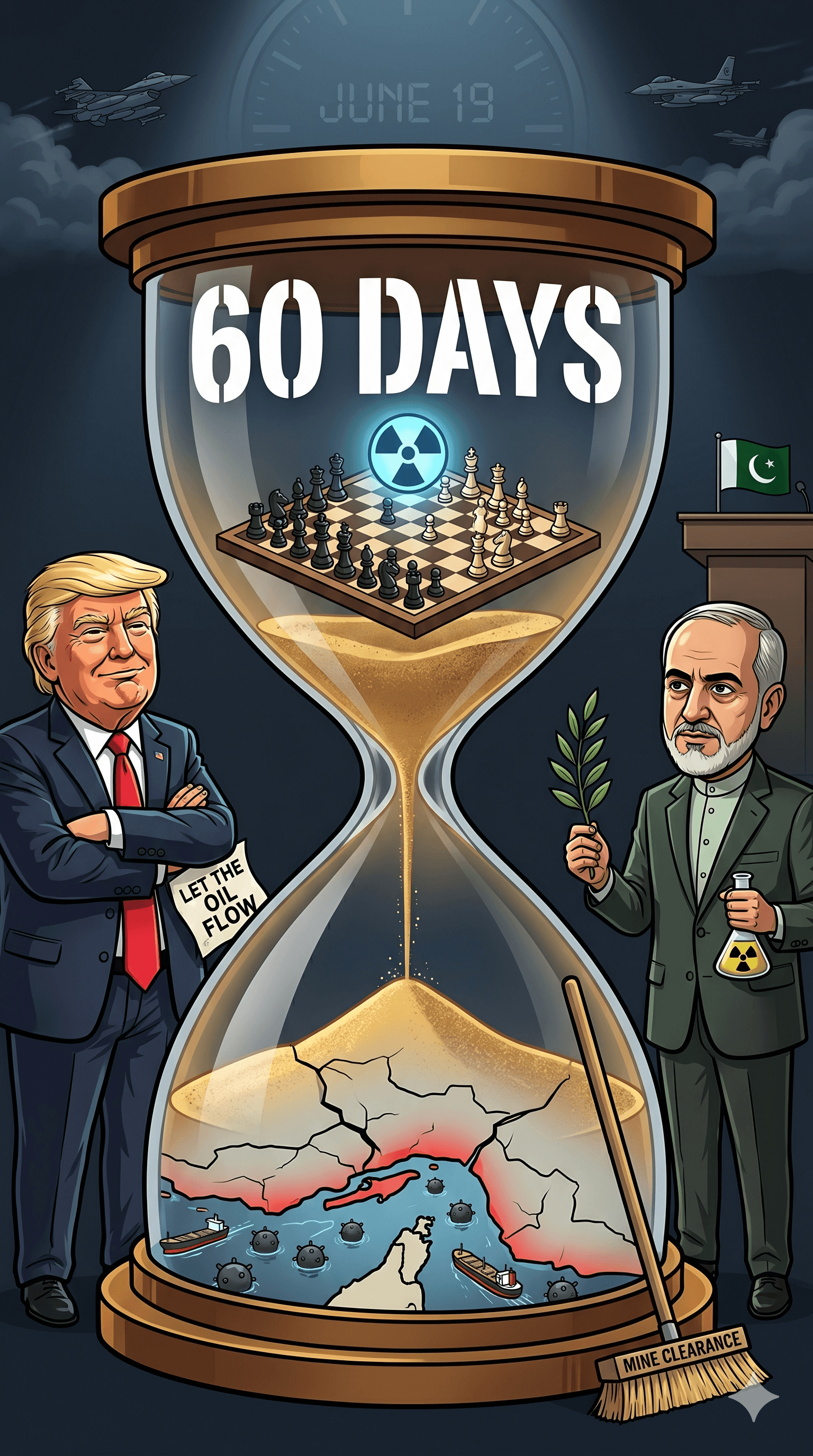
The United States and Iran are on the cusp of a landmark diplomatic moment. On June 14, 2026, mediators announced a memorandum of understanding between Washington and Tehran, extending their ceasefire for 60 days, with a formal signing ceremony expected on June 19 and nuclear talks to follow. The agreement, if it holds, would mark the most significant diplomatic breakthrough since the conflict erupted in late February — but analysts warn that the hardest negotiations still lie ahead.
How It Got Here
On February 28, 2026, Israel and the United States launched airstrikes against Iran, killing its supreme leader and many other officials, destroying a large number of military and government targets. Iran responded with missile and drone strikes against Israel, US bases, and US-allied countries in the Middle East, and by closing the Strait of Hormuz, disrupting global trade.
The danger of crossfire and threats from Iran led to severe disruption of traffic through the Strait of Hormuz, one of the world's most critical oil chokepoints, leading to fuel shortages in parts of Asia and rippling effects across the global economy. After more than five weeks of fighting, the United States and Iran agreed on April 7–8 to a ceasefire that included Israel. The months that followed were a grinding back-and-forth of brinkmanship, near-collapses, and last-minute revivals before Sunday's breakthrough.
What's in the Deal
The MOU is a fourteen-point plan that codifies the tenuous ceasefires in Iran and Lebanon and outlines areas for future negotiations. Under the agreement, both sides would sign an MOU lasting 60 days, extendable by mutual consent. During this period, the Strait of Hormuz would be open with no tolls, and Iran would agree to clear the mines it deployed in the strait to let ships pass freely.
On the nuclear front, Iran would make commitments never to acquire a nuclear weapon and to resolve the standoff around its enriched uranium. One of the options discussed includes down-blending Iran's highly enriched uranium inside the country under the supervision of UN inspectors. In return, the US signaled willingness to negotiate over lifting sanctions and unfreezing Iranian funds — though those steps would only be implemented as part of a final agreement that is verifiably implemented.
The Competing Versions Problem
The deal is already showing fault lines. Iran and the US differ in important ways. A version of the text suggests the US and "regional partners" create a program for the reconstruction and economic development of Iran with minimum funding of $300 billion, if a final deal is reached — a stipulation not confirmed by Washington. Iran's semi-official media has also insisted that any final negotiations would not begin until half of Iran's frozen funds are released, oil sanctions are suspended, and the naval blockade is lifted.
Reactions and Regional Implications
Plans for addressing unresolved issues are already receiving domestic criticism in the United States, Israel, and Iran for their yet-to-be-confirmed contents. There are structural incentives in all three countries that will make a second phase difficult to achieve.
For global energy markets, the stakes are immediate. The agreement could reopen the Strait of Hormuz, which before the war handled about 20% of global oil and liquefied natural gas. But fully reopening the strait may not happen immediately — mine-clearing, repairing infrastructure, and guaranteeing security could take time.
What Comes Next
The sides have given themselves 60 days to reach a technical agreement on how to down-blend Iran's highly enriched uranium and both freeze and monitor its nuclear program going forward. That window begins the moment the MOU is signed on June 19.
Analysts note that the framework deal kicks negotiations on the harder issues down the road and leaves key questions unanswered. Whether the 60-day window produces a durable settlement — or becomes another failed diplomatic chapter in the long saga of Iran's nuclear ambitions — remains the defining geopolitical question of the summer of 2026.