Fourteen Senate Democrats want to sanction anyone who bids on a housing tender. Here is the argument against the bill, stated as its opponents state it — and then what that argument has to answer.
What this piece is. Not an endorsement and not a rebuttal. It sets out the case against this bill as strongly as it can be put, because it is mostly being reported as a story about settlements rather than as a story about a legislative instrument, and those are different arguments. The final sections give the countervailing case with equal weight. Contested claims are marked as contested.
What was introduced
On 23 September 2026, Senators Chris Coons of Delaware, Elizabeth Warren of Massachusetts, Ron Wyden of Oregon and Ruben Gallego of Arizona introduced legislation with at least ten further Democratic co-sponsors.
It would direct the Treasury to sanction foreign companies, individuals and entities determined to have facilitated construction of Israeli settlements or related structures in the E1 area — including those merely submitting bids for E1 tenders. It would separately sanction those organising, directing, financing or facilitating the transfer of Israeli civilians into E1.
Coons framed it this way: "As Palestinian civilians face a campaign of devastation and fear from violent extremist settlers, the United States must send a strong message that this behavior is unacceptable," adding that the US "remains committed to freedom, security, prosperity and self-determination for all Israelis and Palestinians."
What E1 is
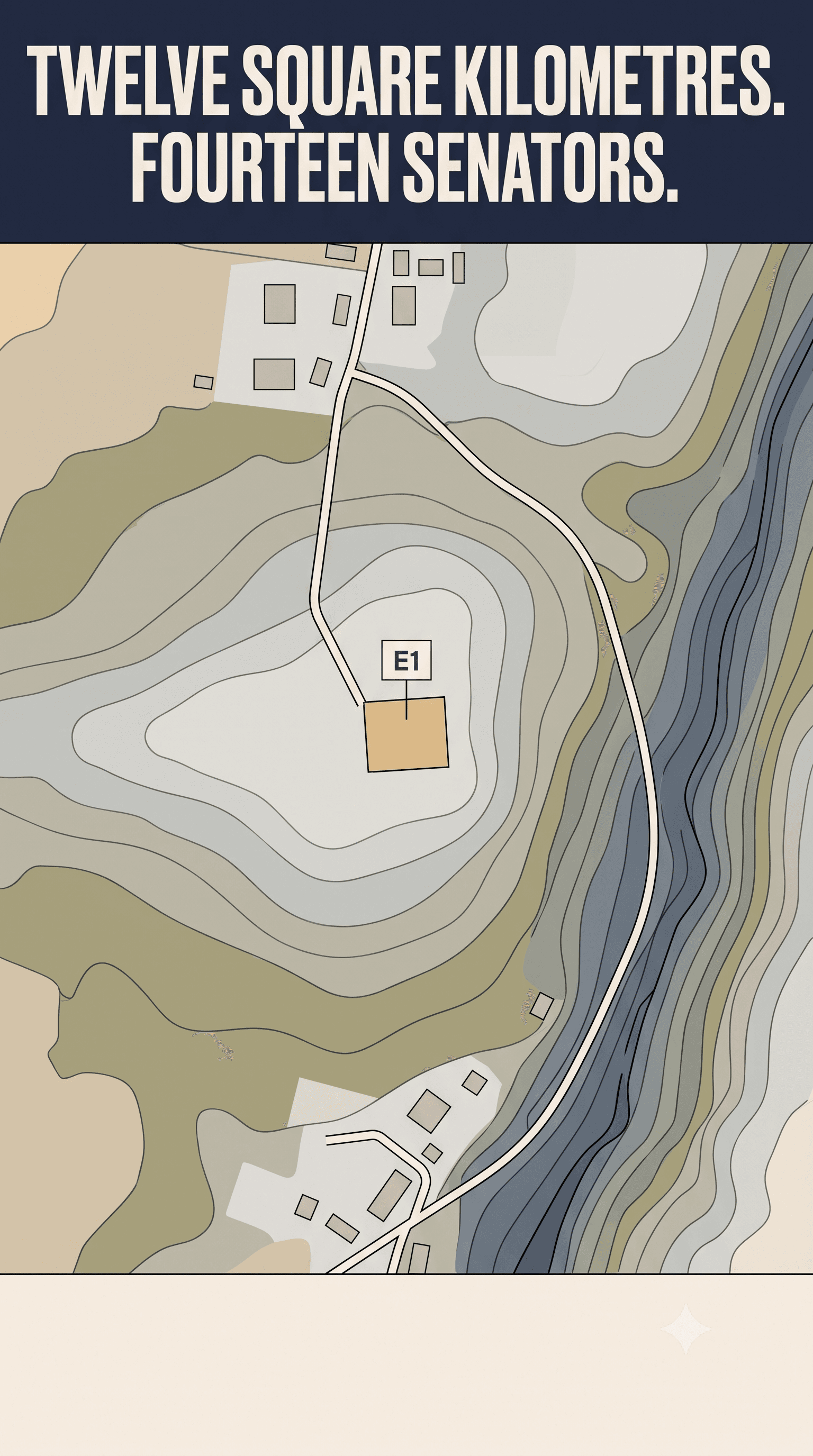
A corridor of roughly 12 square kilometres in the West Bank, lying east of East Jerusalem and west of the settlement of Ma'ale Adumim, which currently houses about 38,000 people. The approved plans cover 3,412 housing units, enough for perhaps 12,000 to 15,000 additional residents. Marketing has begun on the first 1,400 units, with bidding opened on 1,200 homes.
The plan is not new. It dates to the Shamir government in 1991, advanced under Rabin in the mid-1990s until American objections stopped it, and was revived unsuccessfully by Ariel Sharon in 2004. It sat dormant until Finance Minister Bezalel Smotrich approved it in August 2025. Construction is not expected to begin for around a year.
The case against the bill, at full strength
1. The instrument does not match the stated target
Read the Coons quotation again. The rationale offered is settler violence — "a campaign of devastation and fear from violent extremist settlers."
But E1 is not settler violence. It is a cabinet-level planning decision followed by a public procurement process. The conduct the bill would actually sanction is submitting a bid to build apartment blocks. A contractor tendering for a housing project is not a violent extremist, and treating the two as one category is a category error with real consequences for whoever ends up on the list.
The United States already has designation authorities aimed specifically at violent settlers. Those tools exist and can be used. This bill does something different while borrowing that justification.
2. Secondary sanctions, pointed at an ally
The bill's reach is the striking part. It targets foreign companies and individuals — third parties, not Israelis. That is the architecture of secondary sanctions, the instrument built for Iran, North Korea and Russia: make the rest of the world choose between the American financial system and the target.
Deploying it against a treaty ally over a zoning decision is a significant escalation in kind, not just degree. Once that threshold is crossed it is difficult to argue it should not be crossed again, and the states most likely to invoke the precedent are not friendly ones.
3. It writes into statute a legal question the United States has reversed three times
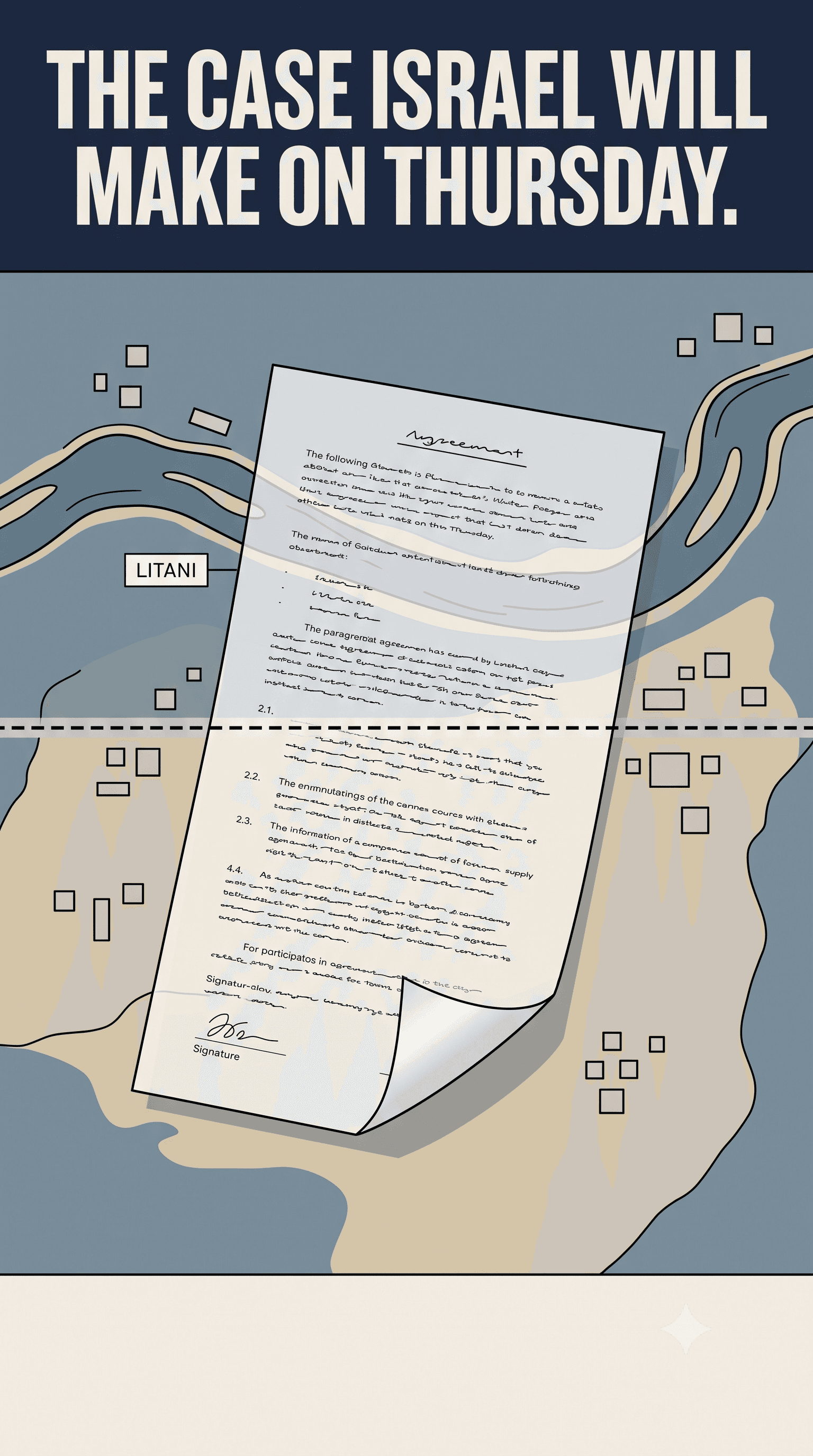
American policy on settlement legality has not been stable. The 1978 Hansell Memorandum held settlements "inconsistent with international law." On 18 November 2019, Secretary of State Mike Pompeo announced that "the establishment of Israeli civilian settlements in the West Bank is not, per se, inconsistent with international law." In February 2024, Secretary Blinken reversed that again.
Three positions in forty-six years, flipping with the party in power. Whatever the merits, legislating one side of a question the executive branch has repeatedly changed its mind about removes flexibility from every future administration — including ones that might want to trade it.
4. Israel's legal position is a minority position, not a frivolous one
The argument runs on three planks. That Article 49(6) of the Fourth Geneva Convention prohibits forcible transfer — Morris Abram, one of the Convention's drafters, said it was aimed at Nazi deportations, not voluntary movement. That the Convention's application is doubtful because the West Bank was never sovereign territory of another state, Jordan's 1950 annexation having gone almost entirely unrecognised. And that Article 55 of the 1907 Hague Regulations permits an occupying power to administer public property, so building on state land where settlers acquire no ownership is permissible.
The international consensus rejects all three. But a US Secretary of State adopted the first as recently as 2019, and a sanctions bill presumes the question is settled when American policy itself demonstrates it is not.
5. It cannot pass, and that is a cost rather than a saving
Democrats hold 47 Senate seats. The House is not in session and will not take this up before the 3 November midterms.
A bill that cannot become law but can be introduced still produces the diplomatic signal — the headline, the reaction, the strain on the relationship — without producing any policy change. That is the least efficient possible combination: all of the friction, none of the effect.
6. It converts tradeable pressure into permanent pressure
Executive-branch pressure is leverage precisely because it can be relaxed in exchange for something. Statutory sanctions are notoriously hard to lift — they require Congress to act again, against the incentives of every member who voted for them.
A Palestinian negotiator gains nothing from a concession Israel could make, because the sanctions stay anyway. Codifying pressure is a way of spending it permanently.
That is the case. It is substantially a case about instruments and institutions rather than about settlements, and on those terms it is strong.
What the case has to answer
Smotrich said the quiet part out loud
This is the hardest fact for the argument above, and it cannot be finessed.
The minister who approved E1 described it as a project that "practically erases the two-state delusion."
Any defence resting on "this is ordinary housing construction that does not preclude a future settlement" has to explain why the person who authorised it says the opposite, in public, as the reason for doing it. The bill's sponsors did not invent the claim that E1 is intended to foreclose a Palestinian state. They took it from the Israeli finance minister.
The ICJ has already ruled, and it bears on third states
On 19 July 2024 the International Court of Justice held in an advisory opinion that Israel's continued presence in the occupied Palestinian territory is unlawful and must end "as rapidly as possible," that Israel must cease all new settlement activity and evacuate settlers, and — directly relevant here — that all states must refuse to recognise the situation as lawful, avoid aid or assistance in maintaining it, and cooperate to bring it to an end.
Read against that, the bill is not an outlier. It is one reading of an obligation the Court says the United States already has. The "sanctions against allies are a dangerous precedent" argument has to contend with the claim that the precedent was set by the Court, not the Senate.
The geography is the point, and it is not rhetorical
Twelve square kilometres is small. Its location is not. E1 sits precisely where the northern and southern West Bank connect, and the terrain east of Ma'ale Adumim falls away into the Jordan Valley — so the alternative route between Ramallah and Bethlehem involves a descent and re-ascent of around 1,200 metres.
There are engineering answers. Michael Koplow of the Israel Policy Forum has pointed out that a Palestinian state would already be non-contiguous, given Gaza, and that tunnels, overpasses and bridges can solve connectivity. That is true. It also concedes that there is a problem requiring solution, and shifts the question to who would build and control the infrastructure.
The precedent argument runs in both directions
If sanctioning an ally corrodes the tool, so does a standing exemption for allies. A rule applied to adversaries only is not a rule; and the argument that friendly states should face different consequences for identical conduct is exactly the argument the United States rejects when others make it.
What is established and what is not
Established: the bill's introduction on 23 September 2026, its four lead sponsors and their quoted statements, and its operative provisions as reported. E1's dimensions, unit numbers and planning history. Smotrich's August 2025 approval and his quoted characterisation. Pompeo's 2019 statement, the Hansell Memorandum and Blinken's 2024 reversal. The ICJ advisory opinion of 19 July 2024 and its terms.
Contested: the legality of settlements under international law — a question on which an overwhelming international consensus exists but which the United States has itself taken both positions on within seven years. Whether E1 forecloses a contiguous Palestinian state, where the geography is agreed and the significance is not.
Not established: the bill's full text, which was not public at the time of writing; its formal title; and any Israeli government or Republican response, none of which had been reported. An advisory opinion is also, by its nature, advisory — it is authoritative as a statement of law and not self-executing.
What to watch
Whether the bill gets a Republican co-sponsor. With none, it is a messaging exercise and will be treated as one. With even one, it becomes a genuine signal about where the coalition on Israel policy is moving.
Whether anyone actually bids. Sanctions on tender participants only bite if foreign firms were going to participate. If the tenders are filled entirely by Israeli companies, the bill reaches nobody — which would tell you it was always about the statement.
Whether construction starts. Approval was August 2025 and ground has not been broken. E1 has been approved and shelved repeatedly since 1991. The gap between announcement and concrete is the most reliable indicator in this whole story.
Sourcing note: Bill details, sponsors, provisions and the Coons quotations are from reporting by Al-Monitor and the Jerusalem Post on 23 September 2026; the bill's text was not public at the time of writing and its title has not been reported. E1's dimensions, unit numbers, planning history and the Koplow argument are from Times of Israel reporting; Smotrich's quotation is from the same source. The Pompeo statement of 18 November 2019, the 1978 Hansell Memorandum and the Israeli legal arguments on Article 49(6), prior sovereignty and Hague Article 55 are as summarised by the Baker Institute; Blinken's February 2024 reversal is separately reported. The ICJ advisory opinion of 19 July 2024 and the third-state obligations described are from published summaries of the opinion. Senate seat numbers and the midterm date are as reported. Where a claim is one party's characterisation rather than an established fact, it is attributed in the text.