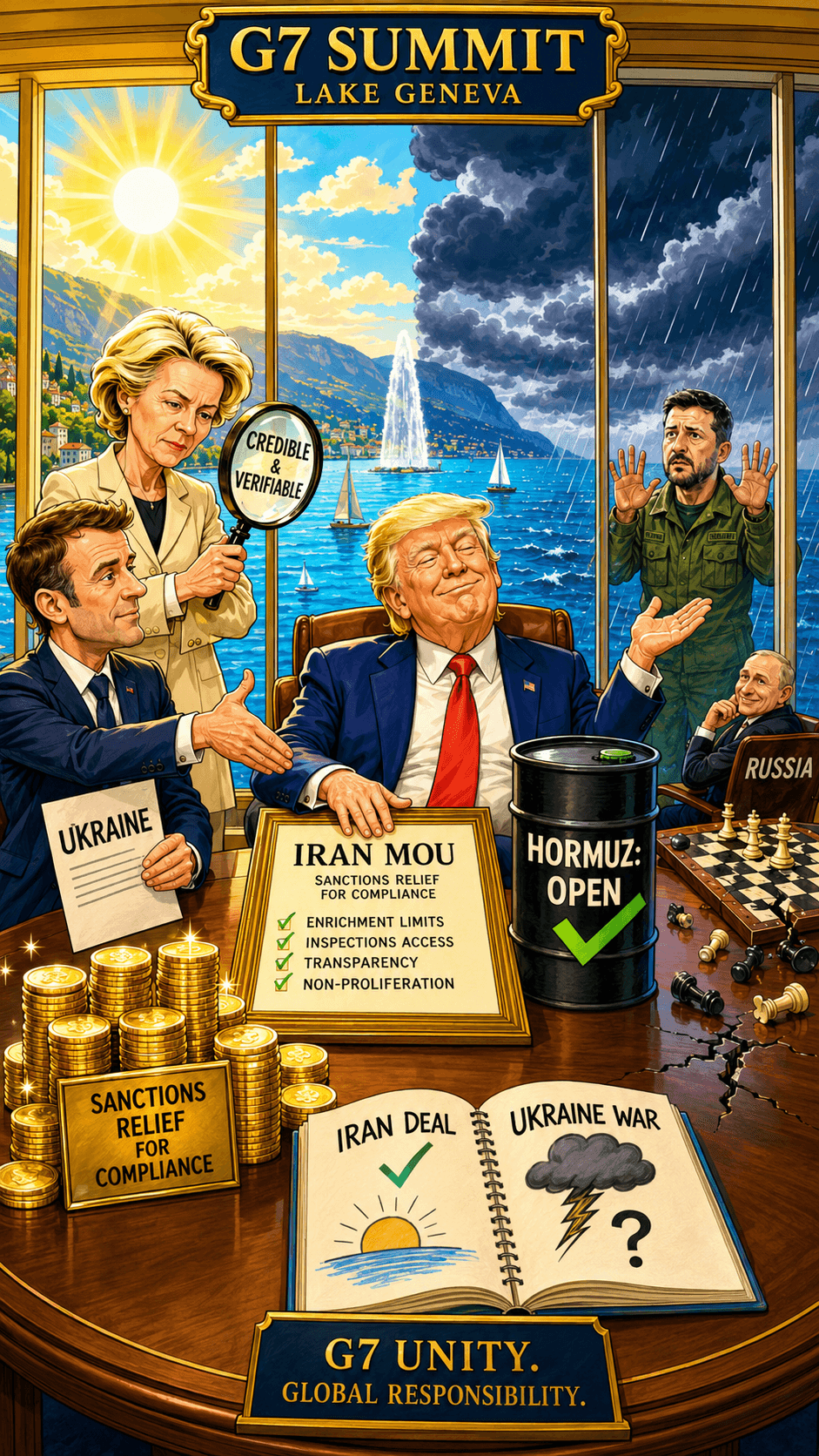
The Agreement That Was Never Really an Agreement
On April 7–8, 2026, the United States and Iran announced a ceasefire — the first direct diplomatic halt between the two nations since the outbreak of the 2026 Iran War. It was historic. It was also fragile from the moment the ink dried.
The core dispute was never resolved: Iran insisted the ceasefire covered Lebanon and Hezbollah. The US and Israel maintained it applied only to direct US-Iran hostilities. That gap — left deliberately ambiguous in the original agreement — became the fault line that would crack the deal open, repeatedly.
Israel continued striking southern Lebanon. Hezbollah continued firing rockets into northern Israel. And Iran, watching its proxy fight without a ceasefire umbrella, began signaling that its patience had a shelf life.
The Second Collapse: June 2026
By early June, the April ceasefire was a ceasefire in name only. The US targeted an empty tanker approaching Iran's Kharg Island on June 2. Iran retaliated with drone and missile strikes against targets in Bahrain and Kuwait on June 3. The tit-for-tat had resumed its familiar rhythm.
Under pressure from all directions, the Trump administration leveraged backdoor talks between Lebanon and Israel to pull Iran back to the table. A new ceasefire deal was announced on June 4.
It collapsed almost immediately.
Hezbollah rejected the agreement outright. The deal's central mechanism — a "pilot zone" scheme that would swap Lebanese national army units into positions currently held by Hezbollah — was widely dismissed as unworkable without Hezbollah's participation. Then came Israeli strikes on Beirut. Not the outskirts. Beirut.
The Beirut strikes didn't just shatter the June ceasefire. They threatened to rupture the Trump-Netanyahu personal relationship that had held the entire diplomatic architecture together. For a US president whose foreign policy brand depends on deal-making, watching a deal he brokered burn in real time carries significant domestic and international costs.
The Strait: Still Closed, Still the Flashpoint
Running parallel to the ceasefire drama is the continuing standoff over the Strait of Hormuz — the narrow maritime corridor through which roughly 20% of the world's traded oil passes.
Iran has not lifted its restrictions. The US has not lifted its counter-blockade on ships transiting through Iranian ports. Trump publicly stated that any ceasefire pause was conditional on the "complete, immediate, and safe opening of the Strait of Hormuz." Iran's Foreign Minister Abbas Araqchi responded that Tehran intends to devise a new arrangement for maritime traffic — which the US has interpreted as an attempt to charge tolls, something Washington has explicitly opposed.
US oil industry figures have been warning the Trump administration in private that the current status quo is unsustainable, and that major price spikes should be expected in the coming weeks if the Strait remains contested. Global markets are watching every escalation and de-escalation with acute sensitivity.
Iran's Strategic Calculus
Every Iranian response to a perceived breach — a blocked tanker, a US airstrike, IDF strikes on Beirut — follows an identifiable logic. Tehran is not reacting emotionally. It is applying pressure at calculated intervals for three distinct strategic purposes.
First, each retaliation imposes costs and signals to Washington that maintaining ceasefire integrity has real consequences — it is meant to discipline US behavior, not start a new war. Second, keeping economic pressure alive through Hormuz disruptions maintains Iran's negotiating leverage. The more volatile oil markets are, the more incentive the Trump administration has to reach a settlement quickly. Third, Iranian strikes remind Gulf Arab states — Bahrain, Kuwait, the UAE — of their structural vulnerability and their ultimate need for a long-term security accommodation with Tehran, regardless of what Washington promises.
Iran is playing a long game. The ceasefire collapses serve its interests as much as a durable peace would, as long as no agreement is reached on its terms.
Global Reactions
The international community is watching with growing alarm. The UK Parliament's House of Commons Library has been tracking the ceasefire negotiations in real time, noting that neither side has removed its blockades despite the rhetorical commitments. European capitals, already stretched by the Ukraine conflict, are increasingly concerned about oil supply disruptions feeding back into domestic inflation — a politically combustible combination.
Gulf Arab states face a particularly uncomfortable position: formally allied with the US security umbrella, yet geographically exposed to Iranian retaliatory capability, and economically dependent on stable Hormuz transit.
China and Russia have maintained studied neutrality, offering diplomatic language while neither intervening nor applying meaningful pressure on Tehran to settle.
Strategic Implications
The pattern emerging from the 2026 Iran conflict is one of managed escalation — neither side wants full-scale war, but neither is prepared to make the concessions required for genuine peace. The ceasefire mechanism has become a tool of pressure rather than a path to resolution.
For the Trump administration, the failure of a second ceasefire in under two months creates a difficult political narrative: the dealmaker whose deals keep falling apart. The pressure to produce a visible, durable agreement before the situation degrades further — and before oil markets deliver another shock — is mounting.
For Israel, the question is how long Netanyahu can sustain strikes in Lebanon that simultaneously antagonize Iran, stress the US relationship, and fail to dislodge Hezbollah from its positions. The "unlimited budget" granted to counter Hezbollah's fiber-optic drone campaign has not produced results.
For Iran, the calculus remains: hold out, impose costs, and wait for Washington to offer terms closer to Tehran's baseline.
Outlook
A third ceasefire attempt is likely. The structural incentives for one — oil prices, domestic US politics, Gulf Arab pressure — have not disappeared. But the pattern is now clear: agreements without a resolution to the Hezbollah question and the Hormuz standoff will not hold. Every deal that leaves those two variables unresolved is a temporary pause, not a peace.
The ceasefire that keeps dying will keep coming back to life — until someone blinks, or someone makes a mistake that neither side can walk back.