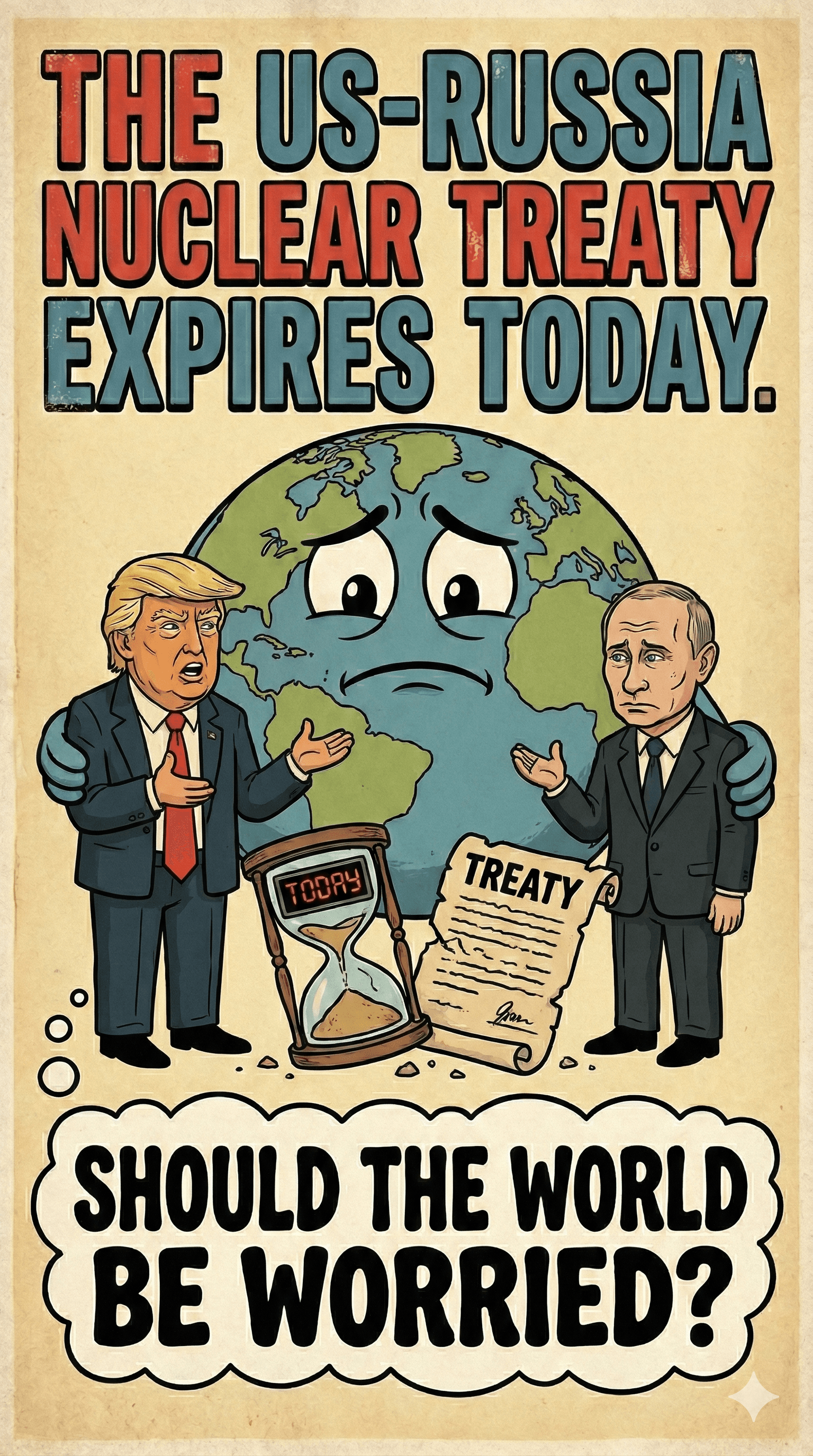
Today marks the expiration of the New START treaty (Strategic Arms Reduction Treaty), the last remaining pillar of nuclear arms control between the world’s two largest nuclear powers. Its demise ushers in an era of uncertainty not seen since the height of the Cold War, removing crucial guardrails on nuclear proliferation at a time of immense geopolitical friction.
The End of an Era
For decades, a complex architecture of treaties managed the nuclear standoff between the United States and Russia. These agreements provided transparency, mandated inspections, and capped the number of deployed strategic nuclear warheads and delivery systems.
One by one, these treaties have fallen away. The Anti-Ballistic Missile (ABM) Treaty was abandoned in 2002; the Intermediate-Range Nuclear Forces (INF) Treaty collapsed in 2019 during the Trump administration amid mutual accusations of violations.
New START was the final barrier. While extended in 2021, its viability was shattered in February 2023 when President Vladimir Putin announced that Russia was "suspending" its participation in the treaty—a move widely seen as nuclear leverage utilized against the backdrop of the ongoing war in Ukraine. Today’s official expiration date formalizes a breakdown that has been in motion for years.
Why the World Should Be Worried
The image of a distressed globe is not hyperbole. The expiration of New START without a replacement agreement has immediate and severe consequences for global security:
Loss of Transparency: The treaty's most vital component was its verification regime. It allowed both sides to conduct on-site inspections of each other's nuclear arsenals, building a baseline of trust and preventing worst-case scenario planning. Without these eyes on the ground, suspicion will inevitably grow.
The Threat of an Arms Race: With caps removed on the number of deployed warheads (previously limited to 1,550 on each side), both nations are technically free to expand their arsenals unlimitedly. China’s rapid expansion of its own nuclear capabilities further complicates this dynamic, potentially leading to a three-way arms race.
Increased Risk of Miscalculation: In the absence of regular diplomatic channels and data exchanges regarding nuclear forces, the risk of a misunderstanding escalating into a nuclear crisis increases significantly.
The Geopolitical Divide
The cartoon graphic highlights the deep divide reflected by the leadership of both nations over recent years. The breakdown of arms control accelerated during the Trump presidency with the exit from the INF treaty and skepticism toward multilateral agreements. However, the final nail in New START's coffin was driven by Moscow's refusal to allow inspections during the Ukraine conflict.
The torn treaty in the image symbolizes more than just paper; it represents the shredding of diplomatic norms that kept the world safe from nuclear catastrophe for half a century.
As the hourglass runs out today, Washington and Moscow remain far apart on negotiating a successor agreement. The United States has insisted that Russia return to compliance and that future treaties must include China. Russia has stated there can be no talk of nuclear stability while the US supports Ukraine against Russian forces.
For now, the world enters uncharted waters, watching anxiously as the old rules expire with no new ones to take their place.