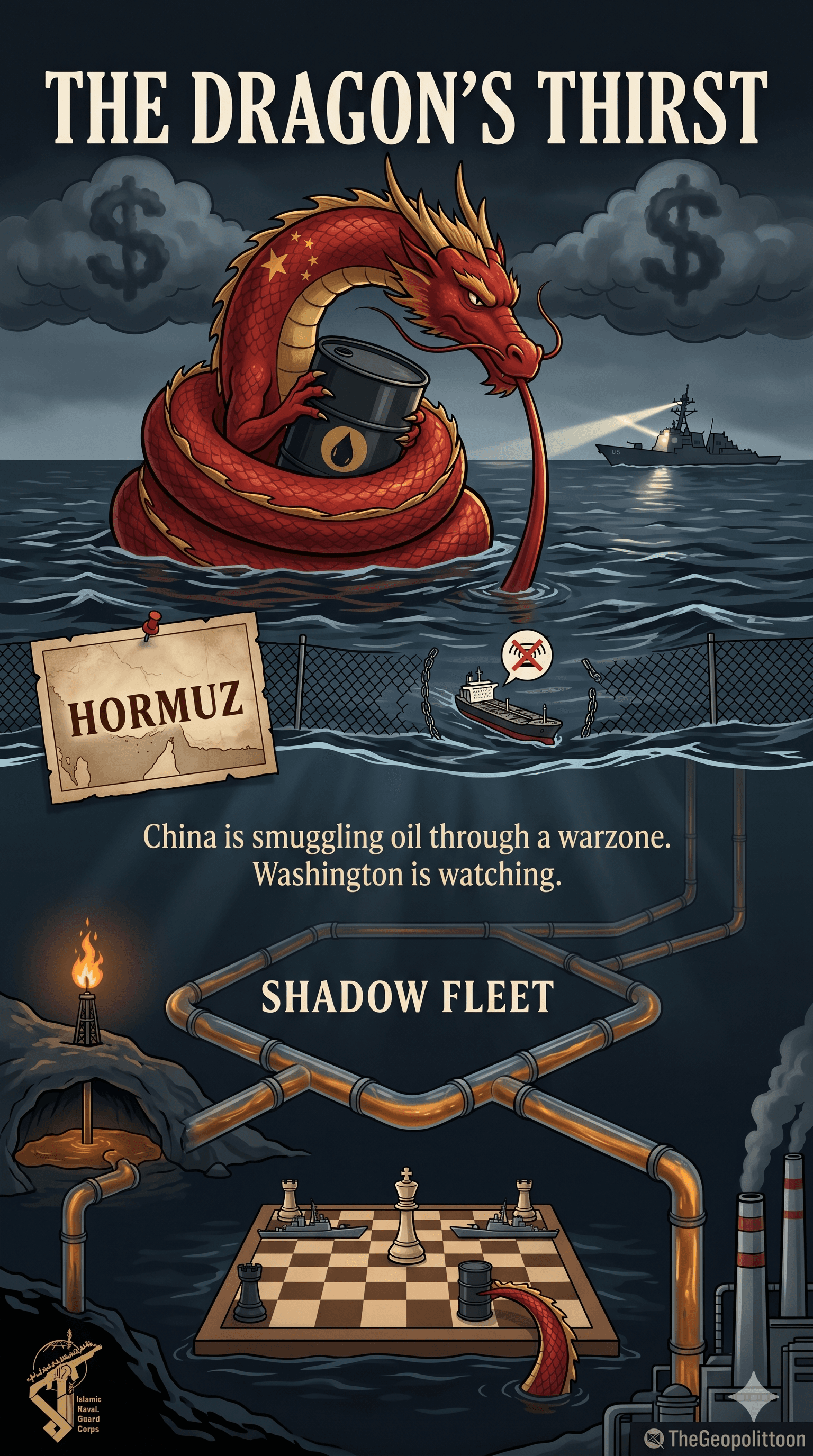
A tanker with a Malawian flag. A landlocked country. A transponder that had been lying about its location for eleven days. On the night the United States naval blockade of Iranian ports took effect, a Chinese-owned vessel called the MV Rich Starry crept toward the Strait of Hormuz, turned back once — then slipped through in the early hours of the morning.
That single ship tells the story of one of the most consequential geopolitical standoffs of 2026 better than any press briefing.
The Choke Point That Runs the World
The Strait of Hormuz — a 21-mile-wide passage between Iran and the Arabian Peninsula — is the most important oil chokepoint on earth. Before the US-Israel strikes on Iran in late February 2026 ignited the current conflict, roughly 20 million barrels of oil per day passed through it. That is approximately one-fifth of all the oil the world consumes. There is no simple alternative route.
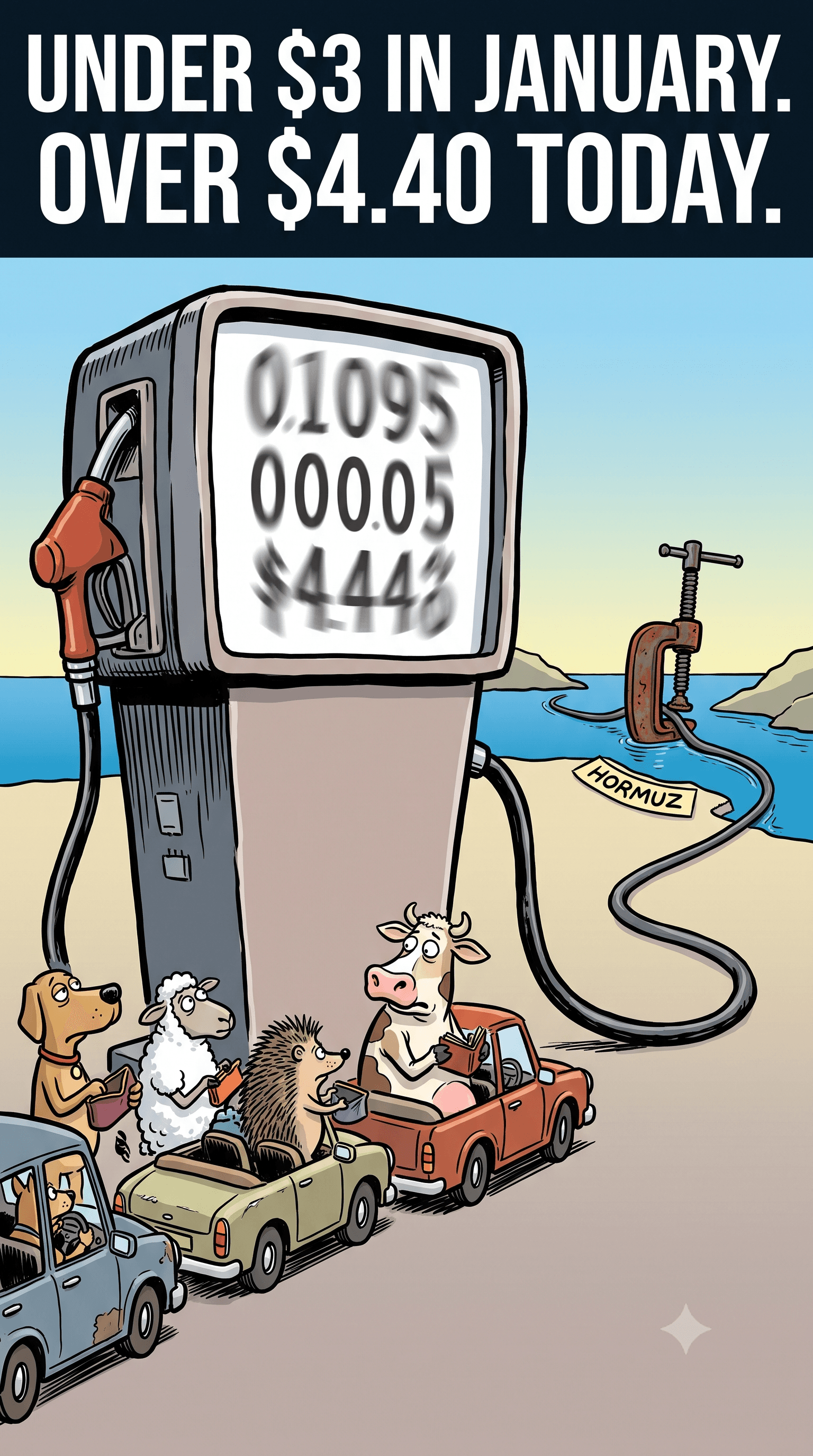
When Iran closed the strait in retaliation for the airstrikes, oil prices surged past $100 a barrel within hours. Marine insurers suspended war-risk coverage across the Persian Gulf. Global shipping giants ordered their fleets to anchor. The world had not seen an energy shock of this scale in a generation.
China's Energy Cliff
No country felt the shock more directly than China. Before the conflict, China received approximately 5.35 million barrels of oil per day through the Strait of Hormuz. That figure has collapsed to roughly 1.22 million — a drop of nearly 80% — with only Iranian tankers now receiving passage, and those tankers deliver almost exclusively to China.
The numbers explain Beijing's position clearly: China purchases around 90% of all Iranian oil exports. That dependency, built over years of sanctions that drove every other buyer away, has become both a lifeline for Tehran and a vulnerability for Beijing.
Oil funds roughly 45% of Iran's government budget. The IMF has estimated Iran's fiscal breakeven at between $121 and $124 per barrel — and Chinese buyers pay around $60, after negotiated discounts. Iran was running deficits before the blockade began. The rial had lost 15% in a single month. Washington's calculation is straightforward: the blockade does not need to stop every barrel. It only needs to make the cost of continuing the trade higher than the cost of stopping it.
Beijing Draws Its Line
China's response has been unprecedented in its directness. Beijing's Commerce Ministry formally instructed Chinese companies to disregard US sanctions targeting Iranian oil — deploying a blocking statute introduced in 2021 that allows Chinese firms to seek domestic damages from any bank, insurer, or shipping company that cuts ties under foreign legal pressure.
The order specifically protects named Chinese refineries — including Hengli Petrochemical and several "teapot" refineries in Shandong province — that the US Treasury had already sanctioned for processing Iranian crude. The message from Beijing was unambiguous: continue the transactions, and China will protect you. Comply with American sanctions, and China will penalise you.
This creates an impossible bind for global companies with exposure to both markets. Follow US rules, face penalties in China. Follow China's order, risk losing access to the US financial system.
The Shadow Fleet at Work
On the water, the operation is more elaborate. Maritime intelligence analysts have tracked a dramatic surge in vessels going "dark" — switching off their AIS tracking signals — in and around the Strait of Hormuz. In one recent snapshot, 146 of 167 vessels in the area were not transmitting location data. Covert loading activity continues at Iran's main export hub at Kharg Island. Ships use false flags, spoofed transponders, and ship-to-ship transfers off the coast of Malaysia to obscure origin and ownership.
This is not improvisation. Analysts describe it as a domestic sanction-busting apparatus that China has been quietly building and refining — not merely for the Iran crisis of today, but as preparation for a potential future confrontation over Taiwan, when the pressure of Western sanctions may be far more severe.
A Showdown Before the Summit
The confrontation intensifies as a planned meeting between US President Donald Trump and Chinese President Xi Jinping approaches. Xi is expected to push for the lifting of Iran-related sanctions on Chinese entities, while Washington will demand China use its leverage over Tehran to help end the conflict. Neither side appears willing to move first.
The blockade grinds on. The shadow fleet keeps sailing. And somewhere in the Strait of Hormuz, another tanker with a flag that doesn't match its paperwork is calculating whether to turn back — or try again.