There are lines in warfare that, once crossed, cannot be uncrossed. On Sunday morning, May 17, 2026, one of those lines was crossed over the Al Dhafra desert in Abu Dhabi.
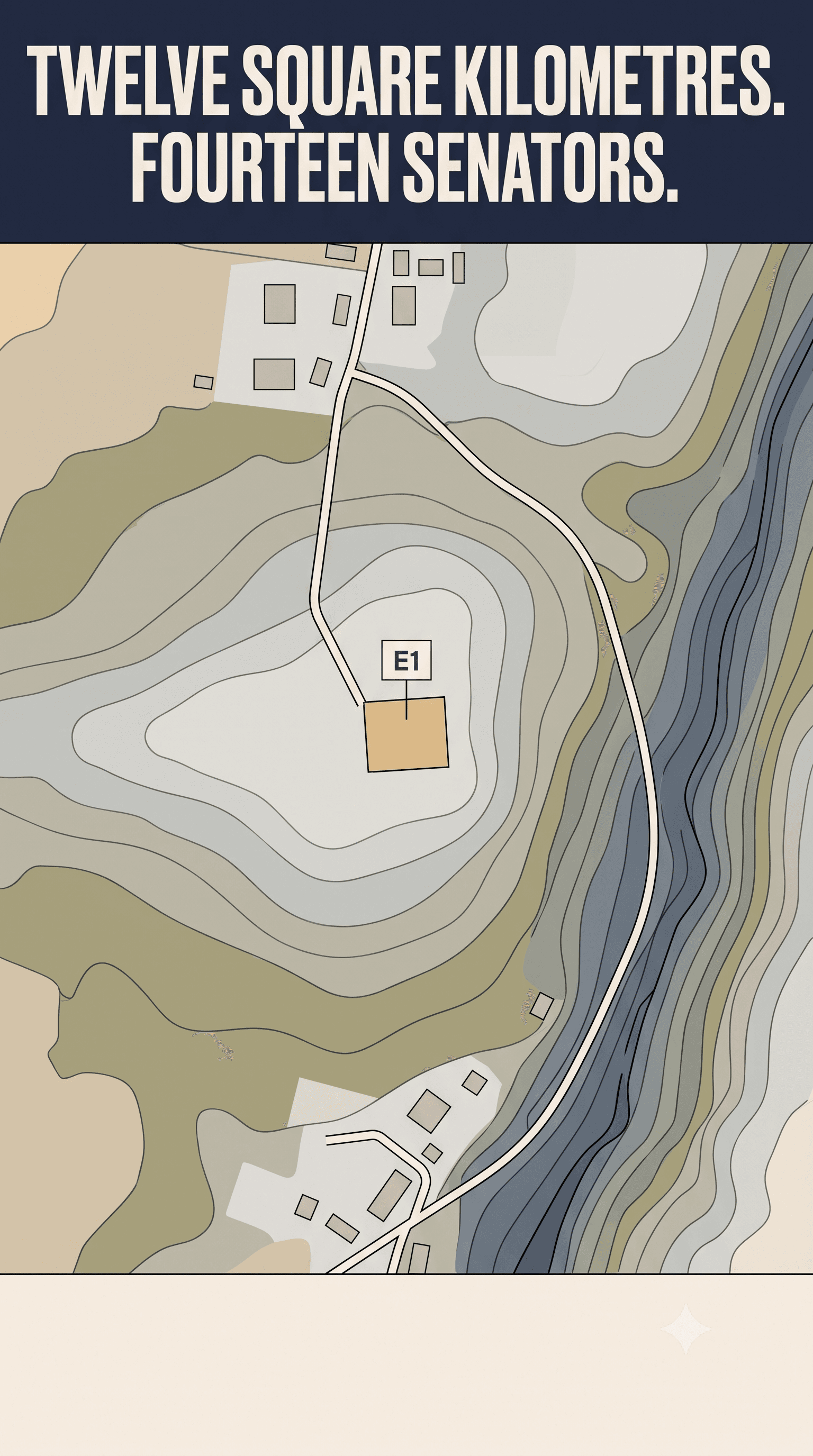
A drone strike sparked a fire on the perimeter of the Barakah Nuclear Energy Plant in the United Arab Emirates, raising new concerns over a potential regional escalation amid a fragile ceasefire between Iran and the United States. No injuries were reported, and there was no impact on radiological safety levels. The fire occurred outside the inner perimeter of the plant, in the Al Dhafra Region.
Those facts — no injuries, no radiation — are important. But they are not the story. The story is that someone just sent a drone at the Arab world's only nuclear power plant. And it got through.
What Happened: Three Drones, One Hit
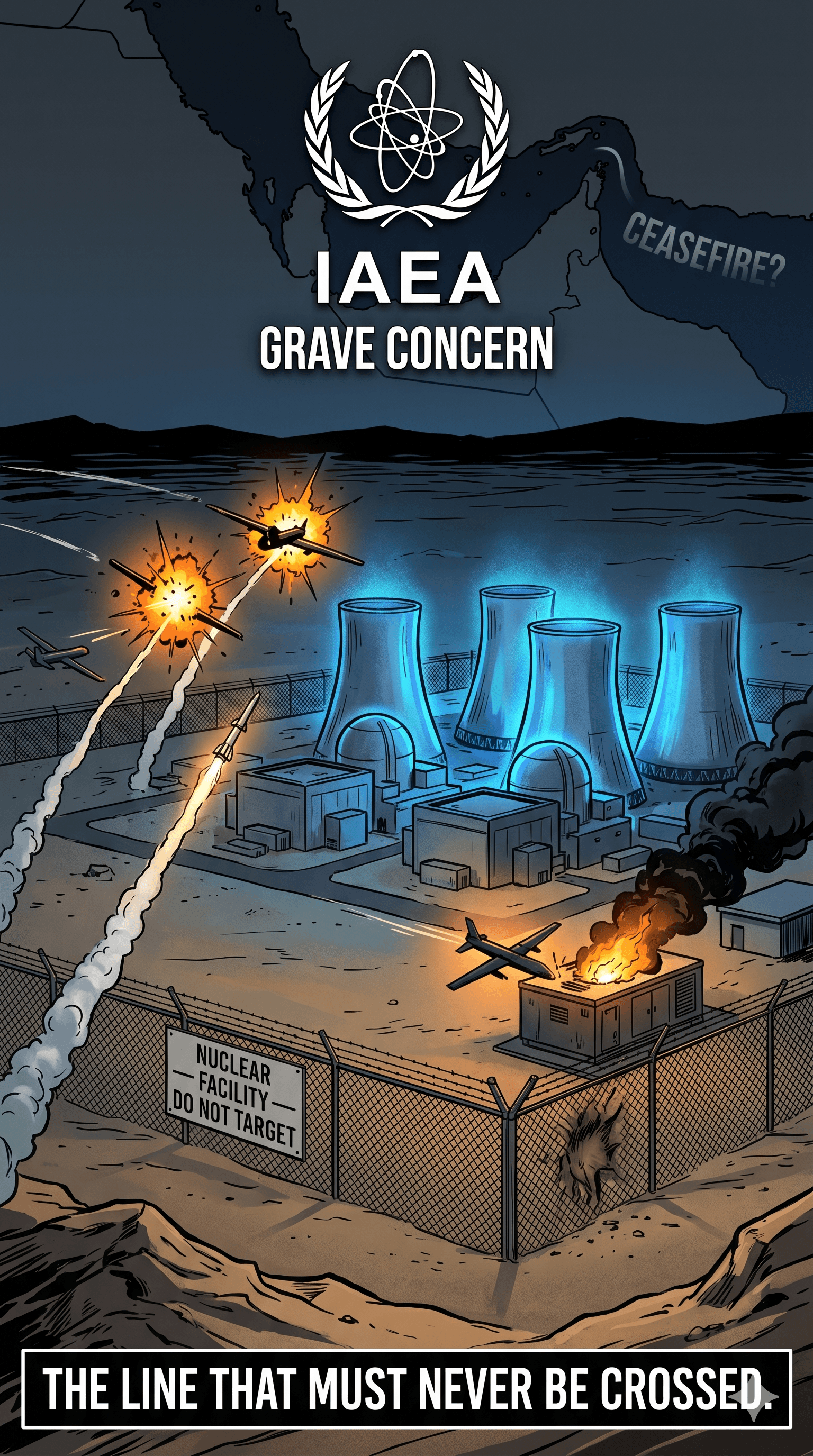
On May 17, the UAE air defences engaged three drones that entered the country from the western border. Two were successfully intercepted. A third hit a generator near the nuclear facility.
The Abu Dhabi Media Office confirmed an electrical generator caught fire outside the main facility, with no radiation leak or injuries reported, and confirmed the plant continued operating normally. The IAEA confirmed the fire affected an electrical generator and said one reactor briefly relied on emergency diesel generators.
The UAE said it had launched an investigation to determine the source of the drone attack. Officials have not attributed responsibility publicly. The reference to a western border raises questions over potential non-Iranian launch points — though the UAE and other Gulf states have faced a barrage of drone and missile strikes from Iran since the war broke out on February 28.
No group immediately claimed responsibility.
The Plant That Was Hit: What Is Barakah?
The Barakah nuclear power plant was built by the UAE with the help of South Korea at a cost of $20 billion. It went online in 2020 and is the only nuclear power plant in the Arab world.
Barakah is central to the UAE's clean energy goals — it supplies about 25 percent of the country's electricity and avoids 22.4 million tonnes of carbon emissions annually, equivalent to removing 4.8 million cars from the road. It generates 40 terawatt hours of clean electricity each year — equivalent to the annual total power demand of Switzerland.
The plant operates four APR1400 reactor units under strict regulatory oversight by the Federal Authority for Nuclear Regulation, which continuously monitors it for safety, security, and environmental protection.
The UAE signed a strict deal with the U.S. over the nuclear plant, known as a "123 agreement," in which it agreed to forego domestic uranium enrichment and reprocessing of spent fuel to ease proliferation concerns. Its uranium comes from abroad. This makes Barakah fundamentally different from Iran's nuclear programme — it is a purely civilian energy facility operating under international safeguards. Which makes Sunday's strike even more alarming.
It is the first time the four-reactor Barakah plant has been targeted in the war.
The World Reacts: "Grave Concern"
The response from international institutions was immediate and unusually direct.
IAEA Director-General Rafael Grossi expressed grave concern about the incident and said military activity that threatens nuclear safety is unacceptable. He reiterated a call for maximum military restraint near any nuclear power plant to avoid the danger of a nuclear accident.
Sheikh Abdullah bin Zayed, UAE Deputy Prime Minister and Minister of Foreign Affairs, strongly condemned what he called a "treacherous terrorist attack." In a phone call with IAEA Director-General Grossi, he said the strike represented a breach of international law and stressed the UAE's full right to respond and to take all necessary measures to protect its security, territorial integrity, and citizens.
The UAE armed forces separately vowed a firm response to threats against the country's critical infrastructure.
The Ceasefire That Is Falling Apart
Sunday's strike did not happen in a vacuum. It is the latest in a series of escalating incidents that have shredded what remains of the April 8 ceasefire between the U.S. and Iran.
The Emirates and other Gulf states faced a barrage of missile and drone strikes launched by Iran since the war broke out on February 28. A conditional ceasefire agreed on April 8 led to a halt in hostilities for several weeks, but Tehran resumed strikes on the Emirates earlier this month.
Sunday's strike raised new concerns over a potential new regional escalation amid a fragile ceasefire between Iran and the United States. Iran's Foreign Minister Abbas Araghchi, for his part, has publicly declared that Iran considers itself the victor in the conflict — a posture that signals Tehran has no intention of backing down.
The backdrop to all of this is the continuing closure of the Strait of Hormuz, the U.S. naval counter-blockade, and the collapse of the Islamabad peace talks. The ceasefire is a word on paper. On the ground — and in the air over Al Dhafra — it means very little.
Why This Changes Everything
A nuclear power plant is not just infrastructure. It is a symbol — of civilian life, of peaceful energy, of the line that separates war from catastrophe. The IAEA's entire post-Chernobyl, post-Fukushima doctrine rests on the principle that nuclear facilities are off-limits in armed conflict. That doctrine was tested on Sunday, and it held — barely.
The drone that struck the Barakah generator did not cause a nuclear incident. But it demonstrated something that every military planner in the Gulf is now absorbing: the plant can be reached. Two out of three drones were intercepted. The third was not.
The Federal Authority for Nuclear Regulation confirmed that the fire did not affect the safety of the power plant or the readiness of its essential systems, and that all units are operating normally. The immediate danger has passed.
But the precedent has been set. A drone found the Arab world's only nuclear power plant on a Sunday morning. It flew in from the west. Two were stopped. One was not.
The next time, the geometry may be different. The next time, the drone may be aimed at something other than a generator.
That is what makes Sunday's strike not just a news story — but a warning.