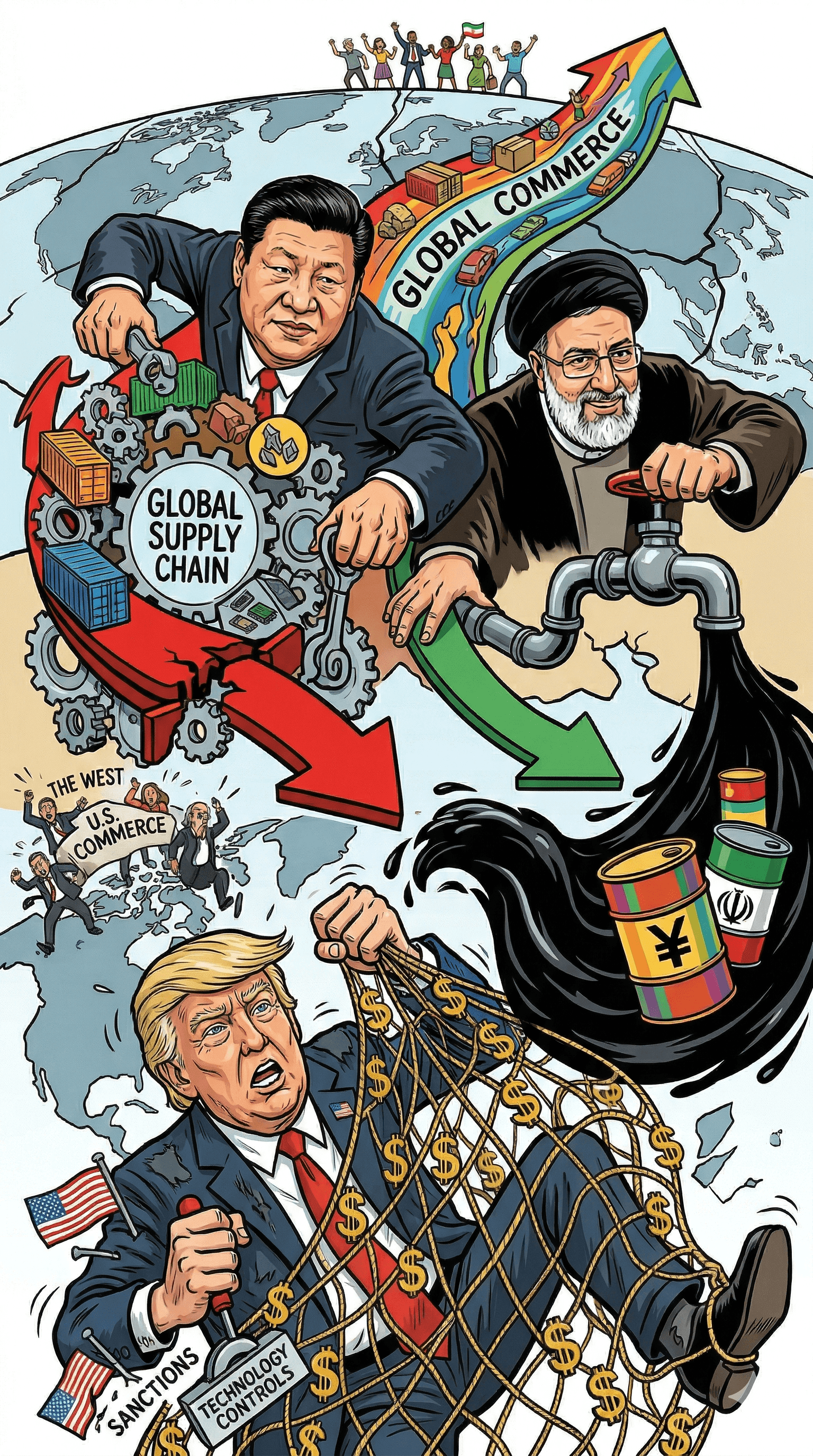
The global geopolitical landscape has fundamentally transformed, moving beyond traditional military battlefields into the intricate web of international trade and finance. A recent investigative report has brought to light a stark new reality: China and Iran have effectively learned to weaponise the global economy, directly challenging the United States at its own game. By squeezing global supply chains, creating parallel energy markets, and leveraging critical commercial links, these nations are actively eroding the historic American monopoly on economic statecraft. As the US faces unprecedented vulnerabilities in an increasingly multipolar world, the weaponisation of the global economy is rewriting the rules of international relations and directly impacting consumers and businesses worldwide.
The Evolution of Economic Warfare
For decades, Washington enjoyed virtually uncontested dominance in the realm of economic warfare. The United States routinely leveraged its control over the global financial system, utilizing the dominance of the US dollar and its near-monopoly on advanced technologies to punish adversarial nations. US sanctions were the ultimate geopolitical tool, capable of crippling a target nation’s economy without firing a single shot.
However, that paradigm is rapidly shifting. As noted by geopolitical analysts and highlighted in recent evaluations of US vulnerabilities, rival powers are no longer merely absorbing these financial blows; they are striking back using similar economic tactics. According to Edward Fishman, author of Chokepoints, the global economy was designed for a benign environment that assumed major powers would cooperate. Today, intensifying geopolitical competition has forced nations like China and Iran to adapt, ultimately leading to a fragmented and weaponised global economy that challenges US hegemony.
China’s Grip on Global Supply Chains and Rare Earth Minerals
One of the most potent examples of this new economic warfare is China's strategic control over global supply chains, particularly its dominance in rare earth minerals. These minerals are the critical ingredients required for everything from consumer electronics and electric vehicles to advanced military technology.
When Washington applied tariffs and technological restrictions, Beijing retaliated by weaponising its near-monopoly on rare earths, severely limiting exports. This move sent shockwaves through US manufacturing sectors and exposed a glaring strategic weakness. US Secretary of State Marco Rubio recently highlighted this vulnerability, noting that the United States lacks domestic resilience in almost all leading-edge industries of the 21st century. The sudden restriction of rare earth minerals forced the US government and its European allies into a defensive scramble, sparking urgent initiatives to invest in domestic production and diversify supply lines to survive the new era of economic warfare.
Iran, the Strait of Hormuz, and Energy Coercion
While China flexes its industrial and supply chain muscle, Iran has leveraged its geographic advantages to weaponise global energy flows. Facing overwhelming conventional military asymmetry and crippling US sanctions, Tehran has turned the Strait of Hormuz—one of the world's most vital energy chokepoints—into an instrument of economic coercion.
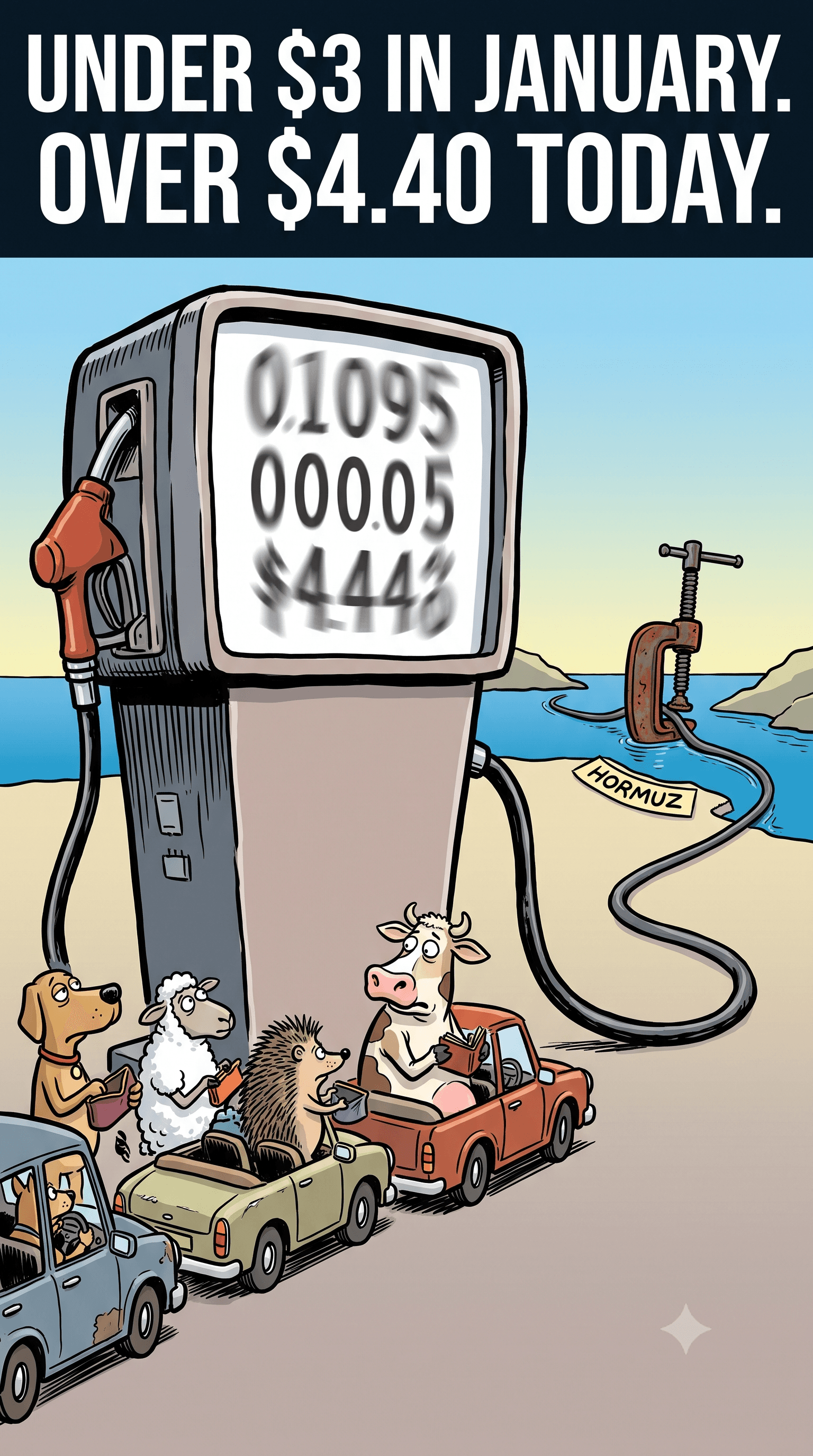
Iran’s strategy has evolved from simple blockades to the establishment of a "coercive transit regime." By allowing safe passage to vessels from allied or non-aligned nations (such as China and Russia) while threatening those linked to the US and its partners, Iran has introduced immense risk into the global energy market. This selective disruption has skyrocketed maritime insurance premiums and delayed shipping flows, effectively weaponising the global economy by driving up the prices of oil, diesel fuel, fertilizers, plastics, and even everyday consumer goods in the United States. The resulting inflation and supply chain turbulence demonstrate that Washington no longer controls all the critical global chokepoints.
Bypassing US Sanctions: The Rise of 'Teapot' Refineries
To survive the intense pressure of US sanctions, Iran has found a willing and capable economic partner in China. Together, they have forged a parallel energy market that operates entirely outside the US dollar-dominated financial system. Central to this strategy is China's network of independent "teapot" refineries.
These smaller, privately-owned refineries process millions of barrels of heavily discounted Iranian crude oil, providing Tehran with a crucial fiscal lifeline. To bypass US sanctions, this shadow trade utilizes decentralized networks, ship-to-ship transfers, deactivated transponders, and transactions settled in the Chinese yuan rather than the US dollar. By absorbing this sanctioned oil, China has simultaneously insulated its own economy from the broader energy crisis and amassed a massive strategic petroleum reserve—estimated at 1.2 billion barrels—at below-market costs. This sophisticated evasion network underscores the diminishing effectiveness of unilateral US sanctions and highlights how alternative currencies are being used to challenge the global economy's traditional structure.
Geopolitical Implications and US Strategic Responses
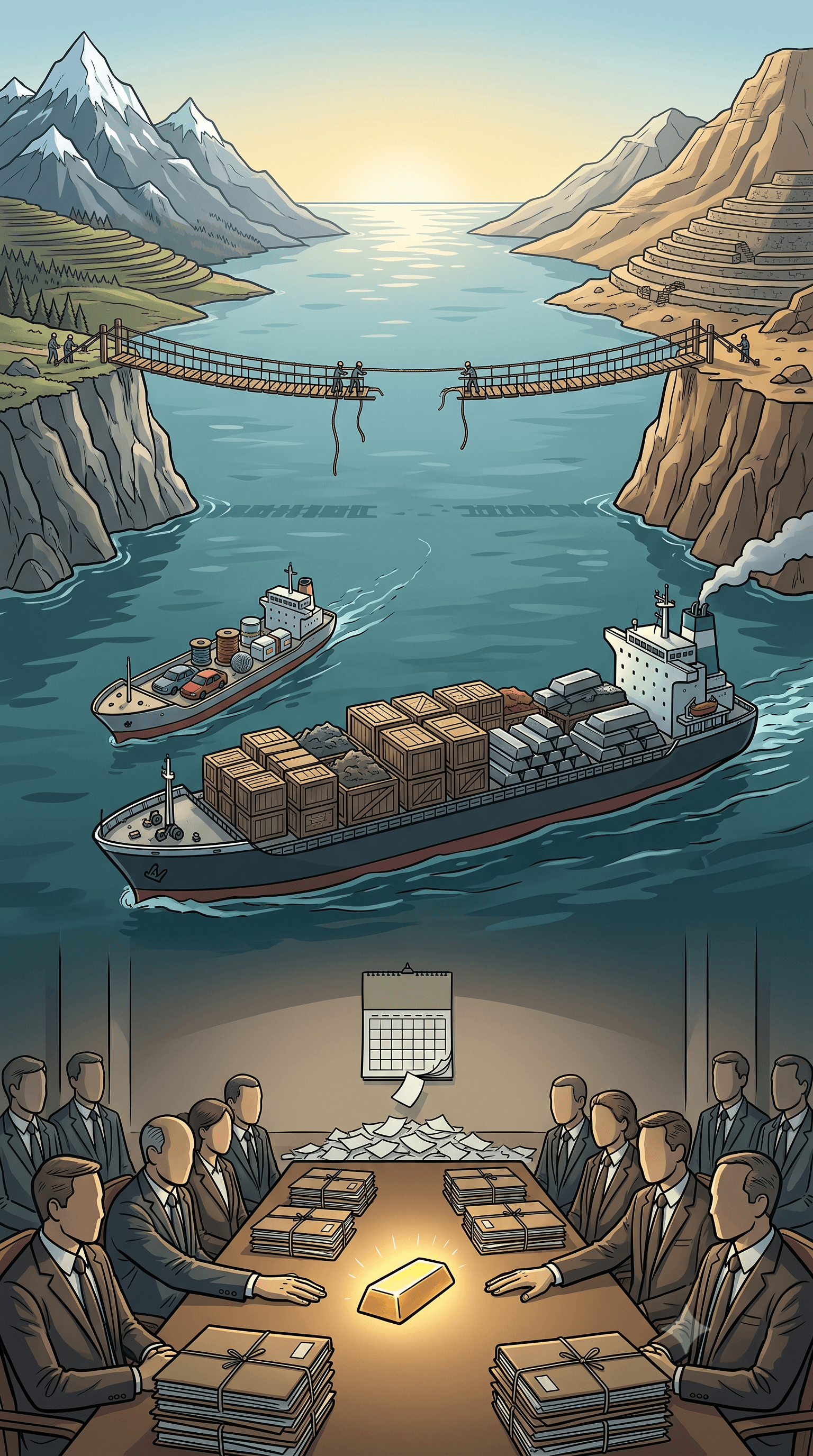
The combined economic tactics of China and Iran represent a systemic challenge to US foreign policy. The limits of traditional economic warfare were recently laid bare when 21-hour diplomatic talks between the US and Iran collapsed in Pakistan. In response to the ongoing energy disruptions and the failure of negotiations, the Trump administration has threatened to escalate the situation by imposing a naval blockade around the Strait of Hormuz, targeting vessels paying "illegal tolls" in alternative currencies like the yuan.
However, analysts warn that such retaliatory measures may only accelerate the de-dollarisation of the global economy and further fragment international trade. The US is finding that traditional tools—such as blanket US sanctions and naval posturing—are increasingly difficult to enforce when rival nations possess their own economic leverage and alternative financial infrastructure.
Outlook: Navigating the New Global Economic Order
The weaponisation of the global economy by China and Iran is not a temporary disruption; it is the foundational reality of a new global economic order. The transition away from a unified global market toward a fragmented, heavily weaponised global economy means that businesses and consumers will continue to face systemic volatility, higher inflation, and unpredictable supply chains.
Looking ahead, the primary geopolitical priority for the United States and its allies will be defensive economic statecraft. This will require massive investments in domestic manufacturing, the securing of independent supply chains for critical minerals, and the development of new strategies to counter non-dollar trade networks. Until these economic defenses are fortified, Washington will continue to face a world where its adversaries have mastered the art of challenging the US at its own game.