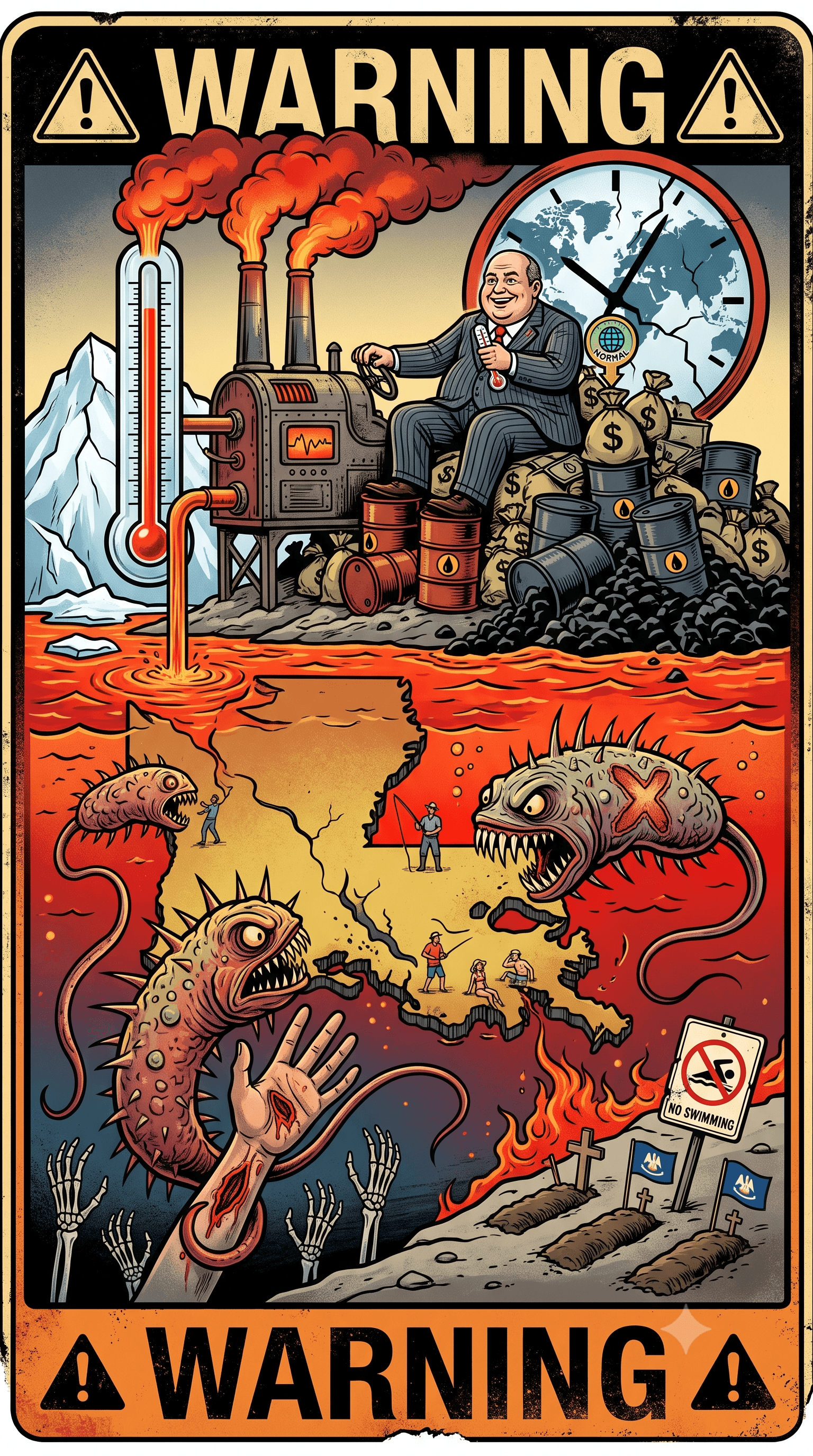
On the sun-drenched shores of the Gulf Coast, a microscopic threat is rewriting the rules of summer. As of August 2026, the Louisiana Department of Health (LDH) has reported a severe and abnormal spike in infections caused by Vibrio vulnificus, a naturally occurring but highly dangerous coastal bacterium. With nine confirmed cases and five tragic fatalities recorded so far this year, the mortality rate of the current outbreak has deeply unsettled public health officials.
Historically, Louisiana averages about seven cases and only a single death during this same period. The sudden surge in fatal infections is not merely a localized health anomaly; it serves as a glaring indicator of a much larger, global issue. As ocean temperatures continue to rise due to global climate change, the environments where these pathogens thrive are expanding. This Louisiana Vibrio vulnificus outbreak provides a stark real-world case study of how shifting environmental conditions are forcing governments to urgently reassess the intersection of public health and climate policy.
The 2026 Louisiana Outbreak: Facts and Figures
Often sensationalized in headlines as a "flesh-eating" bacteria, Vibrio vulnificus belongs to a family of bacteria that naturally inhabit warm, salty, and brackish waters. While the bacteria do not literally eat flesh, severe infections can rapidly cause necrotizing fasciitis, a condition where the tissue around an infected wound becomes badly damaged and dies as the infection progresses.
The statistics emerging from Louisiana in 2026 are alarming. According to the LDH, all nine patients who contracted the infection this year had existing underlying medical conditions, such as liver disease, diabetes, cancer, or compromised immune systems. Furthermore, all nine cases were directly linked to individuals exposing open wounds, cuts, or scrapes to coastal seawater.
The lethality of Vibrio vulnificus cannot be overstated. Health officials warn that approximately one in five people who contract the infection die, sometimes within just a day or two of symptom onset. Initial symptoms include fever, redness, severe pain, swelling, warmth, and discoloration around a wound. If the bacteria enter the bloodstream, it can cause septic shock and blistering skin lesions, often requiring intensive care, severe antibiotic regimens, or even surgical tissue removal and limb amputation to save the patient's life.
The Climate Connection: Warming Oceans as a Threat Multiplier
To understand why the Louisiana Vibrio vulnificus outbreak is escalating, one must look at the thermometer. Vibrio bacteria are highly temperature-sensitive, proliferating exponentially when coastal water temperatures rise, typically peaking between May and October.
The Gulf Coast has long been a natural habitat for these bacteria, but the unprecedented warming of global sea surface temperatures is acting as a massive threat multiplier. The United States Centers for Disease Control and Prevention (CDC) has previously issued health alerts linking the rising frequency and severity of Vibrio vulnificus infections to warming coastal waters and extreme weather events.
Climate change is not just intensifying the density of these pathogens in the Gulf of Mexico; it is expanding their geographic footprint. As the oceans warm, waters that were historically too cold for Vibrio to survive in high concentrations are becoming new breeding grounds. While Louisiana is currently bearing the brunt of this deadly spike, public health data shows the northern geographic range of these infections has been steadily creeping up the Eastern Seaboard over the last few decades. The 2026 Louisiana outbreak is a symptom of a warming planet, illustrating how climate change acts as an invisible catalyst for infectious diseases.
Economic Impacts and the Shift in Climate Policy
The surge in coastal bacterial infections carries profound implications for both local economies and broader climate policy. Economically, repeated outbreaks and heightened public fear threaten the Gulf Coast's vital tourism and seafood industries. While the current cases in Louisiana are linked to wound exposure, Vibrio can also be contracted by consuming raw or undercooked shellfish, particularly oysters. A loss of consumer confidence can devastate local fisheries, hurt coastal businesses, and disrupt regional food supply chains.
From a policy perspective, the Louisiana Vibrio vulnificus outbreak underscores a critical gap in current climate adaptation strategies. Historically, climate policy has focused heavily on reducing carbon emissions and mitigating physical damage from extreme weather events like hurricanes and floods. However, the rise of climate-driven pathogens demands a shift toward proactive health infrastructure. Governments must now invest in advanced water quality monitoring, predictive environmental modeling, and robust early warning systems to alert the public before pathogen levels reach critical mass in recreational waters.
Preventative Measures: How to Protect Yourself
While the geopolitical and environmental challenges require long-term policy solutions, the Louisiana Department of Health is emphasizing immediate, practical steps to prevent further loss of life.
Health authorities strongly advise anyone with an open wound, cut, or even a minor scrape to completely avoid entering saltwater or brackish water. If exposure is unavoidable, wounds must be covered with a highly secure, waterproof bandage. Should a wound come into contact with coastal waters, raw seafood, or raw seafood juices, it should be washed thoroughly with soap and water immediately.
Furthermore, individuals with weakened immune systems, liver disease, or other chronic conditions are urged to exercise extreme caution, as they represent the most vulnerable demographic. Authorities also remind the public to use caution when handling raw seafood and to thoroughly cook all shellfish to eliminate the risk of foodborne transmission.
Outlook: A Warning from the Coast
The 2026 Louisiana Vibrio vulnificus outbreak is a tragedy for the families involved, but it is also a loud warning bell for the rest of the world. As global temperatures continue to climb, the boundary between environmental policy and public health is dissolving rapidly. The silent threat warming in our waters demands immediate attention, proving that the true cost of a changing climate is not just measured in rising sea levels or economic shifts, but in human lives.