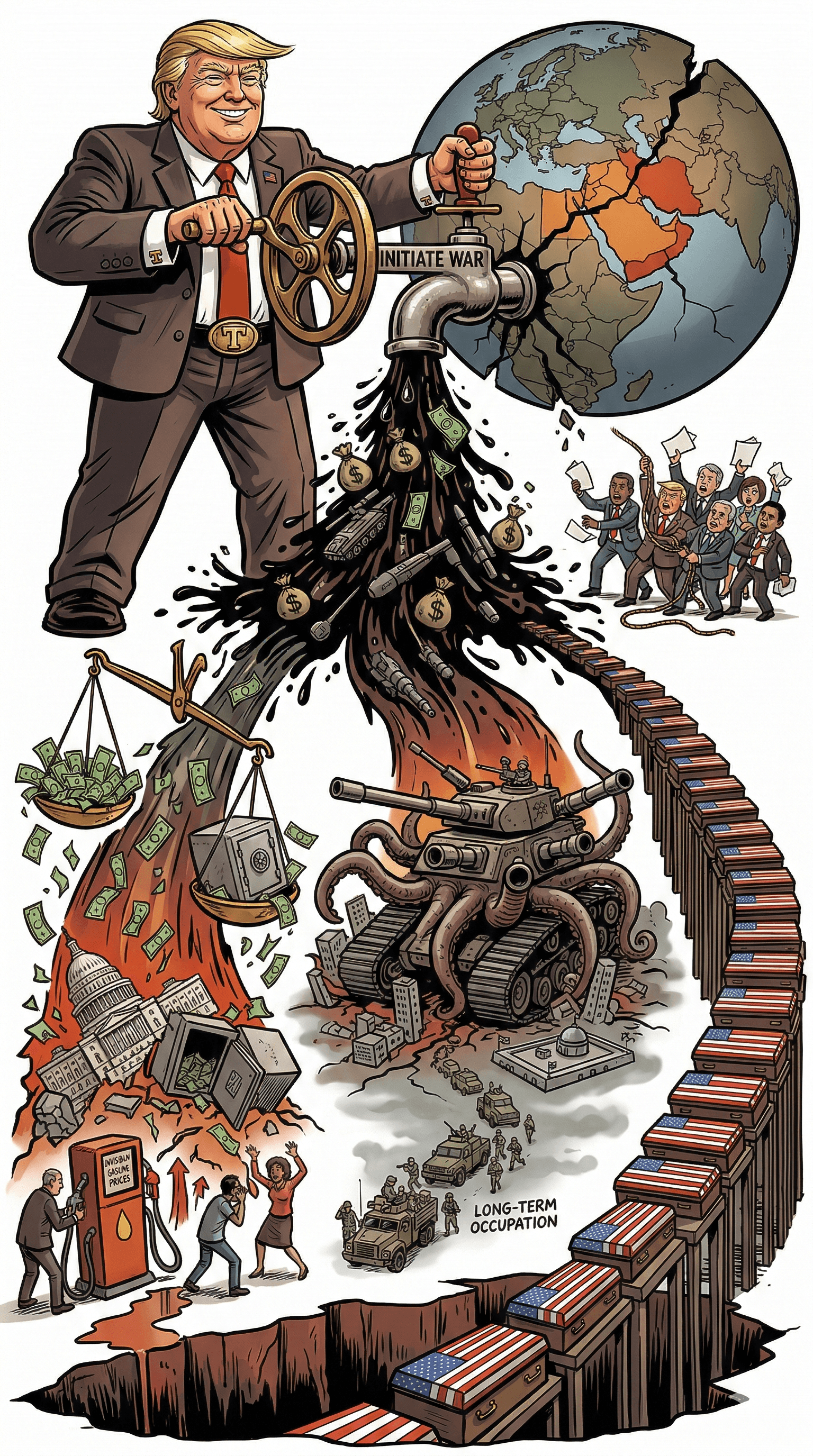
As rhetoric between Washington and Tehran reaches a boiling point, global markets and political analysts are grappling with a critical question: What would a direct military conflict between the United States and Iran actually cost?
Following intense brinkmanship—including severe warnings from President Donald Trump that Iran "might not exist in two weeks" if it fails to halt illicit oil sales and sanctions evasion—the prospect of a US-Iran war has shifted from a distant hypothetical to an immediate global concern. Beyond the devastating human toll, economists and defense experts warn that the economic cost of a US-Iran conflict could easily reach into the trillions, triggering global shockwaves, volatile oil prices, and severe disruptions to international trade.
The Revival of "Maximum Pressure" and Recent Escalations
To understand the potential cost of a US-Iran war, it is essential to examine the immediate background. The current crisis is rooted in the Trump administration's revival of its "maximum pressure" campaign. This strategy relies on sweeping sanctions designed to cripple Iran's economy, specifically targeting its oil exports—the lifeblood of the nation's revenue.
In response, Iran has accelerated missile testing and maintained its defensive posture, with its leadership asserting that US threats will not force them into submission. The geopolitical chessboard is further complicated by ongoing regional instability. With heightened violence across the Middle East, including ongoing friction involving Israel and various Iran-backed proxy groups, the threshold for a regional spillover is historically low. Both nations are currently engaged in high-risk brinkmanship, and diplomatic off-ramps appear increasingly narrow.
The Trillion-Dollar Question: Direct Military Costs
If deterrence fails and military action commences, the financial burden on the United States would be staggering. Historically, the US has significantly underestimated the price tag of Middle Eastern conflicts. According to comprehensive data from Brown University’s Costs of War project, the post-9/11 wars in Iraq, Afghanistan, and related theaters have cost US taxpayers upwards of $8 trillion when accounting for long-term veteran care and homeland security.
Analysts and economic studies, including those from the Harvard Kennedy School and various defense think tanks, project that a full-scale US-Iran war could cost the US and the global economy upwards of $2 to $3 trillion.
Unlike the 2003 invasion of Iraq, Iran presents a vastly different military challenge. Iran is significantly larger, features mountainous terrain highly suitable for defense, and possesses a robust arsenal of ballistic missiles and asymmetrical naval capabilities. Consequently, the cost of a US-Iran conflict would not be limited to initial airstrikes; it would encompass long-term regional security deployments, the defense of allied bases across the Persian Gulf, and the neutralization of sophisticated proxy networks.
Global Economic Shockwaves: Oil Markets at Risk
The most immediate and universal impact of a US-Iran conflict would be felt at the gas pump. The Middle East remains the central artery of global energy, and any direct military engagement threatens the Strait of Hormuz. More than 20% of the world's seaborne oil exports pass through this narrow chokepoint.
Analysis: The Threat to Global Supply Chains If Iran were to disrupt or attempt to blockade the Strait of Hormuz in retaliation for US strikes, the resulting supply shock would be immediate.
Energy analysts and institutions like the Commonwealth Bank of Australia warn that in the event of a US-Iran war, oil prices could swiftly rally toward $100 a barrel. In worst-case conflict scenarios, experts at Lipow Oil Associates have projected that Brent crude could surge to between $120 and $150 per barrel.
Such a drastic spike in oil prices would have a cascading effect on the global economy. Higher energy costs directly drive up inflation, making manufacturing and everyday goods more expensive. Central banks, currently attempting to manage post-pandemic economic stabilization, would face intense pressure. For the average consumer, this translates to higher transportation costs, inflated grocery bills, and a potential global recession.
Stakeholders and Motivations
Understanding the motivations of the primary stakeholders sheds light on why this conflict remains a looming threat despite the exorbitant costs:
The United States: The Trump administration aims to permanently dismantle Iran's nuclear enrichment capabilities, halt its ballistic missile development, and sever its financial support for proxy militias across the Middle East. The overarching goal is a fundamental shift in regional power dynamics.
Iran: For Tehran, the primary motivation is regime survival and the preservation of its regional influence. Iran views its proxy network and missile programs as essential deterrents against US and Israeli intervention.
Israel: As America’s primary ally in the region, Israel views a nuclear-capable Iran as an existential threat. Israel’s own security concerns heavily influence US policy, and any broader conflict would likely draw Israel into direct confrontation with Iranian forces.
Global Markets: Nations heavily reliant on Middle Eastern oil—including major economies in Europe and Asia—are critical, albeit involuntary, stakeholders desperately hoping for a diplomatic resolution to avoid economic catastrophe.
Impact and Outlook
As the situation develops, the global community is watching closely. The impact of a US-Iran war would extend far beyond the borders of the Middle East, reshaping global markets, accelerating inflation, and demanding trillions of dollars from the US treasury. While the current rhetoric relies heavily on the strategy of deterrence, the margin for error is razor-thin. A miscalculation by either side could ignite a conflict that the global economy is ill-prepared to absorb. In the coming weeks, international markets will remain highly sensitive to any military movements or breakdowns in back-channel diplomacy, bracing for the economic tremors of potential war.
#USIran #Geopolitics #GlobalEconomy #OilPrices #MiddleEastTensions #DonaldTrump #EconomicImpact #ForeignPolicy #NationalSecurity #EnergyMarkets