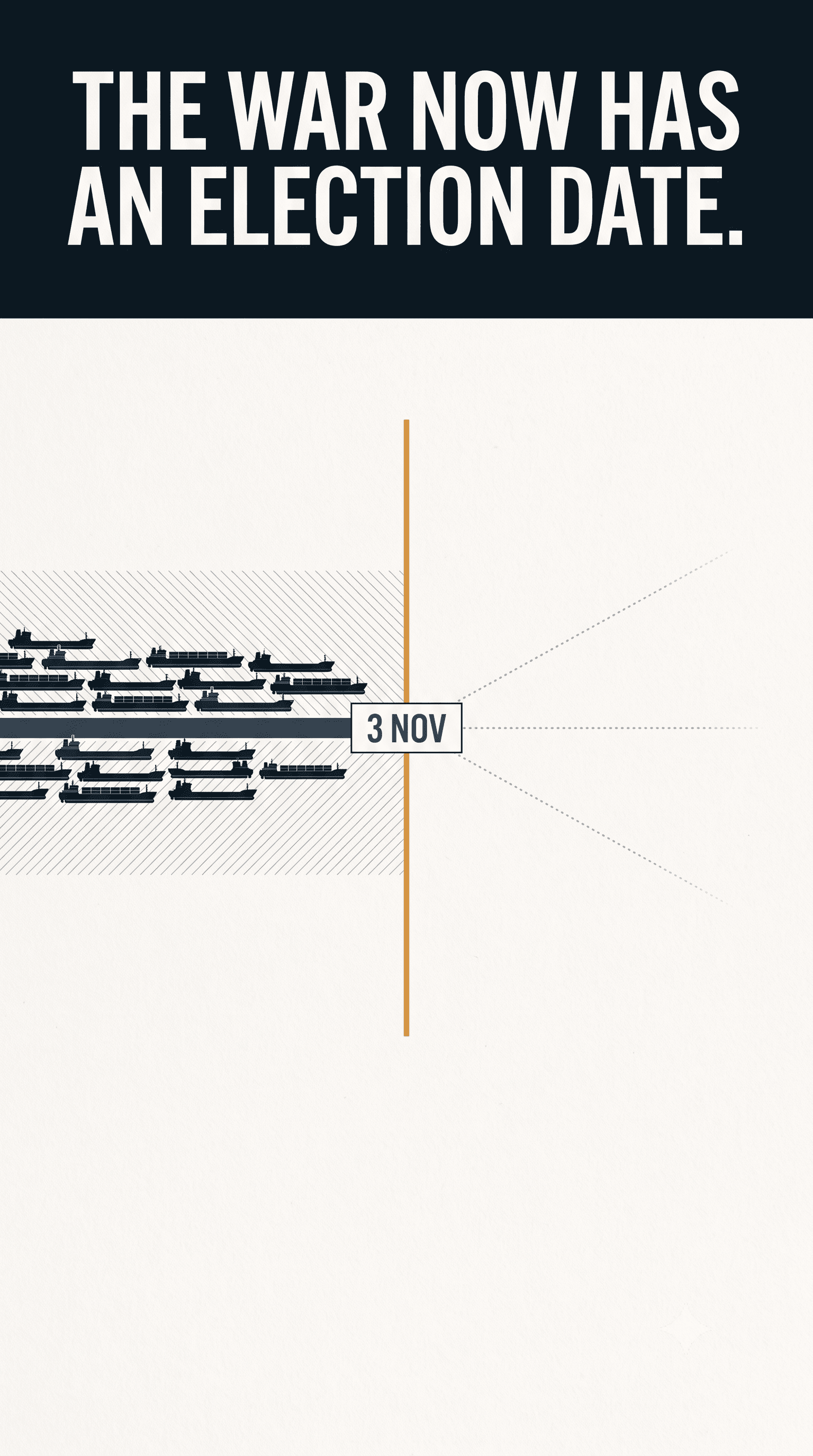
On 8 October 2026, in a post on Truth Social, President Trump wrote:
"We will not be attacking Iran at any time prior to the midterm elections to be held in the United States on November 3."
He added that "we are having productive discussions with the Islamic Republic of Iran," described Iran as being in a "very bad condition" economically and militarily, and said the blockade of the Strait of Hormuz would remain in "full force."
Read carefully, that statement is not a de-escalation. It is a schedule.
What it actually commits to
Three things are promised, and it is worth separating them.
No strikes for twenty-six days. This is specific, dated and verifiable, which makes it the most meaningful part of the statement. A public commitment with a date attached is harder to abandon than a vague one.
"Productive discussions." This is the opposite. It is unfalsifiable, costs nothing, cannot be checked by anyone outside the room, and can be dropped without ever constituting a reversal. Indirect contacts have been running through Qatar as mediator; whether they are productive is a characterisation, not a fact.
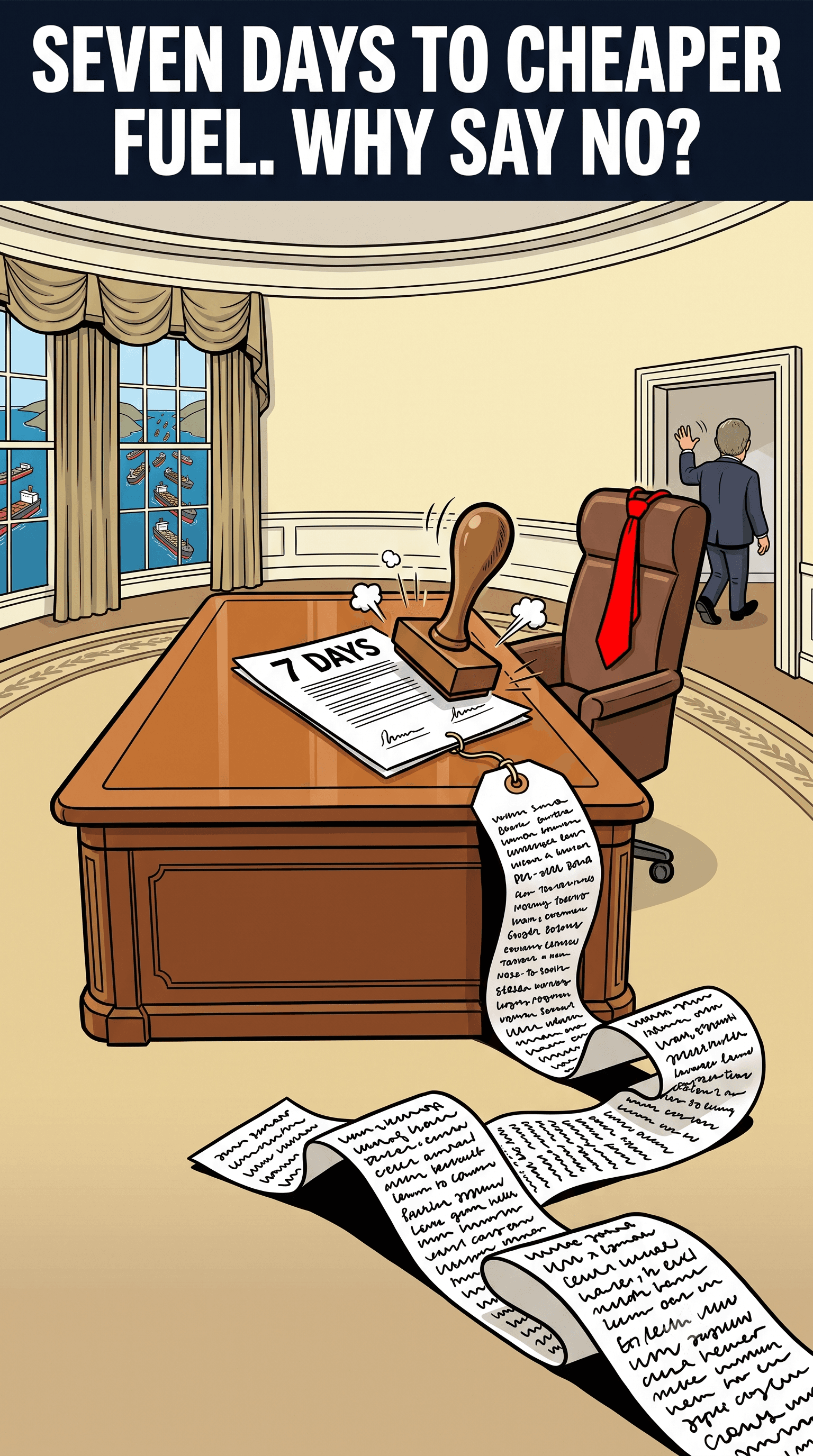
And the blockade stays. This is the part that matters most and is being reported least. Not attacking is not the same as stopping. The Strait of Hormuz has now been closed for roughly seven months. The economic pressure continues at full strength for another twenty-six days by explicit design.
A pause in strikes that preserves the blockade is not a ceasefire. It is holding the pressure steady while a clock runs down.
We said to watch this date. Here is the receipt.
On 26 September, in our piece on Iran's rejected seven-day roadmap, we wrote that Wall Street Journal reporting had Trump expecting bombing campaigns after the November midterms while also suggesting a deal might follow shortly after them — and that both could not be a strategy at once, but both could be true as expectations, and they shared a date.
We then wrote this, and flagged it explicitly as inference rather than fact:
"If the operative variable is 3 November rather than anything in Araghchi's roadmap, then the seven-day proposal was never going to be accepted on its merits, because its merits were not what was being assessed."
And under what to watch: "If nothing moves before the midterms and a great deal moves after them, that tells you what this negotiation was actually about."
Twelve days later the date is in the President's own words, with the election named as the reason for the timing.
We are not claiming to have read anyone's mind. We are noting that an inference we labelled as an inference has now been confirmed by the person it was about, and that this is what marking your guesses as guesses is for.
Three different futures, one date
Here is the genuinely confusing part, and it is confusing because the statements are confusing rather than because the analysis is hard.
Over roughly five weeks, three incompatible things have been said about what happens after 3 November:
Last month, that the war would end immediately after the midterms.
Via WSJ sourcing, that bombing campaigns were expected after them.
Now, that productive discussions are under way and no strike will come before them.
These cannot all be plans. They can all be expectations, held at different moments or by different people, and reported accurately each time. What they share is the date.
When three mutually exclusive outcomes are all scheduled for the same day, the date is doing the work, not the outcomes.
The case that this is good news
It should be said, because it is a reasonable reading and this piece is not trying to be clever at anyone's expense.
A public, dated, specific commitment not to attack is worth something. It is the clearest de-escalatory signal of this war so far. It creates a defined twenty-six-day window in which the Qatari channel can operate without the threat of imminent strikes collapsing it. And having said it in public, with a date, the cost of breaking it is higher than if he had said nothing.
Diplomacy often needs exactly this: a period in which nobody has to react to anything. If a deal emerges in November, this statement will look like the thing that made the room for it.
The honest position is that both readings are available, and which one is right is not knowable from outside. What is knowable is that the blockade continues either way.
Who pays for the twenty-six days
The strait has been shut since early March. US diesel reached a national average of $6.285 a gallon in mid-September, up 68% on the year. Petrol went from under $3 in January to over $4.40.
Those are American numbers and they are the least severe ones. Bangladesh is projected to lose up to 3% of GDP. Slovenia rationed private motorists to 50 litres a day. Egypt ordered shops shut at 9pm. The Philippines declared a national energy emergency. None of those countries has a vote on 3 November.
That is the actual content of "the blockade remains in full force": twenty-six more days of it, minimum, for everyone.
What to watch
Whether the strait reopens before anything else does. It is the single variable that would change conditions for the largest number of people, and it is not contingent on a comprehensive deal.
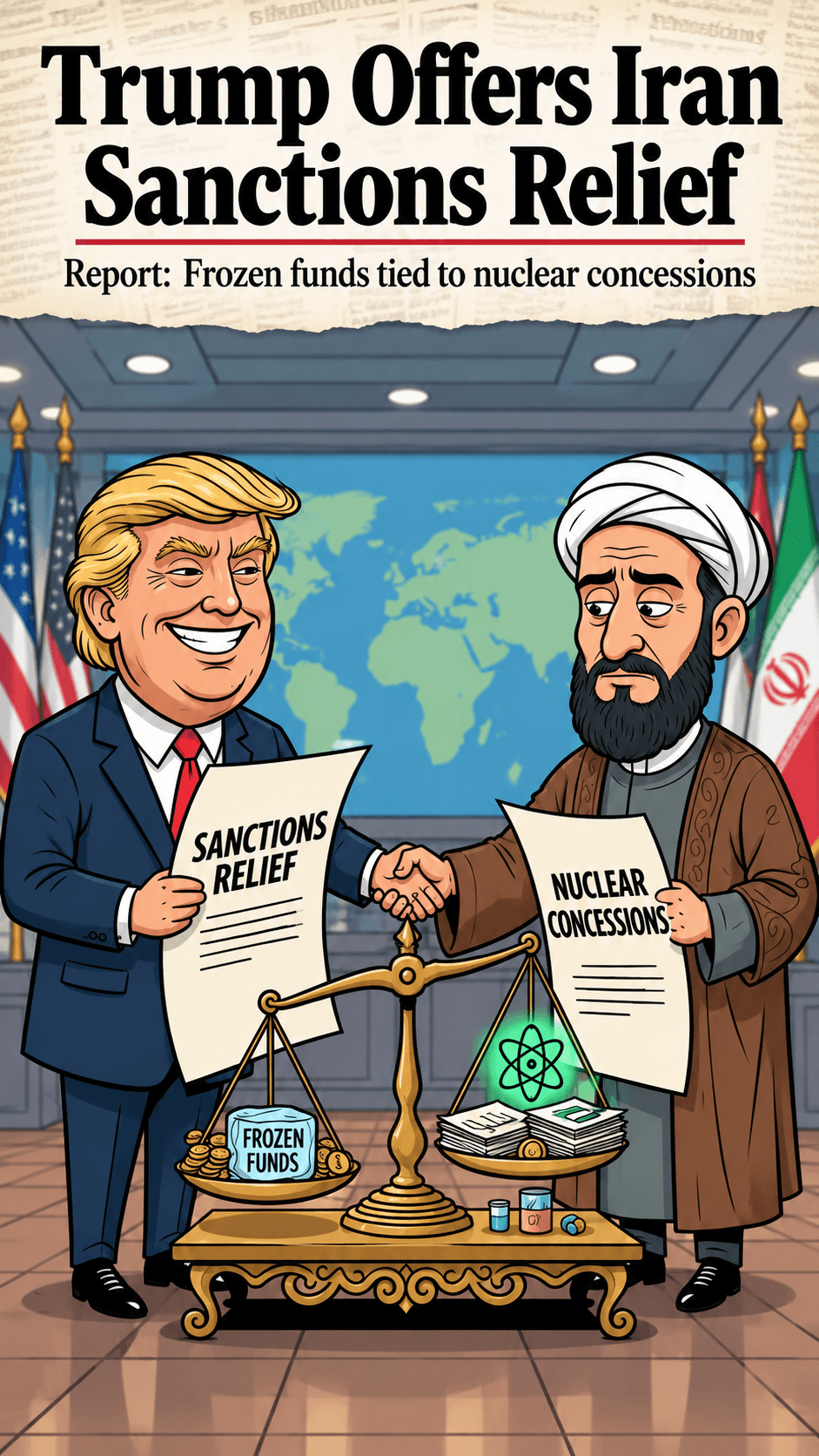
Whether any element of Iran's seven-day roadmap resurfaces. The $12 billion asset figure is the most negotiable item anyone has put on the table. If it moves, the talks are real.
Whether "productive discussions" ever acquires a noun. A named venue, a named envoy, a named agenda item. Without one, the phrase is weather.
And 4 November. Not the election — the day after it. By his own statement, that is when whatever has been deferred stops being deferred.