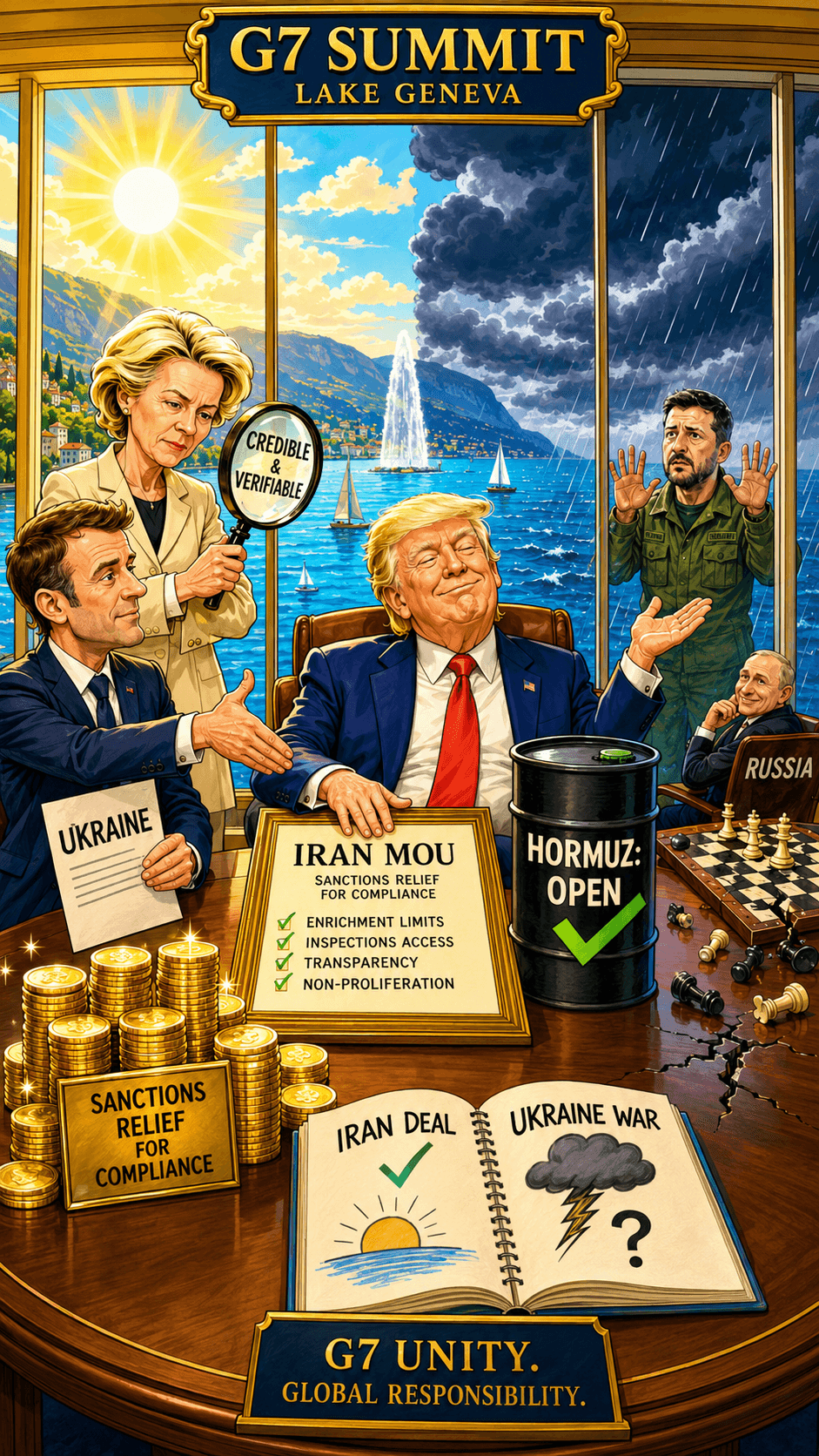
The lakeside resort town of Évian-les-Bains, France — best known for its bottled water — became the unlikely epicenter of global geopolitics this week as leaders of the world's seven largest economies convened for the 52nd G7 Summit. Running from June 15 to 17, 2026, the gathering was the first G7 since the United States launched military operations against Iran over four months ago, and it arrived at a moment of extraordinary diplomatic velocity.
A Deal in the Air
Before Air Force One even touched down in Geneva, Trump had already changed the terms of the summit. On Sunday, June 14, the White House announced that the United States and Iran had reached a preliminary memorandum of understanding — an agreement designed to end the four-month US-Iran war, halt active military operations, and reopen the Strait of Hormuz to international shipping. The formal signing is scheduled for June 19.
The Strait of Hormuz — a narrow waterway between Iran and Oman — carries approximately 20% of the world's oil and liquefied natural gas supply. Its closure during the conflict had sent energy prices surging and rattled global markets. Trump, arriving at the summit on June 15, was bullish. He told reporters that oil prices were already falling and stock markets were rising. He described the strait as soon to be "completely open" and "toll free," adding that mine-clearing operations were already underway.
Vice President JD Vance, speaking to media in Washington, confirmed that the deal's full text would be released within days. The framework, he explained, ties Iranian sanctions relief directly to performance — "Iran doesn't get a dime of money unless they perform their obligations." The deal also initiates 60 days of technical talks, during which negotiators will address the most sensitive issue: what happens to Iran's stockpile of highly enriched uranium. Pakistan, which served as a back-channel mediator, confirmed that "pre-implementation discussions" would begin immediately.
The G7's Two Agendas
French President Emmanuel Macron, hosting his last G7 before leaving office, welcomed the Iran deal warmly. In bilateral talks with Trump, he called it "a very important step for peace of the whole world." But Macron also made clear that Europe's primary concern was Ukraine — and that he would use the summit to lobby Trump to maintain pressure on Russia.
The divergence between Washington and its European partners was unmistakable. European Commission President Ursula von der Leyen, speaking ahead of the summit, set conditions for any sanctions relief tied to Iran — and echoed the same conditionality when it came to Russia: "If behavior is changing credibly and verifiably, then you can lift sanctions — but the other way around is also true." The message was pointed and intentional.
The tension has a specific trigger. During the Strait of Hormuz crisis, the United States quietly granted waivers allowing the purchase of Russian oil to offset the shortfall caused by the blockade. European leaders — already frustrated by what they see as insufficient US commitment to Ukraine — now want those waivers reversed. Trump, who resented European inaction during US strikes on Iran, was not expected to simply comply.
Ukrainian President Volodymyr Zelenskyy was invited to join a dedicated working session at the G7 on Tuesday, June 16 — a politically significant inclusion. The elephant in the room was whether Trump would agree to tighten economic pressure on Moscow now that the Iran crisis was entering a resolution phase.
What's at Stake
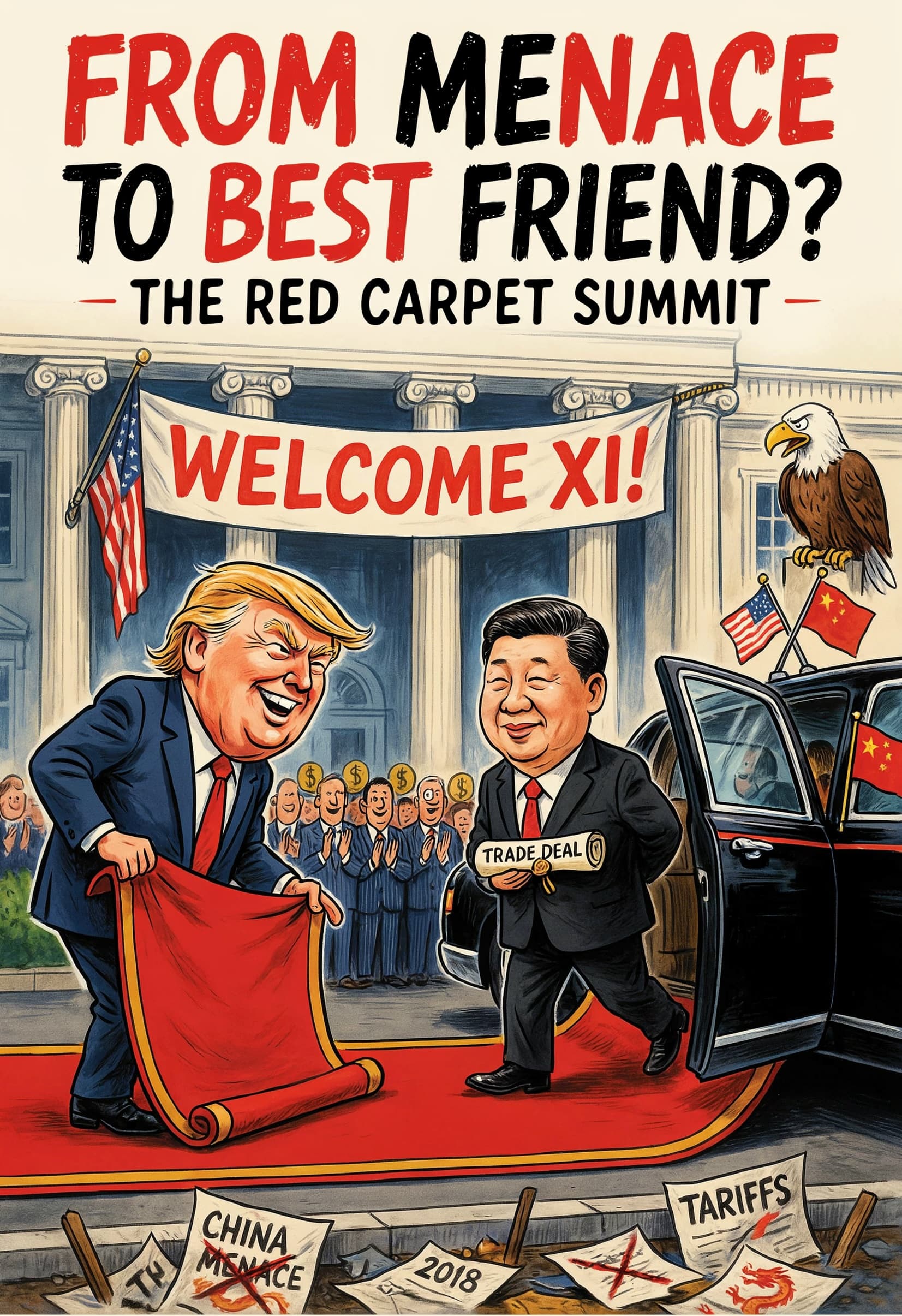
Beyond Iran and Ukraine, the Évian summit carried several other high-stakes items. Trade tensions between the US and its G7 partners — particularly around tariffs and technology governance — remained unresolved. The role of China was woven through nearly every agenda item: European leaders pushed for a strategy on critical minerals that would reduce dependence on Chinese supply chains, while separately calling for a "rebalancing" of EU-China trade relations.
Canada, notably, aligned more closely with European members at the summit, a shift traced back to its participation in May 2026's European Political Community summit — the first time a non-European country was included — signaling Ottawa's intent to hedge against US policy unpredictability.
Implications and Outlook
The US-Iran preliminary deal, if implemented, would mark the most significant American military-diplomatic resolution in years. But the 60-day technical timeline is fragile — and the question of Iran's enriched uranium stockpile is deeply contentious. Meanwhile, the Russia-Ukraine war continues to escalate, with drone strikes hitting civilian infrastructure in Kyiv even as the Évian summit convened.
The G7 in 2026 is not a summit of consensus — it is a summit of managed divergence. Trump arrived with a deal and an agenda. Europe arrived with conditions. And the world watches to see which side blinks first.