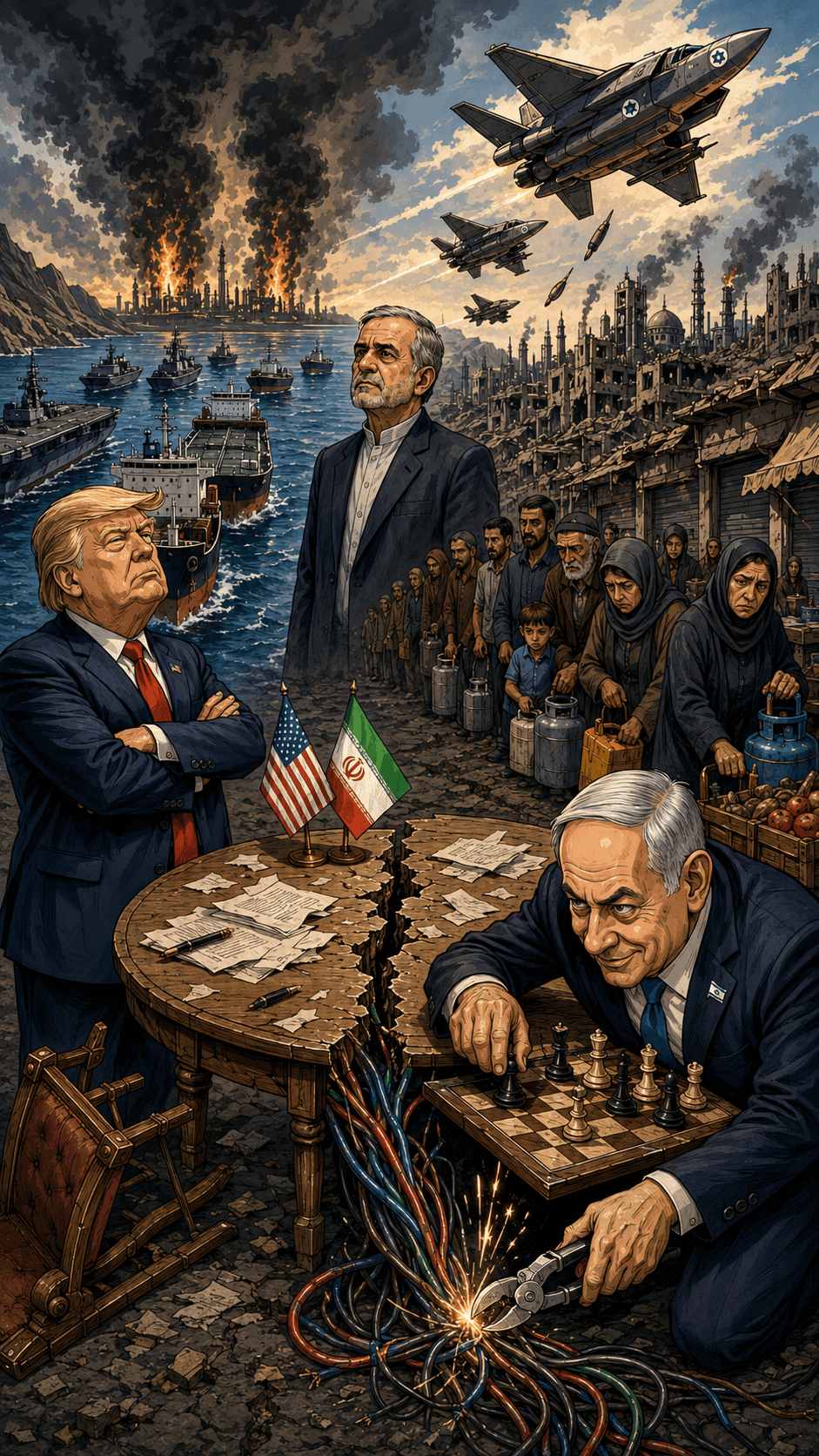
It was supposed to be over in four to six weeks. Instead, 74 days after the United States and Israel launched their air war against Iran on February 28, 2026, the world's most critical maritime chokepoint remains effectively closed — and the diplomatic effort to reopen it has collapsed into a dangerous stalemate that neither side knows how to break.
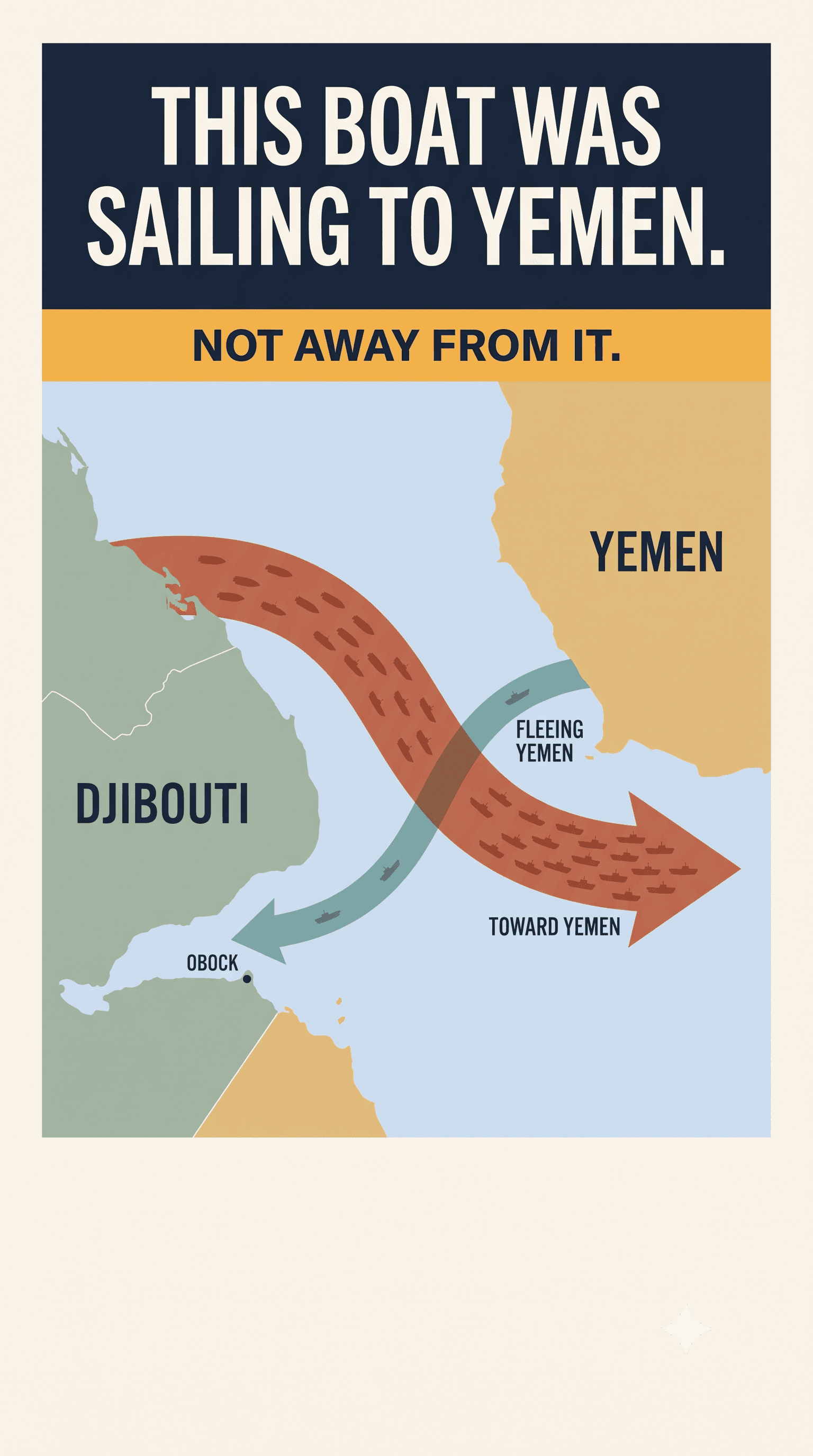
The Strait of Hormuz — a narrow waterway barely 33 kilometres wide at its tightest point — normally carries roughly 20 percent of the world's seaborne oil trade and 20 percent of global liquefied natural gas every single day. Before the conflict, around 3,000 vessels used the strait each month. That number now stands at around 5 percent of pre-war levels. The consequences for the global economy have been seismic.
How It Started: From Airstrikes to a Dual Blockade
On February 28, 2026, Israel and the United States launched a series of strikes against Iran, aiming to induce regime change and destroy its nuclear and ballistic missile programme. Iran's Supreme Leader, Ali Khamenei, was killed in the strikes. Iran's response was swift and asymmetric: missile and drone strikes on Israel, U.S. military bases across the region, and the immediate closure of the Strait of Hormuz.
The Iranian Revolutionary Guard Corps issued warnings forbidding passage through the strait, boarded and attacked merchant ships, and laid sea mines in the waterway. Shipping firms suspended operations almost immediately.
Washington's early response was confident — perhaps overconfident. On March 9, Trump claimed the war was "very complete, pretty much" and falsely declared that the Iranian military had been destroyed and the Strait had reopened. It hadn't. On March 15, he called on NATO members and China to help reopen the strait. In late March and early April, Trump repeatedly threatened to destroy Iranian infrastructure if it did not reopen.
A brief diplomatic window opened on April 8, when Pakistan brokered a conditional two-week ceasefire. The ceasefire was meant to involve the reopening of the Strait. Instead, Iran began controlling traffic through it and charging tolls of over one million dollars per ship. The Islamabad Talks, the formal peace negotiation that followed, then collapsed entirely.
On April 13, the U.S. launched a counter-blockade of the strait, targeting all ships seeking to reach Iranian ports. What The Guardian described as a "dual blockade" was now in full effect — the U.S. Navy blockading Iran, and Iran blockading the Gulf. As of mid-May, the U.S. blockade has intercepted 33 vessels and turned around 52 ships, costing Iran an estimated 500 million dollars daily according to Washington.
The Negotiations: A Stalemate With No Exit
Iran and the United States have reached a full impasse in negotiations, dashing hopes of a quick deal that would reopen the Strait to commercial shipping. Iran has demanded the end of the U.S. blockade of its ports and the release of its frozen assets, while Trump has rejected those terms outright.
Trump has been blunt. "We're going to have a complete victory," he said, adding that Iran thinks "I'll get tired of this. I'll get bored, or I'll have some pressure. But there's no pressure." He described the ceasefire as being on "life support."
Tehran, meanwhile, made a significant diplomatic move in late April — offering Washington a deal that would separate the Strait crisis from the nuclear question. Iran's proposal would bypass nuclear negotiations entirely and focus first on reopening the Strait and lifting the blockade, with nuclear talks postponed to a later stage. But lifting the blockade would remove Trump's primary leverage in any future talks on Iran's enriched uranium stockpile. The White House received the proposal but has not committed to exploring it.
The U.S. President has opposed Iranian attempts to charge tolls for vessels using the strait, saying Iran promised to open it and "knowingly failed to do so." Iran, for its part, has called the U.S. counter-blockade a potential "prelude to a violation of the ceasefire."
The Global Fallout: Oil, Food, and Geopolitical Leverage
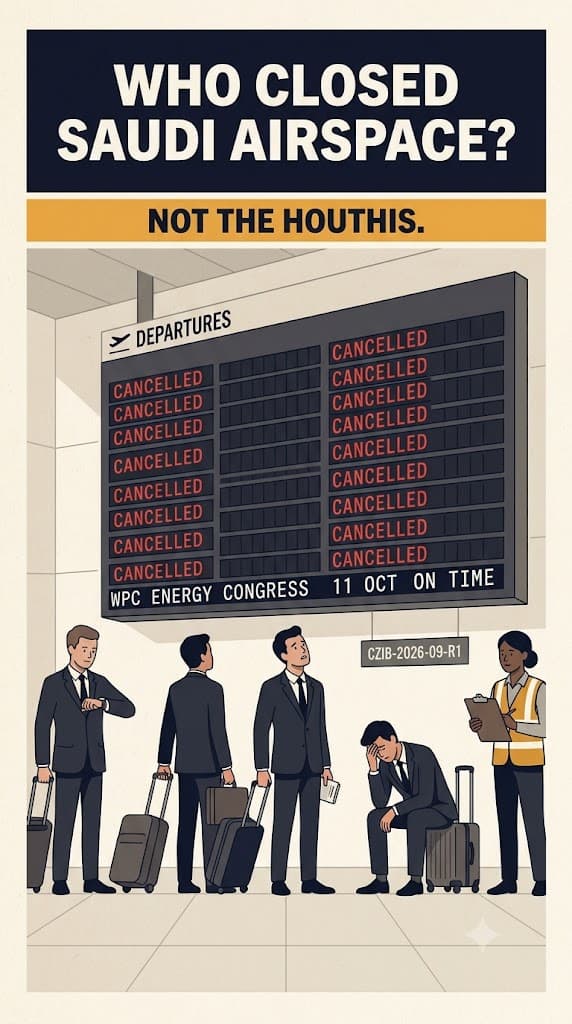
The human and economic consequences of the closure extend far beyond oil prices. The Strait carries approximately 30 percent of internationally traded fertilizer, meaning agricultural supply chains in developing nations have been severely disrupted alongside the energy shock. Lufthansa cut flights. European governments began planning for fuel shortages. Brent crude crossed 111 dollars per barrel.
Developing economies have been particularly hard hit, given the knock-on effects on the cost of food and other essentials. Iran's own population has not been spared — Iranians face skyrocketing food prices as inflation soars and the currency plunges amid the U.S.-enforced naval blockade.
Geopolitically, the stalemate has handed unexpected leverage to China. Beijing is Iran's largest trade partner and the top buyer of its oil. Some analysts note this gives China a degree of leverage heading into the Trump-Xi summit in Beijing — a summit happening this very week. Iran's foreign minister visited Beijing just days before Trump arrived, with China positioning itself as a back-channel broker.
Israel: Rooting for No Deal
Perhaps the most striking element of the stalemate is Israel's open comfort with it continuing. A senior Israeli official said bluntly: "We will be happy if there will be no deal, we will be happy if the siege on Hormuz continues, and we will be happy if Iran gets a few more strikes."
Israel fears a deal that leaves Tehran's nuclear programme partially intact. Early in the war, Trump suggested the U.S. wanted to destroy Iran's ballistic missile programme, end its support for regional proxies, and shut down its nuclear facilities entirely. But negotiations have narrowed to uranium enrichment and reopening Hormuz — with missiles and proxies now reportedly off the table.
What Happens Next
The math of this standoff is brutally simple: Iran cannot sustain a total blockade indefinitely, and the U.S. cannot maintain a naval siege without political cost at home, where gas prices are biting voters ahead of the midterms. Something will give — but when, and on whose terms, remains the defining geopolitical question of 2026.
As the Eurasia Group's Gregory Brew argues, Iran's key weapon is not just oil but its ability to disrupt shipping and energy flows. Control over Hormuz may prove more durable than past shocks, because military pressure alone has not reopened the waterway.
The world is watching two chokepoints simultaneously: the Strait of Hormuz and the negotiating table in Islamabad. Neither is open for business.