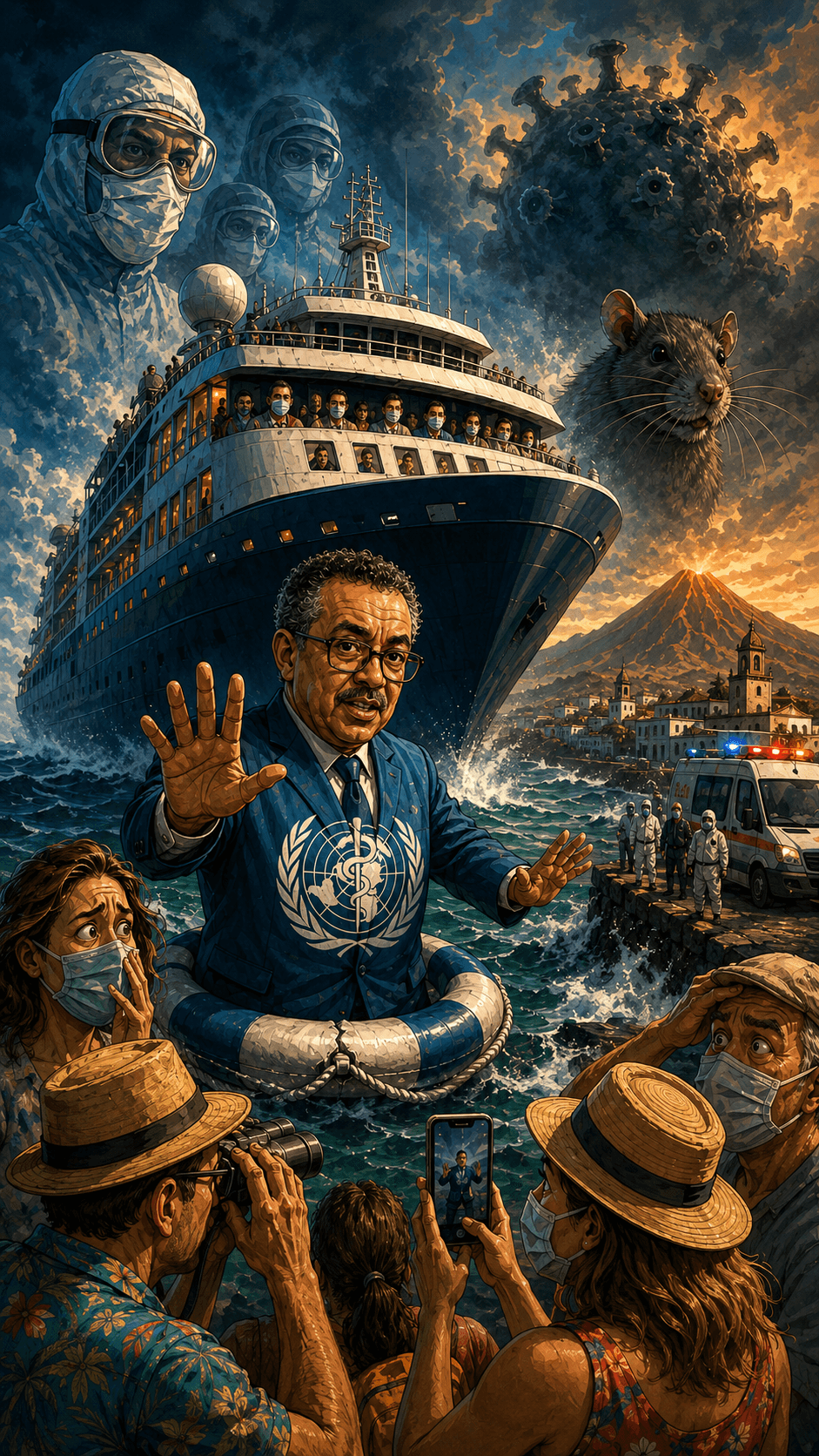
The Dutch-flagged cruise ship MV Hondius, which has been struck by a deadly hantavirus outbreak, has arrived in Spain’s Canary Islands. Escorted by a Civil Guard vessel, the ship dropped anchor off the coast of Tenerife early Sunday morning, setting the stage for a complex, high-security international evacuation.
In an unprecedented move aimed at quelling local anxiety, World Health Organization (WHO) Director-General Tedros Adhanom Ghebreyesus issued a direct, open letter to the residents of Tenerife. His primary message was unequivocal: "This is not another Covid."
As global health authorities manage the repatriation of the nearly 150 passengers and crew members, the operation highlights both the lingering trauma of the 2020 pandemic and the swift, coordinated protocols now in place for international public health emergencies.
Background of the MV Hondius Hantavirus Outbreak
The crisis aboard the MV Hondius began weeks before its arrival in Spanish waters. The luxury expedition ship originally departed from Ushuaia, Argentina, on April 1, embarking on a transatlantic voyage toward Cape Verde. However, the journey was tragically interrupted by an outbreak of the Andes strain of hantavirus.
To date, the outbreak has claimed the lives of three passengers—a Dutch husband and wife, and a German national. According to the WHO, a total of eight cases had been reported leading up to the weekend, with six confirmed to be the Andes virus.
The Andes Strain Explained
Unlike the airborne SARS-CoV-2 virus responsible for the COVID-19 pandemic, hantaviruses are primarily transmitted to humans through the inhalation of aerosolized residue from infected rodent droppings. However, the Andes strain—native to South America—is unique because it is the only known hantavirus capable of rare, human-to-human transmission, usually requiring extremely close and prolonged contact.
Symptoms can take anywhere from one to eight weeks to appear, presenting initially as flu-like illness before potentially escalating to severe respiratory distress. Because of the long incubation period and the enclosed environment of a cruise ship, European public health agencies have classified everyone on board the MV Hondius as a high-risk contact.
"This Is Not Another Covid": The WHO's Direct Appeal
The sight of a quarantined cruise ship seeking safe harbor inevitably evokes memories of the dawn of the global COVID-19 pandemic. Recognizing the potential for public panic, WHO Chief Tedros Adhanom Ghebreyesus took the rare step of addressing the local community directly via an open letter and social media.
"I know you are worried. I know that when you hear the word 'outbreak' and watch a ship sail toward your shores, memories surface that none of us have fully put to rest," Tedros wrote. "The pain of 2020 is still real, and I do not dismiss it for a single moment. But I need you to hear me clearly: this is not another Covid."
Tedros emphasized that the current public health risk to the residents of Tenerife remains incredibly low. He stated that the virus is not spreading in a manner even remotely close to COVID-19. Health authorities confirmed there are currently no symptomatic passengers aboard the vessel, and a WHO expert was deployed to the ship to coordinate with Spanish officials.
The Unprecedented Evacuation Operation in Tenerife
The decision to receive the MV Hondius in the Canary Islands was based on international health regulations, which dictate that ships in distress during a health emergency must be directed to the nearest port equipped with sufficient medical infrastructure. Tedros publicly thanked Spanish Prime Minister Pedro Sánchez for Spain's "act of solidarity and moral duty."
To ensure maximum safety for both the passengers and the local population, the Spanish Ministry of Health, led by Minister Mónica García, engineered a meticulously controlled evacuation plan at the industrial port of Granadilla de Abona.
A Carefully Cordoned Repatriation
Key logistical measures of the operation include:
Offshore Anchoring: The MV Hondius has not docked at the pier. Instead, it remains anchored offshore to maintain distance from the public.
Small Boat Transfers: Passengers, who have been confined to their cabins, are being medically screened before being ferried to land in small boats.
Sealed Transit Corridors: Once ashore, evacuees are moved through a completely cordoned-off maritime exclusion zone and placed into sealed, guarded buses.
Direct Flights Home: Passengers will not enter public airport terminals. They are being driven directly to waiting aircraft. Authorities guaranteed that individuals would not leave the ship unless their repatriation flight was already on the tarmac.
Multiple nations, including the United States, the United Kingdom, and several European Union member states (including Germany, France, Belgium, Ireland, and the Netherlands), dispatched specially chartered planes to retrieve their citizens. Once evacuated, passengers face further monitoring and quarantine measures in their home countries. A skeleton crew of roughly thirty members will remain aboard the MV Hondius to sail the vessel to the Netherlands for deep disinfection.
Local Reaction in the Canary Islands
Despite the alarming headlines, daily life in Granadilla de Abona and the wider tourist hubs of Tenerife has remained largely uninterrupted. While some residents expressed understandable apprehension about receiving a virus-stricken vessel, the transparent communication from health authorities helped mitigate widespread panic.
At the port, civil guards and white medical tents were visible, but nearby markets, cafes, and beaches continued to operate normally. The regional government's strict adherence to a "zero-contact" evacuation strategy has reassured the public that the island's lucrative tourism industry and community health remain secure.
Global Impact and Future Outlook
The handling of the MV Hondius incident serves as a critical test of global pandemic preparedness in the post-COVID era. Unlike the chaotic cruise ship quarantines of early 2020, the response in Tenerife demonstrates a highly coordinated, science-based approach to containing an outbreak without abandoning those stranded at sea.
By balancing strict epidemiological containment with humanitarian solidarity, the international community is proving that localized outbreaks can be managed efficiently. While the hantavirus poses a severe threat to those directly exposed on the vessel, the WHO's decisive communication and Spain's robust logistical execution ensure that this localized tragedy is highly unlikely to spark a broader health crisis.