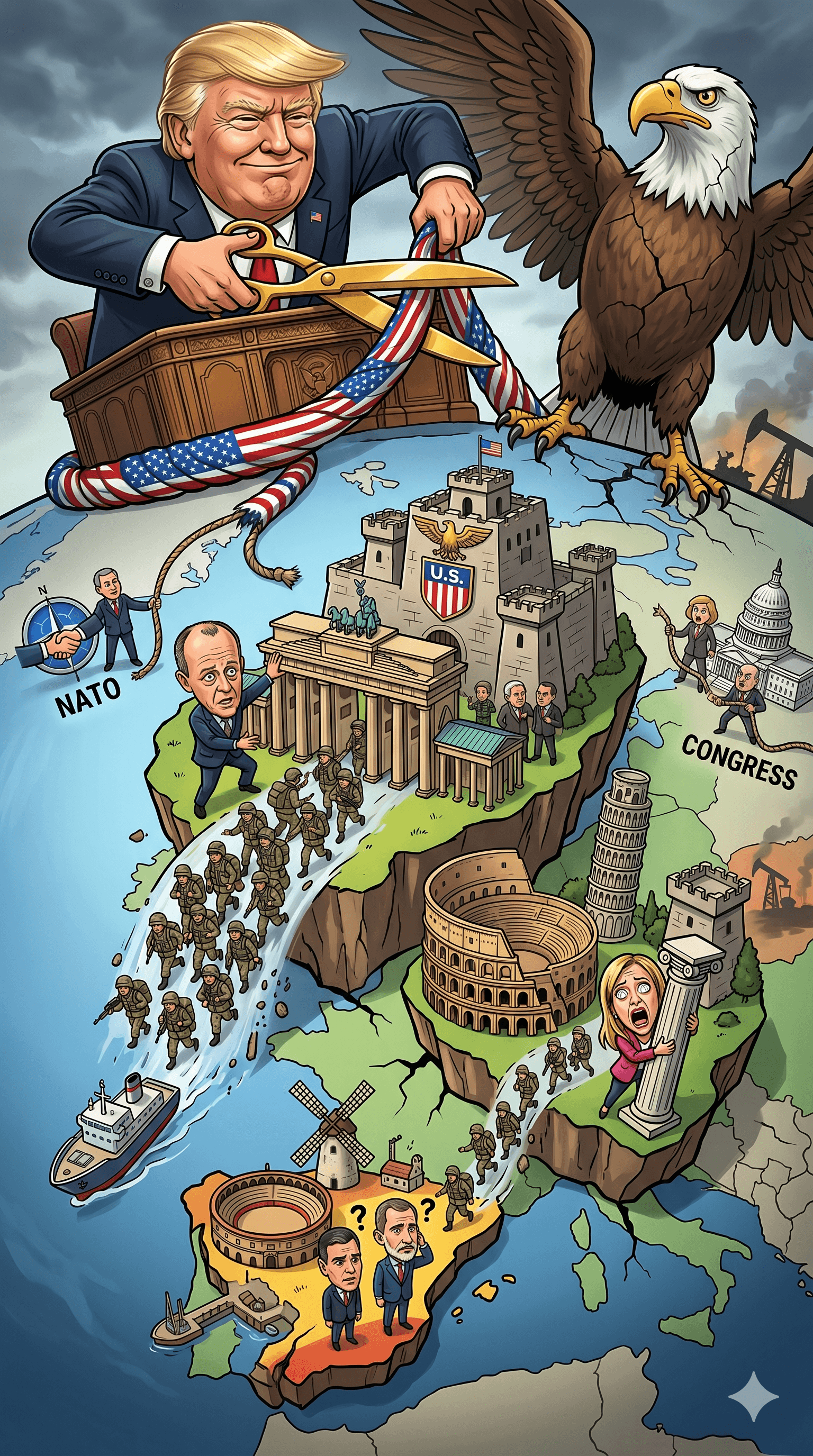
US President Donald Trump has indicated a strong willingness to reduce the presence of American military personnel across several allied European nations, specifically naming Germany, Spain, and Italy. The statements mark a significant escalation in ongoing diplomatic friction between Washington and its traditional NATO partners. Speaking from the Oval Office, the President tied the potential troop drawdown to European reluctance to support the ongoing US-Israeli military campaign against Iran.
The Catalyst: Disagreements Over the Iran Conflict
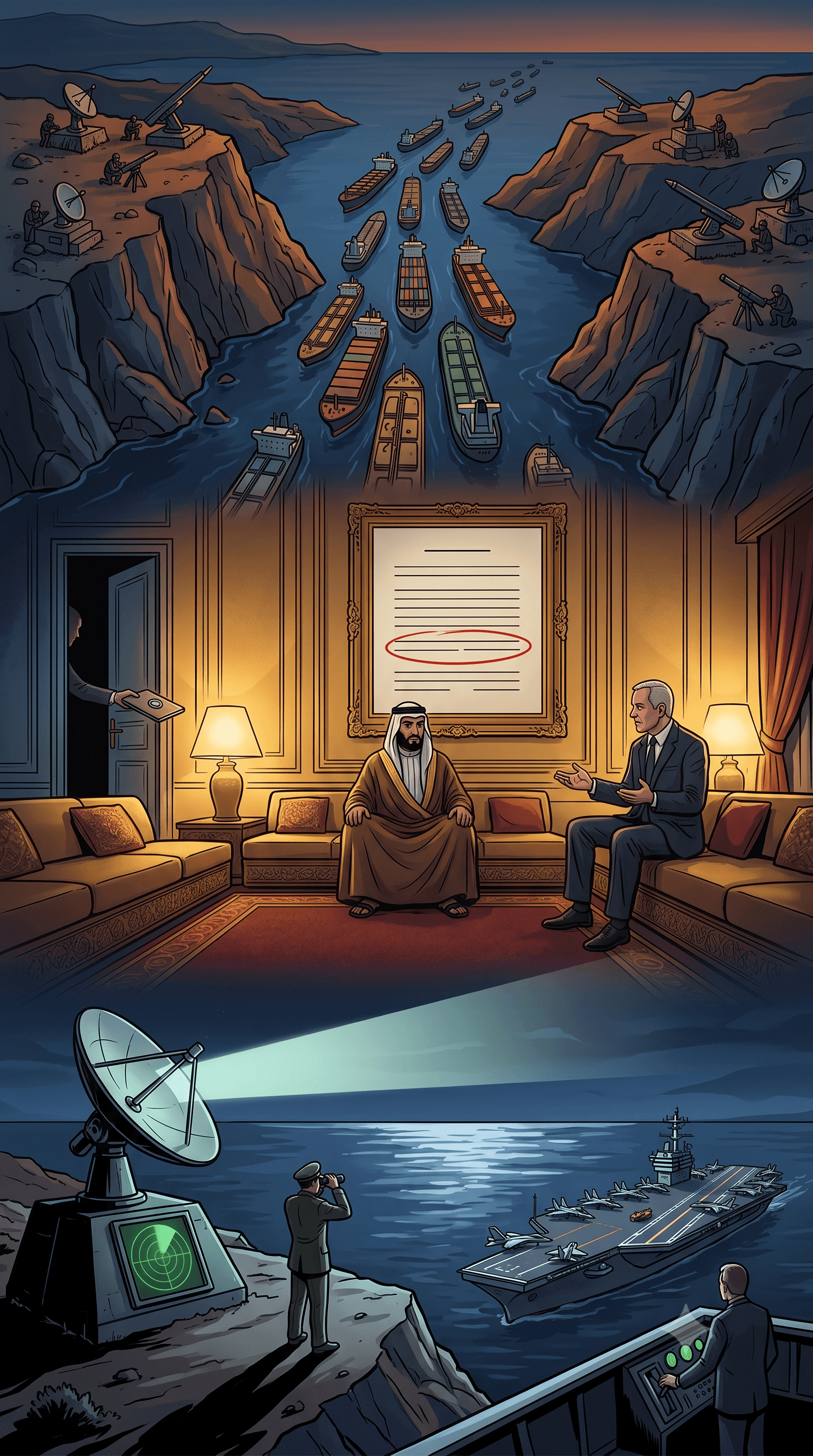
The primary driver behind the proposed reduction of US troops in Europe is a growing divide over international security strategy, particularly concerning the Middle East. President Trump has expressed deep frustration over what he perceives as a lack of burden-sharing and direct assistance from NATO allies in the ongoing conflict with Iran and efforts to secure the Strait of Hormuz.
When asked by reporters at the White House if he was considering pulling troops from Italy and Spain, Trump replied, "Yeah, probably, I probably will. Why shouldn't I?". The President did not mince words in his assessment of the two Mediterranean nations, stating, "Italy has not been of any help to us, and Spain has been horrible, absolutely horrible".
This friction extends to Germany, which has been the traditional anchor of the US military footprint in Europe. A public feud recently erupted between Trump and German Chancellor Friedrich Merz, who criticized the US administration's handling of the Iran conflict, warning that it lacked a clear exit plan and suggesting Washington was being "humiliated" by Tehran. In response, Trump advised Chancellor Merz to focus on fixing his "broken country," specifically pointing to Germany's immigration and energy policies, while defending the US campaign as a measure making the world safer.
How Many US Troops Does Europe Host?
A fundamental question arising from the President's remarks is the current scale of the American military presence on the continent. As of late 2025, the United States maintains a robust network of personnel across Europe, with three countries hosting the bulk of the forces currently under scrutiny by the White House.
Germany
Germany hosts the largest contingent of US forces in Europe, serving as a critical logistical and operational hub. According to recent data, there are approximately 36,436 active-duty American personnel stationed across the country. The bases in Germany are considered vital to US security and play a significant role in supporting military operations linked to the Middle East.
Italy
Italy serves as another crucial staging ground for US and NATO operations, hosting roughly 12,662 active-duty US troops. Italian bases house vital infrastructure, including air defense systems that would reportedly take a decade to replace if dismantled.
Spain
Spain hosts approximately 3,814 US military personnel, primarily located at the Rota naval base and the Morón airbase. Despite the relatively smaller footprint compared to Germany and Italy, these strategic installations are essential for transatlantic maritime and air operations.
Reactions from European Allies
The rhetoric from Washington has prompted varied responses across European capitals, highlighting the strain on bilateral relationships.
In Italy, Defense Minister Guido Crosetto expressed surprise over the accusations that Rome had failed to assist the United States. Rejecting the claims, Crosetto noted that Italy had made itself available for a maritime security mission to protect shipping in the Strait of Hormuz, an offer he stated was appreciated by the American military. Italian Prime Minister Giorgia Meloni, once seen as an ideological ally of the US President, has experienced a severe falling-out with Trump after she defended Pope Leo XIV against his verbal attacks and declined to join the Iran conflict.
Spain has emerged as one of the most outspoken critics of the US position on the Iran war. The Spanish government, led by Pedro Sánchez, has actively barred the United States from using its airspace and the two US military bases on its territory to support strikes on Iran, a decision that deeply angered Washington. Some reports even suggest that the Pentagon has internally explored the unprecedented step of suspending Spain from NATO, though no formal mechanism easily allows for such a unilateral move.
In Berlin, officials appear to be managing expectations. German Foreign Minister Johann Wadephul stated that his government is "prepared" for a potential reduction in American forces, emphasizing that discussions are taking place within NATO frameworks.
Legislative and Logistical Hurdles
While President Trump may wish to drastically alter the deployment of US troops in Europe, such a move faces substantial domestic hurdles in the United States. Any broad effort to reduce military levels on the continent is likely to face fierce opposition in Congress.
Current US law mandates a minimum threshold of 76,000 troops permanently stationed or deployed across Europe. Lawmakers previously blocked Trump's 2020 attempt to withdraw forces from Germany through legislative opposition. Altering the current troop configuration would require navigating complex budgetary, logistical, and legal constraints.
Outlook: What This Means for Global Security
The discussion surrounding the withdrawal of US troops in Germany, Spain, and Italy represents a critical juncture for the transatlantic alliance. As the United States pivots its focus toward the ongoing Iran conflict, Washington is increasingly making its European security umbrella conditional on direct support for its broader geopolitical objectives.
If these reductions materialize, they could force Europe to rapidly accelerate its own defense capabilities and strategic autonomy. Furthermore, the diplomatic friction over the Middle East underscores a growing divergence in threat perception between the US and its European partners. For now, the prospect of a reduced American footprint leaves the European landscape facing a potential structural shift, demanding a profound reassessment of the NATO alliance's future.