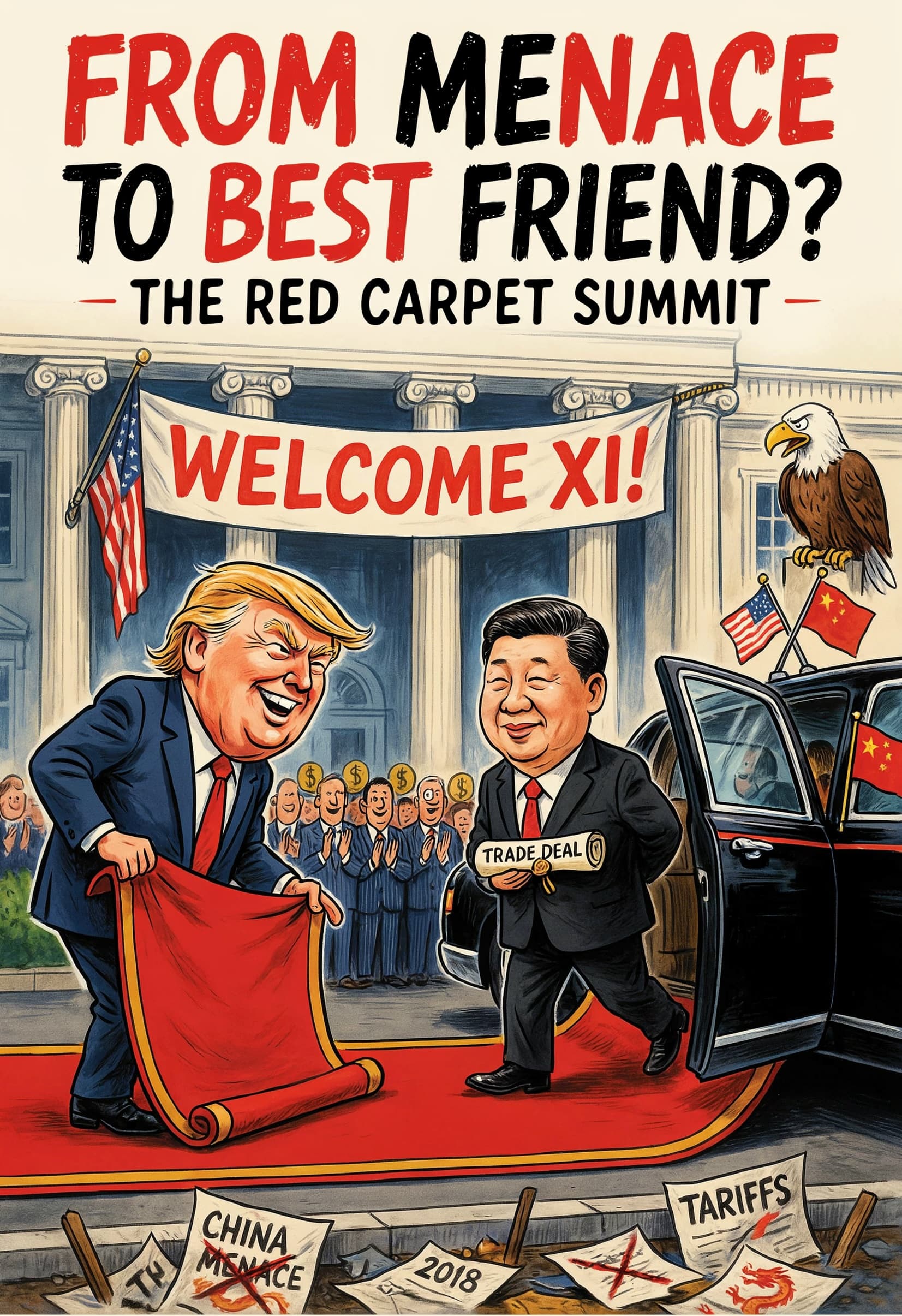
A decade ago, Donald Trump built much of his political message around a simple argument: China was taking advantage of the United States.
He accused Beijing of manipulating trade, taking American jobs and hollowing out U.S. manufacturing. In a 2015 interview, Trump described China as having taken jobs, manufacturing and economic strength away from the United States. During the 2016 campaign, he repeatedly portrayed the relationship as a massive economic loss for America.
Fast-forward to September 2026, and the tone is strikingly different.
Trump is preparing to host Chinese President Xi Jinping in Washington for a high-profile state visit. Trump plans to personally greet Xi when he arrives at Joint Base Andrews, followed by a formal ceremony and a state dinner featuring some of America's biggest technology executives.
That may look like a dramatic reversal.
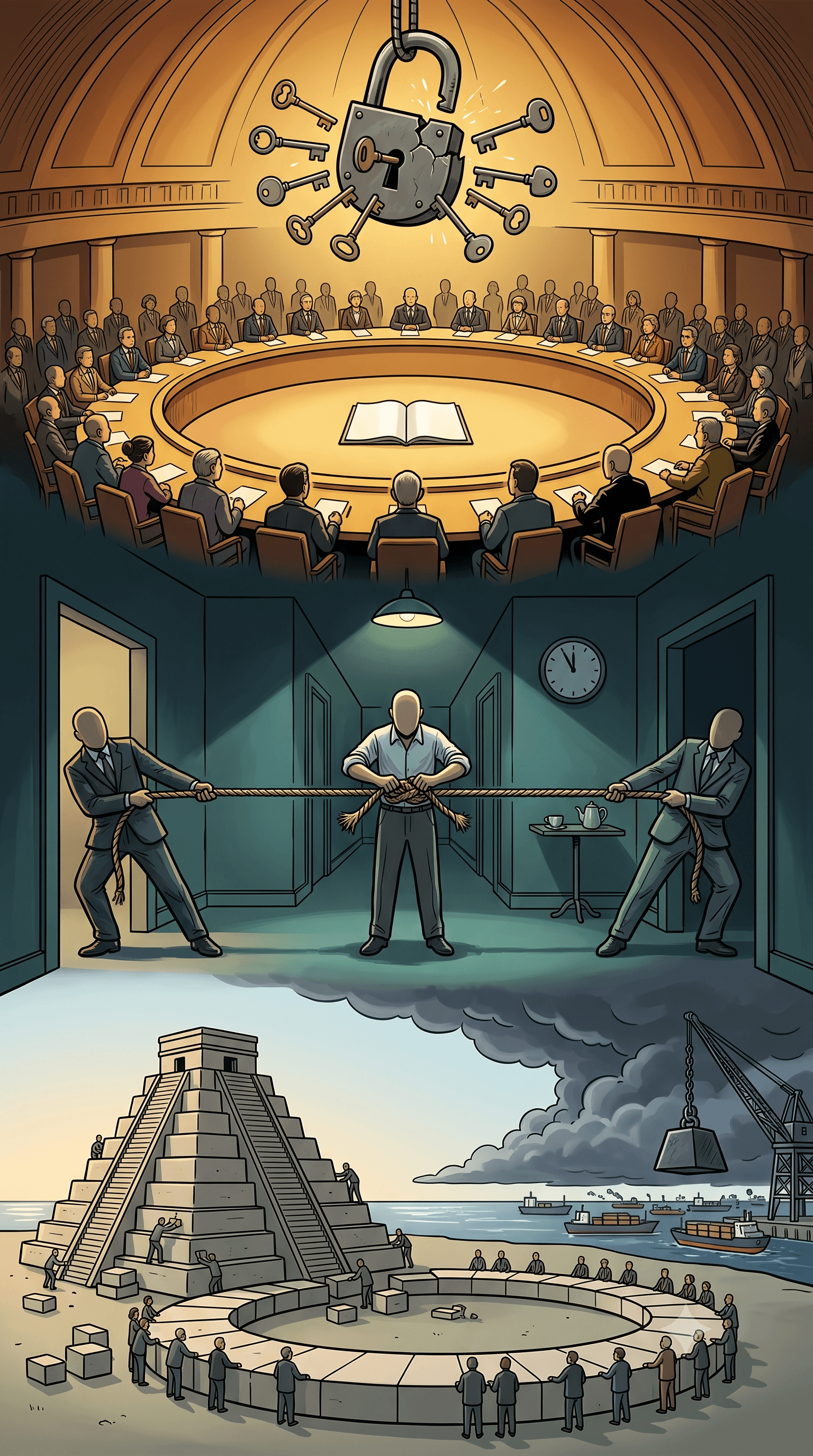
But the reality is more complicated. Trump has not suddenly abandoned competition with Beijing. Instead, the relationship has evolved into something much more transactional: confrontation remains, but so does bargaining.
The biggest change: Trump discovered that pressure works both ways
Trump's first instinct has often been to use tariffs and economic pressure to force concessions.
That strategy produced some results, but it also exposed just how dependent American industry remains on Chinese supply chains.
Rare earths are perhaps the clearest example.
In April 2025, after Washington imposed sweeping new tariffs, Beijing responded with export restrictions on several rare earth elements. Those materials are important for products ranging from electronics and automobiles to aerospace and defense equipment. The move immediately highlighted China's leverage over critical mineral supply chains.
By June, Washington and Beijing were negotiating over the resumption of rare-earth shipments.
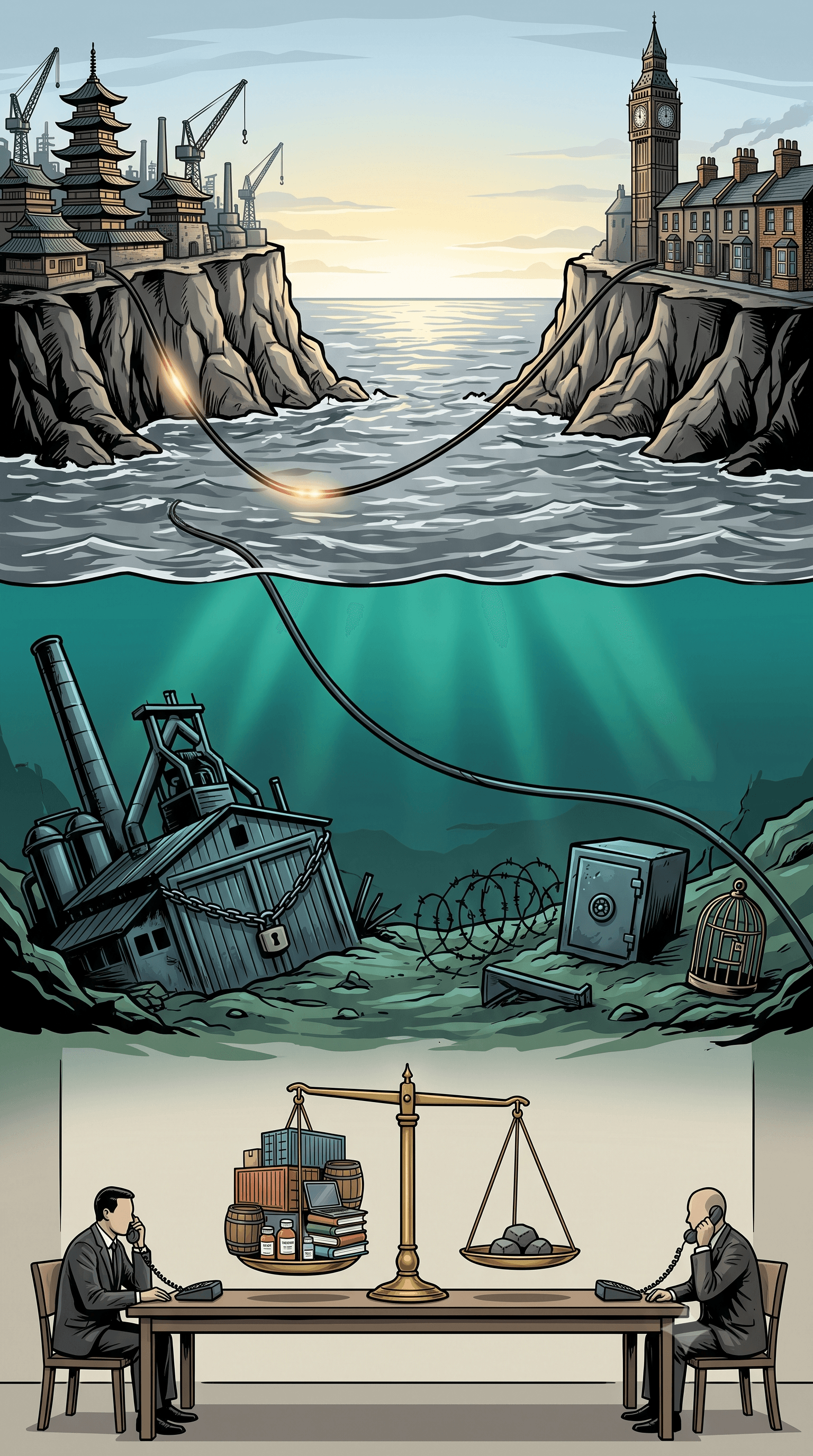
And by the October 2025 Trump-Xi meeting in Busan, rare earths were part of a broader bargain in which the United States reduced some tariffs while China agreed to pause certain export controls and resume purchases of American agricultural products.
The lesson was straightforward: economic pressure can hurt China, but China has tools that can hurt the United States too.
That changes the negotiating equation.
Trump is still using leverage — he's just mixing it with diplomacy
It would be misleading to describe the current relationship as friendly.
Washington and Beijing are still negotiating over tariffs, technology restrictions, artificial intelligence, critical minerals and other strategic issues.
The difference is that Trump increasingly appears willing to use personal diplomacy alongside economic pressure.
Ahead of the September 24 summit, U.S. and Chinese officials are negotiating an extension of their existing trade truce. Treasury Secretary Scott Bessent and Chinese Vice Premier He Lifeng met in New York on September 20, with discussions covering trade, tariffs, AI and critical minerals.
The upcoming Trump-Xi talks are expected to cover much more than tariffs.
Reuters reports that the agenda includes artificial intelligence, Taiwan, fentanyl-related chemical shipments, rare earths and potential Chinese purchases of American goods such as agricultural products and Boeing aircraft.
So the warm optics are sitting on top of a very hard-nosed negotiation.
Why Xi matters more to Trump now
There is another factor that is easy to miss: China is no longer simply a trade issue.
It sits at the center of several of the world's most important economic and technological battles.
China has built enormous manufacturing capacity and become a major force in industries such as electric vehicles, batteries and advanced technology. At the same time, Beijing controls a dominant portion of global rare-earth processing, giving it influence over supply chains that the U.S. and its allies are trying to diversify away from.
Then there is artificial intelligence.
AI is increasingly being treated by both Washington and Beijing as a strategic technology with economic, military and national-security implications. Reuters reported this week that AI competition will be a major subject of the Trump-Xi talks, alongside disputes over advanced chips and technology restrictions.
That makes simply "decoupling" from China far more difficult than political speeches might suggest.
The two countries compete intensely, but they remain economically interconnected.
And Trump appears to believe personal relationships matter
Trump's approach to diplomacy has always placed considerable emphasis on direct relationships with other leaders.
That is particularly visible in his dealings with Xi.
After Trump's May 2026 trip to China, the White House said the two leaders agreed to pursue a "constructive relationship of strategic stability" and that Trump would welcome Xi for a visit to Washington later in the year.
Now that visit is about to happen.
Trump is expected to greet Xi personally at the airport, an unusually high-profile gesture for a visiting foreign leader. The White House event will include formal pageantry, private talks and a state dinner.
The symbolism matters.
A leader Trump once portrayed primarily as the representative of an economic competitor is now being received with the full machinery of a state visit.
But symbolism should not be confused with strategic alignment.
What Trump wants from China
The immediate U.S. objectives are fairly practical.
Washington wants a more stable trade relationship, continued access to critical minerals, progress on fentanyl precursor shipments and greater Chinese purchases of U.S. products.
American negotiators are also seeking arrangements that could reduce tariffs on selected non-strategic goods, while maintaining restrictions in areas considered sensitive to national security.
Beijing has its own priorities.
China is pushing for relief from some U.S. technology restrictions and greater predictability in its access to international markets. Reuters also reports that Chinese business leaders may accompany Xi to Washington, underlining Beijing's interest in commercial engagement alongside the political summit.
In other words, both sides have something to gain from lowering the temperature without ending the competition.
So, has Trump changed his view of China?
In one sense, clearly yes.
His language toward Xi has become considerably warmer than the rhetoric of his first presidential campaign. The current president is comfortable describing Xi in positive personal terms while pursuing direct negotiations with Beijing. Recent reporting has also highlighted Trump's willingness to give China more diplomatic space on some contentious issues than his earlier rhetoric might have suggested.
But his broader approach is not simply pro-China.
Tariffs remain part of the U.S. negotiating toolkit. Technology restrictions remain a major point of disagreement. Washington continues to worry about Chinese control of critical supply chains, while military tensions around Taiwan remain an important issue in the bilateral relationship.
The more accurate description is competitive engagement: pressure where Washington believes it has leverage, negotiation where both sides have something to gain.
The irony of Trump's China policy
There is an obvious irony in all of this.
Trump entered national politics arguing that previous presidents had been too accommodating toward China. His promise was essentially to force Beijing to give the United States a better deal.
Yet several years of trade conflict have also demonstrated something Trump himself has had to negotiate with: China has leverage.
Rare earths can be restricted. Supply chains can be redirected. American farmers depend on Chinese demand for major agricultural exports. U.S. technology companies want access to one of the world's largest markets. And Chinese companies are becoming increasingly important competitors in industries that Washington wants to dominate.
That reality does not make tariffs irrelevant.
It simply means that the U.S.-China relationship cannot be reduced to tariffs alone.
The red carpet is part of the negotiation
The upcoming Xi visit therefore tells us less about a sudden friendship than it does about how the relationship has changed.
Trump once talked about China mainly as an economic threat that needed to be confronted.
Now he is dealing with China as something more complicated: a rival, a trading partner, a technological competitor and, in some areas, a country with which Washington has to negotiate directly.
The red carpet may be out.
The bargaining table is still there.
And beneath the ceremony, the central question remains the same one that has shaped U.S.-China relations for years: how do two competing superpowers protect their own interests without making a conflict that neither side can easily control?
The September 24 Trump-Xi summit may provide some answers, particularly on tariffs, rare earths and AI. But the current agenda suggests that the rivalry is not disappearing. It is becoming more sophisticated.